You may also like:
- 【Explained】Can You Jump Start a Car in the Rain? (A Step-by-Step Guide)
- 【Explained】Car Won’t Start in Cold But Battery is Good? (4 Causes)
- How Long Should a Car Battery Last Without Driving?
- Can You Jumpstart a Car With a Bad Alternator?
- 【Explained】How Long Does It Take to Replace a Car Battery? (A Full Breakdown)
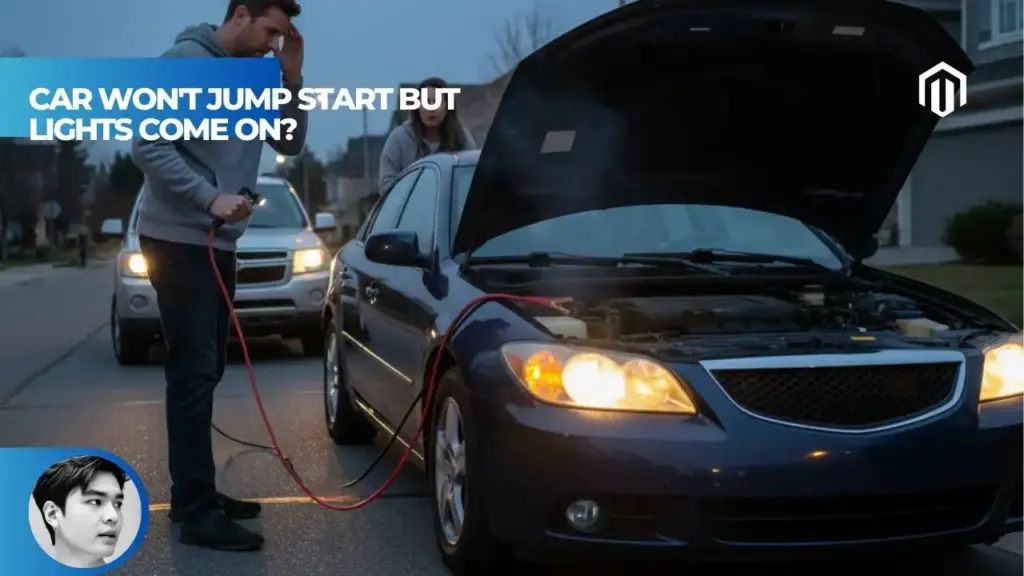
When your car won’t jump start but the lights work, the problem is usually not the battery itself—it’s a component failure that a jump cannot fix[1]. The most common causes include a bad starter motor, corroded or loose battery terminals, a blown fuse or faulty relay, or a failed ignition switch[2]. Interior lights require minimal power to operate, while starting the engine demands hundreds of amps—meaning components can work for low-draw accessories but fail when high current is needed[3].
Why Lights Work But the Engine Won’t Crank
Understanding why this happens requires knowing how different vehicle systems draw power. Dashboard lights and accessories operate on approximately 10-20 amps of electrical current[3]. Starting an engine, however, requires 200-400 amps delivered instantaneously to spin the starter motor fast enough to fire the engine[2].
This massive difference explains why electrical accessories can function normally while the starting system fails completely. A connection point with corrosion, a cable with internal damage, or a component like the starter can allow enough current for lights while completely blocking the high-amperage flow needed for cranking[1].
When troubleshooting, pay close attention to what happens when you turn the key to the start position:
- Complete silence: Points to ignition switch, fuse, relay, or neutral safety switch issues
- Single loud click: Starter solenoid engaging but starter motor not turning (bad starter or insufficient power delivery)
- Rapid clicking: Power reaching the starter but not enough amperage (battery, terminals, or cables)
- Grinding or whirring: Starter engaging but engine not turning over (mechanical issue)
Common Causes and Fixes
Corroded or Loose Battery Terminals
Battery terminal corrosion is one of the most frequent causes of no-start conditions with working lights[2]. The white, green, or bluish buildup creates resistance that may allow small loads to function while blocking the massive current surge required for starting[1].
- How to diagnose: Inspect the battery terminals for visible corrosion, loose connections, or damaged cables. Even terminals that appear clean can have invisible corrosion between the post and clamp[3]. GM vehicles with side-mount terminals are particularly prone to hidden corrosion that isn’t visible without removing the cable[3].
- DIY fix: Disconnect the negative terminal first, then the positive. Clean both terminals and posts using a wire brush or battery terminal cleaner. Apply dielectric grease or terminal protector spray after cleaning, then reconnect (positive first, negative second). Tighten the connections securely—loose clamps cause identical symptoms[2].
- Cost: $5-15 for cleaning supplies; free if you have basic tools
Failed Starter Motor
A bad starter is a primary suspect when you hear clicking sounds but the engine won’t crank[1]. The clicking indicates the starter solenoid is receiving power and attempting to engage, but the starter motor itself cannot spin the engine[2].
How to diagnose: Listen carefully when turning the key. One loud click followed by nothing suggests the starter solenoid activates but the motor fails. Rapid clicking indicates the starter is trying repeatedly but lacks sufficient power—which could be the starter or the power delivery system[1].
Important: Stop trying the ignition after 30 seconds of attempts. Starters are designed for brief operation and can overheat or burn out with extended cranking attempts[1].
Professional repair: Starter replacement typically costs $300-600 including parts and labor, depending on vehicle make and model[2]. Some starters are easily accessible; others require significant disassembly.
For more information on diagnosing electrical issues, see our guide on common car battery problems.
Blown Fuse or Bad Relay
A blown ignition fuse or failed starter relay can prevent the starting signal from reaching the starter motor entirely[1]. When this happens, turning the key produces no response—no click, no noise—while all other electrical systems work normally[4].
- How to diagnose: Locate your vehicle’s fuse box (usually under the dashboard or in the engine bay). The owner’s manual identifies which fuses control the ignition and starter circuits. Visually inspect for blown fuses—a broken metal strip inside the clear plastic housing indicates failure. Test relays by swapping with an identical relay from a non-critical system[1].
- DIY fix: Replace blown fuses with the correct amperage rating. Never use a higher-rated fuse, as this creates a fire risk.
- Warning: A blown fuse is a symptom, not the root cause. Something drew excessive current through that circuit—if the new fuse blows immediately, there’s an underlying electrical problem requiring professional diagnosis[1].
- Cost: Fuses cost $1-5; relays cost $15-40
Failed Ignition Switch
When accessories work but the key turns without any response from the starter, the ignition switch may have failed[1]. This switch sends the starting signal from the key (or push button) to the starter motor[4]. If the switch fails in the accessory position, electronics work but the cranking circuit never activates.
- How to diagnose: If the car starts briefly then immediately dies, or if the key gets stuck, suspect the ignition switch[1]. A mechanic can test the switch with a multimeter to confirm failure[4].
- Professional repair: Ignition switch replacement costs $150-350 depending on vehicle complexity. Push-button start vehicles may cost more due to integrated security systems.
Bad Neutral Safety Switch
On automatic transmission vehicles, the neutral safety switch prevents starting unless the transmission is in Park or Neutral[2]. A failed switch may not communicate the gear position to the engine computer, blocking the start signal entirely.
- How to diagnose: Try shifting to Neutral (with foot firmly on brake) and attempting to start. If the car starts in Neutral but not Park, the neutral safety switch or its associated wiring has failed[2].
- Professional repair: Neutral safety switch replacement costs $100-300 including labor.
Step-by-Step Troubleshooting Guide
Follow this systematic approach to identify the problem:
- Check dashboard behavior when turning the key: Do lights dim at all when you turn to start? No dimming suggests the starting circuit isn’t activating (fuse, relay, ignition switch). Slight dimming means power is reaching the starter circuit[4].
- Listen for sounds: Complete silence points to electrical circuit issues. Clicking indicates starter or power delivery problems. Grinding suggests mechanical issues.
- Inspect battery terminals: Look for corrosion, loose connections, or damaged cables. Clean and tighten if needed.
- Test headlights under load: Turn on headlights with the engine off. If they dim significantly within 60 seconds, the battery may be too weak despite showing some charge[1].
- Check the fuse box: Locate and inspect ignition and starter fuses. Replace any that appear blown.
- Try Neutral position: For automatic transmissions, attempt starting in Neutral to rule out neutral safety switch failure.
- Allow adequate charge time: If jump starting, let the vehicles remain connected for at least 5-10 minutes before attempting to crank[2]. Cold weather may require even longer.
If these steps don’t resolve the issue, professional diagnosis is necessary. Modern vehicles have complex electrical systems that often require specialized scan tools to identify faults.
When to Call a Professional
Seek professional help in these situations:
- The problem persists after cleaning terminals and checking fuses
- You hear grinding or unusual noises when attempting to start
- The car starts briefly then immediately dies
- Warning lights appeared before the no-start condition
- You suspect anti-theft system involvement
- The vehicle is under warranty
Diagnosis at a repair shop typically costs $50-150, which is often credited toward the repair if performed there[2]. Proper diagnosis prevents replacing expensive parts unnecessarily—a battery, starter, and alternator can each cost hundreds of dollars[2].
Preventing Future No-Start Issues
Regular maintenance prevents most no-start situations:
- Battery inspection: Have the battery tested with every oil change. Most auto parts stores offer free battery testing[1].
- Terminal cleaning: Clean battery terminals annually or when corrosion appears
- Cable inspection: Check for frayed or damaged battery cables during routine maintenance
- Fuse check: Familiarize yourself with fuse box locations and keep spare fuses in the vehicle
Consider keeping a portable jump pack in your vehicle. Modern lithium-ion jump packs are compact enough for a glove box and can start most vehicles multiple times on a single charge[1].
Learn more about maintaining your vehicle’s electrical system in our complete car maintenance guide.
Key Takeaways
- Working lights with a no-start condition typically indicates a starter, terminal, or ignition circuit problem—not a dead battery
- Interior lights use minimal current while starting requires 200+ amps, explaining why one system works and the other fails
- Clean and tighten battery terminals first—this simple fix resolves many no-start issues at zero cost
- Stop cranking attempts after 30 seconds to prevent starter damage from overheating[1]
- Listen for sounds when turning the key: silence suggests circuit issues; clicking suggests starter or power delivery problems
- Professional diagnosis ($50-150) often saves money by preventing unnecessary part replacements
Frequently Asked Questions
Why does my car click but not start even with a jump?
Clicking sounds with a jump indicate the starter solenoid is engaging, but the starter motor cannot turn the engine[1]. This typically means a bad starter motor or severely corroded connections preventing adequate power flow. A single loud click suggests starter failure; rapid clicking indicates insufficient amperage reaching the starter[2].
Can a completely dead battery cause no-start with working lights?
Yes, but it’s unlikely if lights appear normal. A severely depleted battery may power low-draw accessories while lacking the reserve capacity for the high-amperage burst required for starting[1]. If headlights dim noticeably when you turn on multiple accessories, the battery may still be the issue despite appearing functional.
How do I know if my starter or battery is bad?
If jump starting allows the car to run normally and recharge the battery, the battery was likely the issue. If the car won’t start even with a jump, or if you hear clicking/grinding sounds, the starter is more likely failed[2]. A mechanic can test both components definitively using specialized equipment.
Why won’t my car start but has power everywhere?
This indicates an issue specifically in the starting circuit rather than general electrical failure[4]. Common causes include a blown starter fuse, failed starter relay, bad ignition switch, faulty neutral safety switch, or failed starter motor. The starting system operates on a separate circuit from accessories, which is why other systems can work normally.
How long should I let a car charge before trying to jump start?
Allow at least 5-10 minutes with jumper cables connected and the donor vehicle running before attempting to start the dead car[2]. In cold weather or with a severely depleted battery, 15-20 minutes may be necessary. If the car still won’t start after adequate charging time, the problem is likely not the battery voltage.
References
- Interstate Batteries. (2023). Why My Car Won’t Start If the Battery’s Still Good. https://www.interstatebatteries.com/blog/car-wont-start
- RepairPal. (2024). Most Common Reasons a Car Won’t Start With a Jumpstart. https://repairpal.com/symptoms/car-battery-wont-jumpstart
- CarParts.com. (2024). Reasons Why Your Car Won’t Start With a Jump. https://www.carparts.com/blog/reasons-why-your-car-wont-start-with-a-jump/
- Car-Ku. (2025). Car Will Not Jump Start But Lights Come On? 5 Common Causes And Quick Fixes. https://www.car-ku.com/news/Car-Will-Not-Jump-Start-But-Lights-Come-On-5-Common-Causes-And-Quick-Fixes.html
- Harris Tire Company. (2025). Car Won’t Jump Start? Here’s What Could Be Causing It. https://harristirecompany.com/car-wont-jump-start/

I am a senior automotive analyst at Autvex. Expert vehicle evaluations, in-depth reviews, and objective analysis helping readers make informed automotive decisions with years of industry experience.