

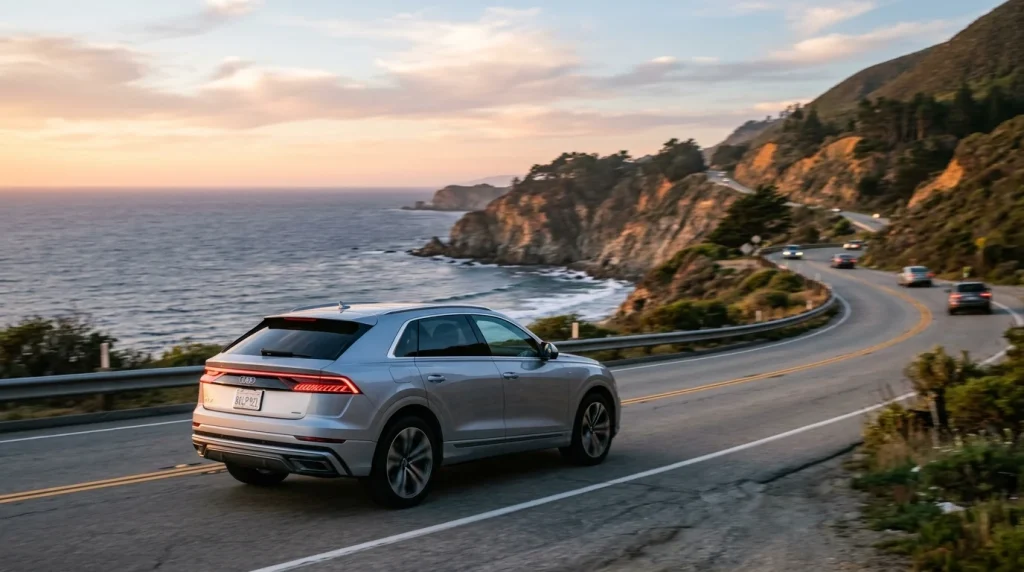
Quick answer: The 2022 Audi Q8 is a flagship mid-size luxury coupe SUV that originally started at $70,800 for the base Premium trim and reached $80,900 for the top Prestige model, excluding destination fees. In the 2026 used market, transaction prices typically range from $29,985 to $58,990 depending on mileage, condition, and optional packages, with most clean units selling between $35,000 and $48,000.
Key takeaways:
- The used market in 2026 offers steep discounts due to depreciation, making the vehicle highly attractive at nearly half its original MSRP.
- Under the hood lies a standard 3.0-liter turbocharged V6 engine that generates 335 horsepower and supports a 7,700-pound maximum towing capacity.
- A widespread 48-volt starter-generator failure triggered major recall campaigns, though Audi USA has extended warranty coverage for this component.
- Coupe-like styling compromises utility, reducing cargo space to 30.5 cubic feet behind the second row compared to the three-row Audi Q7.
Why This Used SUV Review Matters in 2026
Shopping for a luxury mid-size SUV in the pre-owned market requires navigating complex reliability data and steep depreciation curves. The 2022 Audi Q8 sits at the apex of Audi’s passenger crossover hierarchy, competing directly with high-fashion models like the BMW X6 and the Mercedes-Benz GLE Coupe.
As the calendar turns to 2026, the oldest models are coming off their standard four-year leases. This lease return cycle has flooded the market with well-maintained examples at deep discounts, often selling for 40 to 45 percent less than their original window stickers. However, while buying a used luxury vehicle represents an excellent value proposition, it also exposes subsequent owners to premium maintenance fees and out-of-warranty mechanical risks. Understanding the exact mechanical pitfalls, standard equipment changes, and safety recalls is crucial before signing a purchase agreement.
Used Market Pricing and Trim Level Breakdown
The standard 2022 model range is divided into three distinct trim levels: Premium, Premium Plus, and Prestige. Every trim includes a standard $1,195 destination fee when new, bringing the original starting prices to a range of $71,995 to $82,095.
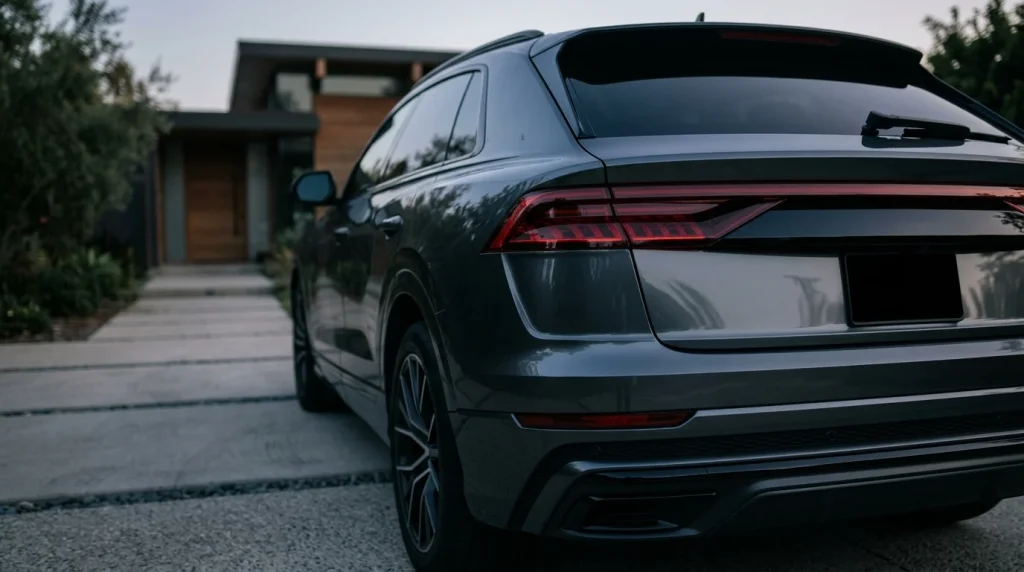
For the 2026 used market, buyers should expect a broad pricing distribution. Higher mileage or base Premium models can be found as low as $29,985, while low-mileage, certified pre-owned Prestige models with desirable packages command up to $58,990. The table below outlines the relationship between the original pricing, current used valuations, and core standard features:
| Trim Level | Original Base MSRP | 2026 Used Price Range | Highlighted Standard Equipment |
|---|---|---|---|
| 55 TFSI Premium | $70,800 | $29,985 – $38,500 | 21-inch alloy wheels, leather upholstery, panoramic sunroof, Audi Virtual Cockpit, 3-zone climate control |
| 55 TFSI Premium Plus | $74,700 | $35,000 – $44,500 | Bang and Olufsen 3D sound system, wireless phone charging, ventilated front seats, adaptive cruise control, lane-keeping assist |
| 55 TFSI Prestige | $80,900 | $42,000 – $58,990 | Adaptive air suspension, head-up display, power soft-close doors, dual-pane acoustic side glass, power rear window sunshades |
Equipment lists received notable updates for the 2022 model year. The base Premium trim was upgraded with standard 21-inch wheels and power-folding mirrors with memory. The Premium Plus trim received essential driver-assistance tech as standard, specifically adaptive cruise control and active lane assist. Prestige trims continued to serve as the technological showcase, coming standard with the comfort-enhancing adaptive air suspension.
Multiple optional packages can raise these prices on the used market. The Black Optic package adds aggressive dark exterior accents and unique wheels, which remain highly popular with pre-owned buyers. The Luxury package, available only on the Prestige trim, adds a soft Dinamica headliner and front passenger massage seats wrapped in premium Valcona leather.
The Critical 48V Alternator Recall and Reliability Problems
Safety and long-term mechanical reliability are major considerations for pre-owned buyers, particularly regarding the 48-volt mild-hybrid electrical system. The 2022 model utilizes a belt-driven starter-generator (BAS) manufactured by Continental. Due to internal component manufacturing defects, moisture can penetrate the generator housing, causing an electrical short-circuit or a failure of the internal inverter diodes.
When the BAS fails, the vehicle displays a red “Electrical system malfunction” warning light on the dashboard. Shortly after, the 12-volt battery drains completely, causing a total loss of engine power and driver assistance features. This failure often occurs without warning, sometimes while driving at highway speeds.
To address this widespread issue, the National Highway Traffic Safety Administration (NHTSA) logged numerous owner complaints, leading to a major service action. Audi issued a voluntary recall to replace defective starter-generators with an optimized, updated component. Because of this component’s high failure rate, Audi USA officially extended the warranty on the 48-volt starter-generator to 7 years or unlimited mileage for affected vehicles in the United States.
Note: When shopping for a pre-owned vehicle, always request the dealership to run a VIN check to confirm that all open safety recalls, specifically the 48-volt starter-generator replacement, have been completed by an authorized service center.
Beyond the electrical system, the model experiences other common problems. Infotainment system glitches, such as the sudden erasure of radio presets or random screen blackouts, are frequently documented in owner forums. Models equipped with the adaptive air suspension can also develop air spring leaks as they age, leading to expensive repairs that can cost upwards of $2,000 per axle. If you are comparing this model year to the older version, checking the 2021 Audi Q8 review reveals similar electrical glitches, showing that these patterns persisted across multiple production runs.
Performance, Handling, and Real-World Fuel Economy
The heart of every standard model is a 3.0-liter turbocharged V6 engine paired with a 48-volt mild-hybrid system. This powertrain generates 335 horsepower and 369 pound-feet of torque, routed through an eight-speed Tiptronic automatic transmission. Power is split continuously between the front and rear axles via Audi’s legendary quattro all-wheel-drive system.
According to independent testing by automotive journalists, the V6 engine delivers brisk acceleration, pushing the heavy 4,960-pound SUV from 0 to 60 mph in just 5.3 seconds, which beats Audi’s conservative official estimate of 5.6 seconds. The vehicle handles curves with remarkable composure, especially when configured with the Prestige trim’s standard adaptive air suspension and optional all-wheel steering.
However, the driving experience is not without flaws. Many owners report a frustrating throttle lag when starting from a complete stop in Comfort mode. The transmission and engine software prioritize fuel economy, creating a delay between pressing the accelerator pedal and receiving engine power. Drivers must slide the gear shifter back into Sport mode or choose the Dynamic setting in the Audi Drive Select menu to sharpen throttle response.
For buyers who need utility, the model offers a robust 7,700-pound maximum towing capacity when equipped with the factory-installed towing package. This limit matches conventional body-on-frame SUVs, allowing owners to easily pull boats or campers.
Fuel economy remains average for this class. The EPA estimates stand at 18 mpg city, 23 mpg highway, and 20 mpg combined. According to Car and Driver’s independent highway testing, the vehicle achieved a surprising 28 mpg on a 75-mph highway fuel economy loop, showcasing the efficiency of the mild-hybrid system during steady cruising. Owners must factor in the requirement for premium unleaded fuel (91 octane minimum) to maintain this performance.
Interior Luxury, Tech, and Cargo Limitations
Step inside the cabin, and the model showcases its flagship status. Material quality is top-tier, with real wood veneers, brushed metal trim, and soft-touch plastics lining the doors and dashboard. Standard dual-pane acoustic side glass on the Prestige trim limits wind and road noise, creating a whisper-quiet cabin at highway speeds.
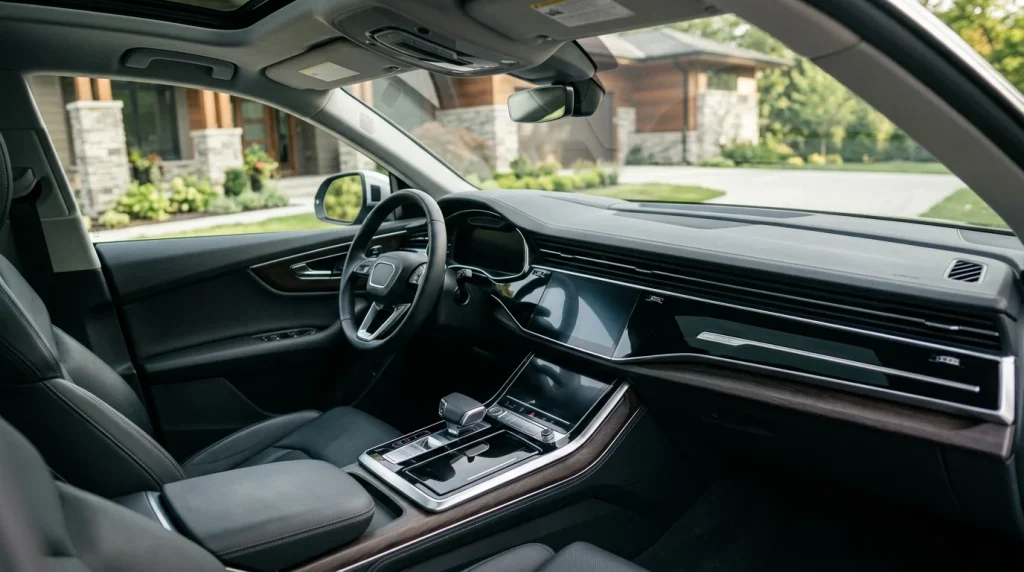
The focal point of the dashboard is the dual-touchscreen MMI infotainment system. An upper 10.1-inch display handles navigation, media, and vehicle configurations, while a lower 8.6-inch display manages climate control and hand-written text input. Both screens feature haptic feedback that provides a physical click when pressed.
While the screens look modern, they are prone to collecting fingerprints and can distract the driver. Operating the lower screen for basic climate functions requires looking down from the road, a design choice that is less intuitive than traditional physical buttons. This setup is paired with the standard 12.3-inch Audi Virtual Cockpit, which projects crisp navigation maps directly behind the steering wheel.
Coupe-like styling dictates clear cargo compromises. Because of the sloping rear roofline, the vehicle offers 30.5 cubic feet of cargo volume behind the second row, which expands to 60.7 cubic feet when the rear seats are folded flat. This utility is significantly lower than the boxier three-row Audi Q7, which offers up to 69.6 cubic feet of cargo space. Rear seat headroom is slightly compromised by the roofline, but sliding and reclining rear seats allow adults to sit comfortably in the back row.
Safety Ratings and Headlight Performance
Safety remains a strong selling point, backed by extensive crash testing. The 2022 model earned the prestigious Top Safety Pick award from the Insurance Institute for Highway Safety (IIHS). The vehicle secured the highest rating of Good in every physical crashworthiness category, showing robust structural integrity.
According to the official IIHS safety ratings, the Q8’s standard crash prevention systems also earned a Superior rating. The pre-sense front crash prevention system successfully avoided collisions with pedestrians and other vehicles at speeds up to 25 mph.
However, headlight performance is a critical differentiator that used buyers must consider. The standard LED headlights found on Premium and Premium Plus trims received a Poor rating from the IIHS due to excessive glare for oncoming drivers. Only the upgraded HD Matrix LED headlights, which come standard on the Prestige trim and were optional on the Premium Plus, earned an Acceptable rating to qualify the vehicle for the Top Safety Pick status.
Used Value Verdict: Is the 2026 Audi Q8 Worth It?
Expert view: The used market has transformed the Q8 from an expensive luxury purchase into a highly compelling pre-owned value. However, the mild-hybrid system represents a known point of failure. Buyers should set aside an annual maintenance budget of $1,500 for scheduled services, premium fuel, and potential electronic repairs.
When comparing the flagship crossover to its closest competitors, the BMW X6 and the Mercedes-Benz GLE Coupe, the Audi positions itself as the balanced, minimalist alternative. The BMW X6 offers slightly sharper steering feel and a more refined inline-six engine, while the GLE Coupe prioritizes an expressive interior. The Audi Q8 wins on interior material quality and clean, understated styling.
For those researching other model years, comparing this model with the 2023 Audi Q8 specifications shows that the platform remained largely unchanged, making the 2022 model a smarter financial buy due to the extra year of depreciation.
Who Should Buy the 2022 Audi Q8?
- Style-oriented buyers who want the elevated driving position of a luxury SUV without the boxy, utilitarian appearance of family haulers.
- Commuters who value exceptional highway refinement, acoustic insulation, and high-speed stability.
- Value hunters looking to capitalize on luxury depreciation by acquiring a flagship German SUV at a deep discount.
Who Should Avoid the 2022 Audi Q8?
- Families requiring a third row of seats or maximum cargo volume for bulky items, who should look at the boxier Audi Q7 instead.
- Drivers who prefer physical buttons and knobs over touchscreens for climate controls and radio tuning.
- Buyers on a tight budget who are unprepared for the high cost of replacement parts, premium fuel, and specialized maintenance.
If you are interested in exploring how this vehicle fits into the broader brand portfolio, you can view the complete Audi Q8 lineup to trace the evolution of this design over successive years.
Frequently Asked Questions About the 2022 Audi Q8
Is the 2022 Audi Q8 reliable?
The 2022 model displays average reliability. The engine and transmission are mechanically robust, but the vehicle is prone to electrical malfunctions, specifically the 48-volt starter-generator failure and MMI software bugs.
How does the Q8 compare to the Q7?
Both vehicles share the MLB Evo platform, but the Q8 is shorter, wider, and features two rows of seating instead of three. The Q8 prioritizes styling and road presence, while the Q7 focuses on passenger utility.
Does the 2022 Audi Q8 require premium gas?
Yes, the 3.0-liter turbocharged V6 engine requires premium unleaded gasoline with a minimum octane rating of 91 to prevent engine knocking and maintain performance.
What is the real-world fuel economy of the Q8?
While the EPA estimates the vehicle at 18 mpg city, 23 mpg highway, and 20 mpg combined, independent highway fuel tests show it can achieve up to 28 mpg during steady highway driving.
What are the main recall issues for the 2022 Audi Q8?
The primary recall involves the 48-volt starter-generator, which can fail due to an internal moisture short-circuit, causing the vehicle to stall. Audi has issued a recall to replace the unit and extended the warranty on this part.

