

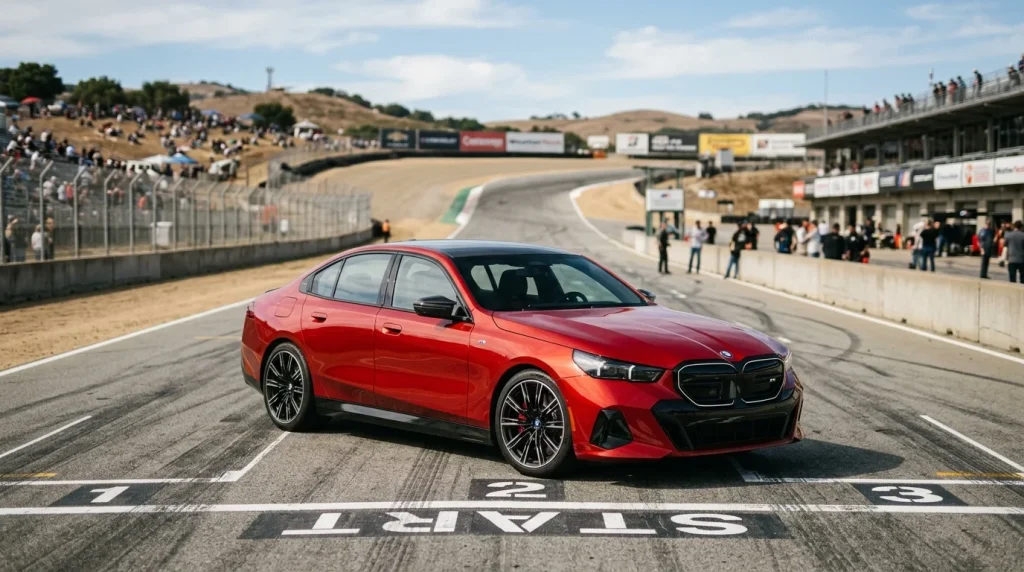
Quick answer: Production of the fully electric 2027 BMW iM3 (internally codenamed ZA0) is scheduled to begin in March 2027, with US showroom availability expected in late 2027. Based on the BMW M Concept Neue Klasse that debuted at the 24 Hours of Le Mans, the electric M3 will feature a high-performance quad-motor electric drivetrain producing a minimum of 650 horsepower and over 800 pound-feet of torque.
Key takeaways:
- Production begins in March 2027 with U.S. deliveries expected by late 2027.
- Features a quad-motor M eDrive powertrain delivering at least 650 horsepower and 800 pound-feet of torque.
- Utilizes a centralized control system called Heart of Joy with latency as low as 1 millisecond.
- Employs an 800-volt charging architecture supporting DC fast charging speeds up to 400 kilowatts.
- Coexists alongside a gas-powered G84 M3 equipped with a mild-hybrid S58 inline-six engine starting in 2028.
Platform and Codenames: The Neue Klasse Era
The upcoming 2027 BMW iM3 represents a massive technological shift for BMW’s high-performance division. Codenamed ZA0, the iM3 is the first dedicated electric M car built on the new Neue Klasse platform. Unlike current BMW electric vehicles that share the flexible CLAR platform with combustion cars, the Neue Klasse platform is built from the ground up for electric drivetrains.
The Neue Klasse platform introduces structural battery packs, an advanced 800-volt electrical architecture, and custom high-output electric motors. This dedicated platform allows BMW M engineers to package heavy batteries lower in the chassis, optimizing the center of gravity and weight distribution. For more context on BMW’s expanding performance lineup, you can explore the iM3 category page.
Neue Klasse Platform and Electric Powertrain
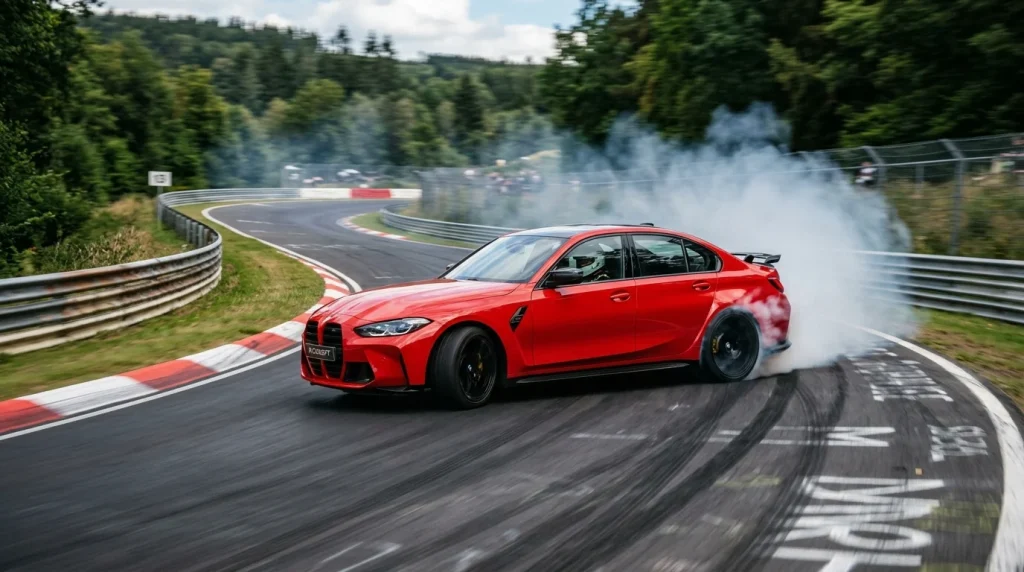
At the core of the ZA0 iM3 is a high-performance quad-motor drivetrain featuring four independent electric motors. BMW M is developing a specialized M eDrive setup that uses excited synchronous motors (EESM) at the rear axle and asynchronous motors (ASM) at the front axle. This layout allows for independent torque vectoring at each wheel, enabling handling characteristics that are impossible to replicate with traditional mechanical differentials.
Horsepower and Torque Figures
According to specifications revealed with the world premiere of the BMW M Concept Neue Klasse, the high-performance electric M3 will produce a minimum of 650 horsepower and over 800 pound-feet (1,100 Newton-meters) of torque. While the Neue Klasse platform is technically capable of supporting quad-motor outputs up to 1,340 horsepower, production versions of the base iM3 are expected to be tuned conservatively to maintain driving dynamics and prevent premature tire wear.
The following table outlines the expected specifications of the upcoming ZA0 iM3 compared to the current gas-powered M3 Competition:
| Feature | 2027 BMW iM3 (ZA0) Expected | Current M3 Competition (G80) |
|---|---|---|
| Drivetrain | Quad-Motor Electric (AWD) | Twin-Turbo 3.0L Inline-Six (RWD/AWD) |
| Output | Minimum 650 hp | 503 hp (523 hp with xDrive) |
| Torque | Over 800 lb-ft (1,100 Nm) | 479 lb-ft (650 Nm) |
| Platform | Neue Klasse (Dedicated EV) | CLAR (Shared EV/ICE) |
| System Voltage | 800-Volt | 12-Volt (with 48V mild-hybrid option) |
| SOP | March 2027 | In production |
The “Heart of Joy” Control System
To manage the enormous torque of four independent electric motors, BMW M developed a centralized vehicle dynamics computer called the Heart of Joy. In traditional performance cars, separate electronic control units (ECUs) manage the powertrain, stability control, braking, and steering. The Heart of Joy consolidates all these functions into a single processor.
This centralized layout reduces processing latency to just 1 millisecond, which is up to ten times faster than current multi-ECU architectures. The system can adjust the torque at each individual wheel almost instantly, correcting slides and maximizing cornering grip before the driver even detects a loss of traction.
Battery Capacity, Range, and Charging Capability
The 2027 BMW iM3 will utilize BMW’s sixth-generation (Gen6) battery technology. Instead of the prismatic cells used in existing BMW electric vehicles, Gen6 batteries use cylindrical cells. BMW claims these new cells deliver 20% higher volumetric energy density and up to 30% more range compared to previous technology.
Based on leaked specifications of the concept car, the iM3 is expected to feature a usable battery capacity of over 100 kilowatt-hours. In terms of driving range, while standard Neue Klasse i3 sedans are targeting over 500 miles on the European WLTP cycle, the performance-tuned iM3 will likely achieve a more conservative estimate of approximately 400 miles (around 320 to 350 EPA-rated miles).
Thanks to the 800-volt architecture, charging speeds will improve dramatically. The iM3 will support DC fast charging up to 400 kilowatts, allowing drivers to recharge the battery from 10% to 80% in approximately 15 to 20 minutes under optimal conditions.
Design and Styling Evolution: Inspired by Le Mans
The visual direction of the 2027 BMW iM3 was previewed by the BMW M Concept Neue Klasse, which celebrated its world premiere at the 24 Hours of Le Mans in June 2026. The concept showcased a muscular stance with flared wheel arches, wide performance tires, and aerodynamic air intakes carved deep into the front bumper.
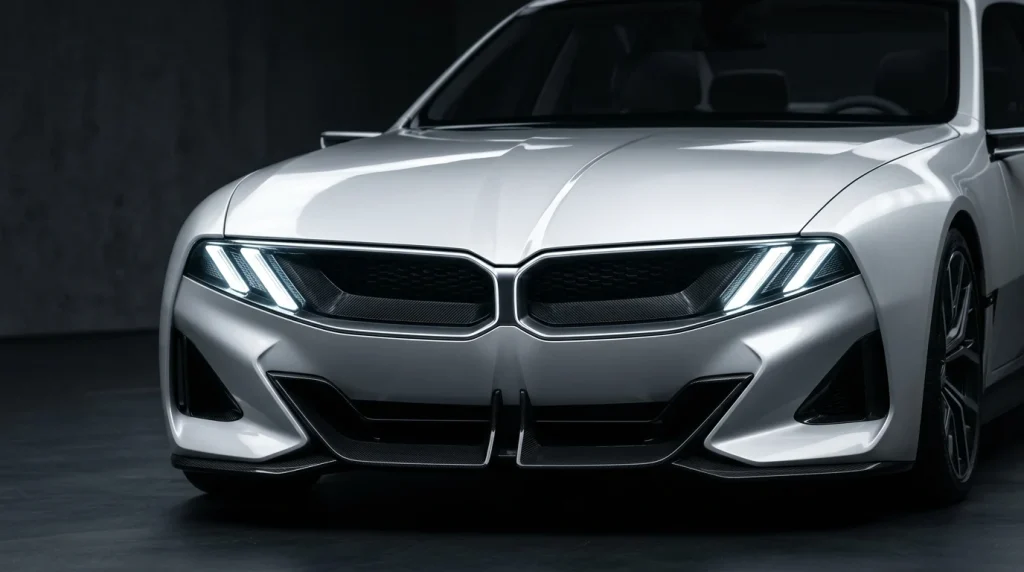
BMW is moving away from the large, vertical kidney grilles featured on the current G80 generation. Instead, the Neue Klasse design language integrates the kidney grilles horizontally across the front end, merging them directly with the slanted dual-LED headlights. The headlights feature two distinctive slanted LED strips per side, creating a sharp, modern appearance.
Analysis: High-performance electric cars often struggle with visual identity due to the lack of traditional exhaust pipes and front grilles. BMW M’s approach with the Neue Klasse concept focuses heavily on aggressive track-focused aerodynamics, ensuring the electric M3 is instantly recognizable as a dedicated performance machine rather than a standard commuter EV.
BMW iM3 vs. Competitors: How It Compares
The upcoming electric M3 will enter a competitive landscape dominated by established electric performance models. Its primary rivals will include the Porsche Taycan Turbo S and the Tesla Model S Plaid.
The following table compares the projected specifications of the iM3 against its main competitors:
| Metric | 2027 BMW iM3 (Projected) | Porsche Taycan Turbo S | Tesla Model S Plaid |
|---|---|---|---|
| Peak Output | ~650 hp to 900+ hp | 938 hp (with overboost) | 1,020 hp |
| 0-60 mph | Under 3.0 seconds | 2.2 seconds | 1.99 seconds |
| Battery Size | Over 100 kWh | 97 kWh (usable) | 95 kWh (usable) |
| Max Charging | 400 kW | 320 kW | 250 kW |
| Base Price | ~$85,000 to $100,000 | $209,000 | $89,990 |
While the Tesla Model S Plaid offers superior straight-line acceleration and raw horsepower at a competitive price, BMW is betting that the iM3 will win over driving enthusiasts through superior handling agility, advanced torque vectoring, and faster charging speeds.
The Coexistence of Gas and Electric M3s
Purists who are not ready to switch to electricity can rest easy. BMW M leadership has confirmed that a combustion-powered M3 will be sold alongside the new electric model.
The next-generation gas M3, codenamed G84, is expected to enter production in July 2028. To comply with strict Euro 7 emissions standards, the G84 M3 will pair a revised version of the S58 3.0-liter twin-turbocharged inline-six engine with a 48-volt mild-hybrid system. This dual-track strategy ensures that BMW M customers can choose the powertrain that best fits their driving preferences.
Expected Price and Release Timeline
While BMW has not announced official pricing, automotive experts project the starting MSRP for the base 2027 BMW iM3 will fall between $85,000 and $100,000. Higher-output track variants will likely exceed the $120,000 mark.
The production timeline is structured as follows:
- June 12, 2026: World premiere of the BMW M Concept Neue Klasse at Le Mans.
- July 2026: public showcase at the Goodwood Festival of Speed.
- July 2026: Standard i3 electric sedan begins production in Europe.
- March 2027: High-performance iM3 (ZA0) begins production.
- Late 2027 / Early 2028: US customer deliveries begin.
- July 2028: Gas-powered hybrid G84 M3 begins production.
Frequently Asked Questions About the 2027 BMW iM3
When will the BMW iM3 be released?
Production is scheduled to begin in March 2027. US market availability will follow shortly after, with initial deliveries expected in late 2027. The companion gas-powered G84 M3 with a hybrid inline-six engine is expected to launch in July 2028.
How much horsepower will the BMW iM3 have?
The base version of the iM3 is expected to deliver a minimum of 650 horsepower and 800 pound-feet of torque from a quad-motor configuration. Higher-output performance variants could push power levels toward the 800 to 900 horsepower range.
Will there still be a gas-powered BMW M3?
Yes. BMW M has confirmed that a combustion-powered M3 (G84) will be sold alongside the electric iM3. The gas M3 is expected in 2028 and will use a mild-hybrid version of the twin-turbo S58 inline-six engine.
How does the iM3 compare to the Tesla Model S Plaid?
The Tesla Model S Plaid offers more raw power (1,020 hp) and faster straight-line acceleration (1.99 seconds 0-60 mph). However, the iM3 is expected to offer superior track handling due to its quad-motor torque vectoring system and faster charging speeds of up to 400 kilowatts.

