

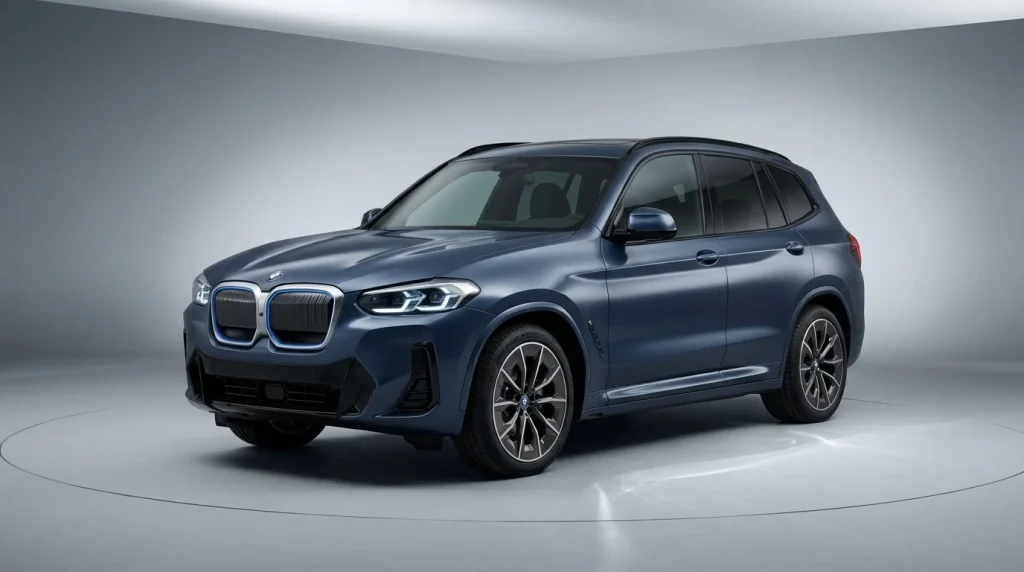
Quick answer: The 2026 BMW iX3 is BMW’s first dedicated electric SUV built on the revolutionary Neue Klasse platform. Launching initially as the iX3 50 xDrive, it delivers 469 horsepower, an estimated EPA range of 400 miles (up to 500 miles WLTP), and supports ultra-fast 400 kW DC charging. Production began in late October 2025 in Hungary, with US deliveries scheduled for summer 2026 at an estimated starting price of $60,000.
Key takeaways:
- Built on a bespoke 800V EV-only platform, discarding the combustion-engine compromises of previous CLAR-based models.
- Features sixth-generation cylindrical battery cells that increase energy density by 20 percent and charging speed by 30 percent.
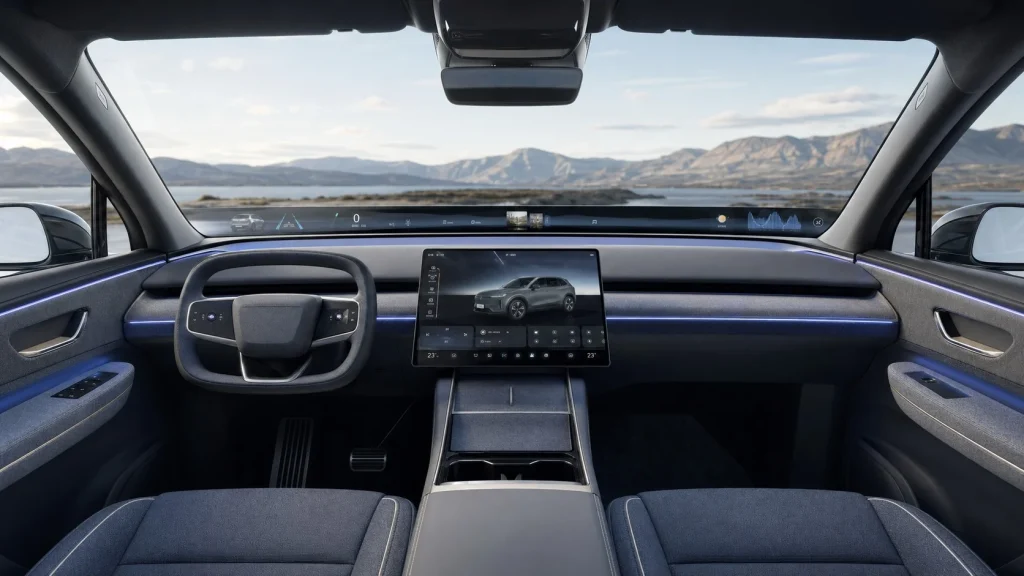
- Introduces the BMW Panoramic Vision display, a 43.3-inch projection spanning the base of the windshield between the A-pillars.
- Powered by the “Heart of Joy” superbrain computer, which centralizes driving dynamics, stability control, and braking.
Neue Klasse Platform: The Ground-Up Rebirth
The 2026 BMW iX3 represents the most substantial engineering shift in BMW’s modern history. Instead of adapting combustion-engine architectures for electric powertrains, the iX3 is the first production model built on the dedicated Neue Klasse EV platform. This architecture focuses on computational optimization, battery integration, and maximizing cabin space.
Series production of the iX3 commenced at Plant Debrecen in Hungary in late October 2025. This production milestone marks the opening of BMW’s first manufacturing facility designed to run entirely on green energy. Readers tracking model releases can monitor updates on the BMW iX3 model page. Details regarding the factory start can be found in the BMW Group Plant Debrecen official announcement.
Gen6 Battery Technology and Cylindrical Cells
The technological core of the Neue Klasse platform is the sixth-generation battery pack. BMW has transitioned from prismatic cells to cylindrical lithium-ion cells. These cells measure either 95 mm or 120 mm in height with a uniform 46 mm diameter. The change results in a 20 percent increase in volumetric energy density, enabling a flatter floor layout and reducing vehicle height. The primary launch battery pack holds a 108.7 kWh usable capacity, providing a range improvement of up to 30 percent compared to fifth-generation packs.
The Heart of Joy and Quad-Superbrain Architecture
Computing power in the iX3 is managed by four high-performance computers termed “superbrains.” Rather than distributing electronic control across dozens of isolated Electronic Control Units (ECUs), the iX3 consolidates vehicle operations. The most critical processor is the “Heart of Joy,” which manages chassis dynamics, power distribution, stability control, and regenerative braking. By executing commands within a centralized unit, data latency is eliminated, allowing the vehicle to adjust suspension dampening and torque vectoring in milliseconds.
2026 BMW iX3 Price, Release Date, and Trim Levels
The iX3 launches as the iX3 50 xDrive. In North America, this vehicle will be sold as a 2027 model year vehicle, with customer deliveries scheduled to begin in summer 2026. The estimated US base price sits at $60,000.
European deliveries are scheduled to begin earlier in March 2026, where prices start at roughly 68,900 Euros. In the United Kingdom, pricing spans from 53,250 to 64,655 Pounds across available configurations. Additional variants, including a single-motor rear-wheel-drive iX3 40 and a performance-oriented iX3 M60, are planned for late 2026 and early 2027.
| Trim / Model | Estimated Base Price (US) | Drivetrain Type | U.S. Market Availability |
|---|---|---|---|
| iX3 40 eDrive | $55,000 | Single-Motor RWD | Early 2027 |
| iX3 50 xDrive | $60,000 | Dual-Motor AWD | Summer 2026 |
| iX3 M60 xDrive | $72,000 | Dual-Motor AWD | Mid-2027 |
Performance, Horsepower, and Charging Capabilities
The 2026 BMW iX3 50 xDrive delivers balanced electric performance, focusing on charging speed and energy efficiency rather than straight-line acceleration metrics.
Dual-Motor All-Wheel Drive Specifications
The iX3 50 xDrive utilizes a dual-motor setup delivering a combined output of 345 kW, which translates to 469 horsepower and 475 lb-ft of torque. Power is divided between two distinct motor types:
- Rear Axle: A 322-hp (240 kW) electrically excited synchronous motor (EESM). This motor avoids the use of rare-earth permanent magnets, using electrical current to magnetize the rotor instead.
- Front Axle: A 165-hp (122 kW) asynchronous motor (ASM) that engages when additional traction is required, running friction-free when disengaged to save energy.
This dual-motor system pushes the SUV from 0 to 62 mph (100 km/h) in 4.9 seconds. The top speed is electronically governed at 130 mph (210 km/h) to protect the battery and electric motors from thermal stress.
800V Architecture and Charging Speeds
With the integration of an 800-volt electrical network, the iX3 supports peak DC fast-charging rates of up to 400 kW. When connected to compatible high-speed chargers, the battery can replenish from 10 to 80 percent capacity in 21 minutes. A brief 10-minute charge adds approximately 231 miles (372 km) of range. For home charging, the vehicle supports 11 kW AC charging as standard, with a 22 kW upgrade available. The vehicle uses the North American Charging Standard (NACS) port natively in the US, with a CCS adapter supplied for older public stations.
Interior Technology and Panoramic Vision
The cabin of the iX3 removes traditional design cues in favor of a minimalist, screen-driven interface that repositions how the driver receives information.
Pillar-to-Pillar Panoramic Vision Display
BMW has replaced the traditional driver instrument cluster with BMW Panoramic Vision. This system projects a 43.3-inch band of high-contrast data directly onto the dark coating at the bottom edge of the windshield. The display runs from A-pillar to A-pillar, placing critical information (vehicle speed, battery status, navigation arrows) directly in the driver’s natural line of sight. Six customizable widgets can be arranged to the right, allowing passengers to view media details or weather alerts.
BMW OS X and Central Touchscreen Interface
Supplementing the projected display is a 17.9-inch central touchscreen. The display features a resolution of 3,340 x 1,440 pixels and is angled 17.5 degrees toward the driver. The infotainment system runs on BMW Operating System X, a custom Google-based software stack. To maintain safety, a permanent bar of climate controls remains visible at the bottom of the touchscreen, and physical buttons on the center console handle volume, gear selection, hazard lights, and parking brake functions.
Dimensions and Utility Specifications
The dedicated EV platform allows the iX3 to offer a spacious interior layout relative to its exterior footprint, maintaining utility without excessive bulk.
| Dimension / Utility | Value in Metric / Imperial Units |
|---|---|
| Overall Length | 4,782 mm (188.3 in) |
| Overall Width | 1,895 mm (74.6 in) |
| Overall Height | 1,635 mm (64.4 in) |
| Wheelbase | 2,897 mm (114.1 in) |
| Drag Coefficient | 0.24 Cd |
| Cargo Capacity (Seats Up) | 520 Liters (18.3 cu ft) |
| Cargo Capacity (Seats Folded) | 1,750 Liters (61.8 cu ft) |
| Front Trunk (Frunk) Volume | 58 Liters (2.0 cu ft) |
| Maximum Towing Capacity | 2,000 kg (4,409 lbs) |
Competitors Compared: How the iX3 Stacks Up
The premium electric SUV segment contains several established competitors. The iX3 differentiates itself primarily through its charging speeds and range efficiency.
| Vehicle Model | Starting Price (US Est.) | Estimated EPA Range | Horsepower Output | Cargo Volume (Behind Rear Seats) |
|---|---|---|---|---|
| 2026 BMW iX3 50 xDrive | $60,000 | 400 miles | 469 hp | 520 Liters |
| 2025 Tesla Model Y LR AWD | $47,990 | 320 miles | 346 hp | 850 Liters |
| 2025 Audi Q6 e-tron | $63,800 | 321 miles | 422 hp | 526 Liters |
| 2025 Mercedes-Benz GLC EV | $59,900 | 295 miles | 381 hp | 520 Liters |
| 2025 Polestar 3 Long Range | $73,400 | 315 miles | 489 hp | 484 Liters |
Pros and Cons of the Neue Klasse SUV
Pros
- Bespoke Neue Klasse electric platform improves cabin packaging.
- Industry-leading estimated EPA range of 400 miles.
- Peak 400 kW charging speed adds over 230 miles in 10 minutes.
- Panoramic Vision display projects data safely without blocking the road.
- Bidirectional charging capability (V2L, V2H, and V2G) comes standard.
- Eco-friendly electrically excited synchronous motors avoid rare-earth magnet mining.
Cons
- Polarizing exterior front-end design elements.
- 400 kW DC fast chargers remain rare in North American charging networks.
- Thick A-pillars restrict corner visibility during city driving.
- Touch-sensitive controls on the steering wheel can be difficult to use.
- Rear cargo volume is smaller than the Tesla Model Y.
Frequently Asked Questions
How far can the 2026 BMW iX3 go on a charge?
The launch version of the 2026 BMW iX3, the 50 xDrive, has an estimated EPA range of 400 miles. Under the European WLTP testing cycle, the vehicle is rated between 421 and 500 miles (679 to 805 km) depending on wheel choices and aerodynamics packages. Real-world testing indicates highway range will hover around 360 miles in typical driving conditions.
How fast does the 2026 BMW iX3 charge?
Using its 800V electrical architecture, the iX3 supports DC fast charging up to 400 kW. Under optimal conditions, the battery charges from 10 to 80 percent in 21 minutes, adding 231 miles (372 km) of range in 10 minutes. Home AC charging takes approximately 10 hours using the standard 11 kW onboard charger.
When will the 2026 BMW iX3 arrive in the US?
Customer deliveries for the 2026 BMW iX3 in the United States are scheduled to begin in summer 2026. The vehicle will be sold under the 2027 model year designation in the North American market. European customers will begin receiving their vehicles earlier in March 2026.
What is BMW Panoramic Vision?
BMW Panoramic Vision is a projected display system that projects essential driving information across a 43.3-inch dark band at the base of the windshield. Running from A-pillar to A-pillar, it projects speed, range, and navigation prompts directly in the driver’s line of sight, replacing the traditional physical instrument cluster behind the steering wheel.

