

Quick answer:
The safest way to get tree sap off your car is by applying 70% or 91% isopropyl alcohol or a specialized commercial bug and tar remover with a soft microfiber cloth. Dampen the cloth with your solvent, let it dwell on the sap for 30 to 60 seconds to break down the sticky resins, and then wipe gently in circular motions. Always rinse and apply wax afterward to restore paint protection.
Key takeaways:
- Isopropyl alcohol (70% or 91%) is the most reliable household solvent for paint-safe sap removal.
- Avoid baking soda pastes and hand sanitizer hacks to protect paint from micro-scratches and chemical films.
- Detailing clay bars effectively lift microscopic sap particles from clear coat pores.
- Solvents strip protective wax, making immediate reapplication of wax or sealant mandatory.
- Never scrape dried sap off dry paint, as it will permanently damage your vehicle clear coat.
Why Tree Sap Damages Car Paint So Quickly
Tree sap is not just a cosmetic nuisance, it is a chemically destructive substance that can permanently damage your vehicle exterior. When fresh sap lands on your car, it is soft and relatively easy to wash away. However, as it sits on the paint surface, it undergoes a chemical hardening process. The organic compounds in plant resins chemically bond with your clear coat, which is the protective top layer of your automotive paint.
According to a Bliss Car Wash study on paint damage, tree sap contains acidic terpene compounds that begin to etch into the polyurethane clear coat within 48 hours, especially under hot weather conditions. UV rays and heat accelerate this chemical bonding process. What starts as a sticky spot can quickly turn into a permanent, etched crater in your clear coat.
The progression of tree sap damage typically follows this timeline under average summer conditions:
| Stage | Timeframe | Damage Level | Removal Difficulty |
|---|---|---|---|
| Fresh resin | 0 to 48 hours | None, clear coat is safe | Very easy with standard car wash |
| Hardening sap | 2 to 7 days | Clear coat etching starts | Moderate, requires mild solvents |
| Baked-on sap | 1+ weeks | Permanent etching likely | Difficult, requires compounding |
If you leave tree sap on your car for weeks under direct sunlight, it will shrink and contract as it dries. This mechanical contraction pulls on the clear coat, leading to localized fracturing, discoloration, and eventual paint peeling. Regular maintenance is key, and if you are interested in overall vehicle exterior care, you can read our latest automotive news guides on autvex.com.
Method 1: Isopropyl Rubbing Alcohol (IPA)
According to the official AutoZone guide on sap removal, isopropyl alcohol is the most versatile and effective household solvent for removing tree sap without damaging modern automotive paint. The alcohol acts as a solvent that quickly dissolves the sticky organic resins without dissolving or softening cured polyurethane clear coats.
What you need:
- Isopropyl rubbing alcohol (70% or 91% concentration)
- Clean microfiber cloths
- Warm water
- High-quality car wax or paint sealant
Step-by-step instructions:
- Wash the vehicle thoroughly with car shampoo to remove loose dirt and dust. This prevents scratching the paint during the rubbing process.
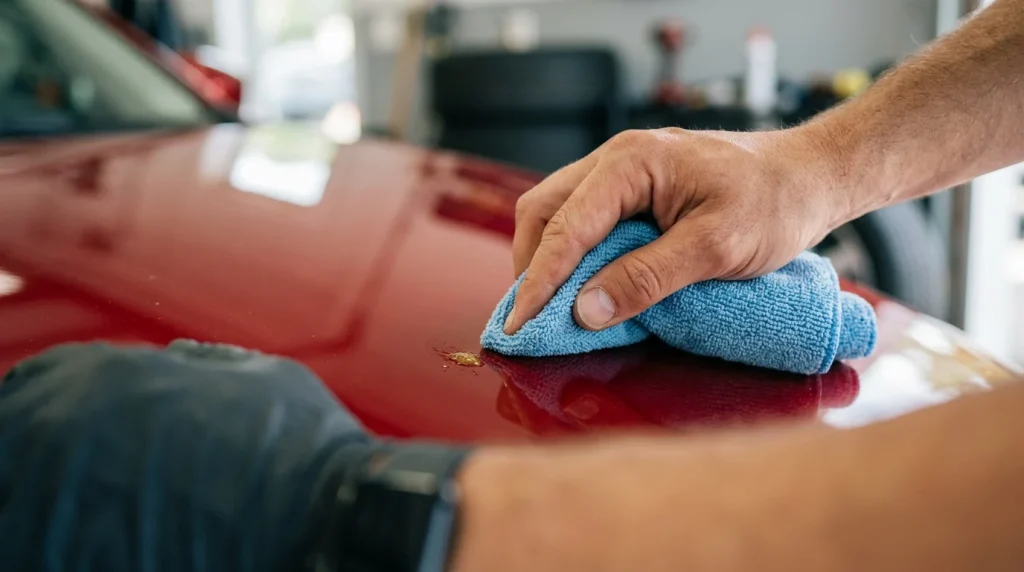
- Pour a small amount of isopropyl alcohol onto a clean microfiber cloth. Do not pour alcohol directly onto the car paint.
- Place the alcohol-soaked cloth directly over the sap spot and hold it there with light pressure for 30 to 60 seconds. This allows the solvent to penetrate and liquefy the hardened sap.
- Gently wipe the area in circular motions using very light pressure. The sap should begin to dissolve and transfer onto the cloth. Repeat the process with a clean section of the cloth if some residue remains.
- Rinse the area thoroughly with clean water to remove any remaining alcohol residue.
- Apply a thin layer of car wax or paint sealant to the treated area. The alcohol will strip away any existing wax protection, leaving the clear coat vulnerable if not resealed.
While 70% or 91% alcohol is safe for modern clear coats, you should avoid using 99% concentration on hot paint surfaces, as the rapid evaporation can cause minor paint swelling or staining on older single-stage paint systems.
Method 2: Commercial Bug and Tar Removers
Dedicated commercial bug and tar removers are specifically formulated to target organic contaminants on automotive surfaces. These products typically utilize safe petroleum distillates and citrus-based solvents to break down plant resins, road tar, and bug splatter quickly.
Top-rated automotive sap removers include:
| Product | Recommended Use | Price Range |
|---|---|---|
| Meguiar’s Heavy Duty Bug & Tar Remover | Multi-surface foam spray | $8 to $12 |
| Stoner Tarminator | Rapid tar and sap solvent | $10 to $15 |
| Goo Gone Automotive | Light to moderate sap spots | $6 to $10 |
| Nanoskin Tree Sap Remover | Heavy, professional-grade buildup | $15 to $20 |
Step-by-step instructions:
- Shake the product well and spray it directly onto the dry sap spot.
- Allow the cleaner to dwell on the surface for 2 to 5 minutes, as recommended by the product instructions. Do not let the product dry completely on the paint.
- Use a clean microfiber cloth to wipe away the softened sap. Avoid heavy scrubbing.
- Wash the area with soapy water to neutralize and remove chemical residues.
- Apply a fresh coat of car wax to restore the paint barrier.
These dedicated automotive solvents are highly effective, but you must avoid spraying them on unpainted textured plastics or rubber weatherstripping, as some petroleum-based formulas can dry out or discolor plastic materials over time.
Method 3: Clay Bar Detailing for Sap Residue
Sometimes, even after solvent treatment, a microscopic film of bonded sap remains on the clear coat, leaving the paint feeling rough. Detailing clay is a synthetic elastic compound designed to pull bonded contaminants out of the microscopic pores of your paint.
Step-by-step instructions:
- Clean the paint area thoroughly with car soap and dry it.
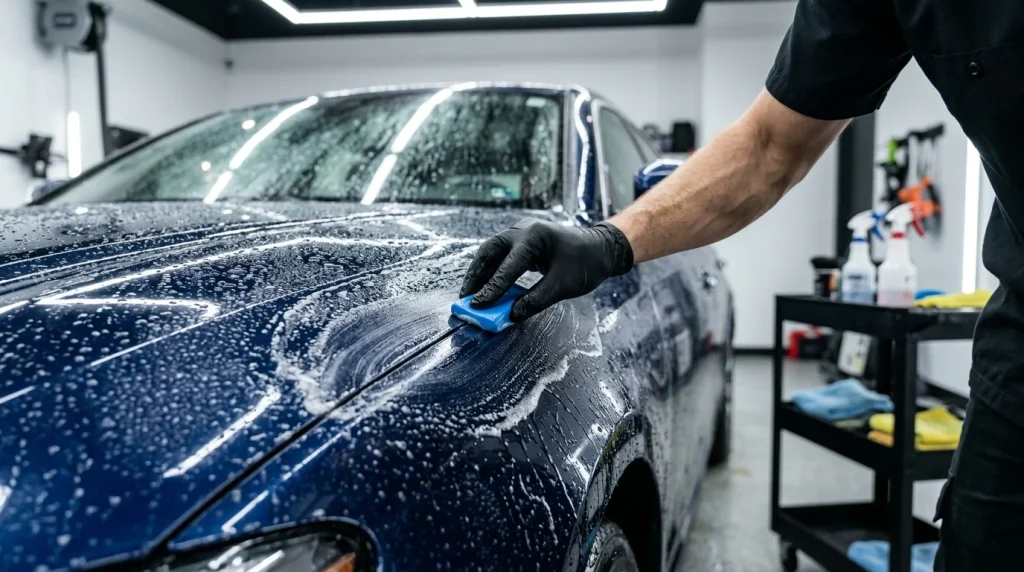
- Spray a generous amount of dedicated clay lubricant or detail spray onto the paint. Never use a clay bar on dry paint, as it will scratch the clear coat.
- Flatten a small piece of detailing clay into a disc.
- Slide the clay back and forth over the lubricated area using light finger pressure. You will feel resistance initially as the clay grabs the sap residue.
- Continue sliding the clay until the surface feels perfectly smooth.
- Wipe the area dry with a microfiber cloth.
- Inspect the clay. If it has picked up dirt or sap, fold the clay inward to expose a fresh, clean surface.
- Reapply your choice of wax or sealant.
According to the Detail King professional guide, detailing clay is an essential step to achieve a completely smooth, contaminant-free surface before applying ceramic coatings or protective films. If you are protecting a custom wrap, note that cleaning methods differ, you can find details in our guide on how long vinyl wraps last on cars.
Method 4: WD-40 Multi-Use Product
According to a McCarthy Collision Centers guide, WD-40 can serve as an effective emergency sap remover. Its light petroleum distillates act as organic solvents that quickly penetrate and soften sticky pine sap.
Step-by-step instructions:
- Spray a small amount of WD-40 directly onto the tree sap spot.
- Let it sit for 5 minutes to allow the lubricants to loosen the bond.
- For dry, baked-on sap, place a microfiber cloth soaked in warm water over the WD-40 treated area to trap heat and moisture.
- Gently wipe the sap away with a clean cloth.
- Wash the treated paint area immediately with car wash soap and warm water. WD-40 leaves an oily, non-evaporating petroleum film that can attract dirt and dull the clear coat if left on the surface.
- Apply a fresh layer of protective wax.
WD-40 is a useful alternative when dedicated automotive cleaners or rubbing alcohol are not immediately available. However, because it is highly effective at stripping paint oils, immediate washing and waxing are mandatory steps.
Why You Should Shun Baking Soda and Hand Sanitizer Hacks
Social media platforms frequently promote quick-fix home remedies for tree sap removal, such as baking soda paste or hand sanitizer. However, professional car detailers strongly advise against using these household products.
According to a formal Autoglym paint safety warning, these online hacks pose significant risks to your vehicle clear coat. Baking soda (sodium bicarbonate) is a crystalline compound. When mixed with water to form a paste and rubbed onto paint, the undissolved crystals act as a coarse abrasive. This creates micro-scratches and swirl marks that dull the clear coat, requiring professional polishing to repair.
Hand sanitizer is also problematic. While it contains alcohol, it is also formulated with gelling agents, moisturizers like glycerin, and synthetic fragrances. When applied to car paint, the alcohol evaporates, leaving behind a sticky chemical film. Under hot sunlight, these chemical additives can react with the clear coat, causing permanent discoloration or chemical staining. It is always safer to use pure isopropyl alcohol diluted with water rather than cosmetic gels.
Surface-Specific Advice: Paint vs. Glass vs. Trim
The safety of a sap removal method depends heavily on the surface material you are cleaning. A technique that is safe for glass can easily ruin a plastic trim piece.
- Automotive Paint: Requires the gentlest care. Use only microfiber cloths and approved chemical solvents. Never use razor blades, abrasive sponges, or household kitchen scrubbers on paint, as these will cause deep scratches.
- Car Windows and Glass: Glass is much harder than clear coat and can withstand more aggressive cleaning. You can use glass cleaners, isopropyl alcohol, or even fine 0000 steel wool to remove tough sap. A glass-safe razor blade held at a 45-degree angle can also scrape away dried sap safely.
- Black Plastic and Rubber Trim: Solvents like isopropyl alcohol and petroleum-based tar removers can extract essential oils from rubber seals and unpainted plastics, causing them to dry out, turn white, or warp. Keep solvent contact under 30 seconds, wash the area immediately, and apply a silicone-based trim dressing to restore hydration.
| Surface | Allowed Solvents | Safe Agitator | Hazards to Avoid |
|---|---|---|---|
| Paint | Rubbing alcohol, commercial remover | Microfiber cloth, detailing clay | Razor blades, baking soda, kitchen sponges |
| Glass | Alcohol, acetone, glass cleaner | 0000 steel wool, razor blade (45 degrees) | Heavy pressure on tinted film |
| Plastic Trim | Mild car wash soap, very quick alcohol wipe | Microfiber cloth | Extended solvent contact, petroleum distillates |
How to Fix Paint Etching and Stain Damage
If tree sap has been left on your car paint for weeks, removing the physical sap might reveal a circular dull spot or a textured ring. This is clear coat etching, which means the acid in the sap has eaten into the top layer of paint.
To repair light to moderate clear coat etching, follow these professional detailing steps:
- Wash and dry the vehicle, then use a clay bar to ensure the surface is completely clean.
- Apply a small amount of dual-action automotive polishing compound to a foam polishing pad.
- Work the polish into the etched spot using a dual-action machine polisher or by hand using firm, even pressure in overlapping motions.
- Wipe the residue away with a clean microfiber cloth and inspect the area.
- If the etching is gone, apply a protective wax or ceramic coating.
According to a Car Crafters collision repair guide, spot paint correction for sap etching costs between $150 and $300 at a professional detailing shop. If the sap has sat long enough to crack the clear coat and reach the base paint layer, the paint cannot be polished out and will require professional panel sanding and refinishing.
If you want to maintain a clean cabin environment along with a pristine exterior, you can follow our guide to remove smoke odors from your cabin to keep your interior smelling fresh.
Preventing Future Tree Sap Damage
The absolute best way to protect your car from tree sap is to prevent direct contact between the sap and your paint.
- Smart Parking: Avoid parking under high-risk sap-producing trees, particularly pines, maples, birches, and oaks, during the spring and summer seasons. If shade is necessary, seek out concrete carports or garages.
- Sacrificial Barriers: Keep your vehicle protected with a durable barrier. Traditional carnauba wax provides 1 to 3 months of protection, synthetic paint sealants offer 4 to 6 months, and professional ceramic coatings can protect paint for 2 to 5 years. Sap bonds to these coatings instead of your clear coat, making it much easier to wash off.
- Weekly Washing: During peak sap season, wash your car weekly. Fresh sap is water-soluble and can be removed with standard car soap and warm water before it has time to cure and bond with the clear coat.
Frequently Asked Questions
Does tree sap permanently damage car paint?
Yes, tree sap can cause permanent damage to car paint if it is left untreated. Fresh sap is soft, but it chemically cures over time and bonds with the clear coat. Under heat and sun, the acidic resins etch into the paint, creating dull spots, physical craters, and cracking that require paint correction.
Can I use nail polish remover to remove tree sap?
Nail polish remover is not recommended for tree sap removal on car paint. Most nail polish removers contain acetone, which is a highly aggressive solvent that can dissolve or soften automotive clear coats and plastics. Isopropyl rubbing alcohol is a much safer alternative.
How long can tree sap stay on a car before causing damage?
Tree sap can begin etching clear coats within 48 hours to a week depending on temperature. In hot, sunny climates, the bonding process occurs rapidly, and clear coat damage can be seen in just 2 days. In cooler weather, you may have up to a week.
Will a car wash remove tree sap?
A standard car wash will not remove hardened tree sap. Car soap and water pressure are not formulated to break down cured plant resins. You must use a chemical solvent like isopropyl rubbing alcohol or a commercial tar remover to dissolve the sap before washing.
What is the best commercial tree sap remover?
Professional detailers highly recommend Meguiar’s Heavy Duty Bug & Tar Remover for general maintenance and Stoner Tarminator for fast removal of heavy sap spots. For persistent residues, a detailing clay bar used with clay lubricant is highly effective.

