


Quick answer: Placing an infant car seat on the top seat or handle of a shopping cart is extremely dangerous and a leading cause of cart tip-overs. The only physical way to transport a car seat inside a shopping cart is to place it completely flat inside the large main basket, facing you, with the harness buckled. However, because this leaves almost no room for groceries and still poses minor risks, safety experts strongly recommend safer alternatives like babywearing or using a compatible stroller.
Key takeaways:
- Snapping a car seat onto the top toddler seat of a shopping cart raises the center of gravity, creating a severe tip-over risk.
- A clicking sound when placing a car seat on a cart is a false indicator of security; carts do not lock or anchor car seats.
- Placing the car seat flat inside the main cart basket is the only physical cart method allowed, but it eliminates grocery storage.
- Babywearing, using a dedicated stroller travel system, or curbside grocery pickup are the safest alternatives for parents.
- Babies can ride directly in the built-in shopping cart seat only after they sit unassisted, usually around 6 to 8 months.
The Hidden Dangers of Snapping a Car Seat onto a Shopping Cart
Many parents instinctively lift an infant carrier and snap it onto the top seating area of a grocery cart. This practice creates a critical safety hazard. Placing a heavy infant carrier high up on a narrow, lightweight shopping cart raises the vehicle’s center of gravity. This makes the entire setup top-heavy and highly prone to tipping over.
A minor bump, a slight pull from a sibling, or navigating a sloped parking lot pavement can cause the cart to fall sideways. Because infant car seats are heavy, a tip-over can lead to severe head and neck injuries for the baby.
The mechanism that connects a car seat to its base or a stroller is not compatible with shopping carts. The wire structure of a cart is the wrong thickness and shape, meaning the seat cannot lock. The plastic latches under the car seat may grab the metal wire, creating a clicking sound, but they do not secure the seat against a sudden jolt.
Analysis: The illusion of security is what makes this practice so common. The click that parents hear is simply plastic meeting metal wire, not a locked mechanism. Car seat manufacturers explicitly state in their instruction manuals that carriers must never be clicked onto shopping carts.
Official Warnings from the CPSC and AAP
Public health and safety organizations have long warned against combining infant car seats and shopping carts.
According to the U.S. Consumer Product Safety Commission (CPSC) Publication 5075, falls from shopping carts are a leading cause of head injuries to young children, with thousands of injuries reported annually. The CPSC safety alert explicitly warns parents not to place a personal infant carrier or car seat in the cart seat or basket.
Similarly, the American Academy of Pediatrics (AAP) Shopping Cart Safety for Children guidelines state that parents should not snap an infant car safety seat onto the built-in cart seat, as this makes the cart highly unstable. The AAP notes that more than 20,000 children are treated in U.S. emergency rooms each year for shopping cart-related injuries, with falls being the primary cause.
Note: These safety guidelines are updated periodically based on pediatric emergency room data. The recommendation to avoid placing car seats on the upper portion of carts remains a consistent standard across all major child safety groups.
The Basket-Only Method: Steps and Limitations
If you have no other options and must use a shopping cart with a car seat, the only physical placement that reduces tip-over risks is placing the carrier completely inside the large main basket.
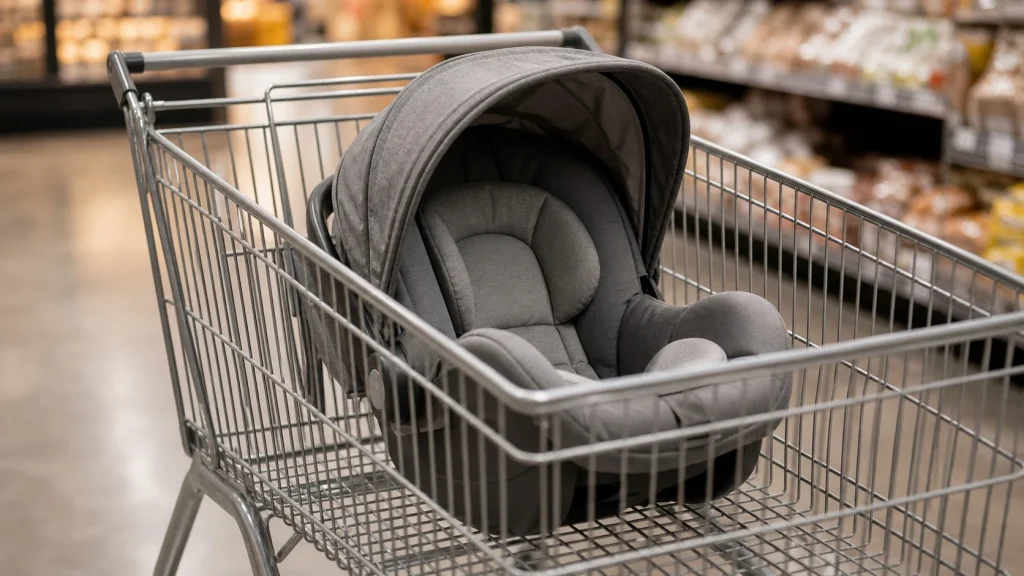
To use this method, you must follow these steps:
- Clear the Basket: Ensure the main basket is entirely empty so the car seat can sit flat.
- Place the Seat Flat: Lower the carrier directly onto the bottom wire grid of the basket. Do not let it rest on the edges or the rim.
- Face the Parent: Orient the car seat so the baby faces you as you push the cart.
- Keep Harness Secure: Keep the baby fully buckled with the 5-point harness snug and adjusted correctly.
While this method lowers the center of gravity and prevents the carrier from falling off the cart, it has severe practical limitations. The car seat occupies nearly the entire main basket, leaving no room for actual groceries. Furthermore, placing heavy items next to the carrier poses a risk of objects falling onto the baby.
Safe Alternatives for Grocery Shopping with a Newborn
To avoid the risks and space limitations of using a shopping cart, parents can use several widely recommended alternatives:

Babywearing (Wraps and Soft Carriers)
Using a wrap, sling, or soft structured carrier is highly recommended by child passenger safety technicians. It keeps the newborn secure against your chest, naturally regulates their body temperature, and leaves both of your hands free. Crucially, it leaves the entire shopping cart open for groceries.
Travel System Strollers
If you are shopping with a partner, one parent can push the baby in a dedicated stroller (or snap the carrier into its compatible stroller frame) while the other parent pushes the shopping cart. If shopping alone, you can push the stroller and pull a lightweight rolling shopping basket behind you.
Curbside Pickup and Delivery
For large grocery trips, the most efficient and risk-free option is ordering online. Many major retailers allow you to drive up and have store employees load the groceries directly into your vehicle’s trunk. This keeps the baby safely buckled in their car seat inside the vehicle at all times, avoiding the store environment entirely.
FAQs About Shopping Cart and Car Seat Safety
Can you click a car seat onto the toddler seat of a shopping cart?
No. You should never click or snap an infant car seat onto the toddler seat or handle of a shopping cart. The locking mechanisms on car seats are designed to secure only into compatible vehicle bases or stroller frames, not the wire or plastic grids of shopping carts. Doing so makes the cart top-heavy and increases the risk of a catastrophic tip-over.
When can a baby sit directly in the shopping cart seat?
A baby can sit in the built-in toddler seat of a shopping cart only when they can sit up completely unassisted and have developed strong head and neck control. This developmental milestone typically occurs between 6 and 8 months of age. When placing them in the seat, always use the cart’s safety straps to secure them.
Are shopping cart hammocks safe for newborns?
While some commercial shopping cart hammocks claim safety compliance and are designed to hold infant carriers, pediatric safety experts recommend babywearing or strollers as safer, less risk-prone options. Standard shopping carts do not have certified attachment points for aftermarket hammocks, which can lead to installation errors or product failures.
For more safety tips and updates on family vehicle safety, you can browse the latest articles on Autvex News.

