

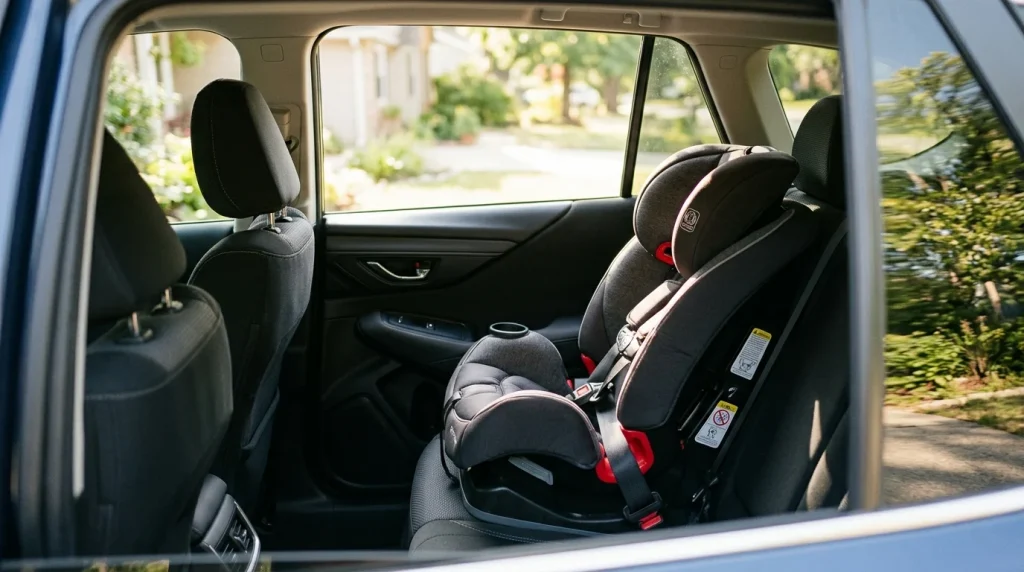
Quick answer: Yes, leaving your children in the car can be illegal, depending on your state. Currently, 20 U.S. states have specific statutes making it illegal to leave a child unattended in a motor vehicle, with strict age limits and time thresholds. In the other 30 states, you can still face severe child endangerment charges, neglect prosecutions, or felony charges if a child is left in a vehicle under dangerous conditions. The National Highway Traffic Safety Administration (NHTSA) strongly warns that a car’s interior temperature can rise 50 degrees Fahrenheit above the outdoor temperature in minutes, making any unsupervised stay highly dangerous.
Key takeaways:
- Only 20 U.S. states have specific unattended-child vehicle laws, but all 50 states can prosecute caregivers under general child endangerment statutes.
- State laws define strict age cutoffs (typically under 6 to 12 years old) and supervision requirements (caregivers must be 12 to 16 years old).
- In completed 2025 statistics, between 33 and 37 children died from vehicular heatstroke in the U.S., showing the ongoing severity of the risk.
- A child’s core body temperature rises three to five times faster than an adult’s, leading to rapid heatstroke and potential organ failure.
- General laws protect bystanders who break car windows to rescue distressed children, provided they contact emergency services first.
U.S. State Laws on Leaving Children in Vehicles
Twenty states have enacted specific statutes that prohibit leaving a child unattended in a vehicle under varying age, time, and environmental conditions. Some of these laws are risk-based, meaning they trigger immediately if the environmental conditions pose a threat (such as extreme heat or cold) or if the car is running with the keys in the ignition. Others enforce a strict time limit, making it a misdemeanor to leave a child unattended for even a few minutes.
The table below breaks down the key provisions of selected state statutes, including the maximum age of the protected child, the minimum age required for an supervising passenger, and the time allowed before an offense occurs.
| State | Statutory Reference | Covered Child Age | Time Allowed | Minimum Supervisor Age |
|---|---|---|---|---|
| California | California Vehicle Code Section 15620 | 6 and younger | Risk-based (civil fine) | 12 years or older |
| Texas | Texas Penal Code Section 22.10 | 7 and younger | Less than 5 minutes | 14 years or older |
| Florida | Florida Statutes Section 316.6135 | Under 6 years old | 15 minutes max (0 min if running) | 15 years or older |
| Illinois | Illinois Compiled Statutes 720 ILCS 5/12C-5 | 6 and younger | 10 minutes max | 14 years or older |
| Connecticut | Connecticut General Statutes Section 53-21a | Under 12 years old | Risk-based | 12 years or older |
| Michigan | Michigan Compiled Laws Section 750.135a | Under 6 years old | Risk-based | 13 years or older |
| Louisiana | Louisiana Revised Statutes Section 32:295.3 | Under 6 years old | Risk-based | 10 years or older |
| Maryland | Maryland Family Law Section 5-801 | Under 8 years old | Risk-based | 13 years or older |
| Utah | Utah Code Section 76-10-2202 | Under 9 years old | Risk-based | 9 years or older |
In addition to the states listed above, the remaining states with specific laws addressing unattended children in vehicles include Alabama, Hawaii, Kentucky, Missouri, Nebraska, Nevada, Oklahoma, Pennsylvania, Rhode Island, Tennessee, and Wisconsin.
Note: Many of these state laws contain exceptions for situations where the child is supervised by an older minor. For instance, California permits leaving a child under the supervision of someone who is at least 12 years old, while Texas and Illinois raise that requirement to 14 years old.
What If Your State Has No Specific Law?
In the 30 states without explicit unattended-child vehicle statutes, authorities rely on broader child endangerment, neglect, or abuse laws to prosecute caregivers. This means that even if your state is not among the 20 with a dedicated law, you are not exempt from legal action.
Prosecutors frequently file child endangerment charges when a child is left in an environment that poses a significant risk to their life or health. Leaving a child in a vehicle on a warm day, or leaving the vehicle running in a public area, constitutes reckless conduct under most state penal codes.
For example, Washington state does not have a broad law banning all unattended child situations in parked vehicles, but it does enforce Washington Revised Code Section 46.61.685, which makes it a misdemeanor to leave a child under 16 unattended in a public place with the engine running. Furthermore, Washington Revised Code Section 9.91.060 imposes a gross misdemeanor charge on any caregiver who leaves a child under 12 unattended in a parked car while entering a tavern or an establishment that dispenses alcohol.
Vehicular Heatstroke: Why Hot Cars Are Deadly
The primary reason these laws exist is the rapid and deadly greenhouse effect that occurs inside a parked vehicle. A car’s glass windows allow solar radiation to enter, which is then absorbed by the dashboard, seats, and interior trim. This heat becomes trapped inside the sealed cabin.
The physical heat buildup occurs much faster than most people realize:
- Inside temperatures can climb 19 degrees Fahrenheit in just 10 minutes.
- Within 30 minutes, the interior temperature can rise by 34 degrees Fahrenheit.
- After one hour, the temperature inside a car can be 43 to 50 degrees Fahrenheit hotter than the outside air.
- Even on a relatively mild 70-degree day, the interior of a vehicle can easily reach 113 degrees Fahrenheit in 30 minutes.
From a physiological standpoint, children are highly vulnerable to these temperature spikes. A child’s body temperature rises three to five times faster than an adult’s because children have a larger surface-area-to-mass ratio and their thermoregulatory systems are not fully developed. When a child’s core body temperature reaches 104 degrees Fahrenheit, major organs begin to shut down, leading to heatstroke. A core temperature of 107 degrees Fahrenheit is typically fatal.
Note: Bypassing these safety risks by parking in the shade or leaving the windows cracked is ineffective. Tests conducted by researchers have shown that cracking the windows open by a few inches does not reduce the rate of temperature rise, nor does it lower the maximum temperature reached inside the vehicle.
U.S. Hot Car Death Statistics (Up to 2026)
Hot car deaths represent a significant and preventable public safety issue in the United States. Data tracked by independent organizations highlights the persistent danger of leaving children unattended.
Two primary organizations compile these statistics: NoHeatStroke.org (managed by Jan Null at San Jose State University) and Kids and Car Safety. Because they use slightly different criteria for tracking, their reported annual totals can vary by a few cases.
The table below presents the annual child hot car deaths in the United States over recent years, illustrating the scope of the problem:
| Year | Deaths (NoHeatStroke.org Database) | Deaths (Kids and Car Safety Database) | Key Circumstance Notes |
|---|---|---|---|
| 2026 | 9 deaths (as of June 30) | 8 deaths (as of June 30) | July and August are historically the deadliest months. |
| 2025 | 33 deaths | 37 deaths | Methodological differences account for the database variance. |
| 2024 | 39 deaths | 42 deaths | Represents a 35 percent increase from the previous year. |
| 2023 | 29 deaths | 29 deaths | Slightly below the long-term national average. |
| 2019 | 53 deaths | 54 deaths | Tied for the highest record of annual fatalities. |
| 2018 | 53 deaths | 54 deaths | Tied for the highest record of annual fatalities. |
| Average | 37 deaths per year | 38 deaths per year | Long-term average tracked since 1998. |
According to the historical Kids and Car Safety Database, more than 1,000 children have died in hot cars in the United States since 1990. The data also reveals three primary scenarios behind these tragedies:
- Caregiver Forgets Child (52 percent of cases): The parent or caregiver undergoes a disruption in routine, and their cognitive autopilot causes them to forget the child is in the back seat.
- Child Gains Access (25 percent of cases): A child climbs into an unlocked parked vehicle to play or retrieve a toy and becomes trapped inside.
- Knowingly Left Behind (20 percent of cases): A caregiver leaves the child in the vehicle intentionally, often underestimating the speed of heat buildup.
Criminal and Civil Penalties for Caregivers
The legal consequences of leaving a child unattended can destroy a caregiver’s life, even if no physical injury occurs.
If a child is left unattended but suffers no harm, the caregiver can still be charged with a misdemeanor. For example, in Texas, leaving a child under 7 unattended for more than 5 minutes is a Class C misdemeanor carrying a fine of up to $500.
If the child suffers physical injury or dies, the charges escalate to severe felonies. Prosecutors can charge the caregiver with felony child endangerment, child abuse, involuntary manslaughter, or negligent homicide. A conviction can result in prison sentences ranging from 2 to 20 years, depending on the state’s penal code.
Beyond criminal prosecution, caregivers face severe civil and administrative impacts:
- Child Protective Services (CPS) Investigations: Any charge triggers an immediate investigation, which can lead to the temporary or permanent loss of child custody.
- Professional License Revocation: Teachers, daycare workers, and other professionals often lose their licenses and livelihoods following child endangerment charges.
- Civil Lawsuits: Caregivers can face wrongful death lawsuits from other family members.
What to Do If You See a Child in a Hot Car
Bystanders play a vital role in preventing hot car deaths. If you see a child unattended in a parked vehicle, you must take immediate action.
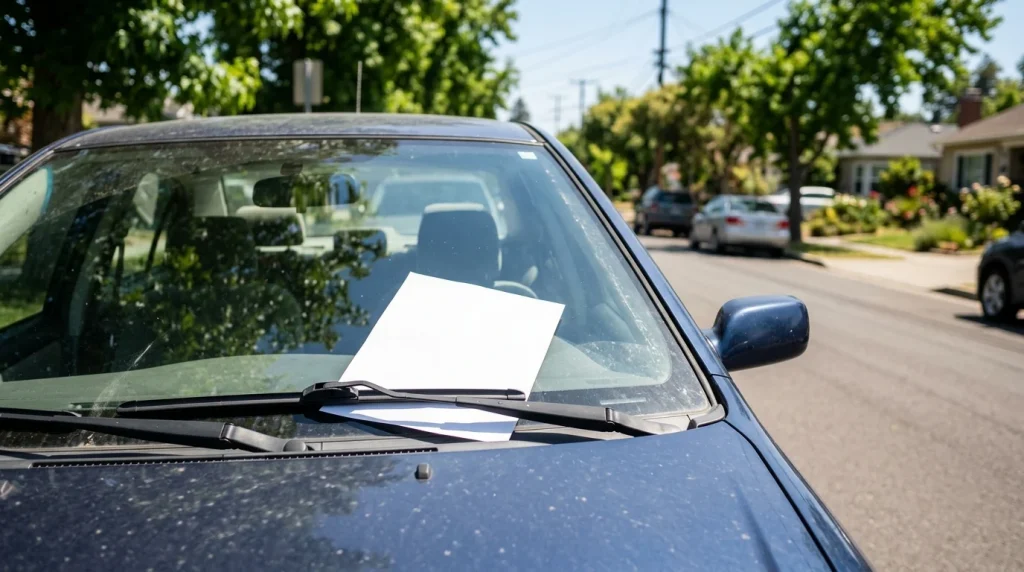
First, check the child’s responsiveness. If the child appears active, responsive, and is not showing signs of distress, attempt to locate the parent by having the license plate paged at nearby stores. Have someone stay with the vehicle to monitor the child’s condition.
If the child is unresponsive or shows signs of heat distress, call 911 immediately. Signs of emergency distress include:
- Red, hot, flushed, or dry skin.
- Rapid breathing or a racing pulse.
- Extreme lethargy, limpness, or confusion.
- Vomiting or seizures.
- Complete unresponsiveness.
If the child is in distress and emergency services have not arrived, you should remove the child from the vehicle. Break the window furthest from the child using a tool or heavy object, open the door, and move the child to an air-conditioned space. Dampen their skin with cool water while waiting for the ambulance.
Most states protect rescuers under Good Samaritan laws. These statutes shield bystanders from civil lawsuits or criminal property damage charges if they act in good faith to rescue a child in imminent danger. However, you must follow the correct protocol, which typically requires calling 911 before attempting entry and remaining with the child until authorities arrive.
Practical Strategies to Prevent Forgetting Your Child
Because the human brain can slip into autopilot during routine drives, caregivers must establish deliberate habits to prevent forgetting a child in the backseat. The NHTSA recommends several easy prevention steps:
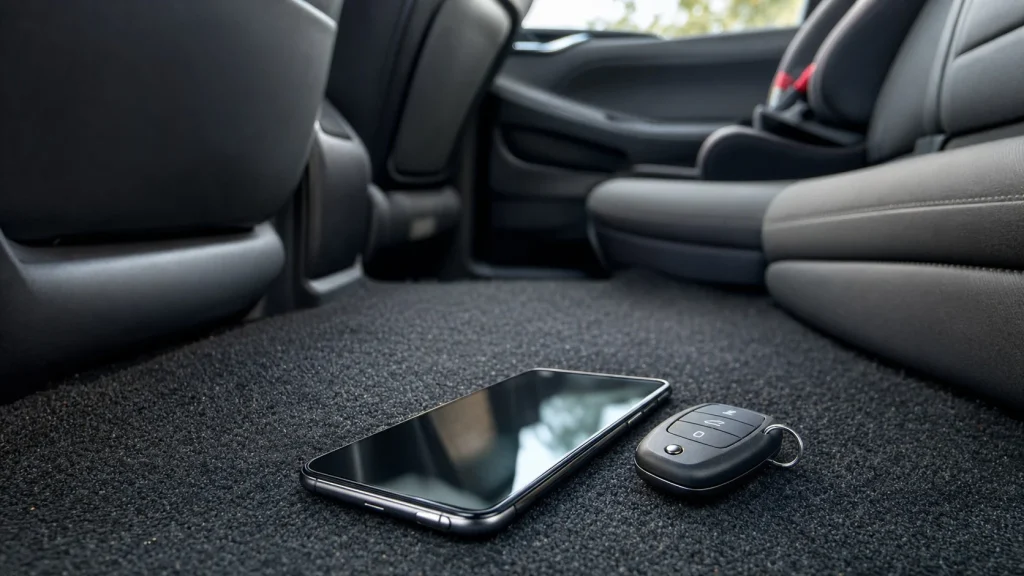
- Look Before You Lock: Make it an absolute habit to open the back door of your vehicle every time you park, even if you think you are driving alone.
- Keep a Left-Behind Object: Place a personal item that you must take with you (such as your phone, purse, employee badge, or left shoe) in the backseat. This forces you to open the rear door at your destination.
- Use a Visual Cue: Keep a stuffed animal in the child’s car seat. When the child is buckled in, place the stuffed animal on the front passenger seat as a visual reminder.
- Lock Parked Cars: Always lock your vehicle’s doors when it is parked in your driveway or garage. Store the keys out of reach of children to prevent them from climbing inside to play.
- Set Up a Caregiver Check-In: Ask your childcare provider to call you immediately if your child does not arrive at their scheduled time.
Frequently Asked Questions
Can I leave my child in the car for just a minute?
No, you should never leave a child alone in a vehicle, even for a minute. The physical heat inside a car rises too quickly, and a child can suffer heatstroke within minutes. Depending on the state, leaving a child unattended for any period can trigger immediate child endangerment charges.
At what age can kids legally stay in the car alone?
Legally, age limits range from 6 to 12 years old depending on the state. For example, California prohibits leaving a child under 7 unattended. In states without a specific age statute, parents can still face criminal charges if police determine the child was not mature enough to handle emergencies or if the environment was unsafe.
What if I leave the car running with the AC on?
Leaving the air conditioning running does not eliminate the risk. The vehicle’s engine can stall, the AC system can blow hot air, or the child can shift the gear, causing the vehicle to move. In states like Washington, leaving a child under 16 unattended with the engine running is explicitly illegal under RCW 46.61.685.
Can I be arrested for leaving my child in the car?
Yes. Law enforcement officers can arrest you for child endangerment, child neglect, or violating specific state vehicle codes. If the child is injured or dies, you will face felony charges, including involuntary manslaughter.
Do Good Samaritan laws protect me if I break a window to save a child?
Yes, most U.S. states protect bystanders from civil liability and criminal property damage charges if they break a window to rescue a child who is in imminent danger. You should call 911 first, confirm the doors are locked, break the window furthest from the child, and stay with the child until first responders arrive.
Note: The legal and medical information in this article is for educational purposes only and does not constitute formal legal advice or professional medical guidelines. For specific legal inquiries regarding unattended children in motor vehicles in your local jurisdiction, consult a qualified attorney or local law enforcement authorities.
For more information on vehicle safety and legal compliance, explore the Autvex News Hub.

