

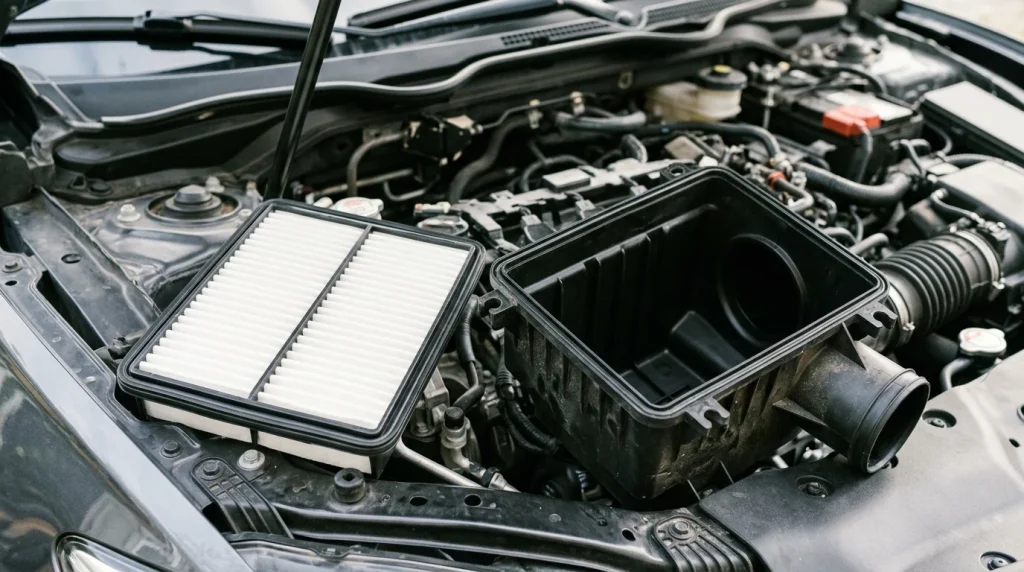
Quick answer: An engine air filter prevents dust, dirt, sand, and road debris from entering your car’s engine, ensuring only clean air reaches the combustion chambers. By trapping these abrasive particles, the filter protects critical internal components like cylinders and pistons from premature wear. While a clean air filter does not improve fuel economy in modern fuel-injected vehicles, it significantly restores acceleration performance and maintains optimal engine efficiency.
Key takeaways:
- The engine air filter acts as a barrier, trapping particles down to 5-10 microns to prevent internal engine wear.
- Replacing a clogged air filter improves vehicle acceleration by 6% to 11% under wide-open throttle conditions.
- Modern fuel-injected engines automatically adjust the fuel mixture, meaning a dirty filter does not reduce gas mileage.
- Typical replacement intervals range from 15,000 to 30,000 miles, depending on driving habits and environmental dust levels.
How an Engine Air Filter Works
To generate power, an internal combustion engine requires a precise mixture of fuel and air. A typical vehicle draws in approximately 10,000 gallons of air for every single gallon of fuel burned. Positioned at the entry point of the engine’s intake system, the air filter acts as the primary shield.
As outside air is drawn into the intake duct, it must pass through the pleated filter media. Most factory filters use media made of resin-treated paper or synthetic fibers, folded into pleats to maximize surface area. This structure captures microparticles before the air flows through the throttle body and intake manifold into the combustion chambers.
Pleated Media and Micron Ratings
The effectiveness of an air filter is determined by its ability to trap small particles without excessively restricting airflow. High-quality engine air filters are rated to trap particulates as small as 5 to 10 microns. For comparison, a single grain of sand is about 90 microns, and a human hair is roughly 70 microns wide.
Pleated paper or cotton gauze filters create a complex path that physically blocks particles while allowing air molecules to slip through. Over time, as more dust accumulates on the surface of the filter, it forms a secondary barrier that can actually improve filtration efficiency, though it eventually restricts the total volume of air the engine can draw.
Engine Air Filter vs. Cabin Air Filter
Many drivers confuse the engine air filter with the cabin air filter. While both clean the air, they serve completely different components within the vehicle.
| Feature | Engine Air Filter | Cabin Air Filter |
|---|---|---|
| Primary Purpose | Protects internal engine parts | Cleans air inside the passenger cabin |
| Installation Location | Under the hood, inside the air intake box | Behind the glove compartment or under the dash |
| Media Thickness | Thicker pleated paper or synthetic fibers | Thinner paper, often infused with activated carbon |
| Maintenance Interval | Every 15,000 to 30,000 miles | Every 12,000 to 15,000 miles |
| Impact of Failure | Sluggish acceleration, engine wear, check engine light | Musty interior smells, weak HVAC airflow |
If the cabin air filter becomes clogged, passengers may notice weak air conditioning flow or musty odors. However, a clogged engine air filter directly impairs the engine’s ability to breathe, resulting in performance issues and potential mechanical damage.
The Real Impact of a Clean Air Filter
Maintaining a clean air filter is essential for preserving the performance and longevity of your vehicle.
Protecting Internal Engine Components
The clearances between an engine’s cylinder walls, pistons, and piston rings are microscopic. If abrasive dust or silica particles bypass the air filter, they act like sandpaper inside the cylinders. This abrasive wear scores the metal surfaces, leading to loss of compression, increased oil consumption, and eventual engine failure.
According to Ford’s official maintenance guidance, the engine air filter is the vehicle’s first line of defense, ensuring it operates with maximum efficiency and longevity. This protection is especially critical for vehicles equipped with turbochargers, where high-speed compressor wheels can be severely damaged by even minor debris.
Restoring Acceleration Performance
A clogged air filter restricts the volume of air entering the engine, which acts like a choke. When you press the gas pedal for hard acceleration, such as when merging onto a highway, the engine demands maximum airflow. If the filter is restricted, the engine cannot draw enough air, leading to hesitation and sluggish performance.
According to a comprehensive study by the U.S. Department of Energy, average acceleration times improved by 6% to 11% when a clogged filter was replaced with a clean one. Cruising at stable highway speeds requires very little airflow, so you may not notice a dirty filter during normal driving, but the bottleneck becomes apparent under heavy load.
The Fuel Economy Myth: Modern Engines vs. Carbureted Engines
There is a common belief that a dirty air filter reduces gas mileage. While this was true for older vehicles, modern automotive technology has changed how engines respond to restricted airflow.
Analysis: Modern gasoline engines (built since the 1980s) use computer-controlled electronic fuel injection. These systems rely on sensors, such as the mass airflow sensor and oxygen sensors, to continuously monitor the volume of incoming air. If a clogged filter restricts airflow, the engine control unit automatically reduces the amount of fuel injected to maintain a stoichiometric air-to-fuel ratio of 14.7:1. Because the fuel volume is reduced to match the lower air volume, fuel economy remains virtually unchanged. However, the total power output drops, which is why acceleration suffers.
A landmark study by the Oak Ridge National Laboratory titled “Effect of Intake Air Filter Condition on Vehicle Fuel Economy” verified this behavior. Researchers tested fuel-injected vehicles under controlled EPA drive cycles and concluded that air filter clogging had no significant impact on fuel economy.
Conversely, the study showed that older carbureted engines, which draw fuel based on vacuum pressure rather than computer sensors, suffer a significant drop in fuel economy. For carbureted vehicles, a clogged filter richens the fuel mixture, reducing fuel economy by up to 14% under severe restriction.
Common Signs of a Dirty Engine Air Filter
Because the decline in engine performance occurs gradually, it can be difficult to notice immediately. Watch for the following warning signs:
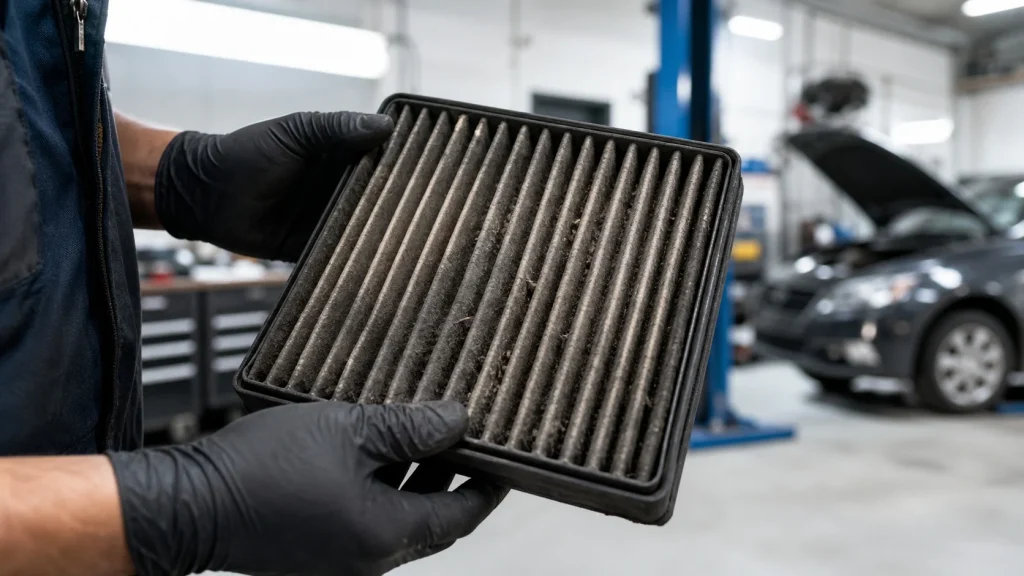
- Sluggish Acceleration: The vehicle hesitates or feels underpowered when you press the accelerator pedal.
- Engine Misfires or Rough Idle: Restricted air can create an overly rich fuel mixture, fouling the spark plugs and causing the engine to shake or idle unevenly.
- Dark Smoke from the Exhaust: In severe cases, unburnt fuel escapes through the exhaust system, producing black smoke or a strong smell of gasoline.
- Dashboard Warning Lights: If the air-fuel mixture is severely imbalanced, the onboard computer may trigger diagnostic trouble codes and illuminate the check engine light. If you notice any dashboard warning lights, checking the air filter is a simple first step before scheduling expensive diagnostics.
- Dirty Visual Appearance: A clean filter is white or light beige. If it appears dark gray, brown, or clogged with leaves and debris, it needs replacement.
Note: A simple test is to remove the air filter and hold it up to a strong light source. If the light cannot pass through the paper pleats, the filter is saturated with fine dust and should be replaced immediately.
Recommended Replacement Intervals and Influencing Factors
For most passenger vehicles, manufacturers suggest replacing the engine air filter every 15,000 to 30,000 miles. However, the actual lifespan of your filter depends heavily on your driving environment.
Manufacturer Guidelines vs. Real-World Driving Conditions
Standard intervals assume normal driving on paved, clean roads. If you frequently drive in harsh conditions, you should inspect and replace the filter much more frequently, typically every 10,000 miles or sooner.
Factors that accelerate filter clogging include:
- Dusty or Unpaved Roads: Driving on gravel or dirt roads exposes the filter to massive amounts of airborne dust.
- Heavy Urban Traffic: Constant stop-and-go driving exposes your intake to soot, exhaust particulates, and rubber dust from other vehicles.
- Arid or Desert Climates: High wind speeds in dry regions carry fine sand and dust that quickly saturate the filter media.
- Agricultural or Construction Zones: High concentrations of airborne pollen, chaff, and soil particles will shorten filter life.
Types of Engine Air Filters
When purchasing a replacement, you will encounter several different types of filter designs.
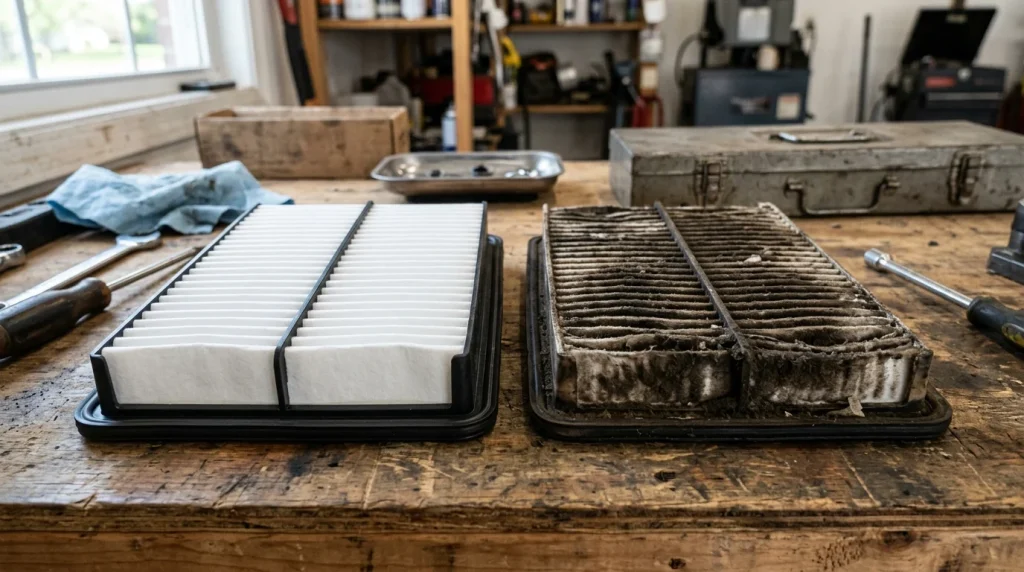
Panel Filters (Paper or Synthetic)
This is the standard style installed by vehicle manufacturers. Made from pleated paper or synthetic blends, these filters are cheap, highly efficient at trapping fine dust, and designed to be disposed of when dirty. They are ideal for standard passenger cars driven in normal conditions.
Cotton Gauze Filters (Premium Reusable)
Popularized by performance brands like K&N, these filters consist of multiple layers of oiled cotton gauze sandwiched between wire mesh. They allow higher airflow and are reusable. Instead of throwing the filter away, you clean, wash, and re-oil it using a specialized kit. While they have a higher initial purchase price, they can last the lifetime of the vehicle if properly maintained.
Foam Filters
Commonly used in off-road vehicles and dirt bikes, foam filters excel at trapping heavy mud and dirt. They are saturated with filter oil to capture large volumes of dust without completely blocking airflow. They are not recommended for standard street cars because they require frequent cleaning and do not filter fine particles as efficiently as pleated paper.
Air Filter Replacement Costs and DIY Service
Replacing an engine air filter is one of the most affordable maintenance tasks you can perform.
- DIY Replacement: A standard replacement filter costs between $15 and $40 at most auto parts retailers. For most vehicles, changing the filter requires no tools and takes less than 15 minutes.
- Professional Replacement: Having a mechanic or dealership replace the filter typically costs between $55 and $120. While the part cost remains low, professional shops charge for labor.
If you are already performing other basic maintenance, such as trying to jump-start a car in the rain or checking fluid levels, inspect the air filter box at the same time. The filter housing is usually secured by simple metal clips or a few screws, making visual inspection straightforward. For more complex repairs, such as repairing a car bumper, consulting a professional is recommended, but changing your air filter is a great entry point for DIY maintenance.
Frequently Asked Questions
Can a dirty air filter cause a check engine light to come on?
Yes. A severely restricted air filter restricts airflow to the point where the engine control unit detects an abnormal air-to-fuel ratio. This can lead to engine misfires, spark plug fouling, or mass airflow sensor faults, triggering diagnostic trouble codes and illuminating the check engine light on your dashboard.
What happens if you don’t change the engine air filter for a long time?
If neglected, a clogged filter will starve the engine of air, causing sluggish acceleration and rough idling. Over time, the physical filter media can degrade, tear, or collapse. This allows unfiltered air containing abrasive dust, sand, and debris to enter the engine cylinders, causing severe internal wear on pistons and cylinder walls that can lead to expensive engine damage.
Is it worth upgrading to a premium reusable air filter?
For daily drivers, standard disposable paper filters provide excellent filtration and are cost-effective. Premium oiled cotton filters offer slightly better airflow and are reusable, which can save money over the long term for high-mileage drivers. However, they require periodic cleaning and precise re-oiling; applying too much oil can contaminate the mass airflow sensor, causing performance issues.

