

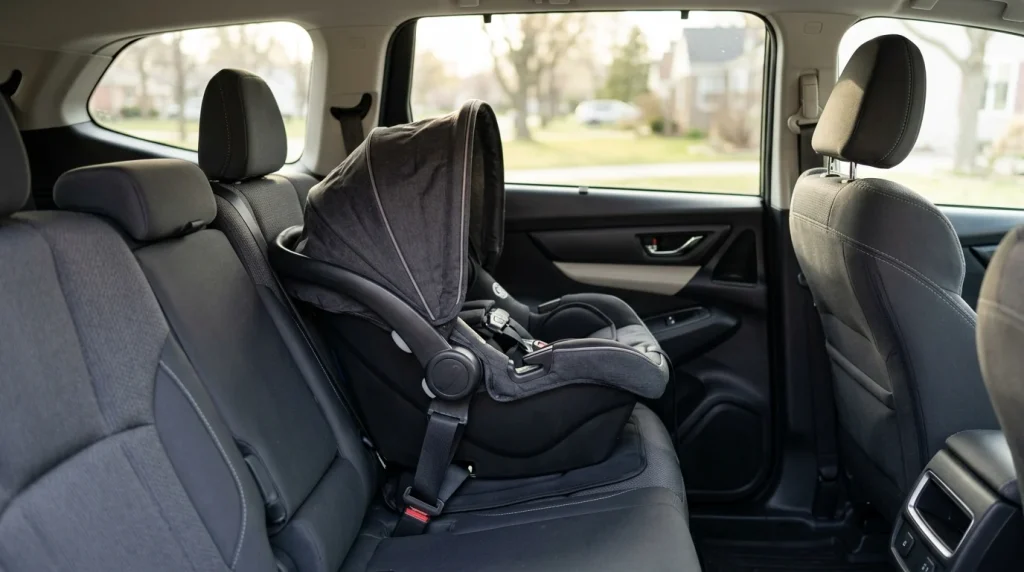
Quick answer: Most infant car seat inserts must be removed when your baby reaches a weight limit of 11 pounds, though manufacturer limits range from 8 to 18 pounds depending on the specific model. Parents must also remove the insert if the harness straps sit above the baby’s shoulders in their lowest slot, or if the infant’s shoulders are cramped and their head is pushed forward.
Key takeaways:
- Weight limits are maximum thresholds rather than goals, meaning physical fit overrides weight numbers.
- Popular manufacturers like Nuna, Chicco, and Clek set the insert weight limit at 11 pounds.
- UPPAbaby Mesa V2 uses a single insert for babies up to 11 pounds and beyond, while UPPAbaby Aria features a two-piece insert with a preemie cushion removed at 9 pounds.
- After removing the insert, always adjust the harness height, verify the recline angle, and conduct the pinch test to ensure baby safety.
- Only use inserts approved or manufactured by your car seat’s brand to avoid compromising crash test safety.
Why the Timing of Newborn Insert Removal Matters
Infant car seats are engineered to protect fragile babies during travel, and newborn inserts play a critical role in this design. These inserts fill the extra space around a tiny baby, cradling their torso and head to ensure that harness straps contact the body at the correct points for crash protection. They keep a small infant from slouching, which helps maintain a clear airway.
However, leaving an insert in place for too long introduces serious safety risks. As babies grow, the extra padding compresses. In a crash, this compressed fabric creates hidden slack in the harness, reducing its restraint effectiveness. An oversized baby squeezed into an insert is also pushed forward. This can cause a chin-to-chest posture, a dangerous position that can block an infant’s narrow airway and lead to positional asphyxia.
Conversely, removing the insert too early is just as dangerous. Without the necessary support, a small baby under 8 or 9 pounds may slouch or sit too low. This misaligns the harness straps and leaves the head unprotected by the seat’s side-impact shell. Safety requires transitioning at the exact manufacturer-approved milestone.
Newborn Insert Weight Limits by Major Brand (2026 Reference)
Car seat brands specify precise weight limits and fit rules for their inserts. Because car seat designs evolve, always cross-reference these general rules with your specific model’s instruction manual.
| Car Seat Brand & Model | Weight Limit for Body Insert | Head Support Rules | Key Fit Criteria |
|---|---|---|---|
| Nuna Pipa Series (PIPA, PIPA RX) | Remove at 11 lbs | May keep for comfort or remove at 11 lbs | Harness must sit at or below shoulders. |
| Chicco KeyFit Series (KeyFit 30, KeyFit 35) | Remove at 11 lbs | May raise or keep after body cushion removal | Body insert is mandatory for infants 4 to 11 lbs. |
| UPPAbaby Mesa V2 | Use from 4 to 11 lbs (or until fit is met) | Adjustable headrest stays in the seat | Remove bottom cushion; headrest is never removed. |
| UPPAbaby Aria | Remove lower cushion at 9 lbs | Remove back insert at approx. 4 months | Two-piece system designed for preemies and newborns. |
| Clek Liing | Remove cushion at 11 lbs | Headrest must stay for newer models | Body cushion is mandatory under 11 lbs. |
| Cybex Cloud Series (US Cloud T) | Remove insert at 11 lbs | Headrest is integrated and adjustable | Height-based i-Size models remove inlay at 61 cm. |
Nuna Pipa Series (PIPA / PIPA RX)
Nuna specifies that the body support insert must be removed once your baby reaches 11 pounds. According to Nuna’s official safety guidelines, you may choose to keep the head support in the seat longer for baby comfort, or you can remove both the body cushion and headrest at the 11-pound mark if your baby’s shoulders fit snugly.
Chicco KeyFit Series (KeyFit 30 / KeyFit 35)
Chicco infant inserts are designed specifically for smaller babies weighing between 4 and 11 pounds. The body insert must be removed once the baby reaches 11 pounds. You can read the official Chicco USA infant insert usage guide to verify how the seat’s harness should sit relative to the shoulders after the cushion is taken out. The separate headrest can stay in the seat to provide comfort as the child grows.
Graco SnugRide Lines
Graco car seat insert rules vary widely depending on your specific model. For instance, the SnugRide 35 Lite DLX body support cushion must be removed when the baby reaches 12 pounds. Other Graco models allow body support cushions to remain up to 18 pounds. Because Graco uses diverse accessory designs, you must check the accessories section of your specific Graco manual to identify the exact weight limit.
UPPAbaby Mesa V2 and Aria
The Mesa V2 utilizes a single-piece insert designed to optimize body positioning for infants weighing 4 to 11 pounds. You should remove the bottom cushion of the insert once the baby reaches 11 pounds and satisfies all harness fit criteria. UPPAbaby explains that the adjustable headrest is not an insert and should not be removed; instead, raise it as your child grows taller.
The UPPAbaby Aria uses a two-piece insert consisting of a preemie cushion and a back-positioning insert. The full two-piece setup is designed for infants from 4 to 9 pounds. Once your baby reaches approximately 9 pounds, you must remove the lower preemie cushion. The back-positioning insert should remain in the seat until the baby is approximately 4 months old, according to the official UPPAbaby Aria support documentation.
Clek Liing Support Cushion
The Clek Liing uses a two-piece Newborn Support System consisting of a headrest and a body support cushion. Using both pieces is mandatory for infants under 11 pounds whose shoulders sit below the lowest harness slots. Once the baby exceeds 11 pounds, you can keep using the body cushion until their shoulders reach the top harness slot. After that milestone, the body cushion must be removed.
For Clek Liing units manufactured after February 1, 2024, the headrest must remain in the seat until the child outgrows it completely. For older eligible units, removing the headrest requires unthreading the harness straps. You can verify these steps in the Clek Liing Newborn Support guide.
Cybex Cloud Series (i-Size & US Cloud T)
The US version of the Cybex Cloud T newborn insert supports infants from 4 to 11 pounds and must be removed once the baby reaches 11 pounds. If you own a European i-Size Cybex seat, the removal trigger is height-based rather than weight-based. You must remove the newborn inlay when your baby reaches 61 cm in height, which typically occurs around 3 months of age. You can review the exact specifications on the official Cybex Cloud T product page.
Physical Fit Indicators Overriding Weight Limits
While weight limits offer a helpful baseline, physical fit is the ultimate indicator of when to remove the insert. If your baby is close to the weight limit, monitor their position for these physical signs:
- Harness Straps Sit Above the Shoulders: For rear-facing car seats, the harness straps must emerge from the slots at or slightly below the baby’s shoulders. If the straps sit above the shoulders even when adjusted to the lowest slots, the insert is lifting the baby too high and must be removed.
- The Baby Looks Hunchback or Cramped: If the baby’s shoulders are compressed, or if their head is pushed forward so that their chin rests close to their chest, the insert is too small.
- The Infant Sits on the Crotch Buckle: When a baby grows, their hips widen. If they begin sitting directly on top of the crotch buckle housing, or if the harness straps cut into their thighs, removing the insert will create the necessary clearance.
- Failure of the Pinch Test: If the padding of the insert is so bulky that it prevents you from tightening the harness snugly against the baby’s collarbone, the insert must be removed to ensure a secure fit.
Step-by-Step Checklist After Removing the Insert
Removing the newborn insert changes how your baby fits in the car seat. Take these five steps to reconfigure the harness for your growing baby:
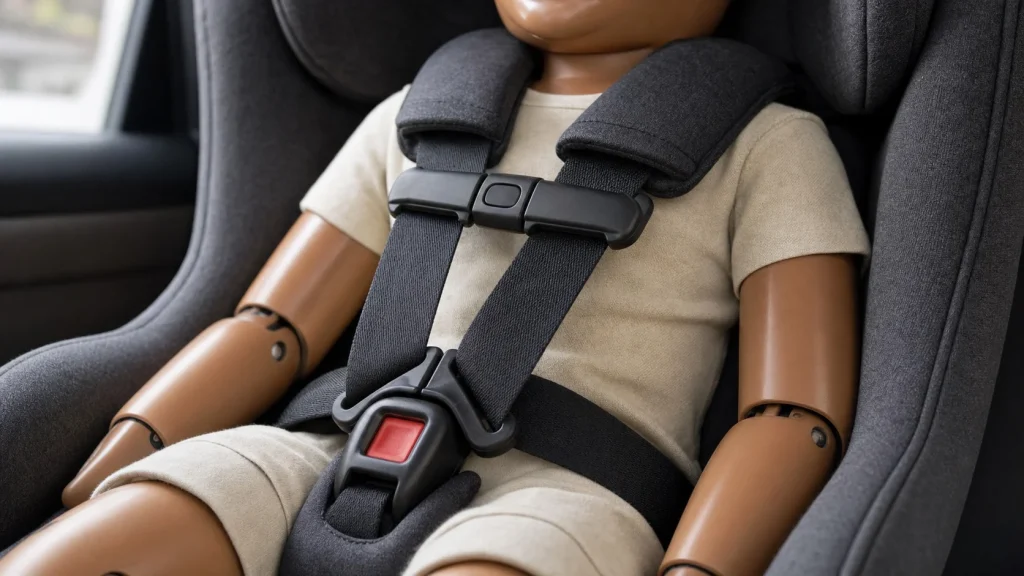
- Adjust the Harness Height: Relocate the shoulder straps to the slots that align at or just below your baby’s shoulders. Never allow the straps to emerge above the shoulders for a rear-facing seat.
- Reposition the Crotch Buckle: Many infant car seats offer two crotch strap slots. Adjust the buckle to the outer slot if your baby is sitting on the buckle or if the strap is too tight against their thighs.
- Verify the Recline Angle: Check your car seat’s built-in bubble or dial level indicator. Young infants require a semi-reclined angle to keep their airways open, but you may need to adjust the seat angle as their weight distribution shifts.
- Perform the Pinch Test: Buckle and tighten the harness. Try to pinch the strap webbing at the baby’s collarbone using your thumb and forefinger. If you can pinch any webbing, the harness is too loose and must be tightened further.
- Position the Chest Clip: Slide the chest clip up so that it sits level with the baby’s armpits, resting on the center of the breastbone. Placing it too low on the abdomen can cause internal injuries in a crash.
Common Pitfalls and Safety Mistakes
Avoiding common mistakes keeps your baby safe during every car ride:
- Using Aftermarket Inserts: Never use head supports, wedges, or strap pads purchased from third-party manufacturers. These products are not crash-tested with your specific car seat, can void your manufacturer warranty, and may cause the harness to fail in an accident.
- Keeping the Insert Too Long for Comfort: Parents often worry their baby looks uncomfortable without the plush insert. However, leaving the insert in past the weight limit compromises safety. A snug harness against a flat car seat back is the safest configuration.
- Confusing the Two-Hour Rule: The two-hour car seat rule states that babies should not spend more than two hours in a car seat within a 24-hour period due to airway restrictions. This rule relates to travel duration and recline angles, not insert usage. Even without the insert, the two-hour rule still applies.
If you are ever uncertain about your baby’s car seat fit, seek professional guidance. Certified Child Passenger Safety Technicians (CPST) offer free car seat inspections and harness fit checks to help you travel with peace of mind.
To read more safety guides, car maintenance updates, or vehicle seat regulations, visit our news archive for the latest passenger safety reports.

