

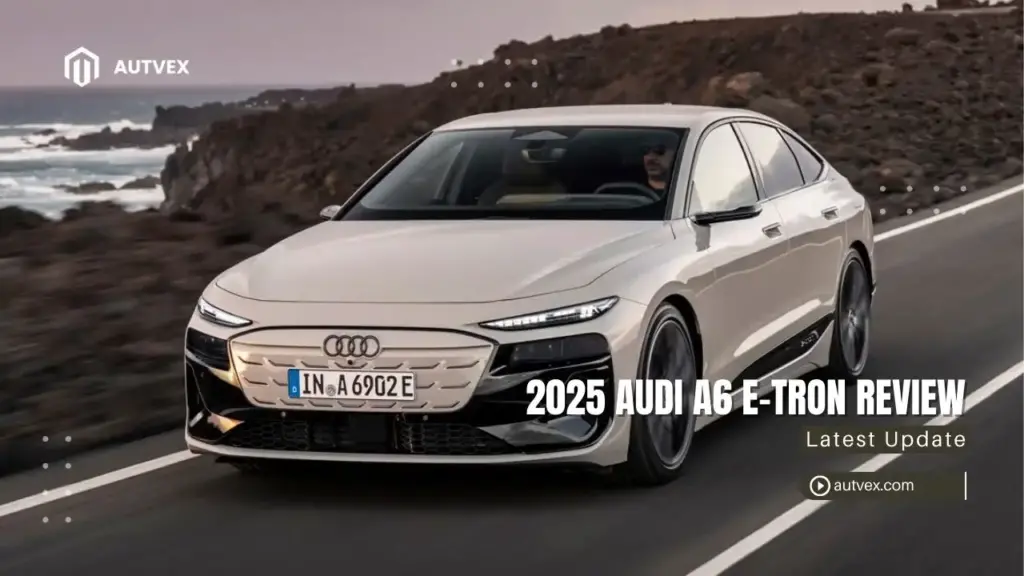
The 2025 Audi A6 lineup represents a unique transitional year featuring two completely different models—the final-year gas-powered C8 sedan with 261-335 hp starting around $56,000, and the all-new electric A6 e-tron Sportback with 375-543 hp and up to 392 miles of EPA-estimated range starting at $67,195. These models share only the A6 name while offering fundamentally different experiences: the gas model provides proven reliability and traditional luxury for conservative buyers, while the e-tron debuts revolutionary electric technology with 800-volt architecture enabling 21-minute fast charging for early adopters ready to embrace the future.
Understanding the Two Different 2025 Audi A6 Models
The most critical fact buyers must understand: saying “2025 Audi A6” now refers to two fundamentally different vehicles that couldn’t be more distinct if they tried. This isn’t a simple engine choice—it’s a decision between automotive philosophies, platforms, and futures.
2025 Audi A6 vs 2025 A6 e-tron
The distinction between these models extends far beyond powertrain differences. Car and Driver confirms the gas A6 continues on the mature C8 platform that debuted in 2019, while the A6 e-tron rides on the all-new Premium Platform Electric (PPE) co-developed with Porsche at a cost exceeding $1 billion[1].
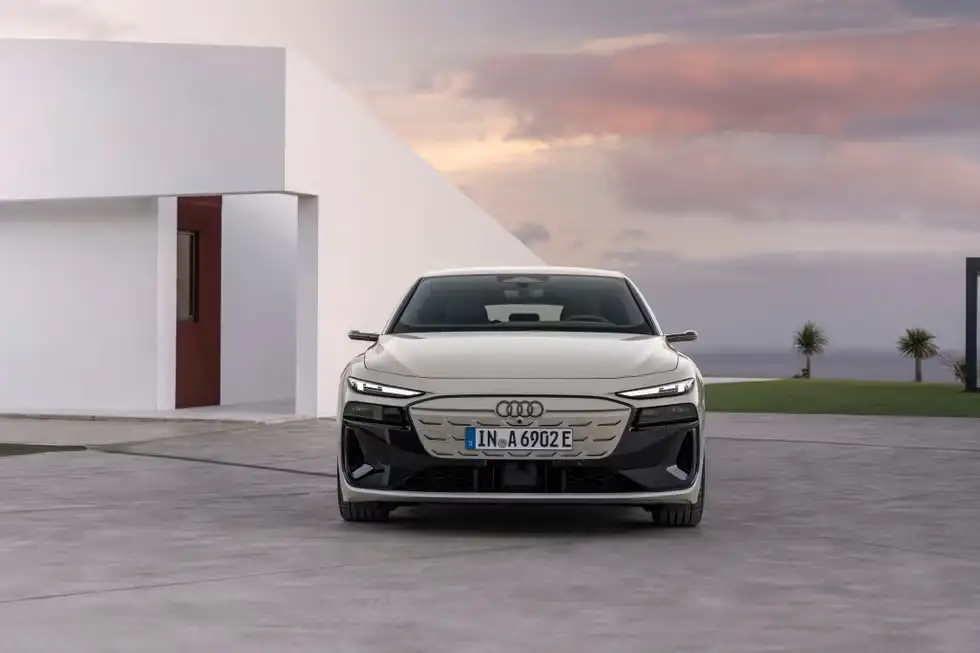
These platforms dictate everything from proportions to practicality. The gas model maintains traditional three-box sedan architecture with an isolated trunk, while the e-tron adopts a sleek Sportback design offering superior cargo flexibility through its hatchback configuration.
The manufacturing approach differs fundamentally—the e-tron’s skateboard battery platform creates a completely flat floor and more spacious interior, while the gas model retains a transmission tunnel despite standard all-wheel drive being offered on both.
Is the New 2025 Audi A6 Gas or Electric
The answer is deliberately both, creating market confusion but also unprecedented choice. The gas model starts around $56,000 with either a 2.0-liter turbocharged four-cylinder producing 261 hp or a 3.0-liter V6 generating 335 hp[2].
Meanwhile, the electric A6 e-tron begins at $67,195 for the rear-wheel-drive Performance model, roughly $11,000 more than the gas variant. This price gap narrows when considering potential federal tax credits of up to $7,500 for the electric model.
This dual approach reflects market reality—some buyers remain skeptical of EV infrastructure while others demand zero emissions. Audi satisfies both camps, though at the cost of brand clarity and significant dealer confusion when explaining options to customers.
Audi A6 Gas vs Electric 2025
Comparing these models requires understanding their fundamental philosophical differences beyond just fuel type. The gas A6 targets traditional luxury sedan buyers who value familiar dynamics, instant refueling anywhere, and proven technology with predictable maintenance costs[2].
Performance characteristics differ dramatically despite overlapping horsepower figures. The gas model’s power arrives through traditional gear changes and engine notes, creating an engaging mechanical symphony. The e-tron’s instant torque delivery creates violent yet silent acceleration that feels otherworldly.
Operating costs favor the e-tron significantly—electricity costs roughly one-third of premium gasoline per mile, while maintenance requirements drop dramatically without oil changes, transmission service, or brake replacements thanks to regenerative braking systems.
Difference Between Audi A6 and A6 e-tron
Beyond the obvious powertrain distinctions, these vehicles target completely different demographics with distinct priorities. According to MotorTrend testing, the gas A6 appeals to conservative luxury buyers who appreciate physical controls and traditional sedan proportions, while the e-tron attracts technology enthusiasts ready for radical change[3].
Body styles differ fundamentally—the gas model’s isolated trunk provides security and noise reduction for golf clubs or luggage, while the e-tron’s hatchback configuration offers 26 cubic feet of cargo space that easily swallows bicycles or large boxes.
Weight distribution varies dramatically, with the e-tron’s floor-mounted 94.4 kWh battery creating an ultra-low center of gravity that enhances handling despite adding nearly 1,000 pounds versus the gas model’s curb weight.
Audi A6 e-tron vs 2025 A6 Gas Sedan (Carryover)
Direct comparison reveals these aren’t variations but entirely distinct vehicles serving different masters. The e-tron accelerates more aggressively—0-60 mph in 4.9 seconds for base RWD versus the gas four-cylinder’s 5.1 seconds, though the dual-motor e-tron Quattro drops this to 4.3 seconds[1].
Range considerations complicate direct comparisons significantly. The gas model achieves approximately 500 miles per tank, refillable in five minutes at any of America’s 150,000 gas stations. The e-tron’s 392-mile EPA range requires careful planning and 21-minute charging stops at specific high-speed locations.
Interior philosophy diverges completely—the e-tron embraces radical digitalization with massive screens dominating the dashboard, while the gas model maintains some physical controls that many drivers prefer. Understanding who makes Audi cars helps contextualize these divergent strategies.
Audi New Naming Strategy A6
Audi’s naming convention has created more confusion than clarity in recent years. Initial plans designated odd numbers for gas models and even for electric, which would have made the gas sedan the A7 and simplified understanding[3].
That strategy collapsed under dealer criticism and customer confusion, leaving both powertrains sharing the A6 designation with only “e-tron” differentiating them. This mirrors Mercedes-Benz’s EQ approach but lacks BMW’s cleaner “i” prefix system that clearly identifies electric models.
The confusion extends to performance variants—both S6 gas and S6 e-tron exist with completely different characteristics and price points. Dealers report spending significant time just explaining model differences before even discussing features and options.
2025 Audi A6 e-tron Electric Platform & Technology
The e-tron’s PPE platform represents Audi’s most advanced engineering to date, promising Tesla-rivaling technology wrapped in traditional German luxury execution.
Audi A6 e-tron PPE Platform
The Premium Platform Electric emerges from intensive joint Audi-Porsche development, creating crucial economies of scale while maintaining distinct brand characteristics. This modular architecture accommodates everything from sedans to SUVs with remarkable flexibility[4].
Key innovations include 800-volt electrical architecture that enables faster charging and improved efficiency, sophisticated thermal management that maintains optimal battery temperature regardless of conditions, and variable battery configurations allowing different range and performance options.
Porsche’s involvement ensures world-class dynamic capabilities—the same platform underpins the electric Macan and upcoming electric 718. This DNA manifests in the A6 e-tron’s surprising agility despite its 4,997-pound curb weight.
Audi 800-Volt Architecture
The 800-volt system represents a generational leap over traditional 400-volt alternatives, enabling remarkable charging speeds while improving overall efficiency. Higher voltage means lower current for equivalent power, reducing heat generation and allowing thinner, lighter cables throughout the vehicle[1].
Silicon carbide semiconductors further enhance efficiency by minimizing power conversion losses during charging and discharging cycles. This advanced technology contributes to the A6 e-tron’s impressive EPA efficiency rating of 118 MPGe combined.
The architecture enables the A6 e-tron’s standout 270 kW charging capability, though finding compatible chargers remains challenging outside major corridors. Most public infrastructure maxes out at 150 kW, still impressive but not utilizing the car’s full potential.
2025 Audi A6 e-tron Battery Size
The lithium-ion battery pack provides 94.4 kWh of usable capacity from a 100 kWh gross capacity, with the conservative 5.6 kWh buffer protecting long-term battery health and ensuring consistent performance throughout the ownership period[1].
Sophisticated liquid cooling circuits maintain optimal temperature between 59-95°F regardless of ambient conditions or driving intensity. The system can pre-condition the battery while plugged in, ensuring maximum performance and efficiency from the first mile.
Battery warranty extends eight years or 100,000 miles with coverage for capacity dropping below 70%, though degradation patterns from similar chemistry suggest most packs will retain 80-85% capacity well beyond warranty expiration.
2025 Audi A6 e-tron Range
EPA testing confirms the single-motor RWD Sportback with Ultra package achieves an impressive 392 miles of range, while standard RWD models reach 370 miles. Dual-motor Quattro variants achieve 377 miles with Ultra package or 333 miles standard[1].
Real-world testing by automotive journalists generally confirms these figures, with highway driving at 70 mph typically returning 85-90% of EPA estimates. City driving often exceeds EPA ratings thanks to aggressive regeneration capturing up to 220 kW during deceleration.
These figures lead the luxury EV segment, surpassing BMW i5’s 295-mile maximum while approaching Tesla Model S Long Range territory. The range advantage proves decisive for buyers concerned about charging infrastructure. Explore Audi’s Electrify America free charging benefits included with purchase.
2025 Audi A6 e-tron Charging Speed
The standout feature remains 270 kW peak DC fast-charging, enabling 10-80% charging in approximately 21 minutes under ideal conditions with compatible chargers. This matches the fastest-charging EVs currently available from any manufacturer[1].
Audi claims the system can add nearly 200 miles of range in just 15 minutes at maximum charging speed, transforming long-distance travel feasibility compared to earlier EVs requiring hour-long stops for similar range additions.
Level 2 AC charging reaches 9.6 kW through the onboard charger, sufficient for overnight home charging from nearly empty to full in about 10 hours. The included mobile charger works with standard 120V outlets for emergency charging at approximately 3 miles per hour.
2025 A6 e-tron 10-80% Charge Time
The specific 10-80% metric matters because charging speeds slow dramatically beyond 80% to protect battery longevity and safety. This sweet spot takes 21 minutes at 270 kW chargers, adding approximately 280 miles of real-world range[5].
Real-world conditions affect these theoretical times—cold weather can double charging duration until the battery warms, while simultaneous charging at busy stations may reduce available power. The car’s sophisticated preconditioning helps optimize speeds by warming the battery en route to chargers.
The charging curve remains impressively flat compared to competitors, maintaining high speeds longer rather than peaking briefly then tapering aggressively. This consistency makes trip planning more predictable and reduces overall journey times.
A6 e-tron Sportback Review
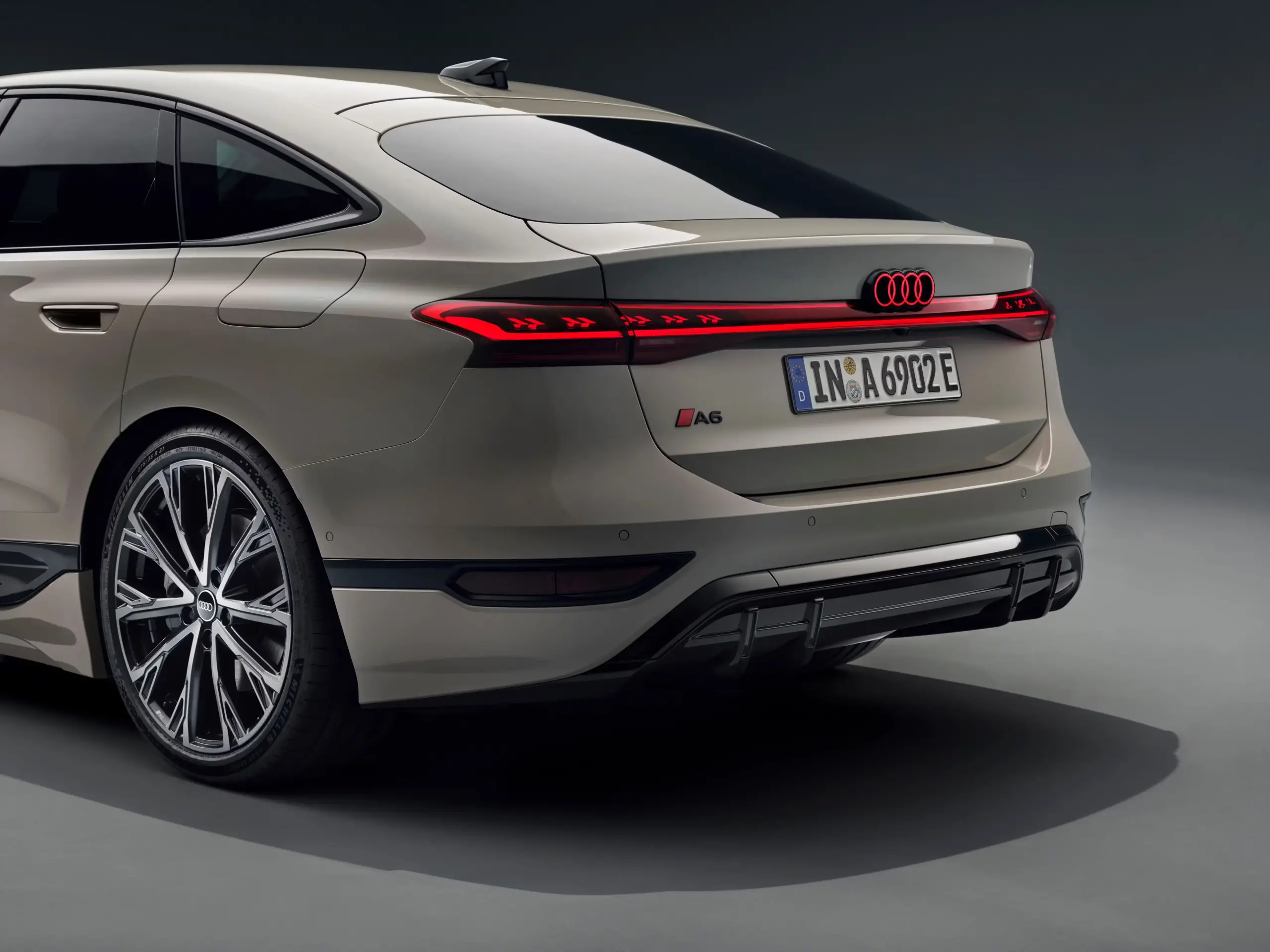
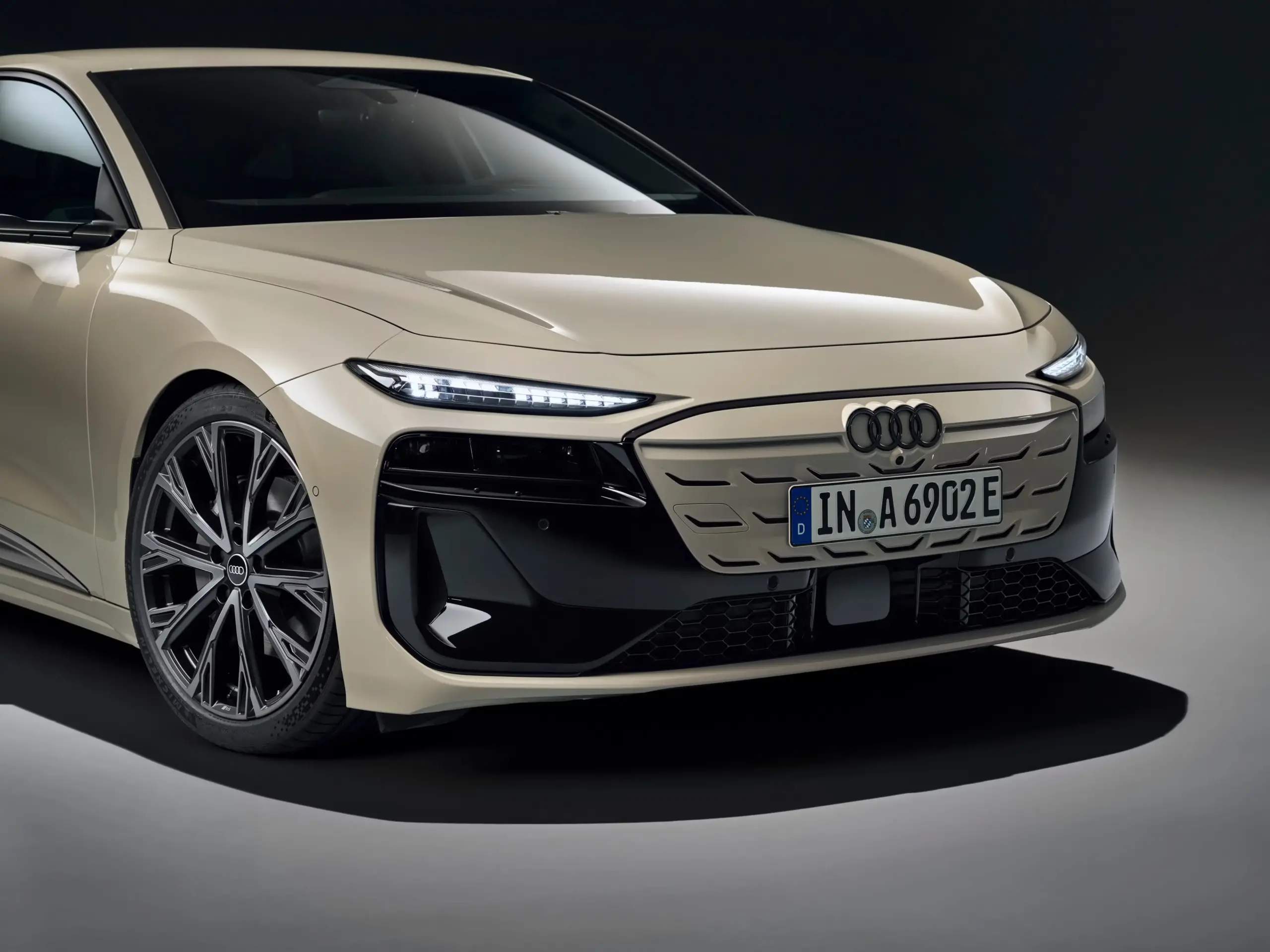
The Sportback body style defines the e-tron’s character beyond mere aesthetics. Consumer Reports notes the fastback roofline achieves a remarkable 0.21 drag coefficient, among the lowest of any production vehicle and critical for maximizing range[5].
This aerodynamic excellence comes with practical benefits—the power liftgate reveals surprisingly capacious cargo space that easily swallows large items impossible to fit in traditional sedan trunks. The wide hatch opening simplifies loading compared to narrow trunk apertures.
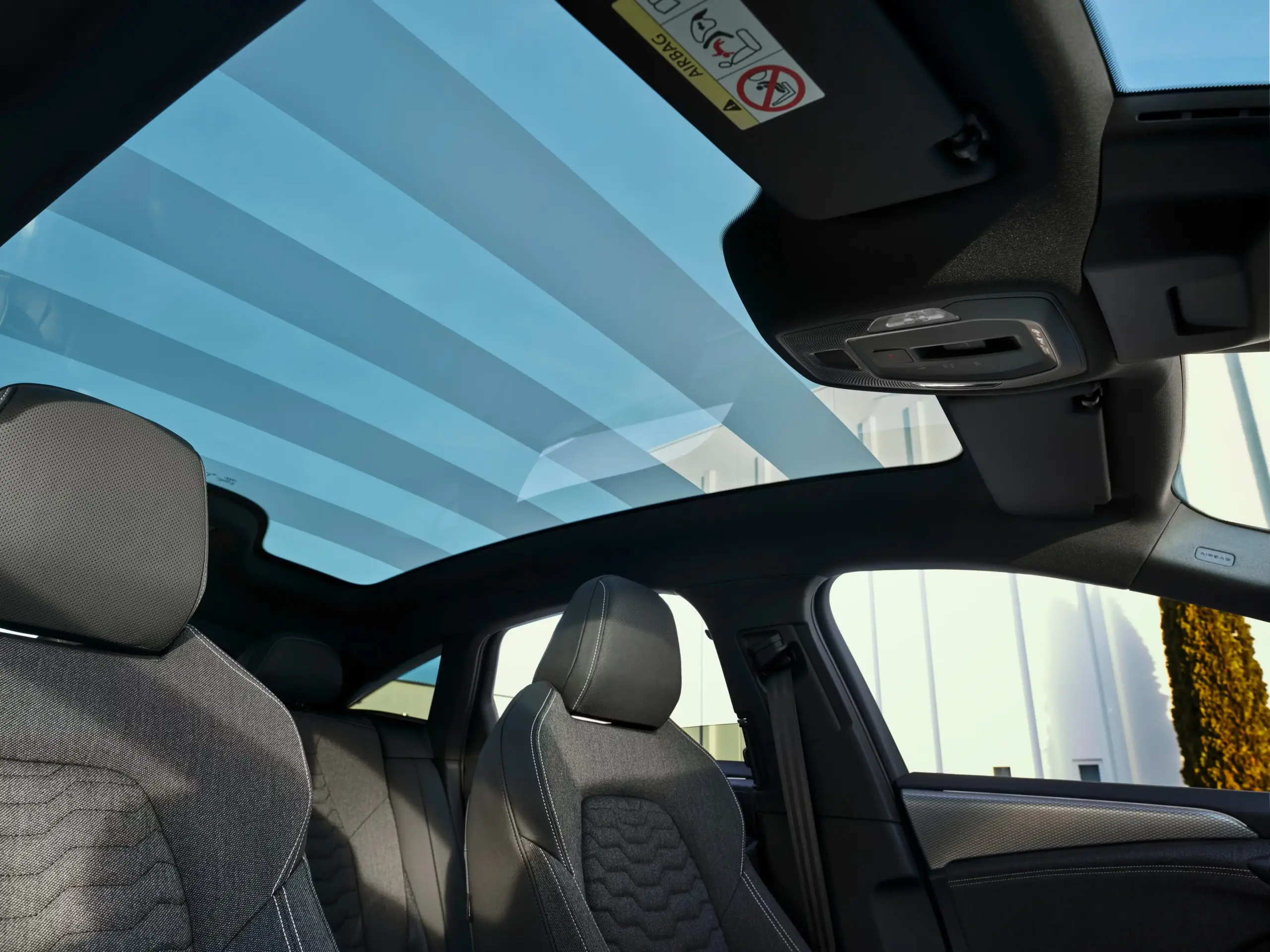
Rear headroom suffers slightly versus traditional three-box designs, with taller passengers feeling the sloping roofline during entry and exit. The standard panoramic glass roof helps create an airy feeling that partially compensates for the lower roofline. Autvex testing confirms adequate headroom for passengers up to 6’2″.
A6 e-tron Avant
While Europe receives the more practical Avant wagon variant offering superior cargo capacity and rear headroom, U.S. availability remains limited to the Sportback body style. The wagon maintains similar aerodynamic efficiency while adding practicality[4].
European specifications show the Avant offers 502 liters of cargo capacity expanding to 1,422 liters with seats folded, significantly more than the Sportback’s figures. The wagon’s less aggressive roofline also improves rear visibility and passenger comfort.
American wagon demand remains frustratingly minimal despite enthusiast interest, making importation unlikely. Those prioritizing maximum utility over style must accept the Sportback or consider the upcoming Q6 e-tron SUV sharing the platform. Check out the best EV chargers for optimal home charging setup.
2025 Audi A6 e-tron Performance Specifications
The e-tron lineup spans from efficient single-motor models to the genuinely quick S6 e-tron, with outputs ranging from respectable to remarkable.
2025 Audi A6 e-tron RWD Horsepower
The base rear-wheel-drive model produces 375 horsepower and 428 lb-ft of torque from its single rear-mounted permanent magnet motor. This output exceeds most luxury sedan competitors while maintaining exceptional efficiency[1].
Performance feels stronger than numbers suggest thanks to instant torque delivery from zero rpm without transmission gear changes. The seamless acceleration creates an addictive quality that makes returning to combustion engines feel antiquated.
Efficiency benefits from single-motor simplicity, achieving 118 MPGe combined in EPA testing with 123 MPGe city and 113 MPGe highway. This translates to roughly 3.5-4.0 miles per kWh in real-world driving, exceptional for a vehicle this size and powerful.
2025 Audi A6 e-tron Quattro Horsepower
Adding a front induction motor for Quattro all-wheel drive increases combined output to 456 horsepower under normal conditions, though exact torque figures haven’t been officially released. The dual-motor setup enables sophisticated torque vectoring between axles[3].
Power distribution adjusts constantly based on available grip, steering angle, throttle position, and driving mode selection. The system can send 100% of available torque to either axle when needed, improving both performance and foul-weather capability.
Acceleration improves to 4.3 seconds for 0-60 mph versus 4.9 seconds for RWD models, though efficiency drops slightly to approximately 110 MPGe combined. The performance gain easily justifies the efficiency penalty for most buyers prioritizing capability.
2025 A6 e-tron 0-60 Time
Acceleration varies by configuration—RWD Performance models achieve 0-60 mph in 4.9 seconds per Car and Driver testing, while Quattro versions drop to 4.3 seconds. The S6 e-tron achieves the feat in just 3.7 seconds with launch control engaged[1].
These figures assume optimal conditions including full battery charge, appropriate tire temperature, and dry pavement. Unlike turbocharged engines affected by altitude and temperature, electric motors deliver consistent performance regardless of environmental conditions.
More impressive than outright acceleration is the quality of power delivery—completely linear without shifts, turbo lag, or power bands. The silent violence of hard acceleration creates cognitive dissonance that never gets old. Compare acceleration with the 2025 BMW i5 for perspective.
2025 Audi S6 e-tron Review
The S6 e-tron elevates performance dramatically with dual motors producing 496 horsepower standard or 543 horsepower with launch control boost. This output embarrasses many dedicated sports cars while maintaining luxury sedan refinement[6].
Beyond straight-line speed, the S6 receives sport-tuned adaptive air suspension, larger brakes with distinctive red calipers, and unique 20- or 21-inch wheel designs. The lowered ride height and wider track improve both aesthetics and cornering capability.
Pricing starts at $79,995, positioning it against BMW i5 M60 ($84,100) and Mercedes-AMG EQE 53 ($91,000). The Audi splits the difference—less expensive than Mercedes while more refined than BMW’s somewhat harsh M-tuned suspension.
2025 Audi S6 e-tron Horsepower
The S6’s dual-motor configuration combines a 188-hp front induction motor with a 375-hp rear permanent magnet motor, though combined output exceeds the sum thanks to sophisticated power management. Standard output reaches 496 horsepower, with boost mode unlocking 543 horsepower for 10-second bursts[6].
Torque figures haven’t been officially confirmed but likely exceed 600 lb-ft based on motor specifications and performance figures. This immense torque enables violent acceleration that pins occupants to their seats despite the car’s substantial 5,250-pound weight.
The absence of engine noise during such acceleration creates surreal experiences—your brain struggles processing sports car acceleration without accompanying drama. Artificial sound enhancement helps but feels synthetic compared to genuine exhaust notes.
2025 Audi S6 e-tron 0-60 Time
Official figures claim 3.7 seconds to 60 mph with launch control activated, though some testing suggests 3.5-3.6 seconds possible under absolutely ideal conditions. The quarter-mile passes in approximately 11.9 seconds at 110+ mph[6].
More impressive than peak acceleration is repeatability—unlike combustion engines that heat-soak and lose power after repeated runs, the S6 delivers consistent performance thanks to sophisticated thermal management. Ten consecutive launches show minimal performance degradation.
Top speed limits at 149 mph electronically, though aerodynamics and gearing would likely enable 165+ mph if unrestricted. Few owners will explore these limits, but the capability provides confidence during high-speed highway merging and passing.
2025 Audi RS6 e-tron
While unconfirmed for 2025, an RS6 e-tron seems inevitable given the platform’s capabilities demonstrated by Porsche’s related Taycan. Expect over 600 horsepower and sub-3-second 0-60 times if Audi follows typical RS formula escalation[3].
The challenge involves differentiation beyond simple acceleration—when S6 already achieves supercar speeds, RS models must offer more than just additional power. Enhanced dynamics, track capability, and exclusive features will justify premium pricing.
Platform sharing suggests the RS6 e-tron could match or exceed Taycan Turbo S performance while maintaining Audi’s distinct character. Expect limited production and pricing approaching or exceeding $150,000 when it eventually arrives.
Pricing and Trim Levels
The e-tron’s pricing strategy positions it aggressively against established luxury EV competitors while building value through standard equipment and available incentives.
2025 Audi A6 e-tron Price
Current pricing reflects Audi’s determination to establish electric market share, starting lower than key rivals despite superior range and charging capabilities. The strategy appears to be working based on initial sales reports[1].
| Model | Starting MSRP | Key Standard Features |
|---|---|---|
| A6 e-tron Performance RWD | $67,195 | 375 hp, 370-mile range, 19″ wheels |
| A6 e-tron Premium Plus RWD | $71,095 | Adds Matrix LED, 360° camera |
| A6 e-tron Prestige RWD | $73,495 | Adds air suspension, massage seats |
| Add Quattro AWD | +$2,000 | 456 hp, reduced range |
| S6 e-tron | $79,995 | 543 hp, sport suspension, unique styling |
Destination charges add $1,295 to all models uniformly regardless of delivery location.
2025 Audi A6 e-tron MSRP
The base MSRP of $67,195 significantly undercuts BMW i5 eDrive40 ($69,900) and Mercedes-EQE 350 ($76,050) while offering superior range. This aggressive pricing reflects lessons learned from earlier EV launches that priced themselves out of consideration[1].
However, desirable options escalate quickly—the Ultra package for maximum range adds several thousand dollars, while individual features like Bang & Olufsen 3D audio ($1,200) and four-zone climate control ($800) accumulate rapidly.
Fully equipped Prestige models with Quattro approach $80,000 before options, entering S6 territory where the performance upgrade becomes tempting. Value-conscious buyers should focus on well-equipped Premium Plus variants around $71,000.
2025 Audi S6 e-tron Price
S6 e-tron pricing starts at $79,995, roughly $12,000-14,000 above comparable A6 e-tron Quattro models. This premium buys significant performance upgrades, exclusive features, and distinctive styling that sets it apart[6].
Standard equipment includes adaptive air suspension, sport seats with enhanced bolstering, Matrix LED headlights with unique signatures, and 20-inch wheels (21-inch optional). The performance differential and exclusive features help justify the cost.
Cross-shopping reveals strong value—BMW i5 M60 starts at $84,100 with similar performance, while Mercedes-AMG EQE 53 begins at $91,000. The Audi offers comparable capability at meaningful savings versus these established competitors.
2025 A6 e-tron Premium vs Premium Plus
The $3,900 jump from base Premium to Premium Plus trim proves worthwhile for most buyers through meaningful feature additions. Matrix LED headlights alone transform nighttime driving while the 360-degree camera system simplifies parking this sizeable vehicle[3].
Premium Plus also adds the Virtual Cockpit Plus with augmented reality navigation, projecting turn arrows directly onto the road view. This genuinely useful technology feels futuristic while providing practical navigation benefits.
Additional features include four-zone automatic climate control, acoustic glass for reduced wind noise, and enhanced driver assistance systems. The comprehensive upgrade package makes Premium Plus the volume seller. Understand how long it takes to buy a car when planning your purchase timeline.
2025 A6 e-tron Prestige
Prestige trim commands approximately $73,495 but includes virtually every luxury and technology feature available. The comprehensive equipment list eliminates difficult option decisions while ensuring maximum capability and comfort[1].
Exclusive features include adaptive air suspension for superior ride quality, ventilated and massaging front seats, soft-close doors, and a head-up display with augmented reality. The executive rear seating package adds heating and power adjustment for rear occupants.
Depreciation analysis suggests Prestige models retain value best given their complete specifications appeal to used buyers. The initial premium partially returns at trade-in time, making them surprisingly rational choices for longer-term ownership.
Interior Design & Cargo Space
The cabin showcases Audi’s technology-first philosophy with massive screens dominating the dashboard, though some traditional luxury elements get lost in the digital transition.
2025 Audi A6 e-tron Interior Review
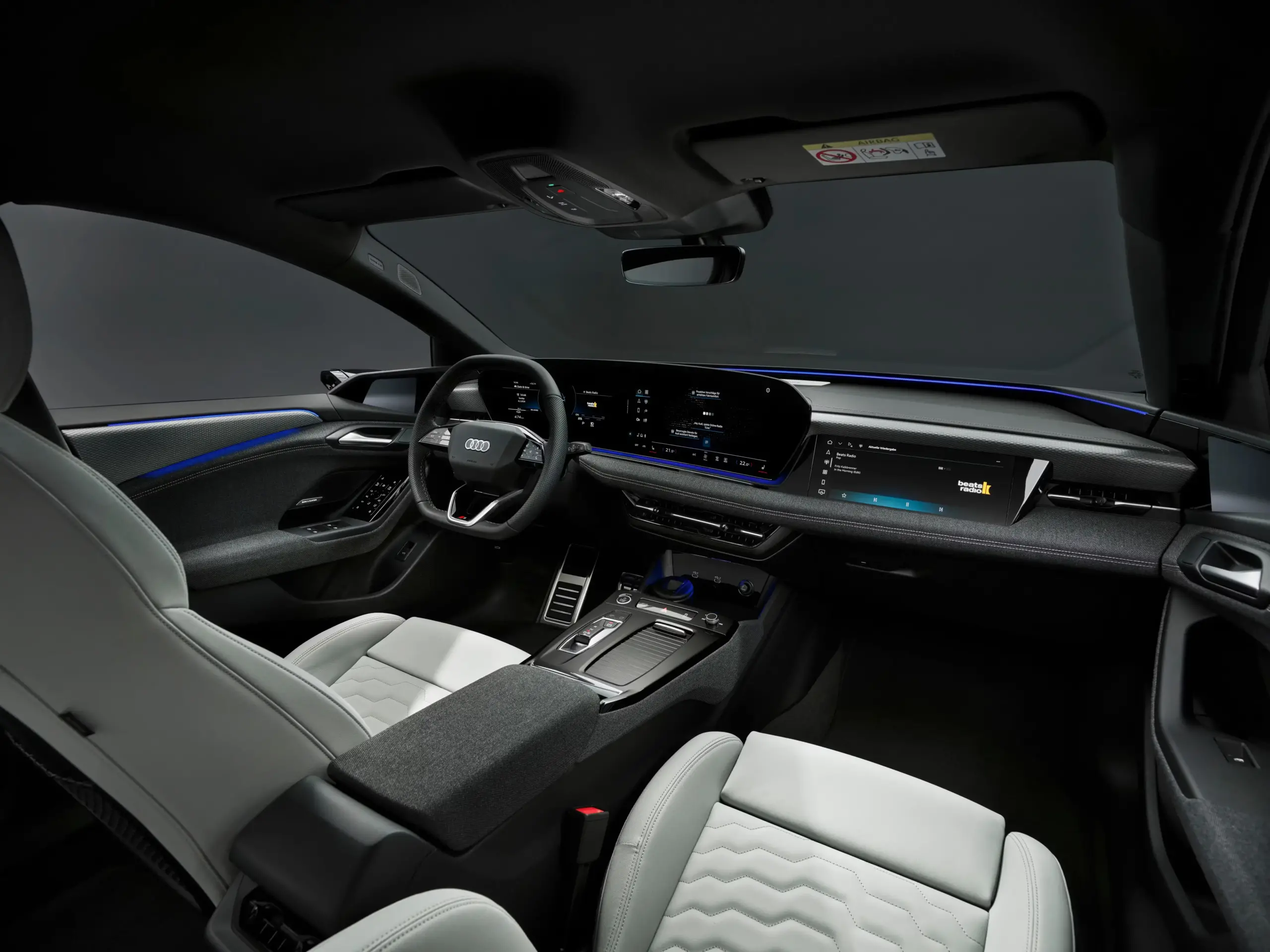
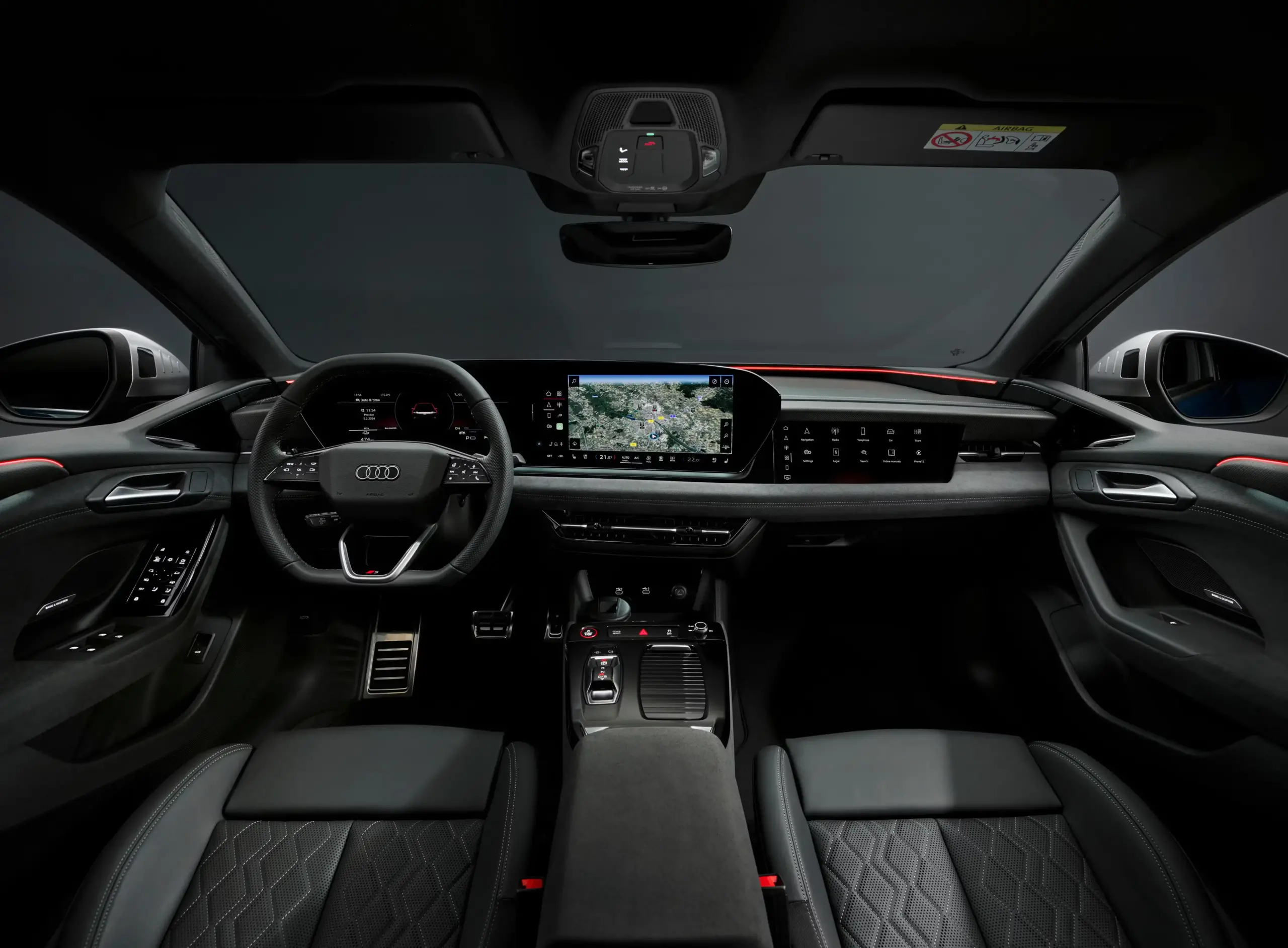
MotorTrend describes the interior as a dramatic departure from traditional Audi design, prioritizing screens over physical switchgear. The curved display housing combines an 11.9-inch driver display with a 14.5-inch central touchscreen creating a seamless digital environment[3].
Build quality remains exceptional with tight panel gaps, solid construction, and minimal squeaks or rattles even over rough pavement. However, excessive piano black plastic attracts fingerprints instantly while some lower door panels use hard plastics inappropriate for this price point.
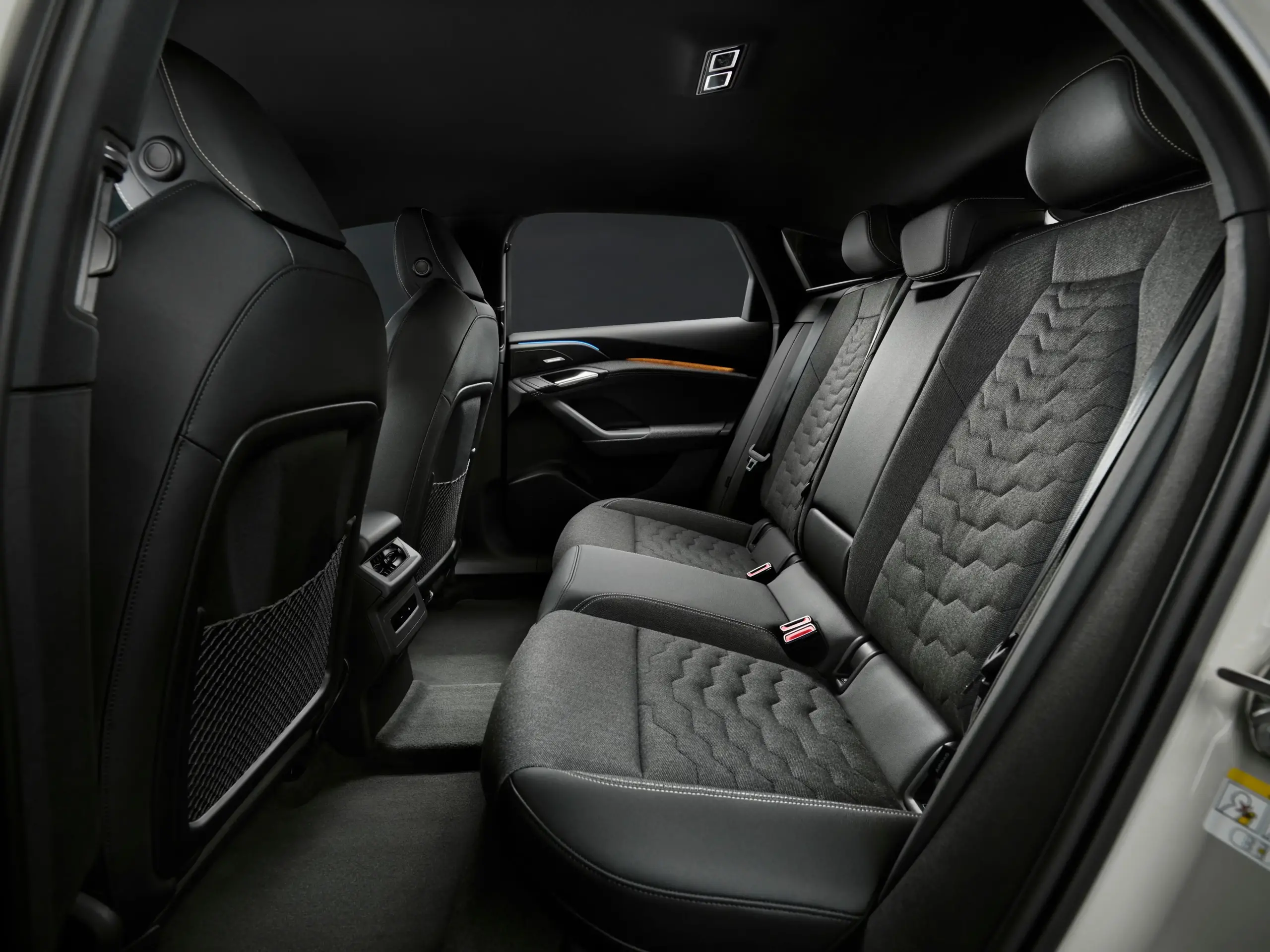
Space impresses thanks to the flat floor enabled by the skateboard battery platform. Rear passengers enjoy limousine-like legroom while the absence of a transmission tunnel creates useful storage space between front seats.
2025 A6 e-tron Screen-Heavy Interior
The Digital Stage concept eliminates most physical controls in favor of haptic feedback surfaces and voice commands. Climate control, driving modes, and even mirror adjustment require touchscreen interaction, proving frustrating while driving[3].
Software generally operates smoothly with logical menu structures and responsive touch recognition. However, the learning curve proves steep for owners accustomed to physical buttons, and some functions require multiple menu levels to access.
The optional 10.9-inch passenger display adds little practical value while contributing to screen overload. Most passengers prefer using their own devices rather than learning another interface. Autvex recommends saving this $1,400 option cost for more useful features.
2025 A6 e-tron Cargo Space
The Sportback design provides 26 cubic feet behind rear seats, significantly more than traditional sedan trunks. The wide hatch opening and low load floor simplify loading heavy or bulky items[1].
Additional storage includes a small front trunk (frunk) providing 1.8 cubic feet of secure storage perfect for charging cables or valuables. Underfloor rear compartments hide smaller items while maintaining a clean cargo area appearance.
The 60/40 split-folding rear seats expand cargo capacity considerably, though Audi hasn’t published maximum volume figures. The nearly flat load floor when seats are folded accommodates items like bicycles or flat-pack furniture impossible in traditional sedans.
2025 A6 e-tron Sportback vs Avant
The Sportback’s sloping roofline sacrifices some practicality for style and efficiency, though most owners find the compromise acceptable. European Avant wagon models offer superior cargo volume and rear headroom but won’t reach American shores[4].
Sportback cargo space proves adequate for most needs—golf bags fit easily, airport luggage for four adults poses no challenge, and even large Costco hauls disappear into the cavernous hatch. The limitation involves tall items that won’t clear the sloping glass.
Those absolutely requiring maximum utility should wait for the upcoming Q6 e-tron SUV sharing the platform. Similar performance with enhanced practicality may better suit family-focused buyers, though at the expense of the Sportback’s striking design.
Competitor Comparisons
Evaluating the A6 e-tron against key rivals clarifies its market position and unique value proposition in the rapidly evolving luxury EV segment.
2025 Audi A6 e-tron vs 2025 BMW i5
BMW’s i5 represents the most direct competitor with similar pricing and positioning, though execution differs significantly. The i5 offers superior driving dynamics with sharper steering and more engaging handling characteristics typical of BMW’s sporting philosophy[1].
However, the A6 e-tron dominates in crucial range metrics—392 miles versus 295 for the i5 eDrive40. This nearly 100-mile advantage proves decisive for buyers prioritizing long-distance capability over ultimate driving engagement.
Interior philosophy differs markedly—BMW maintains more physical controls including the excellent iDrive controller, while Audi goes full digital. Personal preference determines which approach resonates, though BMW’s mixed interface proves more intuitive during driving.
2025 Audi A6 e-tron vs 2025 Mercedes-Benz EQE
Mercedes’ EQE emphasizes traditional luxury over efficiency, with superior interior materials including real wood, metal trim, and exceptional leather quality. However, this luxury comes at a price—the base EQE 350 starts at $76,050, nearly $9,000 above the A6 e-tron[1].
Range favors Audi significantly at 392 miles versus approximately 280 for the Mercedes. Charging speeds are comparable with both supporting 200+ kW rates, though Audi’s 270 kW peak exceeds Mercedes’ maximum capability.
The EQE’s superior interior quality and brand prestige may justify its premium for traditional luxury buyers. However, the A6 e-tron offers better value through superior range, lower pricing, and comparable performance.
2025 Audi A6 e-tron vs Tesla Model S
Tesla’s Model S Long Range offers similar range at higher pricing, starting around $75,000 for comparable capability. Build quality and interior materials strongly favor Audi despite Tesla’s technology leadership in some areas[5].
Performance metrics favor Tesla’s dual-motor standard configuration for acceleration, though the S6 e-tron matches or exceeds Model S acceleration. Tesla’s Supercharger network remains advantageous despite recent opening to other brands.
Service infrastructure strongly favors Audi with nationwide dealer networks providing traditional support versus Tesla’s limited service centers requiring appointments weeks in advance. Traditional luxury buyers will prefer Audi’s conventional approach. Check out comparisons with the 2026 BMW 5 Series for additional perspective.
2025 Audi S6 e-tron vs BMW i5 M60
The performance comparison favors Audi on value—the S6 e-tron starts at $79,995 versus $84,100 for the i5 M60 xDrive. Power outputs are similar with both exceeding 500 horsepower in boost modes[6].
BMW’s M division heritage manifests in superior handling dynamics with more communicative steering and aggressive suspension tuning. The i5 M60 feels more athletic despite similar performance metrics, appealing to driving enthusiasts.
Audi counters with superior range even in S6 configuration, maintaining over 300 miles versus the M60’s approximately 250-mile maximum. The combination of lower pricing, better range, and comparable performance makes the S6 e-tron compelling.
Key Takeaways
- Two completely different 2025 A6 models exist—gas C8 sedan and electric e-tron Sportback
- Electric model offers 392-mile EPA range with 270 kW fast charging in 21 minutes
- Pricing spans $56,000 (gas) to $79,995 (S6 e-tron) with electric starting at $67,195
- Gas model represents final C8 year with proven reliability and traditional controls
- E-tron built on new PPE platform shared with Porsche for exceptional dynamics
- Performance ranges from 261 hp (gas 4-cyl) to 543 hp (S6 e-tron)
- Federal tax credits potentially reduce e-tron pricing by up to $7,500
Next Steps
Begin by honestly evaluating your readiness for electric vehicle ownership—home charging capability, typical daily mileage, and comfort with new technology all factor into this fundamental decision.
If considering electric, map DC fast chargers along your regular routes using apps like PlugShare or ABRP. The A6 e-tron’s excellent range reduces charging anxiety, but understanding infrastructure remains crucial.
Schedule extended test drives of both variants, paying particular attention to the different driving experiences. The instant torque of electric versus the mechanical engagement of gas represents a philosophical divide that specs can’t convey.
Research federal and state incentives carefully—income limits and other restrictions may affect eligibility for the $7,500 federal credit. Some states offer additional incentives that could reduce effective pricing by $10,000 or more.
Consider total ownership costs beyond purchase price. The e-tron’s reduced maintenance and lower fuel costs can offset its higher initial price over typical 3-5 year ownership periods.
For gas models, evaluate whether the proven C8 platform’s maturity outweighs being the final year before complete redesign. Resale values may suffer as the car ages and looks dated compared to newer models.
Compare insurance quotes between models as EVs often carry higher premiums due to expensive components and specialized repair requirements. The difference can exceed $500 annually.
Finally, trust your instincts about readiness for change. The e-tron represents the future with all its promise and uncertainty, while the gas model offers familiar excellence. Neither choice is wrong—they simply serve different needs and comfort levels with automotive evolution.
FAQs
What is the 2025 Audi A6 e-tron?
An all-new, fully electric Sportback built on the PPE platform with 375-543 hp and up to 392 miles of EPA-estimated range.
What is the difference between the 2025 A6 (gas) and the A6 e-tron?
Different platforms (C8 vs. PPE), powertrains (gas vs. electric), body styles (sedan vs. Sportback), and pricing ($56,000 vs. $67,195 starting).
What is the price of the 2025 Audi A6 e-tron?
Starting MSRP of $67,195 for the base Performance RWD model with 375 hp and 370-mile range.
What is the range of the 2025 Audi A6 e-tron?
EPA-estimated 392 miles for RWD Ultra models, 377 miles for Quattro AWD with Ultra package.
How fast is the 2025 A6 e-tron?
0-60 mph in 4.9 seconds (RWD), 4.3 seconds (Quattro), or 3.7 seconds (S6 e-tron).
How fast does the 2025 A6 e-tron charge?
270 kW DC fast charging enables 10-80% charge in approximately 21 minutes.
What is the 2025 Audi S6 e-tron?
High-performance variant with 496-543 hp depending on mode, starting at $79,995.
How does the A6 e-tron compare to the BMW i5 and Mercedes EQE?
The A6 e-tron offers superior range (392 miles) versus BMW i5 (295 miles) and Mercedes EQE (280 miles), more affordable pricing than both competitors, but less refined interior materials than Mercedes.
Is the 2025 A6 e-tron an Avant (wagon)?
Avant wagon available in Europe with superior cargo capacity; U.S. market only receives Sportback body style.
What is the PPE platform?
Premium Platform Electric co-developed with Porsche, featuring 800-volt architecture for ultra-fast 270 kW charging capabilities.
Will the 2025 A6 e-tron be available as a sedan or only Sportback?
Only as a Sportback (fastback hatchback); traditional three-box sedan body style exclusive to gas-powered C8 model.
References
- Car and Driver. (2025). 2025 Audi A6 e-tron Review, Pricing, and Specs. https://www.caranddriver.com/audi/a6-e-tron
- Audi USA. (2025). 2025 Audi A6 Sedan Overview. https://www.audiusa.com/en/models/a6/a6-sedan/2025/overview/
- MotorTrend. (2025). 2025 Audi A6 and S6 E-Tron First Drive Review. https://www.motortrend.com/reviews/2025-audi-a6-s6-e-tron-first-drive-review
- Top Gear. (2025). BMW i5 Touring vs Audi A6 e-tron Avant. https://www.topgear.com/car-news/electric/battle-electric-estates-bmw-i5-touring-vs-audi-a6-e-tron-avant
- Consumer Reports. (2024). First Drive: 2025 Audi A6 E-Tron Is a Sleek EV. https://www.consumerreports.org/cars/hybrids-evs/2026-audi-a6-e-tron-review-a7974596752/
- Car and Driver. (2025). 2025 Audi S6 e-tron Review, Pricing, and Specs. https://www.caranddriver.com/audi/s6-e-tron

