

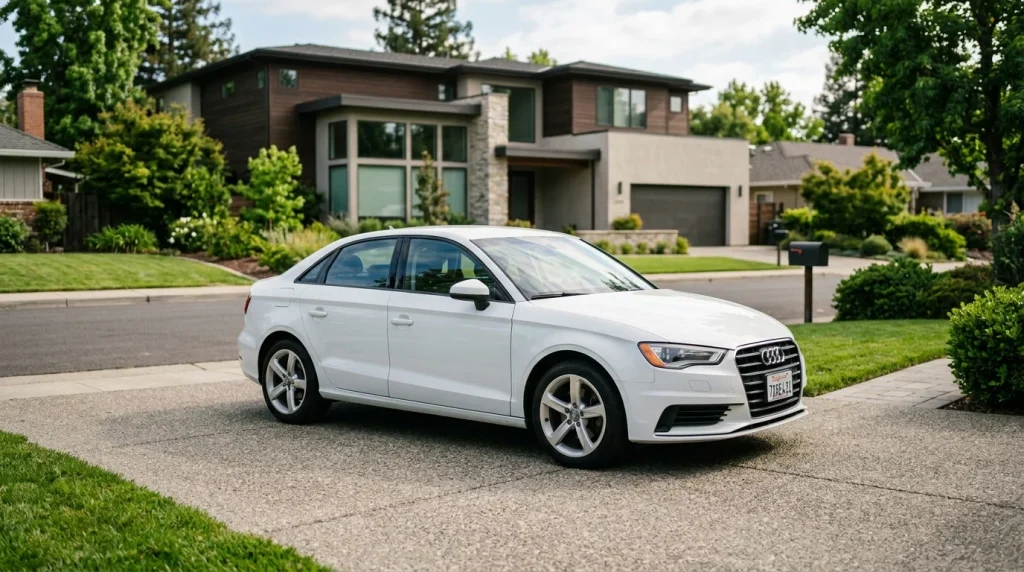
Quick answer: The 2017 Audi A3 is a highly desirable compact luxury car starting from an average used price of $11,721 for FWD Premium models. It introduces the EA888 2.0 TFSI engine replacing the older 1.8T, though buyers must check for common water pump cracks and verify completed safety recalls including the fuel suction jet pump campaign.
Key takeaways:
- Used prices average $11,721 to $15,835 depending on trim and options.
- New 2.0T engine replaces the 1.8T, boosting base output to 186 hp.
- Water pump and plastic thermostat housing leaks are nearly universal.
- Virtual Cockpit debuts as a premium tech option.
- Safety recalls for fuel leaks and airbags must be checked via VIN.
2017 Audi A3 Overview: First Year of 8V Facelift
The 2017 Audi A3 represents the first model year of the 8V generation’s mid-cycle facelift in the United States. Utilizing the Volkswagen Group MQB platform, this refresh brought significant mechanical, technology, and aesthetic updates that set the 2017 model apart from the pre-facelift 2015-2016 models. By introducing standard active safety features and upgrading the baseline engine, Audi aimed to fix early reliability complaints and position the A3 as the segment leader in the entry-level premium class. Before diving into details, check our comprehensive list of Audi A3 reviews to compare various model years.
Key Mechanical and Technology Updates
The mid-cycle refresh introduced several styling enhancements, including a wider and sharper Singleframe grille, redesigned headlights with a distinctive jagged bottom edge, and a revised rear diffuser. However, the most critical changes occurred under the skin. Audi updated the electronic control systems, refined the electric power steering, and upgraded the MMI infotainment system to support standard smartphone integration. These updates resolved several communication glitches between control modules that had caused warning lights on earlier models.
First Year of the 8V Mid-Cycle Refresh
Buying the first year of a vehicle refresh involves a classic trade-off. The 2017 A3 benefits from a modernized cabin and superior engines, but early production runs occasionally had minor software bugs. These teething issues, such as screen motor stalls and sensor calibration errors, were mostly resolved through dealer-applied firmware updates. Potential buyers should check the vehicle service history to confirm that early technical service bulletins were performed.
Key Differences: 2017 Audi A3 vs 2016 Audi A3
The differences between the 2016 and 2017 model years are significant enough to impact your purchasing decision. While the 2016 model relied on the older 1.8-liter engine for its front-wheel-drive configurations, the 2017 model standardizes a 2.0-liter engine across the lineup. Additionally, the FWD transmission was upgraded to a 7-speed unit, and standard equipment lists were expanded.
| Feature | 2016 Audi A3 (Pre-Facelift) | 2017 Audi A3 (Facelift) |
|---|---|---|
| Base Engine | 1.8T Four-Cylinder (170 hp) | 2.0T EA888 B-Cycle (186 hp) |
| FWD Transmission | 6-speed S tronic Dual-Clutch | 7-speed S tronic Dual-Clutch |
| Safety Technology | Optional Packages Only | Standard Pre-Sense Front and Forward Collision Warning |
| Smartphone Link | Not Available | Standard Apple CarPlay and Android Auto |
| Base Wheel Size | 17-inch Aluminum Alloy | 18-inch Aluminum Alloy |
If your budget allows, you might also consider the 2018 Audi A3 Review to see how the refresh matured in its second year.
Used Car Market Values and Pricing for 2017 Audi A3
Used market values for the 2017 Audi A3 have stabilized after absorbing initial depreciation. As of 2026, the vehicle offers access to German engineering at a fraction of its original MSRP. According to pricing data from Kelley Blue Book, the used retail price starts at approximately $11,721 for base FWD Premium sedans, while top-spec Prestige trims command up to $15,835 on the KBB appraisal tool. All-wheel-drive Quattro models carry an average price premium of $2,000 across all trims.
Premium Trim FWD Valuation
The base Premium trim has a used value of $11,721. Despite being the entry point, the Premium trim is well-equipped. Standard features include genuine leather seating surfaces, a panoramic sunroof, dual-zone automatic climate control, 12-way power driver’s seat, heated front seats, and automatic xenon headlights. Because it contains the core luxury features, the Premium trim represents the highest value for budget-conscious buyers.
Premium Plus FWD Valuation
Stepping up to the Premium Plus trim raises the used price to approximately $12,112. This trim adds the Convenience Package as standard equipment, which provides keyless entry and ignition, auto-dimming mirrors, front and rear parking sensors, and unique 18-inch wheels. Given the small $391 retail difference on the used market, the Premium Plus is highly recommended for its added daily convenience features.
Prestige Trim FWD Valuation
The top-tier Prestige trim carries a used retail value of $15,835. The Prestige comes fully loaded with the Technology Package, which includes the Audi Virtual Cockpit, MMI Navigation plus with handwriting recognition, a 14-speaker Bang and Olufsen sound system, full LED headlights, active lane assist, and adaptive cruise control. This model has depreciated heavily from its original MSRP, making it a bargain for tech-focused buyers.
Quattro AWD Pricing Premium
The Quattro all-wheel-drive system adds approximately $2,000 to the used value of any trim level. In addition to providing superior grip in wet or snowy conditions, Quattro models feature a more powerful engine tune (220 hp vs 186 hp) and larger front brake rotors. This makes the Quattro premium highly worthwhile for performance-oriented buyers and those living in northern states.
Depreciation Analysis and Transaction Prices
A depreciation analysis of actual used transactions on CarMax shows that the steep part of the depreciation curve is over. High-mileage units can be found for as low as $6,000, while low-mileage, single-owner examples in excellent condition top out around $11,600. Future depreciation is expected to remain stable at around 8% to 10% annually. For a newer option with fewer potential wear issues, read our 2020 Audi A3 Review to evaluate its pricing and features.
| Odometer Mileage | Average Dealer Transaction Price | Expected Trade-in Value Range |
|---|---|---|
| 100,000+ miles | $6,000 | $3,500 – $4,500 |
| 85,000 miles | $9,600 | $6,200 – $7,100 |
| 76,000 miles | $10,600 | $7,000 – $7,900 |
| 67,000 miles | $11,600 | $7,900 – $8,800 |
| 62,000 miles | $11,600 | $8,000 – $8,900 |
Engine Options, Performance, and Fuel Economy
The 2017 facelift replaced the old 1.8T engine with an upgraded EA888 2.0-liter turbocharged four-cylinder engine. This change improved mid-range power and overall efficiency, though performance varies significantly depending on whether you choose front-wheel drive or Quattro all-wheel drive.
FWD EA888 2.0 TFSI Engine
The front-wheel-drive A3 utilizes the EA888 Gen 3B engine, which runs on a modified Miller combustion cycle (often called the B-cycle). This setup produces 186 horsepower and 221 lb-ft of torque, according to Car and Driver specifications. By keeping the intake valves open longer during the compression stroke, this engine achieves high thermal efficiency and strong low-end torque, though it lacks the high-RPM punch of the standard Otto cycle version.
Quattro AWD 2.0 TFSI Engine
Quattro models feature the standard Otto-cycle version of the 2.0-liter engine, delivering 220 horsepower and 258 lb-ft of torque. The extra 34 horsepower and 37 lb-ft of torque significantly improve acceleration, dropping the 0-60 mph sprint from 7.8 seconds in the FWD model down to 6.6 seconds, as outlined by Kelley Blue Book. The engine is highly responsive, with peak torque available from just 1,600 rpm.
Dual-Clutch Transmissions: 7-Speed DQ381 vs 6-Speed DQ250
The FWD model uses a 7-speed S tronic dual-clutch transmission (model code DQ381), which uses wet clutches and has a wider gear ratio spread for improved highway fuel economy. Quattro models retain the older but highly robust DQ250 6-speed wet-clutch transmission due to its higher torque rating. Both transmissions provide rapid gear changes, though the 6-speed can feel slightly jerky at low speeds during stop-and-go driving.
EPA Fuel Economy Ratings
Due to the different engine cycles and transmission gear counts, fuel economy varies between FWD and Quattro AWD models. The B-cycle engine in the FWD configuration is the mileage leader, making it an excellent highway commuter.
- FWD 7-Speed S tronic: 26 mpg city / 35 mpg highway / 29 mpg combined
- Quattro AWD 6-Speed S tronic: 24 mpg city / 31 mpg highway / 27 mpg combined
Real-world owner feedback shows that both configurations easily meet these estimates when driven conservatively on premium fuel.
Reliability, Common Problems, and Maintenance Concerns
While the 2017 model year addressed the severe piston ring and oil consumption problems of earlier 2.0T generations, it still carries a subpar predicted reliability rating of 81 out of 100 from J.D. Power. Widespread issues include coolant leaks from the plastic water pump housing and strict DSG transmission service needs.
Water Pump and Thermostat Housing Leaks
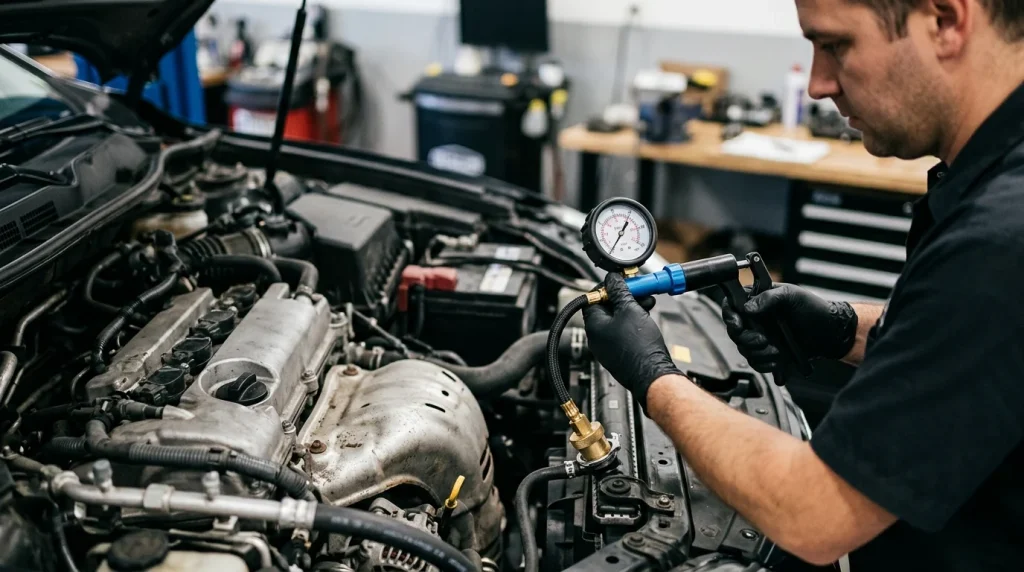
The most common mechanical issue on the 2017 Audi A3 is a coolant leak from the plastic thermostat housing and water pump assembly. Over time, the plastic housing warps and cracks from engine heat cycles, while the gasket seals degrade. This failure often triggers diagnostic trouble code P00B7 (insufficient coolant flow). Repairing this issue is labor-intensive because the intake manifold must be removed, taking 6 to 8 hours. Independent specialists charge between $800 and $1,200, while dealers often charge over $2,000 for this repair.
DSG Transmission Maintenance and Lifespan
The S tronic dual-clutch transmission requires a fluid and filter change every 40,000 miles. Skipping this critical service can lead to clutch pack wear, solenoid failure, or damage to the mechatronic unit. Symptoms of old fluid include jerky shifts, hesitation when accelerating from a stop, and clutch slippage. A mechatronic replacement costs over $3,000, so verifying service records is essential. A standard DSG service costs between $400 and $600.
Electrical Issues and MMI Infotainment Glitches
The 7.0-inch motorized pop-up MMI screen is a frequent source of owner complaints. The plastic gears inside the motorized mechanism can strip over time, causing the screen to get stuck or make grinding noises during deployment. Other issues include occasional Bluetooth disconnects, MMI screen freezes, and software glitches that require a hard reboot (holding down the MMI menu dial and selection buttons simultaneously).
Suspension Wear and Bushing Noise
The front control arm bushings and upper strut mounts tend to wear out prematurely, often between 50,000 and 70,000 miles. Worn bushings cause squeaking or creaking noises when driving over speed bumps or when braking hard. Replacing the front control arm bushings costs roughly $400 to $600 at an independent repair shop.
Safety Recalls and Campaign Service History
Safety recalls are a priority for used car buyers. The National Highway Traffic Safety Administration (NHTSA) lists four safety recalls for the 2017 Audi A3. These recalls should be checked and completed by an authorized dealer at no cost to the owner.
Fuel Tank Suction Jet Pump Leak (Recall 24V110000)
In February 2024, Volkswagen Group of America issued a major recall expansion (NHTSA Campaign 24V110000, Audi factory codes 20UF and 20YF) covering front-wheel-drive A3 models. The suction jet pump inside the fuel tank can crack due to manufacturing defects. This allows fuel to flow directly into the evaporative emissions canister, leading to fuel leaks through the canister vent, gas odors, and fire hazards. Dealers replace the suction jet pump with an improved version free of charge.
Passenger Occupant Detection System (Recall 21V198000)
NHTSA Campaign 21V198000 (Audi code 69BY) addresses the Passenger Occupant Detection System (PODS). The sensor mat inside the front passenger seat cushion can experience wire degradation. This causes the system to incorrectly detect occupancy, deactivating the passenger airbag even when an adult is seated. Dealers install an updated wiring harness and sensor mat to resolve the issue.
Engine Stall Software Update
Early 2017 production vehicles were recalled for an Engine Control Unit (ECU) software issue. The factory fuel management software could cause engine stalls at low RPMs, particularly when rolling to a stop. Dealers resolve this issue with a simple, free ECU software reflash that takes about an hour.
Verification of Completed Safety Recalls
Before purchasing a used 2017 A3, go to the NHTSA recall lookup website and enter the vehicle’s 17-digit VIN. This tool shows any open recalls that have not yet been repaired. You can also request a service printout from an Audi dealership to verify that all recall work has been completed.
Interior Design, Comfort, and Technology Features
The 2017 facelift brought significant cabin technology upgrades that keep the A3 feeling modern. The layout is minimalist, featuring circular jet-turbine air vents and a clean center console, though cargo and rear seat space are limited.
Audi Virtual Cockpit Integration
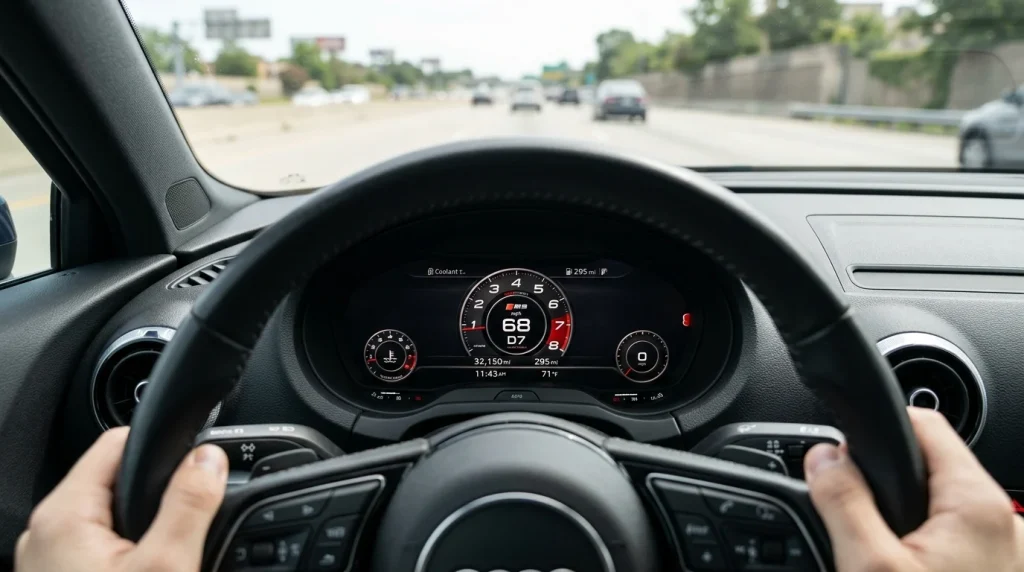
The standout technology feature for the 2017 model year is the optional Audi Virtual Cockpit. This 12.3-inch high-resolution digital gauge cluster replaces the analog dials, displaying high-speed 60 fps graphics. Drivers can customize the screen to show traditional gauges or a full-screen navigation map utilizing Google Earth imagery. This option was included in the Technology Package on Premium Plus and Prestige trims.
Retractable MMI Screen
Base models feature a standard 7.0-inch motorized MMI screen that rises out of the dashboard when the ignition is turned on. The system is controlled via a physical dial and button array behind the gear selector. While unique, the screen’s low-resolution 800×480 display looks dated compared to modern luxury vehicles, and the motorized mechanism adds a failure point.
Smartphone Connectivity and Audio Packages
Standard equipment for the 2017 model year includes wired Apple CarPlay and Android Auto, allowing drivers to bypass the native MMI interface. For audiophiles, the Prestige trim includes a 14-speaker, 705-watt Bang and Olufsen premium audio system. This package features illuminated door speaker grilles and delivers exceptional sound clarity.
Cabin Materials and Cargo Limitations
The front seats provide excellent support and high-quality leather upholstery. However, the rear seats are cramped for adults, with tight legroom and headroom. Trunk capacity is also small, offering only 10.6 cubic feet in the sedan. Because the vehicle uses run-flat tires, there is no spare tire under the trunk floor, leaving only a small repair kit.
High-Performance Models: S3, RS3, and e-tron PHEV
The 2017 model lineup includes three distinct performance and alternative-fuel variants, broadening the A3’s appeal to enthusiasts and eco-conscious buyers.
2017 Audi S3 Performance
The S3 utilizes an upgraded 2.0-liter TFSI engine producing 292 horsepower and 280 lb-ft of torque. It comes standard with Quattro AWD, a magnetic ride control suspension, and larger front brakes. The S3 sprints from 0-60 mph in just 4.7 seconds. Used S3 models are currently valued between $18,000 and $28,000.
2017 Audi RS3 and the Five-Cylinder Engine
The 2017 model year marked the US debut of the RS3 sedan. It features a unique 2.5-liter turbocharged five-cylinder engine producing 394 horsepower and 354 lb-ft of torque. Power is sent through a 7-speed dual-clutch transmission to a performance-tuned Quattro system, launching the car to 60 mph in 3.9 seconds. Used RS3 sedans command prices from $35,000 to $45,000.
2017 Audi A3 Sportback e-tron PHEV
The e-tron plug-in hybrid uses a 1.4-liter engine paired with an electric motor to produce a combined 204 horsepower. It features a hatchback design and offers up to 16 miles of electric-only range. While highly efficient, used e-tron models carry risk due to hybrid battery degradation and high replacement costs.
Competitor Comparisons: A3 vs CLA 250, 2 Series, and Acura ILX
When shopping for a used luxury compact, the 2017 A3 competes with the Mercedes-Benz CLA 250, the BMW 2 Series, and the Acura ILX.
2017 Audi A3 vs 2017 Mercedes-Benz CLA 250
The Mercedes CLA 250 offers a more dramatic sloping roofline and 208 horsepower. However, the CLA suffers from poor rear visibility, a stiff ride, and a lower-quality interior with cheap plastics. The A3 has superior interior build quality, better rear headroom, and a more refined ride.
2017 Audi A3 vs 2017 BMW 2 Series
The BMW 230i coupe is a rear-wheel-drive vehicle producing 248 horsepower. It delivers superior handling and steering feel compared to the front-heavy A3. However, the A3 counters with four-door practicality, standard AWD availability, and a more modern infotainment system.
2017 Audi A3 vs 2017 Acura ILX
The Acura ILX is based on the Honda Civic, offering 201 horsepower, excellent reliability, and low maintenance costs. However, the ILX lacks the premium cabin materials, cabin insulation, and all-wheel-drive capability of the Audi A3, making the A3 feel much more premium.
Is the 2017 Audi A3 Worth Buying Used?
The 2017 Audi A3 is a compelling used luxury car under $13,000, provided you check the service records. It represents a sweet spot in depreciation, offering high-end features and updated engines at a low price point. However, buyers must be prepared for premium maintenance costs and premium fuel requirements.
Expert view: The 2017 model year represents the sweet spot for used A3 buyers. The mechanical improvements of the EA888 Gen 3B engine and standard safety tech make it far superior to the 2015-2016 models. However, we advise against buying any used model lacking documented 40,000-mile DSG service records.
Long-Term Value Assessment
A used 2017 A3 offers a premium driving experience for the price of a generic used economy car. While a Honda Civic or Toyota Corolla will be cheaper to run, the A3 offers superior cabin isolation, standard leather seats, and a turbocharged engine. Future depreciation is expected to slow down, making the car a stable asset.
Pre-Purchase Inspection Checklist
Before buying, get a pre-purchase inspection from a German car specialist. The inspection should prioritize:
- Pressurizing the cooling system to check for water pump housing leaks.
- Scanning for mechatronic faults and testing for DSG clutch chatter at low speeds.
- Checking the front control arm bushings and strut mounts for tearing or noise.
- Verifying that all safety recalls are completed via VIN search.
Ownership Cost Estimates
Running a used A3 requires budgeting for premium fuel (91 octane or higher) and full-synthetic oil changes every 10,000 miles. Insurance premiums for luxury compacts are also roughly 15% to 25% higher than for mainstream sedans.
Note: Fuel pricing calculations should factor in the requirement for 91-octane premium fuel. Running lower grades can reduce performance and accelerate carbon deposit buildup in these direct-injection engines.
Frequently Asked Questions about 2017 Audi A3
Is the 2017 Audi A3 a reliable car?
J.D. Power rates the 2017 Audi A3 at 81 out of 100, which is average. While the facelift resolves major engine and transmission failures seen in 2015-2016 models, the car still experiences common water pump failures.
What are the common problems with the 2017 Audi A3?
The most common problems are plastic water pump and thermostat housing cracks resulting in coolant leaks. Other frequent complaints include DSG transmission hesitation, front suspension bushing wear, and motorized MMI screen glitches.
Is the 2017 Audi A3 better than the 2016 Audi A3?
Yes, the 2017 model is significantly better. It introduces the upgraded 2.0-liter engine replacing the problematic 1.8-liter unit, adds standard Apple CarPlay and Android Auto, and comes standard with forward collision warning.
Did the 2017 Audi A3 have the same transmission problems as the 2015 Audi A3?
No, the 2017 model has substantially fewer transmission issues. The FWD models received a new 7-speed S tronic dual-clutch transmission, while the Quattro models kept the 6-speed unit, both receiving software updates that reduced mechanical failures.
What engine is in the 2017 Audi A3?
The 2017 Audi A3 is equipped with a 2.0-liter TFSI turbocharged four-cylinder engine. In FWD models, it produces 186 horsepower, while Quattro AWD models feature a high-output version producing 220 horsepower.
What is the difference between the 2017 Audi A3 FWD and Quattro?
The Quattro model features all-wheel drive, a more powerful engine tune (220 hp vs 186 hp), a 6-speed transmission instead of a 7-speed, and commands a used market premium of approximately $2,000.
How much horsepower does the 2017 Audi A3 have?
The FWD version has 186 horsepower, and the Quattro AWD version has 220 horsepower.
How much horsepower does the 2017 Audi S3 have?
The performance-focused 2017 Audi S3 has 292 horsepower and 280 lb-ft of torque.
Was 2017 the first year for the Audi RS3 sedan in the US?
Yes, 2017 marked the debut year of the high-performance RS3 sedan in the United States, producing 394 horsepower from its 2.5-liter five-cylinder engine.
How much does a used 2017 Audi A3 cost in 2026?
Average used retail prices in 2026 range from $11,721 for a Premium FWD sedan to $15,835 for a Prestige FWD sedan, with Quattro AWD models adding about $2,000 to the price.
Did the 2017 Audi A3 have the Virtual Cockpit?
Yes, the 12.3-inch Audi Virtual Cockpit digital gauge cluster debuted for the 2017 model year as an option within the Technology Package on Premium Plus and Prestige trims.
Is the 2017 Audi A3 e-tron reliable?
The A3 Sportback e-tron plug-in hybrid shows average reliability, but used buyers face higher risks due to battery degradation and more complex hybrid drivetrain repairs.

