

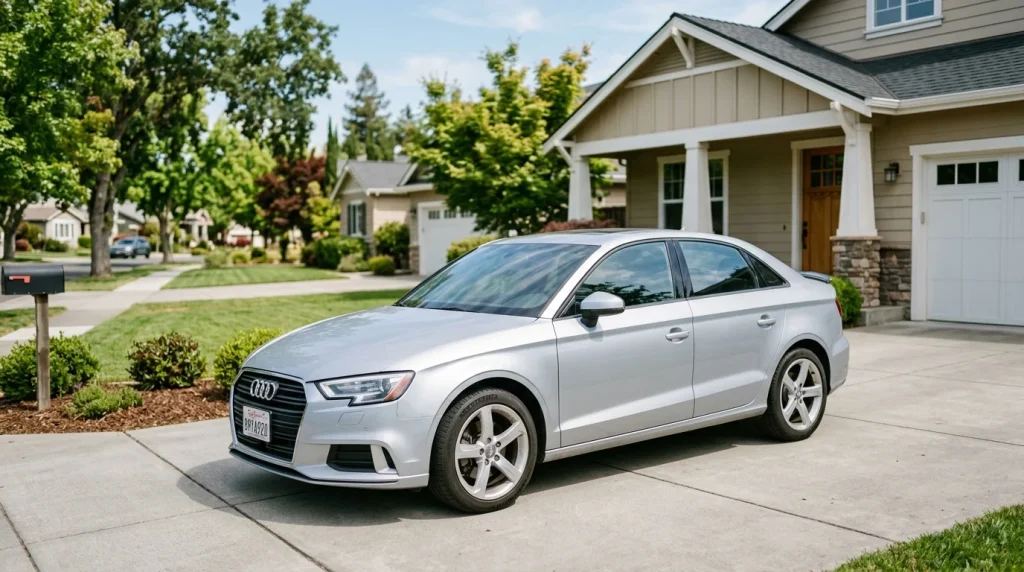
Quick answer: The used 2019 Audi A3 is currently priced between $12,370 and $28,495 in the US market as of July 2026, offering a refined used luxury buying opportunity. Buyers must select between the fuel-efficient 184-horsepower base model and the engaging 228-horsepower Quattro model while ensuring that crucial airbag and fuel pump safety recalls have been resolved.
Key takeaways:
- High depreciation makes the mature 8V generation A3 a compelling used luxury bargain compared to its original MSRP.
- Quattro models offer 44 additional horsepower and significantly better handling than base front-wheel drive configurations.
- Mandatory DSG dual-clutch transmission service is required every 40,000 miles to prevent costly transmission failures.
- Check the status of critical NHTSA recalls including the passenger airbag sensor (PODS) and the fuel pump suction jet.
2019 Audi A3 Overview: A Mature 8V Generation Option
The 2019 model year occupies a highly refined position in the A3 lineup, benefiting from years of engineering enhancements while avoiding the early production glitches of its generational cycle. For used car buyers, this mature entry in the entry-level premium sedan market represents a balanced combination of classical design, advanced cabin options, and proven mechanical packages. If you want to view all model years and reviews, you can return to our comprehensive Audi A3 hub page.
2019 Model Year Positioning and Facelift Refinements
The 2019 Audi A3 represents the penultimate year of the mature third-generation 8V platform, which ran in the US from 2015 through 2020. This timing is highly advantageous for used buyers. By 2019, the manufacturer had addressed the primary mechanical issues that plagued the early 2015 and 2016 production years, such as coolant thermostat housing leaks and early DSG transmission software glitches. This model sits right before the 2020 Audi A3, which was the final year of this generation, and showcases how Audi perfected the platform over time. The 8V generation remains popular because it retains physical HVAC buttons and a clean layout that many drivers prefer over newer all-digital cabins.
For the 2019 model year, the vehicle received subtle visual styling updates that modernized the exterior profile. These updates included a revised front bumper layout, standard chrome exhaust tips, and updated LED daytime running light signatures that align it closely with the larger A4 sedan. Selecting a late-production 8V model ensures that replacement parts are abundant, aftermarket support is broad, and local independent service facilities are fully familiar with repair procedures.
Visual and Interior Styling of the S line Trims
Selecting the optional S line package adds a distinct sporting character to the sedan. S line models are distinguished by a sport-tuned suspension setup that lowers the ride height by 15 millimeters, unique front and rear bumpers with sharper air intakes, side sill extensions, and unique multi-spoke aluminum wheels. Inside the cabin, the S line package upgrades the environment with contoured front sport seats featuring extended thigh support, brushed aluminum trim inlays, black headliner fabric, and a flat-bottom leather steering wheel. On the used market, S line models command a price premium of approximately $1,500 to $2,500, but their enhanced visual presence and sharper handling make them highly desirable among enthusiasts.
Engine Specifications and Driving Performance
Drivability and power delivery represent the most significant differences among used models, depending on whether the original buyer selected the fuel-efficient front-wheel drive setup or the high-output Quattro package.
FWD 40 TFSI: Fuel Efficiency Over Power
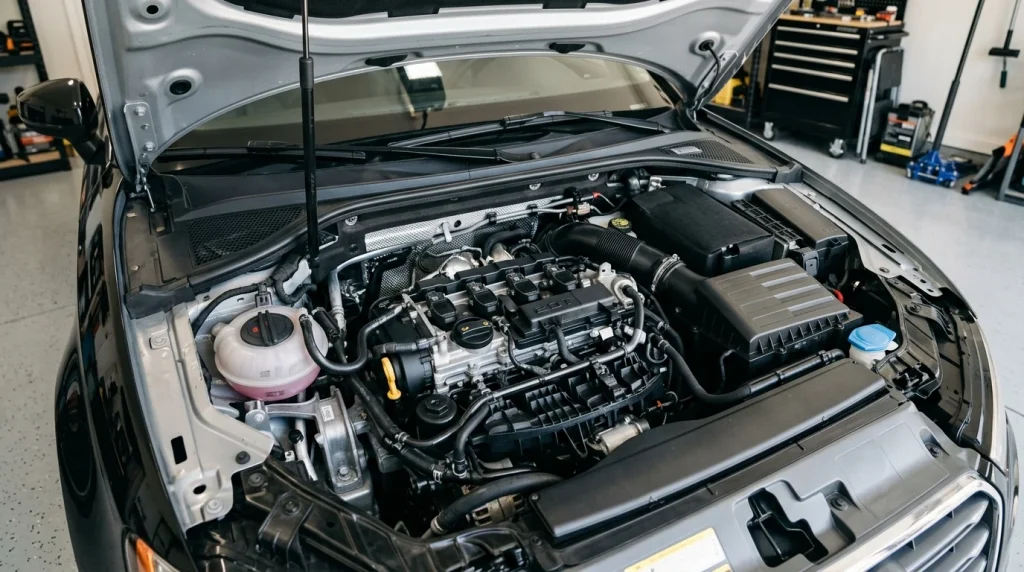
The base powertrain in the FWD model consists of a 2.0-liter turbocharged four-cylinder engine designated as the 40 TFSI. This engine utilizes an efficiency-oriented combustion process known as the Budack-cycle (a variation of the Miller-cycle), which keeps the intake valves closed early to maximize fuel vaporization.
Key specifications for this configuration include:
- Horsepower: 184 hp at 4,400 to 6,000 rpm
- Torque: 221 lb-ft at 1,600 to 4,300 rpm
- Tuning focus: Efficiency and low-speed commuting response
- Boost level: Conservative pressure curve designed to run cool
According to EPA estimations verified on fueleconomy.gov, the 2019 Audi A3 40 TFSI FWD has an EPA fuel economy rating of 26 mpg city and 35 mpg highway, resulting in a combined rating of 29 mpg. This efficiency makes the front-wheel drive model highly practical for highway commuters, though the front tires can struggle to maintain traction under quick standing starts due to the immediate application of turbocharger torque.
Quattro 45 TFSI: Genuinely Engaging Sport Dynamics
Upgrading to the 45 TFSI engine transforms the sedan from a sensible commuter into a genuine sports sedan. This version of the 2.0-liter turbocharged EA888 engine utilizes a traditional Otto-cycle combustion process with a larger turbocharger housing and more aggressive camshaft profiles to deliver substantially more power.
Key metrics for the Quattro powertrain include:
- Horsepower: 228 hp at 4,500 to 6,200 rpm (an increase of 44 hp)
- Torque: 258 lb-ft at 1,600 to 4,400 rpm (an increase of 37 lb-ft)
- All-Wheel Drive: Standard Haldex-based Quattro system
- Traction delivery: Automatic rear-axle torque engagement within milliseconds of front wheel slip
The Quattro fuel economy drops to 22 mpg city and 30 mpg highway (25 mpg combined) as noted on the official fuel economy database. However, most buyers willingly accept this efficiency trade-off for the substantial performance and capability improvements.
Here is a performance comparison of the standard engines:
| Powertrain Configuration | Horsepower | Torque (lb-ft) | EPA Fuel Economy (City/Hwy) | 0-60 MPH Acceleration |
|---|---|---|---|---|
| 40 TFSI FWD (Budack-Cycle) | 184 hp | 221 lb-ft | 26 / 35 mpg | 7.8 seconds |
| 45 TFSI Quattro (Otto-Cycle) | 228 hp | 258 lb-ft | 22 / 30 mpg | 6.0 seconds |
Seven-Speed DSG Transmission Character and Maintenance
Both engines are mated to a seven-speed dual-clutch automatic transmission, referred to by the manufacturer as the S tronic DSG. This transmission uses two separate fluid-bathed clutches to pre-select the next gear, executing shifts in less than 200 milliseconds.
While the DSG provides crisp acceleration, it exhibits unique characteristics that used car buyers must understand:
- Low-speed hesitation: Minor clutch engagement delays can occur when rolling slowly in bumper-to-bumper traffic, sometimes feeling like a manual transmission clutch engagement.
- Incline rollback: The transmission can roll backward briefly on steep hills before the hill-hold assist system engages.
- Launch response: Shifts are exceptionally smooth and direct once the vehicle is moving beyond first gear.
To prevent premature wear on the internal mechatronic control unit, the DSG transmission requires a complete fluid and filter replacement every 40,000 miles without exception. Neglecting this maintenance interval can lead to clutch slippage or complete transmission failure, resulting in replacement costs that often exceed $4,000.
Used Market Pricing and Value Depreciation
Current used market data indicates that the third-generation A3 has passed through the steepest part of its depreciation curve, making it a stable purchase that retains value well over a two-year holding period.
Average Used Pricing Factors (FWD vs Quattro)
According to retail data on Edmunds, the used 2019 Audi A3 averages $12,370 for base FWD configurations to $28,495 for high-trim Quattro configurations in the US used market as of 2026. The wide pricing spread is determined by mileage, drivetrain, and packages:
- Base FWD Premium models: Typically retail between $12,370 and $16,500 with mileages between 50,000 and 70,000 miles.
- Mid-trim Quattro Premium Plus models: Command prices between $17,000 and $21,000, representing the volume sweet spot of the used market.
- Loaded Prestige Quattro models: With under 40,000 miles, these variants can command up to $28,495.
Private party transactions generally transact at a discount of 8 to 12 percent compared to franchise dealerships, though buyers must conduct their own vehicle history verifications.
Long-Term Value Retention and Annual Depreciation Curves
Depreciation analysis shows that base front-wheel drive variants have lost approximately 60 to 65 percent of their original MSRP values. In contrast, Quattro configurations have retained their value better, losing about 45 to 50 percent of their original retail value. S line models equipped with all-wheel drive depreciate at a slower rate of approximately 8 to 10 percent annually, whereas FWD models continue to drop by 12 to 14 percent per year. This divergence indicates that buying a Quattro model not only improves the driving experience but also secures a more resilient asset for eventual resale.
Reliability Ratings and Critical Recalls
Prospective buyers must examine the service history and open safety campaigns of any vehicle they are considering, as several recalls are critical for passenger safety.
NHTSA Airbag Recall: The PODS Sensor Safety Defect
The most significant safety campaign affecting the vehicle is the passenger occupant detection system recall. NHTSA Campaign 21V-198 is a safety recall affecting 153,152 Audi vehicles in the United States, requiring dealerships to replace the Passenger Occupant Detection System sensor. In affected sedans, the electrical connection under the passenger seat can develop micro-cracks, causing the car to falsely deactivate the front passenger airbag even when an adult is seated.
Owners can verify if a vehicle has had this recall resolved by checking the VIN on nhtsa.gov/recalls. If unresolved, the passenger airbag warning light will remain illuminated and the seatbelt warning chime may ring continuously. Dealerships perform this repair free of charge, though replacement parts can sometimes face supply delays.
NHTSA Suction Jet Pump Recall: Fuel Leak Fire Risks
Another critical recall campaign is NHTSA Campaign 24V-110, which was issued to address safety risks in the fuel tank assembly. In affected vehicles, a suction jet pump within the fuel tank can fail, allowing fuel to flow directly into the evaporative emissions charcoal canister.
This condition can cause:
- Fuel to leak from the evaporative canister, posing an immediate fire hazard in the presence of an ignition source.
- Premature fuel nozzle shut-off during refueling.
- A strong gasoline odor inside the cabin or near the rear wheel wells.
- Engine sputtering or stalling shortly after refueling.
Confirming that this campaign has been completed is mandatory for safety. Audi dealerships replace the internal suction jet pump assembly with an updated design at no cost to the owner.
Infotainment Screen Mechanics and Phone Connectivity Problems
The retractable 7.0-inch MMI infotainment screen is a distinctive feature, but its motorized gears represent a common mechanical failure point. Over time, the internal plastic gears can crack or strip, leading to:
- The display getting stuck in the open or closed position.
- Audible grinding noises from the dashboard during engine start or shutdown.
- Intermittent screen flickering caused by wear on the internal ribbon cable.
Replacing the screen motor mechanism out of warranty typically costs between $900 and $1,400 at a specialist repair facility.
Additionally, many owners report phone connectivity drops over the standard wired Apple CarPlay and Android Auto connections. Often, this is caused by worn USB ports in the center console or compatibility issues with aftermarket cables. Using high-quality certified cables or updating the MMI firmware can resolve these connectivity issues.
Engine Weak Points: Turbo Diverter Valve and Intake Carbon Buildup
The EA888 engine has a proven track record, but it has two notable areas that require periodic maintenance:
- Turbocharger Diverter Valve: The factory diverter valve uses a plastic housing that can develop cracks, leading to boost pressure leaks. Symptoms include a high-pitched whistling noise under acceleration, sluggish throttle response, and a stored check engine light code. Upgrading to a reinforced aftermarket piston-style valve costs approximately $250 and prevents repeat failures.
- Intake Valve Carbon Accumulation: Because the engine uses direct fuel injection, fuel does not wash over the intake valves to clean them. By 60,000 to 80,000 miles, carbon deposits restrict airflow. This restriction causes rough morning idles, cold-start misfires, and reduced top-end engine power. Having the intake valves cleaned via walnut blasting costs between $500 and $800, which restores original performance and improves fuel economy.
Expert view:
While the EA888 engine is highly durable, used car buyers should avoid vehicles that have been modified with aftermarket engine tunes. Increased boost pressure accelerates wear on the turbocharger and puts additional strain on the DSG clutches, often leading to premature failure.
Premium Cabin Features and Technology Package
The cabin design balances high-quality touchpoints with compact dimensions that limit rear-passenger comfort.
MMI Retractable Infotainment Screen and Digital Cockpit Options
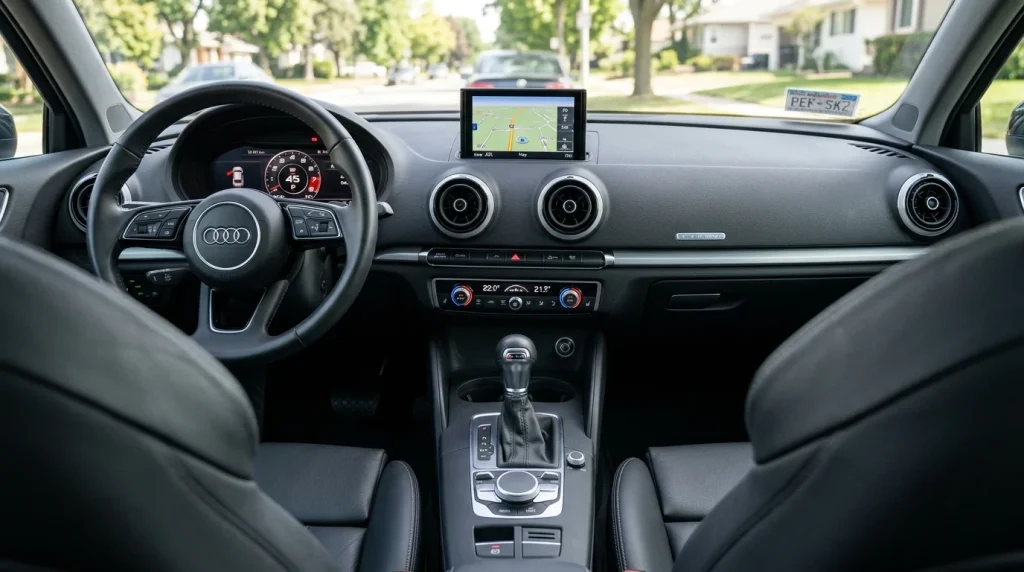
The standard cabin features leather seating surfaces, dual-zone automatic climate control, and a panoramic sunroof. Higher trims, such as the Premium Plus and Prestige, often feature the optional Virtual Cockpit. This package replaces the traditional analog instrument cluster with a 12.3-inch high-resolution digital display that allows the driver to view a full-color Google Earth navigation map directly behind the steering wheel. This option modernizes the driving experience and remains highly sought after on the used market.
Cargo Capacity and Rear Cabin Space Constraints
While front-seat occupants enjoy ample headroom and legroom, the rear seats are tight for taller adults, offering only 35.1 inches of legroom. Cargo capacity is also a significant limitation. The sedan offers only 10.6 cubic feet of trunk volume in Quattro configurations, as the all-wheel drive rear differential raises the trunk floor slightly. FWD models offer a slightly larger 12.3 cubic feet of space.
Here is how the A3’s cargo capacity compares to its classmates:
| Vehicle Model | Trunk Cargo Volume | Rear Legroom |
|---|---|---|
| 2019 Audi A3 Quattro | 10.6 cu ft | 35.1 inches |
| 2019 Mercedes-Benz CLA 250 | 11.9 cu ft | 27.1 inches |
| 2019 BMW 2 Series Coupe | 12.0 cu ft | 33.0 inches |
Performance Upgrades: Audi S3 and RS3 Comparison
For buyers seeking more performance, the S3 and RS3 variants offer substantial upgrades. The S3 utilizes a highly tuned version of the 2.0-liter engine, producing 288 horsepower and 280 lb-ft of torque. It features a lowered magnetic ride suspension, upgraded brakes, and quad exhaust tips, reaching 0-60 mph in 4.7 seconds. Used S3 pricing ranges from $25,000 to $35,000 depending on condition.
The high-performance RS3 features a unique 2.5-liter turbocharged five-cylinder engine, producing 394 horsepower and 354 lb-ft of torque. With standard launch control and Quattro all-wheel drive, the RS3 accelerates from 0-60 mph in 3.9 seconds, accompanied by a distinctive five-cylinder exhaust note. Used RS3 models are rare and command between $40,000 and $50,000.
Head-to-Head: 2019 Audi A3 vs Mercedes-Benz CLA 250
The Mercedes-Benz CLA 250 represents the A3’s most direct styling competitor, featuring a low-slung roofline and a coupe-like profile.
Mercedes-Benz CLA 250 advantages:
- Bold exterior styling with a more aggressive road presence.
- Slightly larger trunk capacity at 11.9 cubic feet.
- Stronger base engine output at 208 horsepower compared to the A3’s base 184 horsepower.
Audi A3 advantages:
- Considerably better rear-seat headroom due to the traditional sedan roofline.
- Superior cabin material quality with fewer creaking interior plastics.
- More intuitive controls with physical buttons for primary climate adjustments.
- Availability of the 228-horsepower Quattro engine, which outperforms the CLA 250’s engine.
For buyers who regularly carry passengers in the rear seats, the A3 is the more practical choice, whereas the CLA 250 suits buyers prioritizing exterior styling.
Generational Dilemma: 2019 Audi A3 vs 2022 Audi A3
Audi skipped the 2021 model year in the United States, introducing the redesigned fourth-generation 8Y platform for the 2022 model year. For those interested in the newest design language, you can explore the 2026 Audi A3 review to compare the specifications, price, and key changes of the latest model.
Key differences between the generations include:
- Infotainment: The 2022 model replaces the retractable dashboard screen with a standard 10.1-inch integrated touchscreen built directly into the center stack.
- Powertrain: The 2022 model introduces a standard 48V mild-hybrid system that improves city fuel economy but adds long-term electrical complexity.
- Pricing: Used 2022 models command a premium of $6,000 to $9,000 over comparable 2019 models.
The 2019 model represents the better value proposition for budget-conscious buyers, as it avoids the touchscreen-only interface of the newer car while offering similar performance.
Autvex Buying Verdict: Who Should Choose the 2019 Audi A3?
The 2019 model is highly recommended for young professionals, commuters, or couples who want a refined luxury vehicle with manageable dimensions. It offers quiet cabin acoustics, comfortable front seats, and stable driving dynamics. However, it is not suitable for families who require rear-facing infant car seats, as the tight rear legroom forces the front seats forward.
Pre-Purchase Inspection (PPI) Checklist
Before purchasing any used A3, hire an independent specialist to perform a pre-purchase inspection. The inspection should prioritize:
- DSG Service Verification: Demand physical service receipts showing transmission fluid changes at 40,000 miles.
- NHTSA Recall Audit: Confirm on the NHTSA database that both the PODS airbag sensor and suction jet pump recalls have been completed.
- Coolant System Leak Check: Inspect the thermostat housing and water pump area for dried pink coolant crust, indicating a slow leak.
- Diagnostic Scan: Connect a diagnostic tool to check for hidden codes related to turbocharger boost pressure or cylinder misfires.
If the seller cannot provide maintenance records or if the water pump shows signs of leaking, budget $1,200 for immediate repairs or negotiate a corresponding price reduction.
Note:
used car buyers should budget $800 to $1,200 annually for maintenance and repairs on a used 2019 Audi A3, including premium synthetic oil and potential carbon cleaning.
Frequently Asked Questions About the 2019 Audi A3
What are the common problems with the 2019 Audi A3?
The most common problems include the passenger airbag sensor (PODS) defect, which is covered under an active NHTSA recall, and fuel pump suction jet failures. Mechanical concerns include turbocharger diverter valve tears, intake valve carbon buildup, and water pump coolant leaks. Infotainment screen motor failures are also common on higher-mileage vehicles.
Is the 2019 Audi A3 a reliable car to buy used?
Yes, it is generally considered a highly reliable option within the used luxury segment. Because 2019 was a late production year for the 8V generation, Audi resolved most of the major mechanical issues that affected earlier models. Powertrains are highly durable if regular oil changes and DSG transmission services are performed.
What is the horsepower difference between the 2019 A3 FWD and Quattro?
The front-wheel drive 40 TFSI produces 184 horsepower and 221 lb-ft of torque, whereas the Quattro 45 TFSI produces 228 horsepower and 258 lb-ft of torque. This 44-horsepower difference reduces the 0-60 mph acceleration time from 7.8 seconds in the FWD model to 6.0 seconds in the Quattro model.
How much does a used 2019 Audi A3 cost?
Prices range from approximately $12,370 for base FWD Premium trims with average mileage to around $28,495 for high-trim Quattro Prestige variants in excellent condition. Typical mid-spec Premium Plus Quattro models retail between $17,000 and $21,000 depending on condition and location.

