

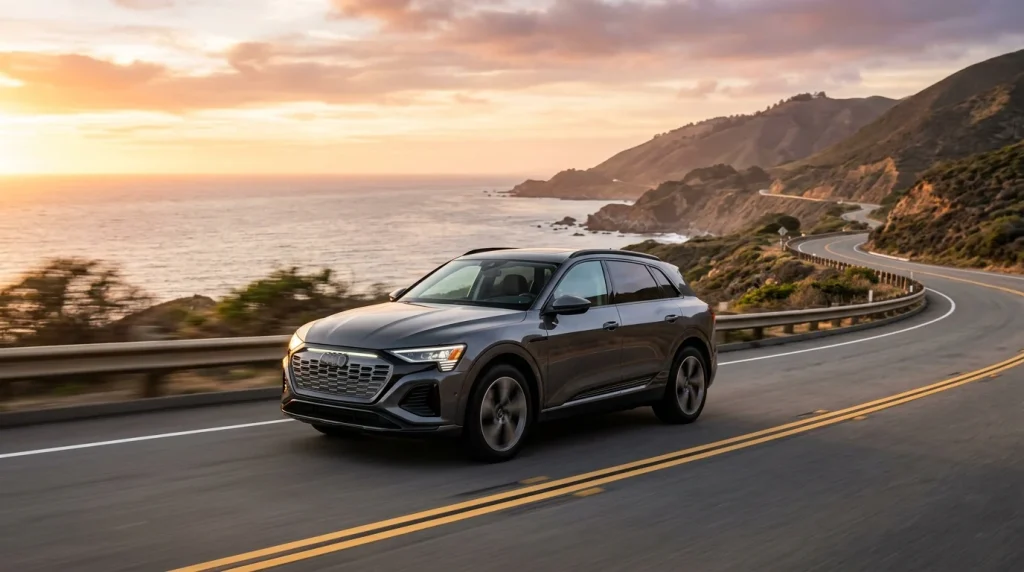
Quick answer: The 2025 Audi Q8 e-tron marks the final chapter of Audi’s flagship electric SUV, with global production officially ceasing on February 28, 2025, following the shutdown of the Brussels assembly plant. Starting at an MSRP of $74,800, this luxury EV offers up to 285 miles of EPA-rated range, dual-motor all-wheel drive, and a quiet, premium cabin. While its charging speed and maximum range trail newer competitors, significant end-of-production dealer discounts make it a compelling value for luxury buyers who prioritize comfort over cutting-edge electric range.
Key takeaways:
- Global Q8 e-tron production ended permanently on February 28, 2025, due to declining luxury EV demand and high factory operating costs.
- US dealers did not receive newly built 2025 model year vehicles, selling remaining 2024 inventory instead, while European markets saw limited 2025 runs.
- Dual electric motors produce 402 horsepower, launching the heavy SUV from zero to 60 mph in 5.2 seconds in boost mode.
- Charging peak is capped at 170 kW, allowing a 10% to 80% charge in approximately 31 minutes under optimal conditions.
- Real-world highway range varies significantly, ranging from 239 miles in cold highway driving to over 330 miles in gentle suburban testing.
- Major owner-reported issues include leaking panoramic sunroof drains that can damage dashboard electronics, brake squeal, and software glitches.
Overview: The End of Audi’s First Flagship EV
The discontinuation of the Audi Q8 e-tron marks the end of an era for the German brand. Originally launched in 2019 under the simple “e-tron” nameplate, this model served as Audi’s initial foray into the modern luxury electric vehicle space. It underwent a substantial mid-cycle refresh for the 2024 model year, receiving the Q8 prefix, an upgraded battery pack, and aerodynamic styling refinements.
However, structural challenges at the Brussels assembly plant in Belgium, coupled with high labor costs and shifting luxury market dynamics, led to the factory’s closure. According to a report by Car and Driver, Audi officially wrapped up assembly on February 28, 2025, after failing to secure a buyer for the facility.
For the US market, this transition created a unique scenario. Audi confirmed that no brand-new 2025 model year Q8 e-trons were manufactured for American dealers. Instead, showrooms continue to sell through existing 2024 Audi Q8 e-tron stock, which is identical in design, battery size, and performance to the limited 2025 models sold in Europe. Buyers shopping for a brand-new large luxury EV can expect steep dealer incentives and federal lease credits as inventory is cleared.
2025 Audi Q8 e-tron Technical Specifications
The Q8 e-tron utilizes a modified version of Audi’s MLB Evo platform, which was originally engineered for internal combustion vehicles. While this gives it a traditional luxury car feel, it also results in a heavy curb weight of nearly 5,800 pounds. The SUV is offered in two primary configurations: the standard Q8 e-tron 55 and the performance-oriented SQ8 e-tron.
The table below outlines the key technical specifications for both models:
| Specification | Q8 e-tron 55 quattro | SQ8 e-tron quattro |
|---|---|---|
| Starting MSRP | $74,800 | $89,100 |
| Battery Capacity (Gross / Net) | 114 kWh / 106 kWh | 114 kWh / 106 kWh |
| Motor Configuration | Dual Asynchronous Motors | Three Asynchronous Motors |
| Total Horsepower (Boost Mode) | 402 hp | 496 hp |
| Peak Torque (Boost Mode) | 490 lb-ft | 718 lb-ft |
| 0 to 60 mph Acceleration | 5.2 seconds | 4.5 seconds |
| Top Track Speed | 124 mph | 130 mph |
| EPA-Estimated Range | 285 miles (300 miles Sportback) | 253 miles (218 miles with 22″ wheels) |
| Maximum DC Fast Charging Speed | 170 kW | 170 kW |
| Cargo Volume (Behind Rear Seats) | 28.5 cubic feet | 28.5 cubic feet |
Driving Dynamics and Real-World Range
On the road, the Q8 e-tron prioritizes isolation over sports-car agility. Standard adaptive air suspension absorbs road imperfections with ease, creating a serene, vault-like cabin experience. The dual-motor system delivers smooth, linear power to all four wheels, though its 5.2-second 0 to 60 mph time feels moderate compared to the immediate punch of rival electric SUVs.
The vehicle’s heavy curb weight affects its overall efficiency. The EPA rates the standard Q8 e-tron SUV at 87 MPGe combined (84 city / 90 highway). The EPA-estimated range of 285 miles is achievable in everyday driving, but highway road trips tell a different story. In independent testing by MotorTrend, a highway range test conducted at 70 mph yielded just 239 miles of usable range, showing that cold weather and sustained high speeds drop range by up to 16%.
Conversely, warm-weather suburban testing by GreenCars achieved over 330 miles on a single charge by utilizing maximum regenerative braking and avoiding high-speed highway runs. Charging the 106-kWh battery pack from 10% to 80% takes 31 minutes on a DC fast charger. However, its peak charging rate of 170 kW is slower than the 250 kW or 350 kW architectures found in newer rivals, meaning highway charging stops will be slightly longer.
Interior Technology and Packaging Gaps
Audi has retained a traditional, screen-rich layout inside the Q8 e-tron rather than migrating to a single giant center screen. The dashboard features the dual-touchscreen MMI system: a 10.1-inch upper display handles navigation and media, while an 8.6-inch lower screen controls climate and vehicle settings. Audi’s Virtual Cockpit remains a standout, displaying high-resolution mapping directly behind the steering wheel.
Standard premium features include a panoramic sunroof, four-zone automatic climate control, heated front seats, and leather upholstery. Upgrading to the Prestige trim adds a head-up display, ventilated front seats with massage functions, and a 16-speaker Bang & Olufsen 3D sound system.
Despite these luxury appointments, the Q8 e-tron suffers from packaging limitations because it is built on a shared combustion-engine platform rather than a dedicated bespoke EV platform.
Analysis:
The Q8 e-tron offers less interior passenger space and cargo room than the slightly smaller, gasoline-powered Audi Q8. The battery pack raises the floor, reducing rear legroom, while the cargo area is limited to 28.5 cubic feet behind the second row. For context, the gasoline-powered Q8 provides 30.5 cubic feet. Furthermore, the front trunk (frunk) is tiny, barely holding a charging cable, whereas dedicated EV designs often feature massive front storage compartments.
Reliability Concerns and Owner Feedback
Prospective buyers of new or certified pre-owned Q8 e-tron models should be aware of several recurring issues documented in owner forums and service bulletins.
Panoramic Sunroof Clogging and Leaking
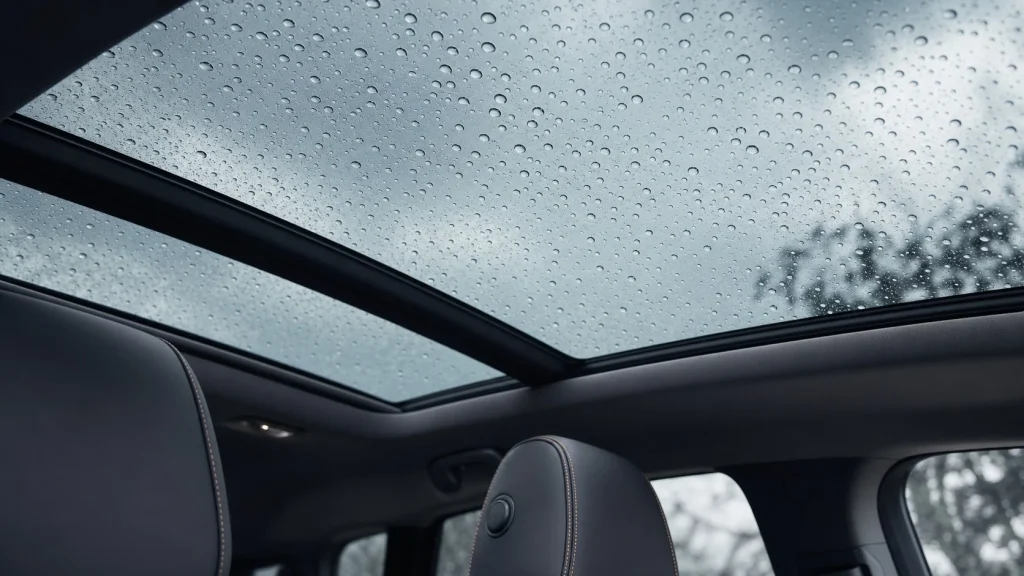
The most critical issue involves the drainage channels for the panoramic sunroof. Over time, dirt and leaves can clog the drains, causing rainwater to back up and overflow into the cabin. In severe cases, water runs down the A-pillars and drips directly behind the dashboard, damaging the MMI screens, digital instrument cluster, and main gateway control modules. Repairs can cost thousands of dollars out of warranty.
Persistent Brake Squeal
Many owners complain of loud brake squeal at low speeds. Because electric vehicles rely heavily on regenerative motor braking to slow down, the physical friction brakes are rarely used with force. This leads to a buildup of rust and debris on the rotors. While Audi dealers often inspect the brakes and label the noise as normal, it remains an annoyance in daily traffic.
MMI Software and Digital Key Glitches
The infotainment system is prone to occasional screen freezes, wireless Apple CarPlay dropouts, and digital profile login errors. The Audi smartphone app, used for remote pre-conditioning and lock status, can also suffer from slow server response times and digital key pairing failures.
Compared to older models like the 2022 Audi e-tron and 2023 Audi e-tron, the Q8 e-tron has shown improved battery health and fewer motor failures, but these ancillary electronic bugs persist.
Price and Market Value Verdict
Since the Brussels plant closed on February 28, 2025, dealers have been highly motivated to clear out remaining luxury EV inventory. The 2025 model year MSRP starts at $74,800 for the Premium Plus SUV, but buyers can routinely find fair purchase pricing closer to $71,100, reflecting discounts of $4,000 to $6,000 before federal tax credits.
Audi also offers promotional financing, such as 2.99% APR for 60 months, making it significantly less expensive to finance than a comparable BMW iX or Mercedes-Benz EQE SUV.
Note:
Purchasing a discontinued luxury EV carries long-term financial risks. Depreciation is steep, and residual values are projected to drop faster than those of active competitors. While Audi’s 8-year or 100,000-mile battery warranty protects against catastrophic battery degradation, finding replacement body panels, sunroof seals, or specialized electric powertrain parts may involve longer wait times now that the dedicated Brussels factory is offline.
Buying Decision: Who Should Buy and Who Should Skip?
Who Should Buy
- The Comfort Seeker: If you want a traditional luxury car that happens to be electric, the Q8 e-tron’s quiet cabin and soft air ride are unmatched in this price bracket.
- The Value Hunter: If you can secure a heavily discounted remaining unit or lease one with high factory cash incentives, it offers premium German build quality at a much lower monthly cost than its rivals.
- The Traditionalist: If you prefer tactile controls, physical dashboard layouts, and standard dials over Tesla-style minimalism, the Audi cabin will feel immediately familiar.
Who Should Skip
- The Road-Tripper: If you regularly drive more than 200 miles in a day, the 170-kW charging speed and highway range limits will slow down your journey compared to a Tesla Model X or Genesis GV87.
- The Tech Enthusiast: If you expect frequent over-the-air updates, advanced driver-assistance features, or high-performance handling, newer dedicated EV platforms will serve you better.
- The Long-Term Owner: If you plan to keep the vehicle past its warranty period, the potential parts scarcity and steep depreciation makes it a risky asset.
Frequently Asked Questions about the 2025 Audi Q8 e-tron
Is the Audi Q8 e-tron discontinued?
Yes. Audi officially confirmed the Q8 e-tron’s discontinuation following the closure of its Brussels factory on February 28, 2025. US showrooms did not receive new 2025 model year vehicles, but limited late-run 2025 models are available in certain European markets.
How much range does the 2025 Audi Q8 e-tron have?
The EPA rates the Q8 e-tron at 285 miles for the standard SUV and up to 300 miles for the Sportback variant. Real-world testing reveals that highway driving at 70 mph reduces range to about 239 miles, while gentle suburban driving can stretch range beyond 330 miles.
What are common problems with the Audi Q8 e-tron?
The most frequent owner complaints center on clogged panoramic sunroof drains that leak water into the cabin, low-speed brake squeal due to underused friction pads, and software glitches in the dual MMI infotainment displays.
Can Audi e-tron charge at Tesla Superchargers?
Yes, with an approved adapter. Audi owners can access Tesla’s Supercharger network using a North American Charging Standard (NACS) adapter, expanding highway charging options across the United States.
What will replace the Audi Q8 e-tron?
Audi is developing a successor utilizing the Premium Platform Electric (PPE) co-developed with Porsche, which currently underpins the Audi Q6 e-tron. This next-generation platform will offer faster 800-volt charging and improved cabin packaging.

