

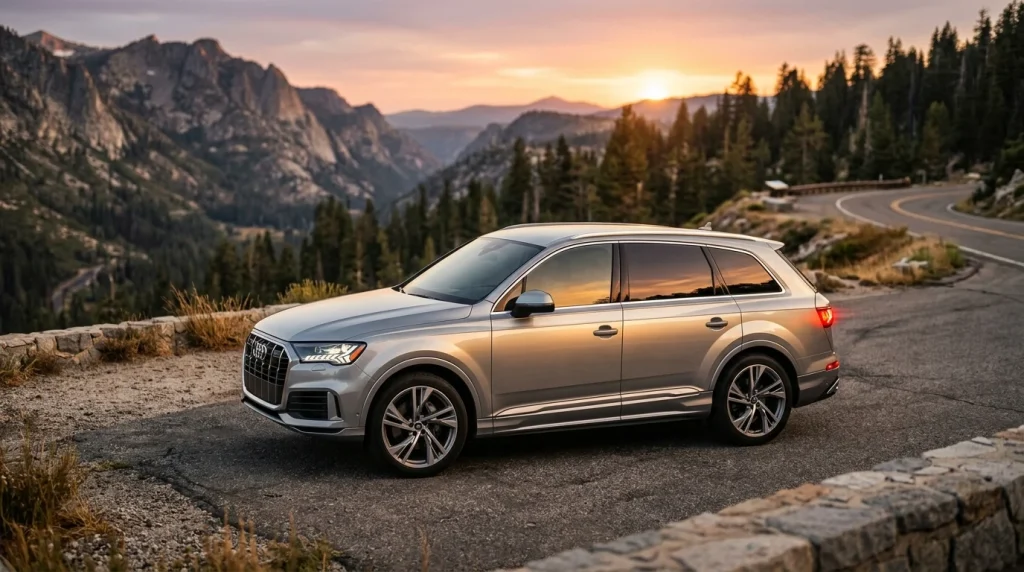
Quick answer: The 2026 Audi Q9 (officially designated as a 2027 model year vehicle) is Audi’s upcoming flagship full-size three-row luxury SUV. Built on the new Premium Platform Combustion architecture, the vehicle is designed to compete directly with the BMW X7 and Mercedes-Benz GLS. Audi has officially scheduled the global reveal of the vehicle for July 29, 2026, with U.S. dealership arrivals expected by the end of 2026 and starting prices anticipated around the $90,000 range.
Key takeaways:
- The Audi Q9 is built on the Premium Platform Combustion platform, which supports internal combustion engines and hybrid setups.
- Audi confirmed a summer 2026 launch in its Q1 2026 financial report, setting the global debut for July 29, 2026.
- Features the “Digital Stage” asymmetric dashboard with an 11.9-inch driver display, a 14.5-inch MMI touchscreen, and a 10.9-inch passenger display.
- Towing capacity is estimated at around 8,000 pounds, aiming to surpass key European luxury rivals.
Positioning of Audi’s New Flagship Three-Row SUV
The upcoming 2026 Audi Q9 serves as the brand’s new flagship internal combustion engine SUV, filling a critical gap in Audi’s utility vehicle lineup. For years, buyers requiring genuine third-row passenger space had limited options within the brand. While the mid-size Audi Q7 offers three rows of seating, its rearmost seats are famously cramped and suited mostly for small children. The new flagship SUV addresses these space constraints directly, offering a true full-size alternative.
Positioned above the Audi Q8, this new model represents Audi’s most ambitious F-segment luxury crossover SUV to date. It spiritually succeeds the A8 sedan as the range-topping luxury vehicle for the brand. The introduction of this model allows Audi to go head-to-head with established premium three-row SUVs like the BMW X7 and Mercedes-Benz GLS. By expanding the Audi Q9 lineup, the brand solidifies its presence in the highly profitable full-size luxury segment, catering to families who refuse to compromise on either space or sophistication.
PPC Architecture and Projected Powertrain Options
The 2026 Audi Q9 is built on the Premium Platform Combustion (PPC) architecture, a modular longitudinal platform shared with next-generation Audi models. According to Wikipedia, the Q9 uses the largest version of the PPC platform, which is optimized for advanced packaging of combustion engines and electrified setups. This platform ensures structural rigidity and weight optimization, while allowing a diverse range of powertrains.
Although Audi has not yet confirmed the final specifications, market intelligence indicates the SUV will offer three main powertrain configurations:
- 55 TFSI (V6 Mild-Hybrid): The volume-selling powertrain is expected to be a 3.0-liter turbocharged V6 paired with a 48-volt mild-hybrid system. This setup is projected to generate between 265 and 350 horsepower, providing a smooth and balanced power delivery.
- TFSIe (Plug-in Hybrid): A plug-in hybrid variant is highly anticipated for global markets. It is expected to combine a turbocharged V6 with an electric motor to deliver a combined output exceeding 400 horsepower, along with an electric-only range of approximately 50 miles (80 km) under real-world driving conditions.
- SQ9 (V8 Performance): For performance enthusiasts, a V8 performance variant is rumored to produce over 500 horsepower, though this high-performance model remains unconfirmed for the initial launch phase.
Every engine option will come standard with an 8-speed automatic transmission and Audi’s signature quattro all-wheel-drive system, ensuring reliable traction in all weather conditions.
Dimensions, Seating, and “Digital Stage” Interior
Inside the cabin, the 2026 Audi Q9 features a high-tech “Digital Stage” triple-screen layout and spacious three-row seating for up to seven passengers. The asymmetric, multi-layered dashboard extends into the front door panels, creating a wrap-around effect enhanced by integrated ambient lighting.
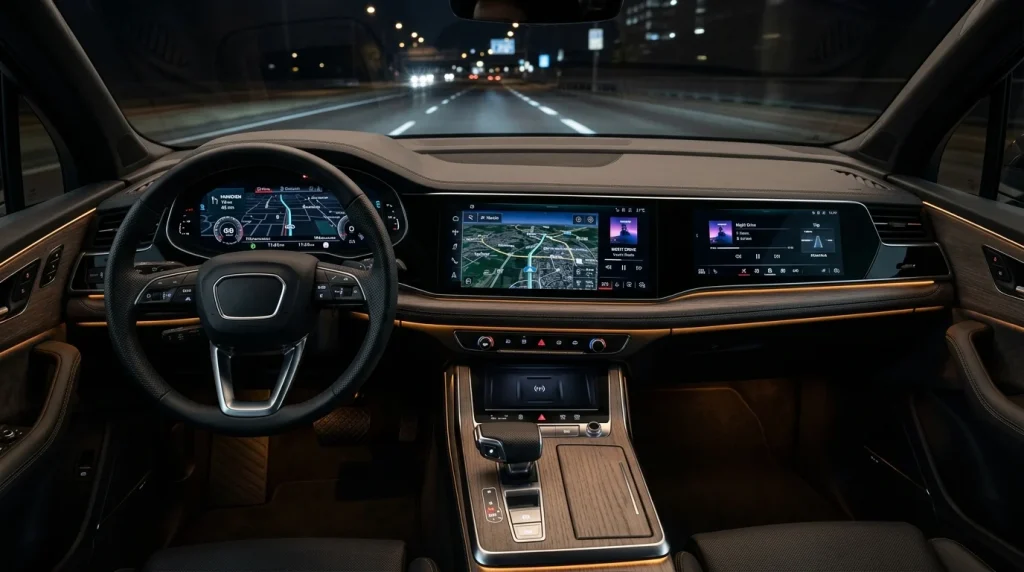
According to Wikipedia, the layout of the triple-screen dashboard integrates:
- An 11.9-inch virtual cockpit driver display.
- A 14.5-inch central MMI touchscreen.
- A 10.9-inch front passenger display with active privacy technology to prevent driver distraction.
The vehicle is designed to host occupants in a 2-3-2 configuration. Buyers can opt for a six-passenger layout featuring second-row captain’s chairs for easier access to the third row. The larger footprint translates directly into generous legroom and headroom in the third row, resolving the biggest complaint about the older, smaller Q7. Furthermore, the massive panoramic glass roof is Audi’s largest, featuring electronic dimming controls to limit cabin heat. The cabin also utilizes premium sustainable materials, including open-pore wood trim and optional alpaca wool textiles.
Driving Dynamics and Estimated Towing Capacity
Engineered for composed handling despite its massive footprint, the 2026 Audi Q9 is projected to deliver segment-leading towing capabilities. With a length approaching 205 inches (approximately 5.2 meters) and a wheelbase of 122 inches, the vehicle uses advanced chassis systems to maintain agility.
To assist with low-speed maneuverability, an optional four-wheel steering system turns the rear wheels opposite to the front wheels, reducing the turning radius. For highway comfort, an adaptive air suspension system continuously adjusts ride height and damping. This setup allows the SUV to lower itself at high speeds to improve aerodynamics or raise itself for light off-road clearance.
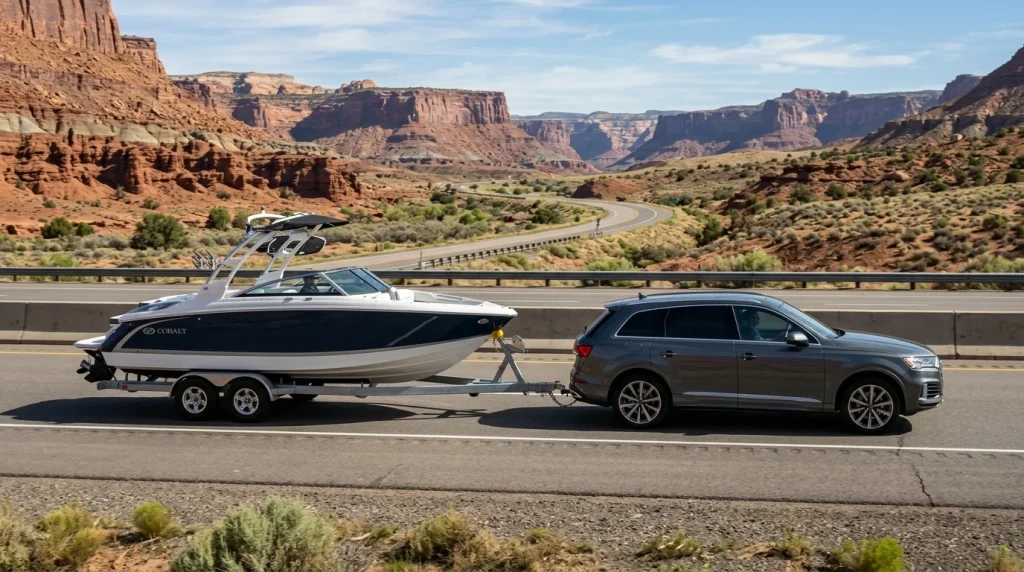
According to reports by Auto123, the SUV is projected to offer an estimated towing capacity of approximately 8,000 pounds (3.6 metric tons). This capability places the flagship SUV ahead of rivals like the BMW X7, which tops out at 7,500 pounds, and the Mercedes-Benz GLS at 7,700 pounds, making it a highly attractive option for families towing trailers or boats.
Expected Pricing and Trim Levels
While official pricing remains unannounced, market intelligence suggests the base 2026 Audi Q9 will start around the $90,000 range. The pricing structure positions the vehicle above the Q8, reflecting its larger footprint and higher standard equipment levels.
The table below outlines the projected trim levels and estimated pricing for the North American market:
| Trim Level (Projected) | Estimated MSRP | Key Expected Features |
|---|---|---|
| Premium (Base) | ~$85,000 | 3.0L Turbo V6 MHEV, Virtual Cockpit, adaptive cruise |
| Premium Plus | ~$95,000 | Bang & Olufsen sound system, HD Matrix LED headlights |
| Prestige | ~$110,000 | Panoramic glass roof, ventilated massage seats, power doors |
| SQ9 (Performance) | ~$120,000+ | Twin-turbocharged V8, sport-tuned air suspension |
While the entry price represents a premium over the Q7, the flagship vehicle justifies its cost through superior materials, standard air suspension, and the new triple-screen dashboard layout.
Global Reveal Date and Market Availability
Audi has officially scheduled the global world premiere of the Audi Q9 for July 29, 2026, with market rollouts beginning shortly after. According to reports by Regit Cars, the global reveal will showcase the final production exterior and interior details.
The vehicle is planned to arrive at U.S. dealerships in late 2026 or early 2027 as a 2027 model year vehicle. In Europe, order books are expected to open in late 2026, with the first customer deliveries scheduled for early 2027.
Origin Analysis: Should You Wait for the Audi Q9?
Deciding whether to wait for the 2026 Audi Q9 or purchase an established competitor depends on passenger space urgency and brand loyalty. The vehicle represents a fresh entry in a shadow segment dominated by the BMW X7 and Mercedes-Benz GLS.
Analysis: Loyal Audi owners who have outgrown the Q7 but wish to remain within the brand will find the upcoming model to be the ideal upgrade. The projected 8,000-pound towing capacity and standard “Digital Stage” screens are clear differentiators. However, buyers who require a vehicle immediately or those who prefer a proven platform with years of reliability data may find the BMW X7 or Mercedes-Benz GLS to be safer immediate purchases. The Q9 remains a pre-reveal vehicle, meaning initial reliability and real-world fuel economy figures are still unknown.
Frequently Asked Questions about the 2026 Audi Q9
When is the release date of the 2026 Audi Q9?
Audi has scheduled the global reveal for July 29, 2026. Production is expected to start in late 2026, with U.S. deliveries starting in late 2026 or early 2027.
How much will the 2026 Audi Q9 cost?
Official pricing is not yet released, but base models are estimated to start between $85,000 and $95,000. Higher-end trims like the Prestige or SQ9 are expected to exceed $110,000.
What is the estimated towing capacity of the Audi Q9?
Insiders estimate the towing capacity will be approximately 8,000 pounds. This is higher than both the BMW X7 (7,500 pounds) and the Mercedes-Benz GLS (7,700 pounds).
How does the Audi Q9 compare to the Audi Q7?
The upcoming model is significantly larger than the Q7, offering a longer wheelbase and an upright roofline that provides genuine adult-friendly legroom in the third row. It also features a more advanced triple-screen dashboard layout.
Will there be a fully electric Audi Q9?
A fully electric version, potentially named the Q9 e-tron, is rumored but not confirmed. Audi’s current focus for this model is the Premium Platform Combustion (PPC) platform, though a separate electric flagship could arrive later in the decade.

