

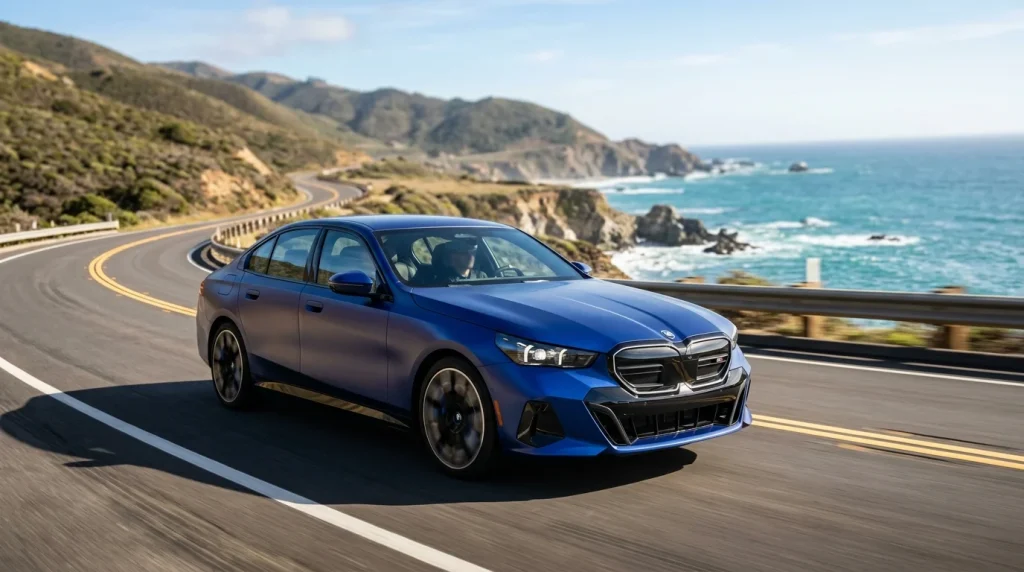
Quick answer: The 2026 BMW 5-Series remains a highly competent luxury sedan that excels in highway comfort, passenger space, and advanced cabin technology. Starting at 59,875 USD, the lineup features refined mild-hybrid and plug-in hybrid powertrains. However, drivers seeking the classic, athletic steering feedback of older generations will find the G60 platform skews heavily toward comfort rather than dynamic driver engagement.
Key takeaways:
- Carryover model year adds small updates including standard flat tire kit, new paint colors, and revised leather upholstery options.
- The 540i xDrive trim offers the best balance of performance and fuel efficiency, featuring a turbocharged six-cylinder engine.
- Plug-in hybrid 550e xDrive receives a faster 11 kW onboard charger, cutting home charging times significantly.
- Class-leading cargo room of 18.4 cubic feet outclasses the main competitor, the Mercedes-Benz E-Class.
- Over-engineered touchscreen climate controls and numb steering feedback remain the primary disadvantages of this generation.
What is New for the 2026 Model Year?
The 2026 model year represents a carryover phase for the eighth-generation BMW 5-Series, which originally debuted for the 2024 model year. As a result, updates are subtle rather than revolutionary, focusing on convenience features, styling customization, and charging efficiency.
Standard across all trims for 2026 is a new flat tire kit, replacing the reliance on run-flat tires to provide peace of mind during roadside emergencies. On the exterior, BMW has introduced Frozen Portimao Blue to the color palette, offering a premium matte finish. Inside the cabin, two new leather upholstery options join the lineup: Dark Violet and Taupe. M Sport models also receive a new carbon fiber trim option, bringing the total number of interior trim choices to six.
For option packages, BMW has reduced the pricing of the Premium and Executive packages by 150 USD. The most significant mechanical update applies to the 550e xDrive plug-in hybrid, which now features an upgraded 11 kW onboard charger instead of the previous 7.4 kW unit. This upgrade cuts charging time at home by nearly one-third when using a compatible Level 2 charger.
2026 BMW 5-Series Pricing, Trims, and Specifications
The 2026 model line is structured around four primary powertrain configurations for gasoline and hybrid models. The base rear-wheel drive model undercuts its direct German competitors, while all-wheel drive, branded as xDrive, remains a popular addition.
The following table details the manufacturer suggested retail prices (MSRP) including destination charges, engine specifications, power output, acceleration times, and estimated fuel economy:
| Trim | MSRP (USD) | Engine Configuration | Power Output | 0-60 MPH | EPA Fuel Economy (Combined) |
|---|---|---|---|---|---|
| 530i | $59,875 | 2.0L Turbo Inline-4 Mild-Hybrid | 255 hp / 295 lb-ft | 5.8 sec | 31 mpg |
| 530i xDrive | $62,175 | 2.0L Turbo Inline-4 Mild-Hybrid | 255 hp / 295 lb-ft | 5.8 sec | 30 mpg |
| 540i xDrive | $66,975 | 3.0L Turbo Inline-6 Mild-Hybrid | 375 hp / 398 lb-ft | 4.5 sec | 28 mpg |
| 550e xDrive | $74,575 | 3.0L Turbo Inline-6 Plug-In Hybrid | 483 hp / 516 lb-ft | 4.1 sec | 67 MPGe / 27 mpg gas |
These figures reflect official specifications and launch prices recorded by Kelley Blue Book. Market pricing reports from Edmunds indicate that transaction prices at dealerships can start below sticker, while early used models are entering the market at lower price ranges depending on wear and mileage.
Given the minor differences between model years, buyers looking for maximum value should also evaluate used inventory for the 2024 BMW 5-Series or the 2025 BMW 5-Series, which share the identical platform and structural design. For buyers considering older platforms, the 2023 BMW 5-Series represents the final year of the previous generation, offering a more traditional styling layout at a lower entry cost.
Performance, Engine Options, and Driving Dynamics
The driving experience of the 5-Series has evolved to prioritize highway comfort, isolation, and luxury. The base 530i, powered by a 2.0-liter turbocharged four-cylinder engine, handles daily commutes with ease. However, testers note that the four-cylinder engine can feel winded when passing at highway speeds or merging onto fast-moving on-ramps.
For enthusiast drivers, the 540i xDrive is the standout choice. Equipped with the legendary B58 3.0-liter turbocharged inline-six engine, it delivers 375 horsepower with turbine-like smoothness. This engine provides effortless passing power while sacrificing only 2 mpg in combined driving compared to the four-cylinder option.
However, the shift toward luxury has altered the sport sedan dynamics that once defined this model line. Austin Parsons, an editor at Car and Driver, pointed out the vehicle’s “numb steering, hefty curb weight, and less athleticism than previous 5-series generations.” The steering wheel acts as an isolation barrier rather than a communication channel, filtering out road feedback in favor of a quiet, relaxed cabin.
Analysis: The current platform behaves like a scaled-down 7-Series. It delivers exceptional stability, hushed wind noise, and a smooth ride over broken pavement, but it no longer encourages spirited cornering.
2026 BMW 550e xDrive Plug-In Hybrid
The 550e xDrive pairs the 3.0-liter inline-six with an electric motor integrated into the eight-speed automatic transmission, generating a combined 483 horsepower. This system enables rapid acceleration, hitting 60 mph in just 4.1 seconds.
The plug-in hybrid system draws power from a 19.4 kWh usable lithium-ion battery pack, delivering up to 33 miles of pure electric driving. This range is ideal for short daily commutes. With the new 11 kW onboard charger, replenishing the battery from empty takes approximately two hours on a Level 2 home charger.
The main drawback of the hybrid system is weight. The battery and electric motor add roughly 500 pounds to the vehicle, which is noticeable during quick transitions. Additionally, when the battery is depleted, fuel economy drops to around 27 mpg, making the standard 530i a more efficient option if you do not plug in the hybrid regularly.
Interior Quality, Tech, and Cabin Comfort
The cabin design takes inspiration from the flagship 7-Series, featuring high-quality wood, optional carbon fiber accents, and modern glass surfaces. The dashboard is dominated by the Curved Display, which houses a 12.3-inch driver information screen and a 14.9-inch touchscreen running the iDrive 8.5 software.
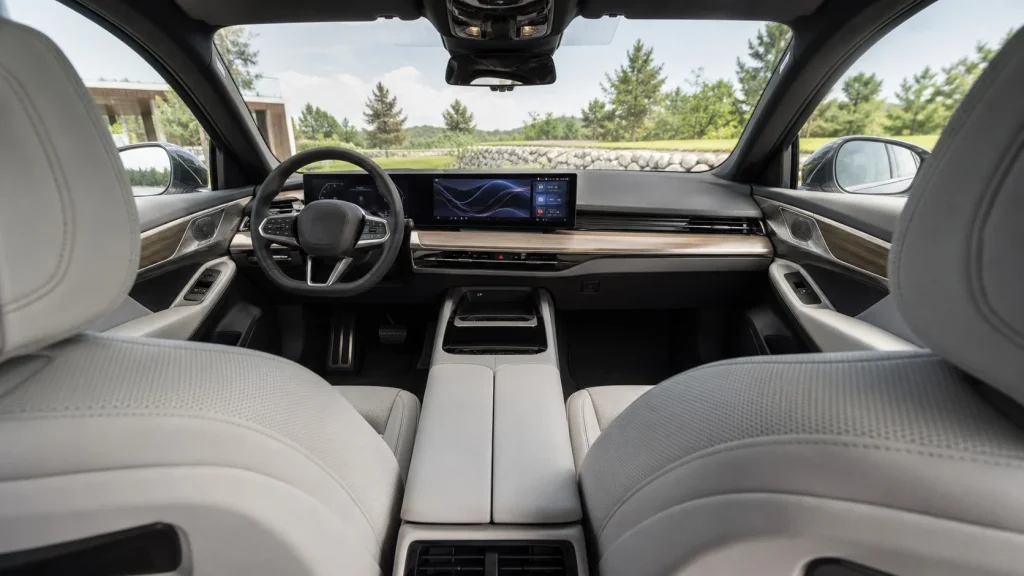
Passenger comfort is excellent. Standard sport seats provide good support, but upgrading to the 1,350 USD Luxury Seating Package adds multi-contour adjustments, ventilation, and heated rear seats. Back seat passengers enjoy ample legroom and headroom, making the cabin suitable for four adults on long road trips.
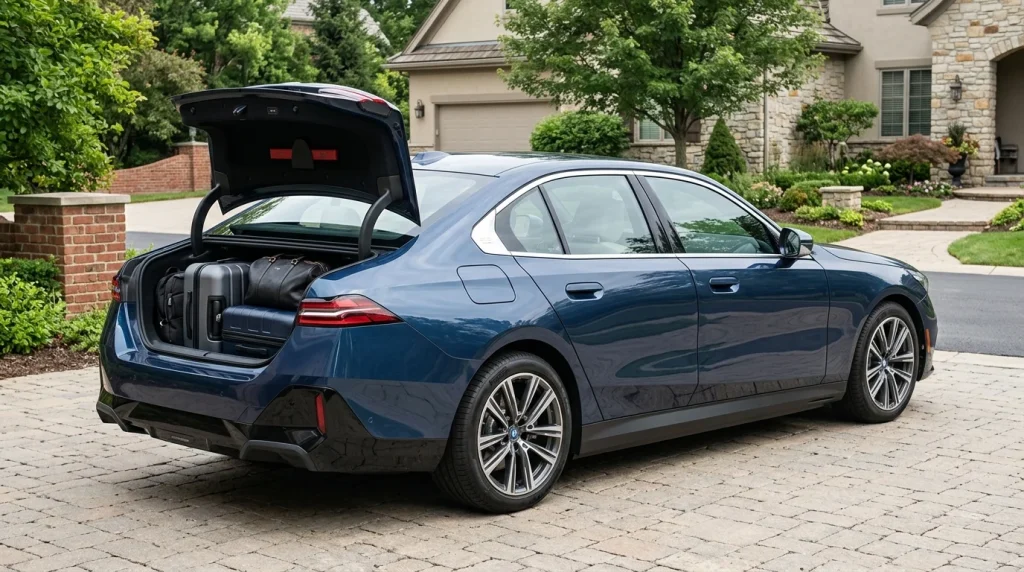
Trunk space is a major asset, measuring 18.4 cubic feet. This volume easily beats the Mercedes-Benz E-Class, which offers only 12.7 cubic feet of space. The split-folding rear seats allow for hauling longer items, though the optional space-saver spare tire does consume some vertical cargo height.
Technology features include wireless Apple CarPlay and Android Auto, a wireless charging pad, and a standard Harman Kardon audio system. However, the technology is not without flaws.
Note: The climate controls are integrated entirely into the touchscreen menus, which requires multiple steps to adjust simple settings like fan speed. The physical vents are also controlled by touch-sensitive pads, which can distract the driver while on the road.
Safety Ratings and Driver Assistance Tech
The G60 platform earned top marks in crash testing, including a Top Safety Pick award from the Insurance Institute for Highway Safety (IIHS) for the structurally identical previous model year.
Standard active safety features include:
- Active Blind Spot Detection
- Frontal Collision Warning with City Collision Mitigation
- Lane Keeping Assistant with steering intervention
- Active Driving Assistant
For drivers who spend long hours on the interstate, the 2,500 USD Driving Assistance Professional Package is highly recommended. This package adds Highway Assistant, which allows for hands-free driving on designated highways at speeds up to 85 mph. A new glance-activated lane change system is standard for 2026, allowing the car to initiate a lane change simply when the driver looks at the corresponding side mirror.
Ownership Costs, Packages, and Long-Term Value
BMW offers a standard 4-year or 50,000-mile warranty. A key value addition is the complimentary Ultimate Care program, which covers scheduled maintenance, including oil changes and brake fluid flushes, for the first 3 years or 36,000 miles of ownership.
To maximize resale value and daily comfort, buyers should consider these packages highlighted by BMW Blog:
- Premium Package ($1,900): Adds a head-up display, remote engine start, heated steering wheel, and a 360-degree camera system.
- Sky Lounge Roof ($600): A massive panoramic glass panel that brightens the interior cabin.
- Bowers & Wilkins Audio ($950): Replaces the standard speakers with a premium surround sound setup.
Pros and Cons of the 2026 5-Series
Advantages:
- Cargo volume of 18.4 cubic feet outclasses key European competitors.
- Inline-six engine on the 540i xDrive provides effortless acceleration with minimal fuel economy penalty.
- Real-world highway fuel economy is highly efficient, often exceeding official EPA highway ratings.
- Advanced hands-free driving assistant operates smoothly with natural lane changes.
- Quiet, isolated cabin environment reduces driver fatigue on long trips.
Disadvantages:
- Steering feedback feels disconnected and numb, lacking traditional athletic response.
- Touchscreen-based climate menus are complex and distract from driving tasks.
- Base four-cylinder engine can feel underpowered during high-speed highway merges.
- Plug-in hybrid model carries a heavy weight penalty that dulls handling.
- Ventilated seats and adaptive cruise control require expensive optional packages.
Verdict: Who Should Buy the 2026 BMW 5-Series?
The 2026 BMW 5-Series is an ideal purchase for commuters, corporate executives, and families who prioritize highway comfort, cargo utility, and high-tech cabin features. The quiet interior, soft ride, and hands-free driving assistant make it a premier road trip companion.
However, buyers searching for a sharp, engaging sports sedan that communicates road textures through the steering wheel should look elsewhere. The current model line has transitioned into a comfortable cruiser, leaving athletic driving dynamics to smaller models like the BMW 3-Series or competitors focused on driving feel.
To explore other models in the lineup or read comparisons of older model years, visit the main BMW 5-Series category page.
Frequently Asked Questions
Is the 2026 BMW 5-Series worth buying over the 2025?
For most buyers, the differences are minimal. The 2026 model adds minor color and upholstery choices, a flat tire kit, and faster charging for the hybrid model. If you can find a discounted 2025 model in dealer inventory, the cost savings will likely outweigh the minor updates of the 2026 model year.
What is the best trim for the 2026 BMW 5-Series?
The 540i xDrive is widely recommended as the best trim. The turbocharged inline-six engine provides the smooth power expected of a midsize luxury sedan, while the mild-hybrid system ensures fuel economy remains close to the base four-cylinder model.
How does the 2026 BMW 5-Series compare to the Mercedes E-Class?
The 5-Series undercuts the E-Class in starting price and offers significantly more cargo space. However, the Mercedes E-Class provides a slightly quieter highway ride and a more traditional interior control layout that some drivers find easier to use.
What is the real-world fuel economy of the 2026 BMW 5-Series?
The base 530i achieves 31 mpg combined, and testers have reached up to 38 mpg in real-world highway driving using efficient habits. The 540i xDrive averages 28 mpg combined, proving highly efficient for a six-cylinder luxury sedan.

