

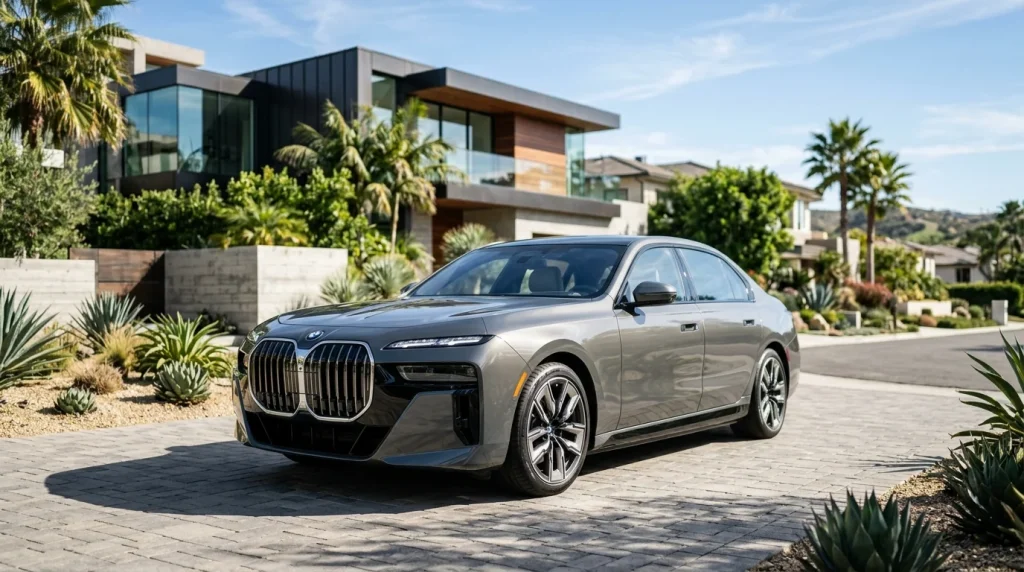
Quick answer: The 2023 BMW 7 Series is a highly ambitious luxury flagship sedan featuring segment-first technologies such as the 31.3-inch rear Theater Screen and hands-free driving assistance. However, its long-term appeal is heavily impacted by its poor reliability ratings and a series of critical NHTSA safety recalls, particularly regarding its Integrated Brake System. Prospective buyers should prioritize vehicles with documented dealer recall fixes or look toward more reliable competitors.
Key takeaways:
- The base 740i and V8-powered 760i xDrive offer impressive performance but command premium pricing, with well-optioned models exceeding $150,000.
- A spectacular cabin features premium materials and the optional rear Theater Screen, contrasting with a polarizing exterior design.
- Agile road manners are supported by standard air suspension, but steering feel remains isolated.
- A concerning safety record includes multiple NHTSA recalls, highlighted by a major brake system defect that reduces power-assist functionality.
Trim Levels, Specifications, and MSRP
The 2023 BMW 7 Series is offered in two main gasoline-powered variants in the United States: the rear-wheel-drive 740i and the all-wheel-drive 760i xDrive. The base 740i is powered by a turbocharged 3.0-liter inline-six engine, while the 760i xDrive features a twin-turbocharged 4.4-liter V8. Both engines benefit from a 48-volt mild-hybrid system designed to smooth out the auto start-stop function and assist with low-speed acceleration.
The specification table below compares the key performance metrics and starting prices for the two trims.
| Specification | 740i | 760i xDrive |
|---|---|---|
| Engine Type | 3.0L Turbo Inline-6 | 4.4L Twin-Turbo V8 |
| Horsepower | 375 hp | 536 hp |
| Torque | 398 lb-ft | 553 lb-ft |
| Drivetrain | Rear-Wheel Drive (RWD) | All-Wheel Drive (AWD) |
| 0-60 mph Acceleration | 5.0 seconds (BMW estimate) | 3.5 seconds (tested) |
| EPA Fuel Economy (Combined) | 27 mpg | 21 mpg |
| Starting MSRP | $94,295 | $114,595 |
The base pricing represents just the starting point, as BMW offers several high-end options that can quickly inflate the final transaction price. The Rear Executive Lounge Seating package costs $7,250 and adds power-adjustable reclining rear seats with massage functions, a rear wireless smartphone charger, and the drop-down Theater Screen. Adding the Bowers and Wilkins diamond surround sound system costs an additional $4,800, while the Executive package with automatic doors is priced at $3,700. A fully optioned 760i xDrive can easily surpass the $151,845 mark.
Polarizing Exterior Aesthetics and Luxurious Cabin Comfort
BMW took massive styling risks with the seventh-generation 7 Series. The split-headlight layout, which places the daytime running lights above the main headlamps, combined with the oversized illuminated kidney grilles, creates a polarizing front fascia. While the previous generation looked like an oversized 5 Series, the 2023 model establishes a unique, aggressive road presence.
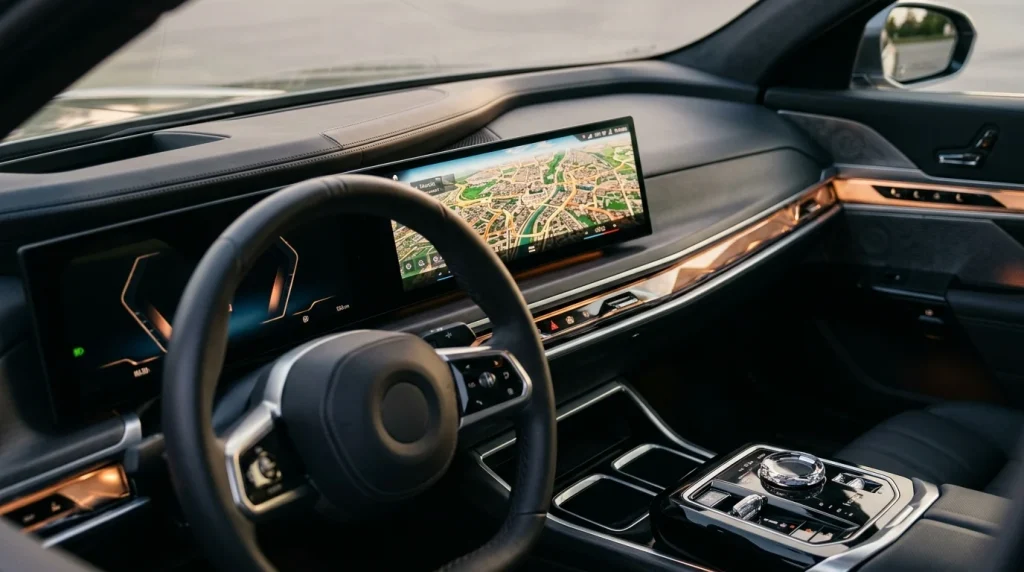
Inside, the cabin represents a significant step forward in material quality and presentation. The dashboard layout is dominated by the BMW Curved Display, which houses a 12.3-inch digital gauge cluster and a 14.9-inch infotainment touchscreen under a single piece of glass. Materials such as open-pore wood, stainless steel speaker grilles, glass controls, and optional cashmere upholstery wrap the occupants in high-end comfort.
For passengers, the rear compartment of the 7 Series is designed to rival the best executive cars in the world. The optional Executive Lounge package allows the passenger-side rear seat to recline up to 42.5 degrees, complete with a deploying footrest.
Analysis: The 2023 redesign highlights a deliberate attempt by BMW to capture younger, tech-focused buyers who value screen real estate and digital features over traditional styling cues. However, this shift risks alienating traditional buyers who prefer the classic proportions and understated elegance found in competitor models.
Alex Leanse, a writer at MotorTrend, noted this contrast in his first-drive review of the vehicle, characterizing it as a mix of “dubious exterior beauty, but a sensational interior. Gratifying driving manners, but an equally impressive backseat experience.”
Power, Performance, and Driving Dynamics
On the road, the 2023 BMW 7 Series balances the athletic driving dynamics expected of a BMW with the isolation required of a flagship luxury cruiser. The base 740i inline-six engine provides smooth, linear acceleration that is more than sufficient for daily driving. For those seeking maximum performance, the twin-turbo V8 in the 760i xDrive provides sports-car-like acceleration. According to instrumented testing conducted by Car and Driver, the 760i xDrive sprints from 0 to 60 mph in just 3.5 seconds, which is faster than BMW’s official 4.2-second estimate.
Standard equipment on all models includes a two-axle air suspension system with electronically controlled adaptive dampers. The system automatically adjusts the ride height based on speed and driving mode, keeping the vehicle level. Additionally, standard rear-wheel steering rotates the rear wheels up to 3.5 degrees in the opposite direction of the front wheels at low speeds, which dramatically reduces the turning radius of this long-wheelbase sedan.
However, the driving experience is not without its flaws. Under heavy acceleration, the soft air suspension allows the vehicle to tilt back excessively, creating a brief pitching motion before stabilizing. Furthermore, the steering feedback remains highly isolated. Edmunds editors observed that the steering is quick, but unless the vehicle is placed into Sport mode, the steering feel is somewhat light and lifeless.
Innovative Tech: Theater Screen and Highway Assistant
The technology suite is the defining characteristic of the 2023 redesign. The most discussed feature is the optional 31.3-inch rear Theater Screen. When deployed from the ceiling, it stretches across the width of the cabin, offering 8K resolution, Amazon Fire TV integration, and a built-in 5G Wi-Fi hotspot. Rear passengers can control the screen, climate settings, and seating positions using 5.5-inch touchscreens integrated into the rear door panels.
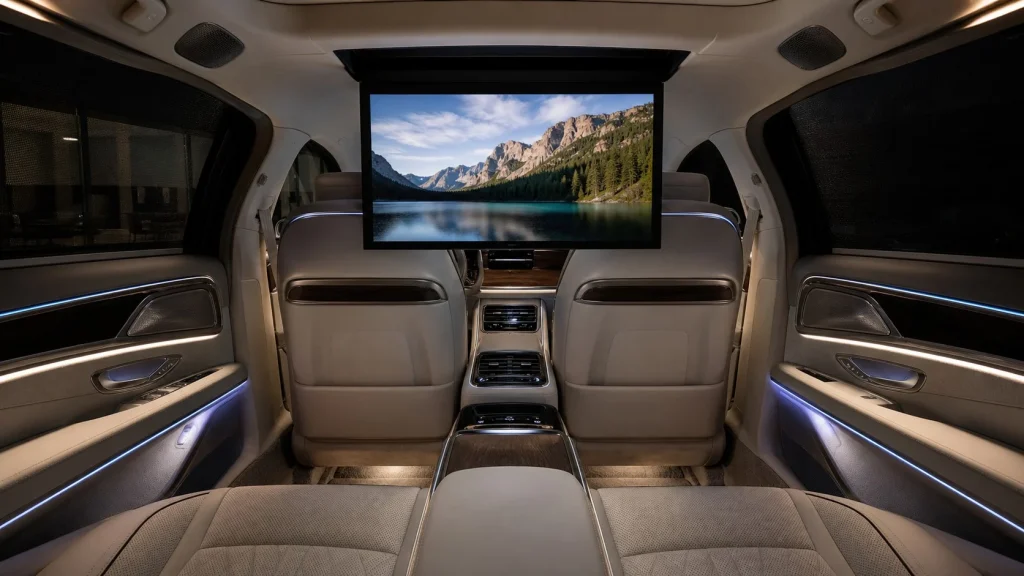
Note: When the rear Theater Screen is fully deployed, it completely blocks the driver’s direct rearward visibility through the physical rearview mirror. Drivers must rely entirely on the side mirrors and the car’s camera feed, which can be disorienting for some.
For the driver, the 2023 model introduces the hands-free Highway Assistant system, which is part of the Driving Assistance Professional package. The system allows for hands-free driving at speeds up to 80 mph on pre-mapped divided highways. Unlike earlier lane-centering systems, the Highway Assistant handles gentle curves, traffic flow adjustments, and even lane changes initiated by the driver tapping the turn signal stalk, provided the driver’s eyes remain focused on the road.
Infotainment duties are handled by the iDrive 8.5 software. While the system responds quickly and features sharp graphics, BMW’s decision to remove almost all physical buttons for climate control and radio presets has drawn criticism. Adjusting basic functions requires navigating multiple touchscreen submenus, which increases driver distraction.
Real-World Ownership Costs and Safety Recalls
While BMW offers a compelling complimentary scheduled maintenance program covering three years or 36,000 miles, long-term ownership costs remain a concern. RepairPal rates the BMW 7 Series at 2 out of 5 stars for reliability, ranking it 40th out of 48 luxury full-size cars evaluated.
According to records maintained by the National Highway Traffic Safety Administration (NHTSA), the 2023 BMW 7 Series has been subject to several safety recall campaigns. These campaigns cover defects in the electrical, seating, steering, and braking systems.
The table below summarizes the safety recalls issued by the NHTSA for the 2023 model year.
| NHTSA Campaign | Component Affected | Defect Description |
|---|---|---|
| 23V414 | Front Seat Rails | Improper welds on the front seat adjustment rails, which may compromise seat integrity in a crash. |
| 23V479 | Interaction Bar | A software error in the dashboard Interaction Bar can prevent the hazard lights and windshield defroster from operating. |
| 23V747 | Steering System | The hands-on detection system may fail to recognize when a driver’s hands are on the wheel, disabling driver assistance features. |
| 24V104 | Integrated Brake System | The integrated brake system module may fail, leading to reduced power-assist braking and extended stopping distances. |
| 24V739 | Integrated Brake System | An expansion of the earlier brake system recall, covering additional vehicles with the same braking module issue. |
| 26V096 | A/C Wiring Harness | The A/C wiring harness can be damaged during cabin air filter replacements, potentially causing a short circuit and fire hazard. |
| 26V422 | Integrated Brake System | A follow-up campaign for vehicles that did not receive the correct replacement brake parts under the previous campaigns. |
The most significant recall relates to the Integrated Brake System defect, which is documented under NHTSA Campaign 24V739. According to NHTSA filing documentation, the system’s electronic module can experience an internal electronic malfunction. If this occurs, the vehicle loses its power-braking assist and defaults to a fully mechanical backup system. While the car can still be stopped, the pedal will feel much stiffer, and stopping distances will be significantly extended. The malfunction also disables key active safety systems, including the Anti-lock Braking System (ABS) and Dynamic Stability Control (DSC).
BMW dealers are instructed to replace the integrated braking module free of charge. Prospective buyers of a used 2023 model must run a VIN check on the NHTSA database to confirm that all recall remedies have been completed by an authorized dealer.
Sibling Comparisons: Which Flagship Sedan Is Right for You?
Buyers looking at the 2023 BMW 7 Series typically cross-shop it against established segment rivals and newer iterations of the 7 Series platform.
The Mercedes-Benz S-Class remains the primary benchmark in this segment. The S-Class offers a more conservative, traditional luxury aesthetic and prioritizes ride isolation over handling agility. Additionally, the Mercedes dashboard retains physical shortcut buttons that make daily operation simpler. However, the S-Class carries a higher starting price than the 740i.
The Genesis G90 represents a strong value-oriented alternative. It comes standard with all-wheel drive, a mild-hybrid V6, and a level of standard equipment that requires expensive optional packages on the BMW. Genesis also backs the G90 with a 10-year or 100,000-mile powertrain warranty, which easily surpasses BMW’s four-year coverage.
Finally, buyers should consider how the 2023 model compares to its successors. The subsequent 2024 BMW 7-Series brought minor software refinements, while the 2025 BMW 7 Series introduced updated options packaging. For the latest model year, the 2026 BMW 7-Series represents the most polished version of this generation, with several early electronic and mechanical bugs resolved. If you are comparing model years or want to review options, you can check all model reviews on the main BMW 7-Series category page.
Ultimately, the 2023 model remains an appealing choice on the used market due to depreciation, provided the vehicle’s recall history has been fully cleared.

