

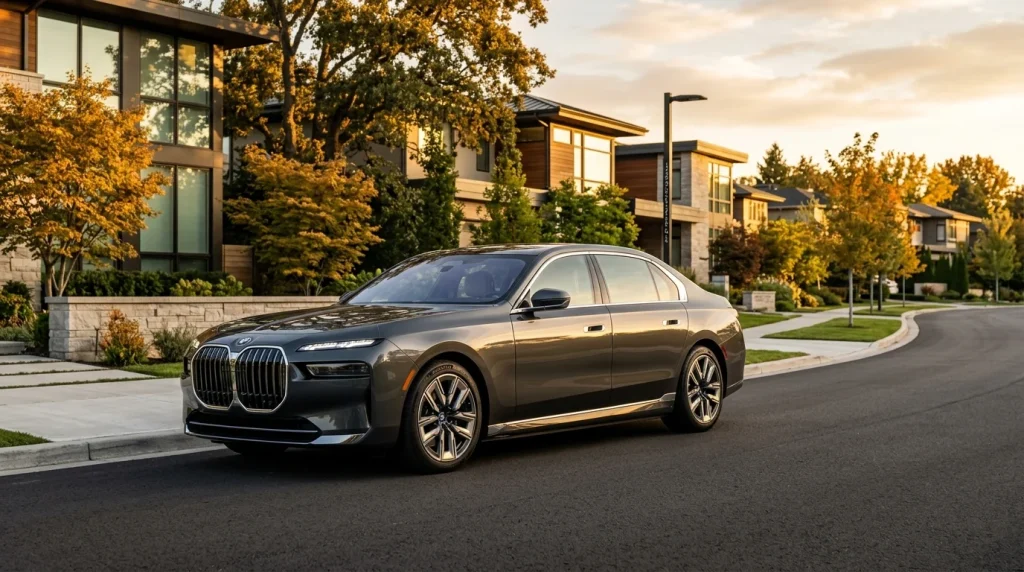
Quick answer: The 2025 BMW 7 Series represents the pinnacle of BMW engineering, combining executive-class passenger comfort with engaging driving dynamics. Key updates for the 2025 model year include the standardization of the Panoramic Sky Lounge LED Roof across all models and enhanced hands-free highway driving capabilities. With starting prices ranging from $98,475 to $123,575, the inline-six powered 740i remains the most balanced and recommended trim for most buyers.
Key takeaways:
- The base 740i trim delivers the best balance of price and performance, offering a silk-smooth inline-six engine that offsets the V8 variant’s high cost.
- The standard air suspension and rear-wheel steering provide a highly composed ride, though the Mercedes S-Class remains slightly more isolated from road imperfections.
- Technology is a primary focus, featuring a standard curved display and advanced driver-assist tools, though the button-free interface requires a steep learning curve.
- Every model comes with a three-year or 36,000-mile complimentary scheduled maintenance plan, which is a major advantage over U.S. competitors.
2025 BMW 7 Series Pricing and Trims Overview
BMW offers the 2025 version of its flagship sedan in four main trims, catering to different preferences for drivetrain, efficiency, and outright speed. The starting Manufacturer’s Suggested Retail Price (MSRP, the retail price recommended by the producer) figures below include the mandatory $1,175 destination charge:
| Trim Level | Starting MSRP | Engine Configuration | Horsepower | EPA Fuel Economy (City/Hwy/Combined) |
|---|---|---|---|---|
| 740i | $98,475 | 3.0L Turbo I6 (Mild Hybrid) | 375 hp | 25 / 31 / 28 mpg |
| 740i xDrive | $101,475 | 3.0L Turbo I6 (Mild Hybrid) | 375 hp | 24 / 31 / 27 mpg |
| 750e xDrive | $109,175 | 3.0L Turbo I6 (Plug-In Hybrid) | 483 hp | 33 miles electric range (EPA est.) |
| 760i xDrive | $123,575 | 4.4L Twin-Turbo V8 (Mild Hybrid) | 536 hp | 18 / 25 / 20 mpg |
These fuel economy ratings can be cross-referenced with the official fueleconomy.gov 2025 BMW listing.
While the pricing reflects a modest increase over the previous model years, the addition of standard high-end equipment helps justify the cost. Buyers researching the evolution of this luxury platform can contrast these figures with the launch pricing of the redesigned 2023 BMW 7 Series and the subsequent upgrades featured on the 2024 BMW 7 Series. Understanding these model-year shifts is crucial when browsing the complete BMW 7 Series catalog for new or pre-owned purchases.
Detailed Trim and Powertrain Options
Choosing the right trim depends on how you value fuel economy, initial purchase price, and performance capabilities.
BMW 740i and 740i xDrive (The Value Leaders)
The rear-wheel-drive 740i and all-wheel-drive 740i xDrive are powered by BMW’s legendary 3.0-liter turbocharged inline-six engine. This powerplant is paired with a 48-volt mild hybrid system (a small electric generator that assists the gas engine to improve fuel efficiency). Producing 375 horsepower and 398 pound-feet of torque, this engine launches the heavy sedan from 0 to 60 miles per hour in a swift 4.9 seconds for the xDrive version.
For the majority of buyers, the 740i series represents the smart choice. It is roughly $25,000 less expensive than the V8-powered 760i, yet its real-world acceleration is more than adequate for daily driving. The money saved on the entry-level model can be allocated toward optional luxury packages.
BMW 750e xDrive (The Plug-In Hybrid Option)
The 750e xDrive is a Plug-in Hybrid Electric Vehicle (PHEV, a hybrid car with a battery pack that can be recharged from an external power source). It combines the inline-six engine with a 194-horsepower electric motor, delivering a combined system output of 483 horsepower and 516 pound-feet of torque.
Equipped with a 14.4-kilowatt-hour usable battery pack, the 750e xDrive offers an Environmental Protection Agency (EPA) estimated 33 miles of pure electric driving range. This setup is ideal for buyers with short daily commutes who can charge at home nightly. However, the added mechanical complexity and the weight of the hybrid system diminish some of the vehicle’s driving agility.
BMW 760i xDrive (The Twin-Turbo V8 Flagship)
For those demanding maximum performance, the 760i xDrive features a twin-turbocharged 4.4-liter V8 engine producing 536 horsepower and 553 pound-feet of torque. During professional testing by automotive publications, the V8 accelerated from 0 to 60 mph in just 3.5 seconds, as detailed in Car and Driver’s 2025 BMW 7 Series review.
The V8 power delivery is remarkably linear and silent, making it feel less like a sports car and more like an effortless, high-speed cruiser. The trade-off is fuel efficiency: the V8 drops to an EPA-rated 20 mpg combined, compared to 28 mpg combined for the RWD 740i.
Design, Cabin Luxury, and Technology Upgrades
The exterior styling remains polarizing with its split-headlight layout and prominent kidney grilles. Inside, however, the cabin presents an undeniable showcase of modern luxury.
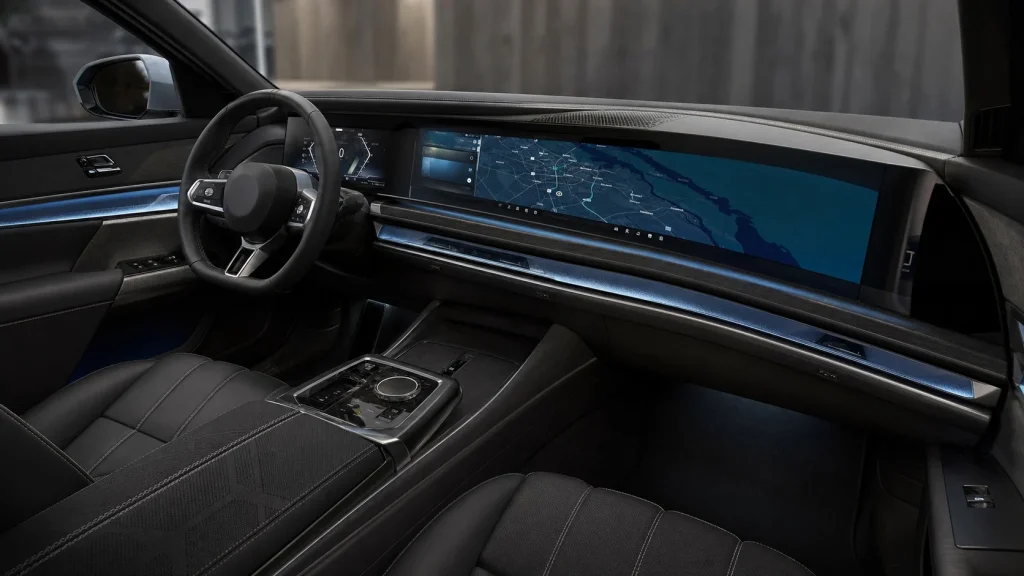
Panoramic Sky Lounge and Infotainment Upgrades
For the 2025 model year, BMW made the Panoramic Sky Lounge LED Roof standard across the entire lineup. This feature uses integrated LED light threads to mirror the color themes of the ambient cabin lighting, creating a dramatic visual effect at night.
The dashboard is dominated by the BMW Curved Display, which houses a 12.3-inch digital instrument cluster and a 14.9-inch infotainment screen running the iDrive 8.5 software. The system supports over-the-air software updates and features improved wireless Apple CarPlay and Android Auto integration. For 2025, Apple users can activate Siri hands-free by simply speaking the wake phrase, removing the need to press any steering wheel buttons.
The primary disadvantage is the removal of physical climate controls. Standard functions such as fan speed and temperature adjustments must now be operated through the touchscreen menu, which can be distracting while driving.
The Executive Lounge Package and Theater Screen
Rear-seat passengers are treated to first-class accommodations, especially when the optional Executive Lounge package is selected. This upgrade features power-reclining rear seats with massage functions, footrests, and a passenger-side seat that reclines up to 42.5 degrees.
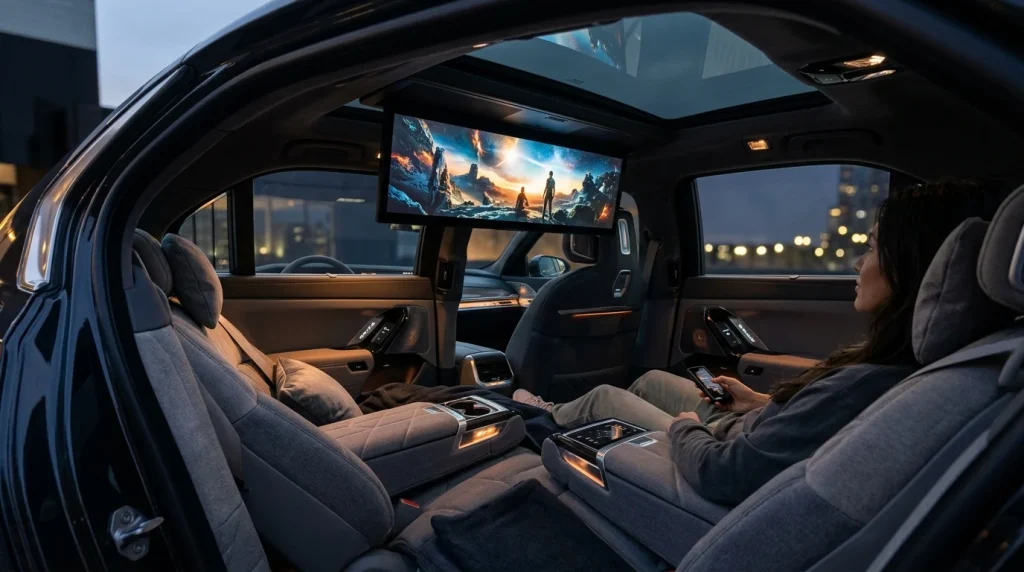
The centerpiece of this package is the 31.3-inch Theater Screen that folds down from the ceiling. With 8K resolution, built-in Amazon Fire TV, and a 5G cellular connection, rear passengers can stream media or connect video games via a built-in HDMI port. When deployed, however, this massive screen completely blocks the driver’s view through the physical rearview mirror, forcing reliance on the exterior side mirrors and camera systems.
Performance, Ride Comfort, and Driving Dynamics
All 7 Series models are equipped with an adaptive two-axle air suspension system and electronically controlled dampers. The suspension automatically adjusts its height based on vehicle speed and selected drive mode, balancing body roll during cornering with a plush ride over highway pavement.
Standard rear-wheel steering (which rotates the rear wheels up to 3.5 degrees in the opposite direction of the front wheels at low speeds) makes the 212.2-inch sedan surprisingly maneuverable in tight parking lots. On twisty roads, the air suspension does a commendable job of managing the sedan’s 5,000-pound curb weight. However, under sudden, hard acceleration, the rear end tilts backward noticeably, causing a minor swaying motion before the suspension stabilizes.
Ownership Costs, Warranty, and Reliability
The 2025 models are backed by BMW’s standard four-year or 50,000-mile basic and powertrain warranty. A key financial differentiator is the inclusion of BMW Ultimate Care, which provides three years or 36,000 miles of complimentary scheduled maintenance. This program covers oil changes, brake fluid flushes, and standard vehicle inspections, saving buyers thousands of dollars compared to competitors that charge for maintenance from day one.
In terms of reliability, the current generation averages a respectable 3.9 out of 5 stars from verified owners on Edmunds. The majority of complaints do not target mechanical failures, but rather the complexity of the digital interfaces and the lack of physical buttons.
Pros and Cons of the 2025 BMW 7 Series
Strengths:
- Power Delivery: Silky inline-six and relentless V8 engines offer superb performance across all trim levels.
- Cabin Luxury: Outstanding interior materials, including optional cashmere and merino leather, rival the highest class benchmarks.
- Standard Features: The addition of the Panoramic Sky Lounge LED Roof as standard equipment on lower trims improves base-model value.
- Complimentary Maintenance: Three years of free scheduled maintenance reduces the overall cost of ownership during the initial lease or finance period.
- Rear Passenger Space: The optional Theater Screen and executive seating package create a private mobile theater experience.
Weaknesses:
- Distracting Interface: The omission of physical controls for basic climate settings forces reliance on complex touchscreen menus.
- Blocked Visibility: The optional 31.3-inch rear entertainment screen completely obstructs the driver’s rearward view when active.
- Polarizing Style: The split-headlight design and massive grille remain controversial.
- Option Pricing: Desirable features, including the hands-free Highway Assistant, require expensive optional packages.
Final Verdict: How the 2025 Model Compares
The 2025 BMW 7 Series is a tech-heavy, comfortable cruiser that does not compromise on performance. It successfully competes against the Mercedes-Benz S-Class by offering a more engaging driving character and a highly advanced rear-seat entertainment system.
For buyers who prefer traditional luxury with physical buttons and understated styling, the Genesis G90 remains a strong, value-packed alternative. However, if you want a flagship that highlights cutting-edge tech and standout design, the 7 Series remains a class leader. Looking forward, early details suggest the upcoming 2026 BMW 7 Series will continue this trajectory with further software refinement, making the 2025 model a solid purchase today.
Frequently Asked Questions
Is the 2025 BMW 7 Series reliable?
Reliability data is positive, with owners reporting few mechanical issues. Most consumer feedback focuses on the steep learning curve of the iDrive 8.5 software. The standard four-year warranty and three years of free maintenance minimize initial ownership risks.
Which 2025 BMW 7 Series trim should I buy?
The base 740i represents the best overall value. It provides smooth inline-six performance and excellent fuel economy. The cost savings compared to the V8 trim allow buyers to opt for the Driving Assistance Professional Package, which includes the hands-free Highway Assistant.
How much does a fully loaded 2025 BMW 760i xDrive cost?
A fully optioned 760i xDrive can easily exceed $150,000. Upgrades such as the Rear Executive Lounge Seating ($7,250), BMW Individual Composition ($5,450), and the 40-speaker Bowers & Wilkins sound system contribute to this premium pricing.
What is new for the 2025 BMW 7 Series?
The most notable update is the standardization of the Panoramic Sky Lounge LED Roof on the 740i and 750e xDrive. The driver-assistance software also includes minor refinements, such as hands-free Siri integration and updated lane-change suggestions.

