

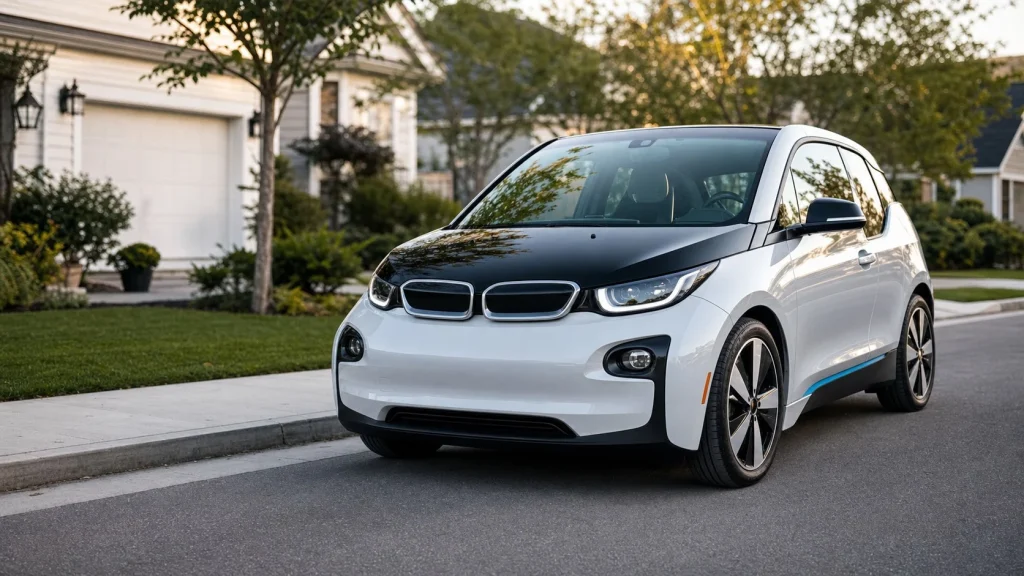
Quick answer: The 2020 BMW i3 remains a premium electric city car featuring unique carbon fiber construction and sustainable materials. It is powered by a 42.2 kWh battery delivering a 153-mile EPA-estimated electric range. Originally priced from $44,450 to $51,500, U.S. market used values in 2026 have depreciated to a typical range of $13,000 to $22,000, presenting a strong value for urban buyers.
Key takeaways:
- Used 2020 BMW i3 models represent excellent value in 2026, showing over 50% depreciation from original MSRP.
- The 153-mile range is best suited for city commutes, trailing modern long-range EVs.
- Carbon fiber chassis (CFRP) provides exceptional safety but increases insurance and collision repair costs.
- Pure electric (BEV) models offer lower maintenance complexity than the Range Extender (REx) versions.
Used Price, Depreciation, and Purchase Value of the 2020 BMW i3
In 2026, used 2020 BMW i3 retail prices average between $13,000 and $22,000 depending on condition and mileage, while excellent-condition examples with low mileage transact between $20,000 and $25,000. This represents a steep 55% to 66% depreciation from its original MSRP of $44,450 to $51,500.
The table below breaks down the original manufacturer’s suggested retail price (MSRP) alongside the typical used retail value range and five-year depreciation rates in the U.S. market.
| Trim Level | Original MSRP (2020) | 2026 Used Retail Range | 5-Year Depreciation Rate |
|---|---|---|---|
| Base i3 BEV (120 Ah) | $44,450 | $13,000 – $17,000 | Approximately 66% |
| i3s BEV (120 Ah) | $47,650 | $15,000 – $19,000 | Approximately 64% |
| Base i3 REx (120 Ah) | $48,300 | $16,000 – $20,000 | Approximately 63% |
| i3s REx (120 Ah) | $51,500 | $18,000 – $22,000 | Approximately 61% |
The severe depreciation profile of the BMW i3 is driven by its older battery technology and the rapid advancement of long-range electric vehicles. Compared to mainstream rivals like the Chevrolet Bolt EV, which has retained approximately 42.4% of its value over the same period, the i3 has depreciated much faster due to its high initial luxury markup and niche target market.
Original MSRP vs. 2026 Used Car Market Value
When new, the 2020 i3 was positioned as a premium luxury vehicle. Buyers had to pay a significant brand premium, with a fully optioned i3s REx easily crossing the $55,000 mark. In 2026, the secondary market treats the i3 less as a luxury status symbol and more as a specialized commuter vehicle. This paradigm shift has dropped entry-level prices for used buyers. Excellent condition vehicles with under 30,000 miles can now be found for under $21,000, which is less than half of their original purchase price. This makes the used 2020 model year particularly appealing because it represents the mature, final generation of the vehicle before it was officially discontinued in the North American market in 2021. For buyers seeking alternative options, exploring the 2021 BMW i3 review can provide valuable insights into the last official model year of this unique hatchback.
Total Cost of Ownership: Insurance, Maintenance, and Electricity
While the purchase price is lower, buyers must carefully calculate the total cost of ownership. Annual running costs for a typical 2020 i3 driven 10,000 miles per year average between $3,500 and $5,000. This cost structure differs significantly from a traditional luxury gasoline car.
Electricity costs are highly favorable. Given an average energy consumption of 30 kWh per 100 miles, home charging in the United States costs about $600 to $900 annually, depending on local utility rates. However, insurance premiums are higher than average, typically ranging from $1,800 to $2,400 per year. Insurance companies charge more because of the specialized carbon fiber passenger cell, which requires certified repair facilities in the event of an accident. Regular mechanical maintenance is minimal, requiring a simple cabin air filter swap and brake fluid flush every two years, which generally costs between $150 and $300 at independent specialist shops.
Note: Used EV tax credits in the United States may offset the purchase price of qualifying used 2020 i3 models by up to $4,000, depending on buyer eligibility and vehicle price limits.
Electric Range and Real-World Charging Capabilities
The 2020 BMW i3 BEV offers an EPA-estimated range of 153 miles from its 42.2 kWh battery, while REx models drop to 126 miles of all-electric range before the gasoline generator activates to extend total range to approximately 200 miles.
To optimize the charging routine, used owners should plan around the following charging timeframes:
- Level 1 (120V household outlet): Approximately 20 to 24 hours for a full charge. Recommended only for emergency backup.
- Level 2 (240V / 32-Amp home charger): Approximately 7 hours to charge from empty to 100% at an intake rate of 7.4 kW.
- DC Fast Charging (50 kW maximum): Approximately 42 minutes to charge from 10% to 80% capacity using public CCS connectors.
The charging profile of the 2020 model year is limited by its onboard charger and thermal management system. Unlike modern electric cars that can handle 150 kW to 350 kW DC charging, the 2020 i3 peaks at just 50 kW. This means the car is best suited for overnight home charging rather than frequent long-distance road trips.
153-Mile EPA Range: BEV vs. REx Range Extender
The battery cells in the 2020 model year are designated as 120 Ah, which was the highest capacity pack BMW ever installed in the vehicle. The battery pack has a gross capacity of 42.2 kWh, with a net usable capacity of 37.9 kWh. According to the official U.S. EPA Fuel Economy data, the pure battery electric vehicle (BEV) achieves a combined rating of 113 MPGe, showing high efficiency in stop-and-go city traffic.
For buyers with range anxiety, the Range Extender (REx) model features a 647cc two-cylinder gasoline generator borrowed from BMW’s scooter division. The REx generator does not drive the wheels directly. Instead, it acts as an onboard generator that maintains the battery’s state of charge once it drops below 6.5%. The system is supported by a small 2.4-gallon fuel tank located under the front hood. While the REx adds peace of mind, it reduces the all-electric battery range to 126 miles due to the extra 260 pounds of mechanical weight. It also increases the vehicle’s maintenance complexity by adding oil changes, spark plugs, and emission control systems.
Charging Speeds: Level 2 AC and DC Fast Charging Times
Daily charging convenience depends on home infrastructure. A dedicated Level 2 wall box is highly recommended, as charging from a standard household outlet is too slow for practical daily usage. The vehicle uses the standard J1772 connector for Level 2 charging and the Combined Charging System (CCS1) port for DC fast charging. When charging on public networks, the flat 50 kW charging curve means the charge rate drops off significantly after reaching 80% capacity. To maximize charging efficiency and minimize costs, drivers should unplug at 80% and continue their journey rather than waiting for the battery to reach 100%.
Performance, Powertrain Specs, and Driving Dynamics
The 2020 BMW i3 delivers standard performance of 168 horsepower and 184 lb-ft of torque, accelerating from 0-60 mph in 7.2 seconds, while the sportier i3s boosts output to 181 horsepower and 199 lb-ft of torque for a 6.8-second acceleration time.
The table below outlines the performance differences between the standard 2020 BMW i3 and the sport-tuned i3s model.
| Performance Parameter | Base 2020 BMW i3 BEV | 2020 BMW i3s BEV | Difference / Advantage |
|---|---|---|---|
| Horsepower Output | 168 hp | 181 hp | +13 hp (i3s) |
| Peak Torque | 184 lb-ft | 199 lb-ft | +15 lb-ft (i3s) |
| 0-60 mph Sprint | 7.2 seconds | 6.8 seconds | 0.4 seconds faster (i3s) |
| Top Speed Limit | 93 mph (electronic) | 99 mph (electronic) | +6 mph (i3s) |
| Tire Section Width | 155 mm front / 175 mm rear | 175 mm front / 195 mm rear | Wider contact patch (i3s) |
| Turning Circle | 32.4 feet | 33.1 feet | Tighter turning radius (Base) |
The standard rear-wheel-drive configuration and rear-mounted motor layout provide a sporty, classic BMW driving character. Because the electric motor sits directly over the drive wheels, traction is excellent even in wet conditions, and the steering is completely free of torque steer.
Motor Output and Acceleration (Base vs. i3s Trims)
The synchronous AC electric motor delivers instant torque from a standstill. This makes both the base i3 and the i3s feel much quicker in urban settings than their 0-60 mph times suggest. The 0-30 mph sprint is accomplished in under 3 seconds, allowing the i3 to zip through city traffic with ease. The i3s trim level features a sportier driving mode that sharpens accelerator response and stiffens the suspension. It also widens the vehicle’s track by 1.6 inches and lowers the ride height by 0.4 inches, reducing body roll and improving stability during high-speed cornering.
Urban Agility vs. Highway Stability
The i3’s natural home is the city center. With a tight 32.4-foot turning radius, the base model can easily execute U-turns on narrow streets and park in tight spots that standard sedans cannot access. The upright driving position offers excellent visibility over the hood, and the large windows minimize blind spots.
However, highway driving reveals the vehicle’s physical limits. The short 101.2-inch wheelbase and tall, slab-sided body design make the vehicle sensitive to crosswinds and aerodynamic turbulence from large commercial trucks. At speeds above 70 mph, the steering requires constant corrections, and the firm suspension setup can transmit highway expansion joints directly into the cabin. This makes long highway commutes tiring compared to a more stable sedan like the Tesla Model 3.
Sustainable Interior Design, Cabins, and Technology
The 2020 BMW i3 interior is built with over 80% recycled and renewable materials, including kenaf fibers and eucalyptus wood, combined with a standard 6.5-inch or optional 10.25-inch central screen running BMW iDrive with Apple CarPlay integration.
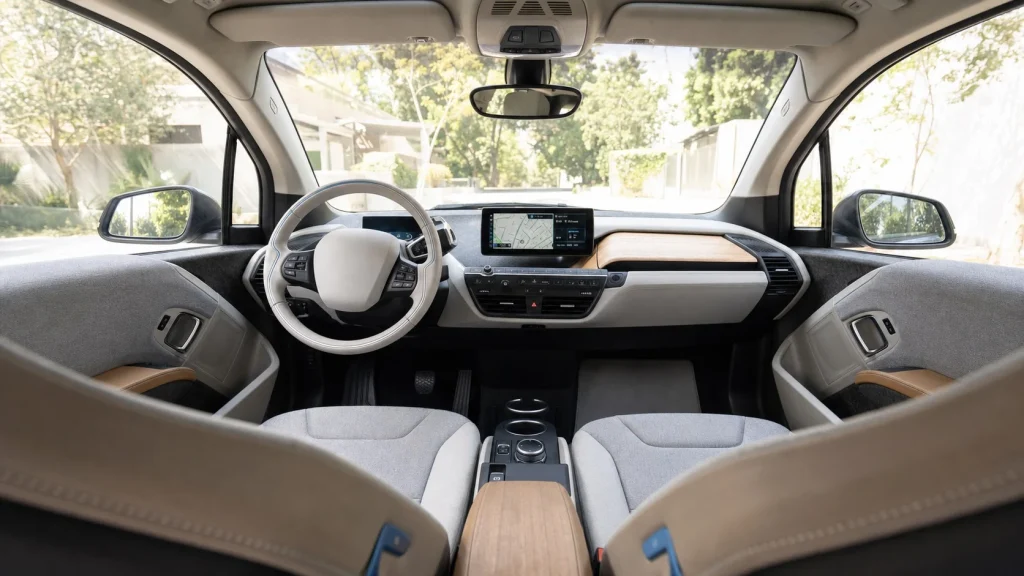
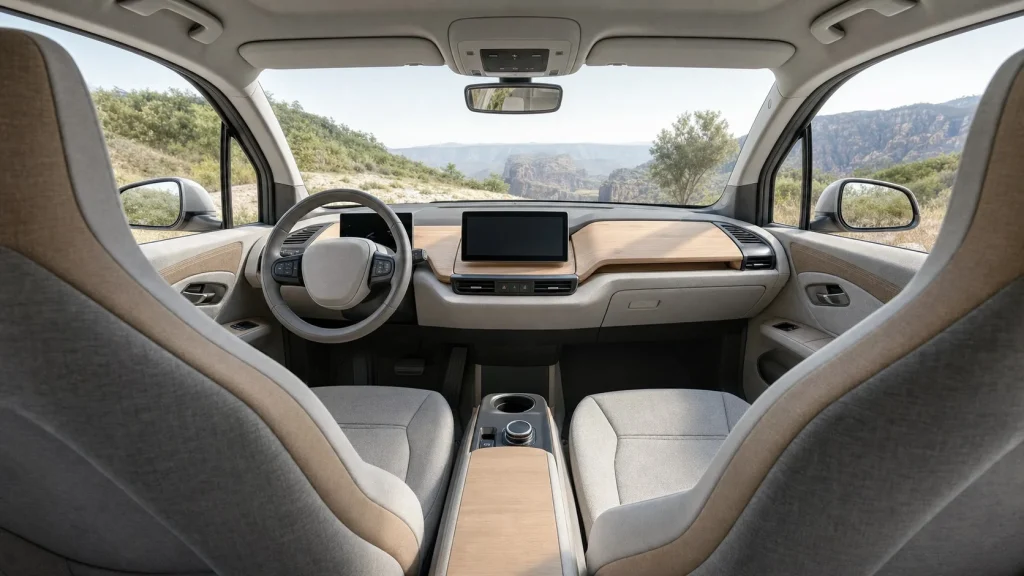
The visual cabin experience is divided into four distinct design packages, which BMW calls “Worlds”:
- Deka World (Standard): Dark, minimalist theme using recycled polyester fabric seats and matte black dashboard trim.
- Mega World (Upgrade): Bright, modern theme featuring light gray fabric seats with brown accent stitching and a leatherette-wrapped steering wheel.
- Giga World (Premium Upgrade): Warm, organic theme combining wool-blend fabric with natural leather accents, completed by open-pore eucalyptus wood trim.
- Tera World (Luxury Flagship): Dark luxury theme with full Vernasca leather seats tanned using olive leaf extract, highlighted by dark oak wood trim.
The suicide door configuration features rear-hinged doors that open in the opposite direction. Because there is no central B-pillar, opening both doors creates a wide portal for entering the cabin. However, this design can be inconvenient in tight parking spaces, as the front door must be opened before the rear door can open, occasionally trapping rear passengers.
Eco-Friendly Cabin Materials (Kenaf and Eucalyptus Wood)
BMW’s environmental commitment is visible throughout the interior. The door panels and dashboard structures are constructed from natural kenaf fibers, a fast-growing plant that belongs to the hibiscus family. The open-pore eucalyptus wood trim is sourced from certified sustainable forests, and the leather seats are tanned using natural olive leaf extracts instead of harsh industrial chemicals. These sustainable materials age well if maintained with specialized cleaners. However, they can show wear and staining on high-contact surfaces if neglected by previous owners.
Infotainment System: Apple CarPlay and Driving Assistance
The central dashboard houses BMW’s familiar iDrive infotainment controller. The standard setup includes a 6.5-inch display, but used buyers should prioritize vehicles equipped with the Technology Package, which upgrades the screen to a 10.25-inch high-resolution widescreen navigation display. The 2020 model year supports wireless Apple CarPlay, allowing drivers to access navigation apps and media player controls easily. Unfortunately, Android Auto was never officially supported on this generation of the iDrive system.
The optional Technology + Driving Assistant package adds active safety features, including camera-based adaptive cruise control with stop-and-go capability, lane departure warning, and a forward collision warning system that can automatically apply the brakes at city speeds.
Real Ownership Costs: Tire Sourcing and Carbon Fiber Repairs
A used 2020 BMW i3 represents high original engineering value due to its carbon fiber passenger cell, but buyers face real ownership drawbacks including expensive tire replacement costs for its unique narrow tires and high body repair costs.
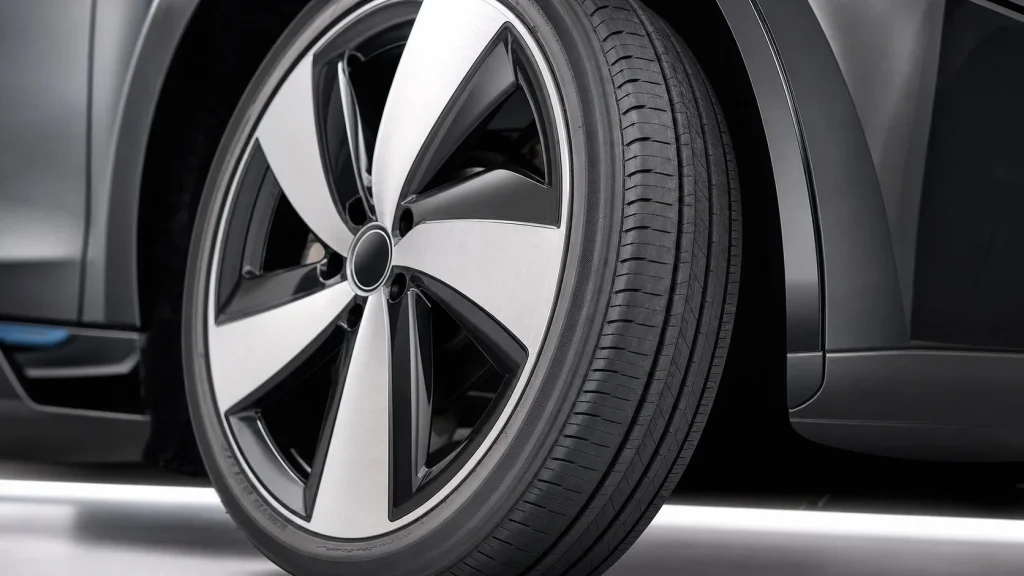
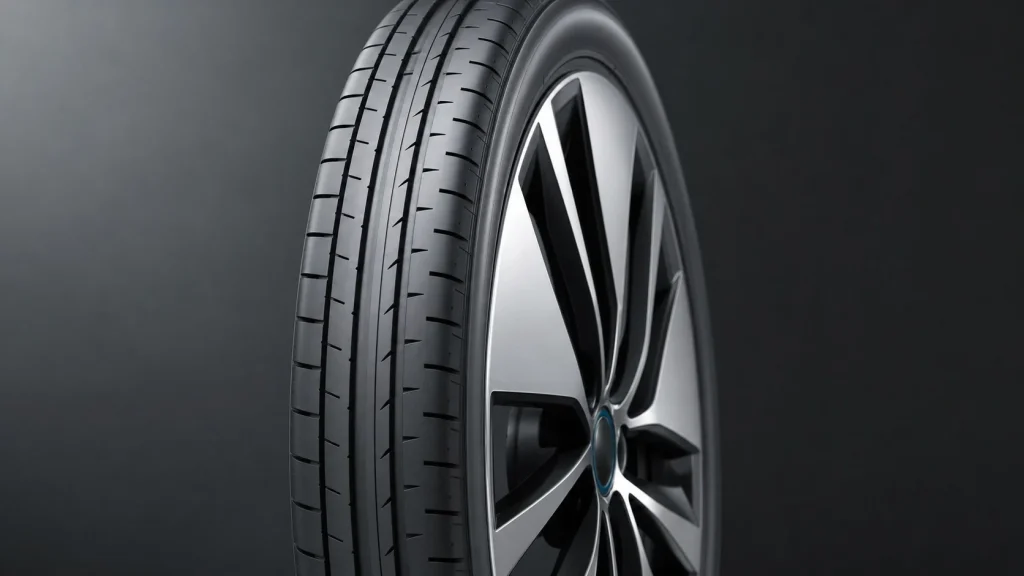
A key drawback of the vehicle is the specialized design of its tires. BMW partnered with Bridgestone to develop the Ecopia EP500 and EP600 tires specifically for the i3. These tires use a unique tall and narrow sizing strategy to minimize rolling resistance while maintaining a decent contact patch.
The table below lists the specific tire sizes required for the 2020 BMW i3 based on wheel diameter and trim level.
| Configuration | Front Tire Size | Rear Tire Size | Typical Replacement Model |
|---|---|---|---|
| Base i3 / REx (19-inch wheels) | 155/70R19 | 175/60R19 | Bridgestone Ecopia EP500 |
| Base i3 / REx (20-inch option) | 155/60R20 | 175/55R20 | Bridgestone Ecopia EP500 |
| i3s / i3s REx (20-inch standard) | 175/55R20 | 195/50R20 | Bridgestone Ecopia EP500 |
Because these tires are only produced for the i3, they are expensive and difficult to find. A replacement set of four tires typically costs between $900 and $1,200 in the United States, while UK buyers pay around £375 to £530. Furthermore, because of their narrow contact patch and the vehicle’s rear-wheel-drive torque, rear tires wear out quickly, often requiring replacement every 15,000 to 20,000 miles.
Another significant drawback relates to the carbon fiber reinforced plastic (CFRP) passenger cell. While the CFRP structure provides an incredibly safe cabin, it cannot be repaired like traditional steel or aluminum. In the event of a collision that damages the carbon fiber tub, repairs must be performed at a certified BMW i facility. These facilities cut out the damaged section and bond a new carbon fiber panel in its place. Because the repair process is labor-intensive and requires specialized tools, even moderate body damage can result in insurance companies writing the vehicle off as a total loss.
Expert view: The i3s trim with 20-inch wheels offers a firmer ride but uses slightly wider tires (175 front, 195 rear) that are marginally easier to source, though still significantly more expensive than standard hatchback tires.
Reliability Survey Ratings and Common Problems
The 2020 BMW i3 achieves excellent reliability ratings in owner surveys, but used buyers must watch out for common problem areas including the 12V accessory battery, charging port locks, and gasoline generator issues on REx models.
According to the official What Car? reliability survey, the BMW i3 platform achieved an outstanding 97.4% reliability rating, placing it first out of 20 electric vehicles in its class. This survey highlights that while the high-voltage battery and electric motor are extremely durable, accessory components require monitoring.
The table below summarizes the most common problem areas, their symptoms, estimated repair costs, and mitigation strategies.
| Common Problem Area | Typical Symptoms | Estimated Repair Cost | Mitigation Strategy |
|---|---|---|---|
| 12V Accessory Battery | Random dashboard error lights, boot failure | $200 – $350 | Replace the 12V battery proactively every 3 to 4 years. |
| Charge Port Lock Actuator | Vehicle refuses to release charger plug | $400 – $600 | Use the manual release cord under the door sill if stuck. |
| REx Fuel Pressure Sensor | Check engine light, fuel door refuses to open | $350 – $500 | Depressurize fuel system manually using the manual pull cord. |
| REx Engine Misfires | Rough generator operation, warning messages | $250 – $800 | Proactively run the generator monthly to prevent stale fuel. |
12V Battery Failures and Charging Port Issues
A common issue reported by used owners is the failure of the 12V lead-acid accessory battery. This battery is hidden deep in the front compartment and powers the car’s computers and accessory systems. When the 12V battery begins to lose voltage, it does not display a simple low-battery light. Instead, the vehicle’s computers behave erratically, throwing false warning codes for steering assist, high-voltage battery faults, and drive system failures. Proactively replacing this battery every three years prevents these issues.
Another known issue is the charge port lock actuator motor. This component locks the charging connector to the car during charging. If the actuator motor fails, it can trap the charging cable, preventing the driver from unplugging. Owners should locate the manual release pull-wire inside the rear door frame to release the cable in an emergency.
Range Extender (REx) Generator Complications
The Range Extender (REx) model carries extra maintenance risks. Because many drivers use the i3 primarily for short commutes, the gasoline generator can sit unused for months. This leads to stale fuel clogging the fuel injectors, corroded spark plugs, and faulty fuel tank pressure sensors. The pressurized fuel tank system can occasionally fail, refusing to open the fuel door. Drivers must pull a green manual release loop located under the front hood to open the fuel flap. To maintain the health of the REx system, owners should configure the vehicle settings to run the generator for at least 15 minutes once a month.
Furthermore, REx engine misfires are frequently documented. A primary cause is high-octane winter-blend fuel used at altitudes above 3,500 feet, which causes rough running. BMW advises draining the tank, using ADVANTEC Protect fuel additive, and refilling with recommended 89-octane fuel to resolve this issue. A failing fuel pump relay is also a common culprit for starting failures on the generator.
2020 BMW i3 vs. EV Competitors: Bolt EV and Model 3
The 2020 BMW i3 offers premium materials and a luxury brand badge, but its 153-mile range falls far behind the 2020 Chevrolet Bolt EV (259 miles) and the 2020 Tesla Model 3 Standard Range Plus (250 miles).
When evaluating the BMW i3 family alongside its primary competitors, used car buyers should compare the following specifications:
| Feature Specification | 2020 BMW i3 BEV | 2020 Chevrolet Bolt EV | 2020 Tesla Model 3 SR+ |
|---|---|---|---|
| EPA Electric Range | 153 miles | 259 miles | 250 miles |
| Battery Usable Capacity | 37.9 kWh | 66.0 kWh | 50.0 kWh |
| MSRP (Used 2026) | $13,000 – $22,000 | $12,000 – $16,000 | $18,000 – $24,000 |
| DC Charging Speed | 50 kW | 55 kW | 170 kW |
| Cabin Material Quality | Premium / Sustainable | Budget / Hard Plastics | Minimalist / Synthetic |
| Seating Capacity | 4 passengers | 5 passengers | 5 passengers |
2020 BMW i3 vs. 2020 Chevrolet Bolt EV
The Chevrolet Bolt EV represents a highly practical value alternative. The Bolt offers a 259-mile range, which is 106 miles more than the pure electric i3, and features a traditional five-passenger hatchback layout. The Bolt’s larger 66 kWh battery makes it far more versatile for road trips. However, the Bolt’s interior is dominated by cheap, hard plastics, and the seats have faced criticism for being narrow and lacking support. The i3 provides a much more comfortable, luxury experience, with premium materials that reduce road noise and create a sophisticated atmosphere.
2020 BMW i3 vs. 2020 Tesla Model 3
The Tesla Model 3 Standard Range Plus is the benchmark for entry-level premium EVs. The Tesla offers superior performance, accelerating from 0-60 mph in 5.3 seconds, and provides a highway-friendly sedan shape with excellent high-speed stability. Tesla’s primary advantage is the Supercharger network, which allows for fast, reliable charging up to 170 kW. However, a used Model 3 is typically more expensive to buy and does not offer the unique hatchback cargo versatility or the distinctive styling of the i3. The i3 is also easier to park in tight city spaces due to its shorter overall length.
2020 BMW i3 vs. 2020 Nissan Leaf
The base Nissan Leaf with its 40 kWh battery offers a similar 149-mile range at a lower used price. However, the Leaf lacks liquid cooling for its battery pack, making it susceptible to thermal degradation and slow charging speeds during hot summer weather. The Leaf also relies on the older CHAdeMO charging standard, which is being phased out in the United States. The i3 uses the widely supported CCS1 standard, making public fast charging much easier to access in the long term. If you are comparing model years to find the best fit, you can also read our review of the 2026 BMW i3 to see what the future holds.
Frequently Asked Questions
Is the 2020 BMW i3 reliable for daily use?
Yes. The 2020 BMW i3 BEV is a highly reliable option for daily commuting. By choosing the pure electric BEV model, owners avoid the maintenance challenges associated with traditional combustion engines. Proactively changing the 12V accessory battery every three to four years prevents most common electrical warning errors.
What is the real-world highway range of the 2020 i3?
In real-world highway driving at 70 mph, the range of the standard 2020 i3 BEV drops from 153 miles to approximately 110 to 120 miles. High speed, cold winter temperatures, and heavy use of the cabin heater are the main factors that reduce battery efficiency.
How long does a 2020 BMW i3 battery last?
The lithium-ion battery pack is designed to last the life of the vehicle. BMW supported the 2020 model year battery with an 8-year or 100,000-mile warranty that guarantees at least 70% capacity retention. Most used models in 2026 show minimal battery degradation, retaining over 85% of their original capacity.
What are the main problems with the BMW i3 REx?
The Range Extender (REx) engine is prone to misfires and starting issues if it is not run regularly. Fuel tank pressure sensors can also fail, preventing the fuel filler door from unlocking. Running the generator monthly for 15 minutes prevents these issues.
Is the BMW i3 expensive to maintain?
Routine maintenance is affordable, as the car does not require oil changes, spark plugs, or transmission fluid service. However, specialized items are expensive. The unique narrow tires are costly, and repairs to the carbon fiber body structure require specialized BMW facilities.

