

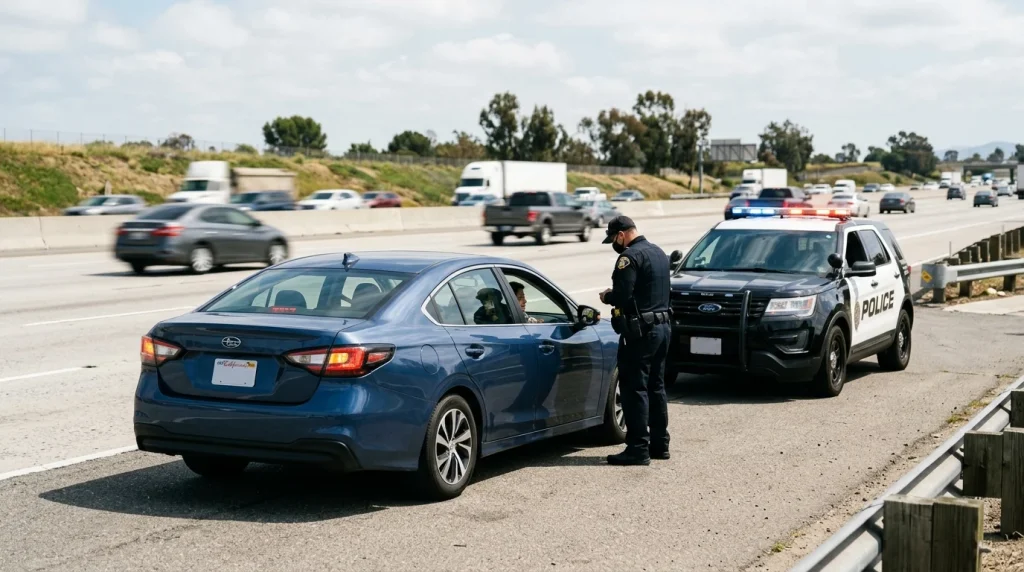
Quick answer: Yes, a police officer can search your car without a warrant under several legally recognized exceptions to the Fourth Amendment. The most common exception is the automobile exception, which allows a warrantless search if there is probable cause that the vehicle contains evidence of a crime. Other exceptions include voluntary consent, searches incident to arrest, plain view observations, and inventory searches.
Key takeaways:
- The Fourth Amendment protects citizens from unreasonable searches, but courts grant a reduced expectation of privacy to vehicles compared to homes.
- Probable cause requires specific, articulable facts, such as visible contraband, K-9 alerts, or driver admissions, not mere officer guesses.
- You have a constitutional right to refuse a consent search, and doing so cannot be used by police as probable cause to search anyway.
- Under the Supreme Court’s Rodriguez ruling, police cannot prolong a routine traffic stop to conduct a K-9 sniff without independent reasonable suspicion.
How the Fourth Amendment Applies to Your Vehicle
The Fourth Amendment of the United States Constitution protects citizens against unreasonable searches and seizures. In typical scenarios, law enforcement officers must obtain a warrant signed by a judge before searching your private property. However, the legal standards governing motor vehicles are significantly different from those protecting a static residence.
Courts have established that drivers have a reduced expectation of privacy in their vehicles. This legal doctrine is based on two primary factors. First, vehicles are inherently mobile and can quickly be driven out of a jurisdiction, potentially resulting in the destruction of evidence before an officer can secure a warrant. Second, motor vehicles operate on public streets and are subject to extensive government regulation, licensing, and inspection.
To initiate a traffic stop, a police officer needs reasonable suspicion that a traffic violation or criminal act has occurred. This is a lower legal standard than probable cause. While reasonable suspicion allows an officer to pull you over, check your driver license, and issue a citation, it does not automatically give them the authority to search your vehicle. For a search to occur, the officer must establish probable cause or meet another recognized exception to the warrant requirement.
The Automobile Exception: Searching with Probable Cause
The primary legal mechanism that allows warrantless vehicle searches is the automobile exception. This exception was first established by the United States Supreme Court in the 1925 landmark case Carroll v. United States. The court ruled that if officers have probable cause to believe a vehicle contains contraband, they can conduct a search immediately without waiting for a warrant.
Under the automobile exception, probable cause must be based on objective, articulable facts that would lead a reasonable officer to believe evidence of a crime is hidden inside the vehicle. Common triggers that establish probable cause include:
| Trigger | Description and Legal Application |
|---|---|
| Visual Contraband | The officer sees illegal items, such as drugs or weapons, inside the passenger cabin. |
| Admissions | The driver or passengers admit to possessing illegal items during the traffic stop. |
| K-9 Alerts | A trained drug-detection dog alerts to the presence of narcotics inside the vehicle. |
| Smell / Odor | The distinct smell of alcohol, marijuana, or chemical components of illegal drugs. |
If probable cause is established, the scope of the search is broad. A police officer can search the entire vehicle, including the passenger cabin, the glove compartment, the trunk, and any closed containers where the suspected contraband could reasonably be hidden. For example, if officers are searching for a stolen television, they cannot open a small pill bottle, but if they are searching for illegal drugs, they can search any small container.
The 2026 Marijuana Odor Update
The legal landscape surrounding the smell of marijuana as probable cause has changed significantly. In states where cannabis remains illegal, the odor of marijuana still constitutes probable cause for a warrantless search. However, in states where recreational cannabis has been legalized or decriminalized, courts have increasingly ruled that the smell of marijuana alone is no longer sufficient to justify a warrantless search.
For instance, the Minnesota Supreme Court ruled in State v. Torgerson (2023) that the odor of marijuana, by itself, is insufficient to establish probable cause to search a vehicle. Similar legal precedents have been upheld in California, Illinois, and Colorado. In these jurisdictions, officers must observe additional indicators of criminal activity, such as signs of impairment or open container violations, before they can search. If you are stopped in a state where cannabis is legalized, knowing how to remove the smell of smoke in a car remains a useful practice to prevent unnecessary interactions, but legally, the smell alone does not automatically strip away your privacy rights.
Consent Searches: Waiving Your Fourth Amendment Rights
One of the most frequent ways police officers conduct searches is by asking for permission. If you give consent, the officer does not need a warrant or probable cause. This is known as a consent search.
Officers are trained to ask for consent in a polite, conversational manner. They may ask questions such as, “You do not mind if I look around, do you?” or “Can I check the trunk to make sure everything is safe?” If you answer in the affirmative, you have waived your Fourth Amendment protections.
It is critical to understand that consent must be given voluntarily. It cannot be coerced, forced, or obtained through threats. Furthermore, the Supreme Court has ruled that police officers are not legally required to inform you that you have the right to refuse a search. Many drivers consent to searches simply because they believe they have no other choice.
How to Handle a Consent Request
If a police officer asks to search your car, you can handle the situation by following these guidelines:
- State your refusal clearly and politely: Say, “I do not consent to searches.”
- Remain calm: Do not use aggressive language or physically interfere with the officer.
- Understand your rights: Refusing a search is a constitutional right. Police cannot arrest you or prolong the stop simply because you said no.
- Limit the scope: If you do choose to allow a search, you can set limits, such as, “You can search the front seat but not the trunk.”
- Revoke consent: You can withdraw your consent at any time during the search, at which point the officer must stop unless they have established independent probable cause.
Search Incident to Arrest: Narrow Boundaries Under Gant
When a police officer arrests a driver or passenger, they have the authority to conduct a warrantless search under the “search incident to arrest” exception. However, this exception is not a license to search the entire vehicle without limits.
The boundaries of this search were strictly defined by the Supreme Court in the 2009 case Arizona v. Gant. Before this ruling, police routinely searched the entire passenger cabin of a vehicle whenever an occupant was arrested. The Gant decision restricted this practice to protect driver privacy.
Under the current legal standard, police can search a vehicle incident to arrest only under two specific conditions:
- The arrestee is unsecured and within reaching distance of the passenger compartment at the time of the search.
- It is reasonable to believe the vehicle contains evidence of the specific offense for which the person is being arrested.
This means that if you are pulled over, arrested for driving with a suspended license, handcuffed, and placed in the back of a patrol car, the police cannot search your car under this exception. You are secured and cannot access the vehicle, and there is no physical evidence of a “suspended license” to be found inside the car. Conversely, if you are arrested for drug possession, officers can search the passenger cabin because it is reasonable to believe additional evidence of drug possession is inside.
The Plain View Doctrine: Contraband in Sight
Under the plain view doctrine, a police officer does not need a warrant to seize illegal items or search your vehicle if the items are visible from a lawful vantage point.
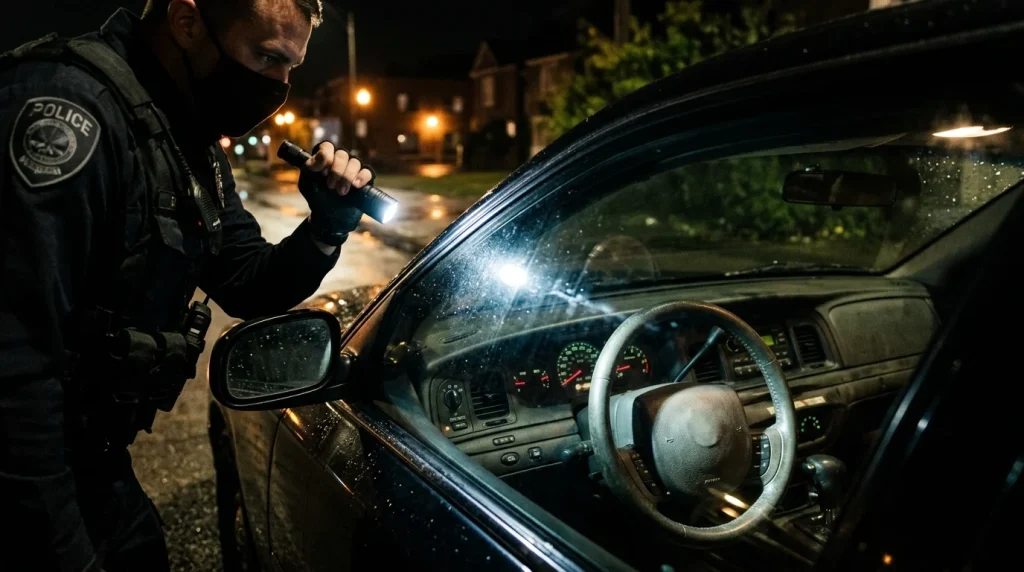
During a routine traffic stop, the officer has the right to stand next to your driver-side window. While speaking with you, they will look inside the passenger cabin. If they see open containers of alcohol, weapons, drug paraphernalia, or other contraband sitting on the seats or floorboards, they can seize the items immediately.
For the plain view doctrine to apply, three elements must be met:
- The officer must be lawfully present in the location from which the item is observed.
- The incriminating character of the item must be immediately apparent.
- The officer must have a lawful right of access to the physical object.
Shining a flashlight into a dark vehicle cabin during a nighttime stop is legally permissible. If an officer spots a weapon under the seat using a flashlight, the plain view doctrine applies, and the observation establishes the probable cause necessary to conduct a broader warrantless search of the vehicle.
Inventory Searches: Vehicle Impoundment and Cataloging
If police officers impound your vehicle, they are permitted to perform an inventory search without a warrant or probable cause. This type of search is classified as an administrative procedure rather than a criminal investigation.
The legal purpose of an inventory search is threefold: to protect the owner’s property while the vehicle is in police custody, to protect the police against claims of lost or stolen property, and to protect officers from potential danger. However, if officers discover illegal drugs, weapons, or other contraband during the inventory, that evidence will be seized and can be used to charge you with a crime.
To prevent abuse, inventory searches are subject to strict administrative rules:
- The police department must have a written policy governing inventory searches.
- The search must be conducted in accordance with those standardized procedures.
- Officers cannot use impoundment as a pretext to conduct an investigative search that they otherwise lack the probable cause to perform.
If the defense can show that the vehicle was impounded unnecessarily or that the inventory search did not follow standard department guidelines, the court may suppress the evidence.
K-9 Sniffs and Traffic Stops: Strict Time Limits
Police departments frequently deploy drug-detection dogs during traffic stops. A K-9 sniff is not considered a search under the Fourth Amendment because a dog only sniffs the air surrounding the exterior of the vehicle, which is exposed to the public. However, officers face strict limitations on how they conduct these sniffs.
In the case Rodriguez v. United States (2015), the Supreme Court addressed whether police can extend a traffic stop to conduct a K-9 sniff. The court held that a police stop exceeding the time needed to address the traffic infraction that warranted the stop violates the Constitution’s shield against unreasonable seizures.
Specifically, the Rodriguez ruling establishes that:
- A traffic stop’s authority ends when tasks tied to the traffic infraction are, or reasonably should have been, completed.
- Police cannot prolong a traffic stop by even a few minutes to wait for a drug dog to arrive, unless they have independent reasonable suspicion of criminal activity.
- If the K-9 unit is already present at the scene and alerts while the officer is writing the citation, the alert is valid and establishes probable cause for a full vehicle search.
If you are detained on the side of the road after the officer has issued your ticket or warning, you have the right to ask, “Am I free to go?” If they continue to detain you without reasonable suspicion to wait for a dog, any evidence discovered during a subsequent search may be thrown out.
Rental Cars: Fourth Amendment Rights for Unauthorized Drivers
A common area of confusion involves rental vehicles. In the past, some police departments argued that if a driver was not listed on the rental agreement, they had no expectation of privacy in the vehicle and could be subjected to a warrantless search at any time.
The Supreme Court resolved this issue in Byrd v. United States (2018). The court held that an unauthorized driver who is in lawful possession and control of a rental car retains a reasonable expectation of privacy under the Fourth Amendment.
This means that:
- Simply violating the terms of a rental contract does not strip you of your constitutional protections against warrantless searches.
- Police must still establish probable cause, obtain consent, or meet another legal exception to search the rental vehicle.
- The exception to this rule is if the driver is in unlawful possession of the vehicle, such as if the car was stolen or if the driver obtained it through fraud.
How to Protect Your Rights During a Traffic Stop
If you are pulled over by law enforcement, knowing how to interact with police officers can protect your constitutional rights and ensure your safety.
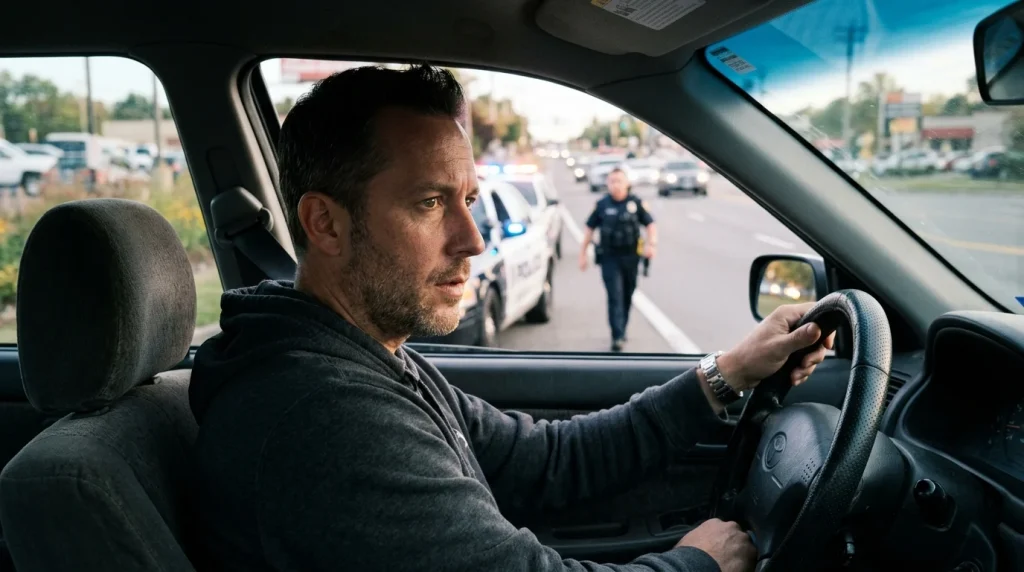
| Step | Action | Legal Purpose |
|---|---|---|
| 1 | Keep hands on the steering wheel | Ensures officer safety and prevents suspicion of hiding items. |
| 2 | Provide required documents | You are legally required to show your driver license, registration, and insurance. |
| 3 | State non-consent clearly | If asked to search, say: “I do not consent to searches.” |
| 4 | Ask if you are free to go | Clarifies whether you are being actively detained or are free to leave. |
| 5 | Document the stop details | Note the time, badge numbers, and statements made for your attorney. |
Never physically resist a police officer, even if you believe the search is unlawful. Challenging an illegal search is a task for the courtroom, not the roadside. If you need to stay updated on other legal topics regarding driving, you can visit the latest automotive news section to review your options.
Original Analysis: When Can Evidence Be Suppressed?
If a police officer conducts an illegal search of your vehicle, the primary legal remedy is to file a motion to suppress the evidence. Under the exclusionary rule, any evidence obtained through unconstitutional police actions is inadmissible in a criminal trial. This rule is often described as the “fruit of the poisonous tree” doctrine.
To successfully suppress evidence, your defense attorney must demonstrate that the officer’s justification for the search was flawed. Common grounds for suppression include:
- Unlawful Traffic Stop: The officer lacked reasonable suspicion to pull you over in the first place, making the entire interaction illegal.
- Unlawful Extension: The officer prolonged the stop beyond the time required to address the traffic infraction, violating the Rodriguez standard.
- Coerced Consent: The officer threatened you or used intimidating tactics to force you to allow a search, invalidating the consent.
- Gant Violation: The officer searched your passenger compartment after you were handcuffed and secured in the patrol car, without having reason to believe evidence of the crime of arrest was inside.
If the court grants the motion to suppress, the prosecution cannot use the seized evidence, which frequently leads to the dismissal of the charges. Understanding these legal nuances is vital for anyone navigating the justice system.
Frequently Asked Questions
Can police search my car during a routine traffic stop?
No, not automatically. A routine traffic stop for speeding, a broken taillight, or another minor infraction does not grant the police the authority to search your vehicle. The officer must have probable cause, obtain your voluntary consent, or meet another legal exception to search.
What happens if I refuse to let police search my car?
Refusing a search is your constitutional right under the Fourth Amendment, and your refusal cannot be used by police as probable cause to search anyway. Once the officer completes the traffic stop and issues your ticket or warning, they must let you go unless they have independent probable cause.
Can police bring a drug dog to sniff my car?
Yes, police can use a drug dog to sniff the exterior of your car during a lawful traffic stop. However, they cannot prolong or extend the stop beyond the time required to complete the traffic ticket or warning to wait for the dog to arrive, unless they have independent reasonable suspicion of drug activity.
Can police search my trunk without a warrant?
Yes. Under the automobile exception, if a police officer has probable cause to believe your vehicle contains contraband, they can search the entire vehicle, including the trunk. Additionally, they can search the trunk during a standardized inventory search if your vehicle is impounded.
Does the Fourth Amendment protect my car the same as my home?
No. The Supreme Court has established that vehicles have a reduced expectation of privacy compared to homes. Because cars are mobile and travel on public roads under government regulation, police have much broader authority to conduct warrantless searches of vehicles than of private residences.
Note: This guide is provided for educational and informational purposes only. It does not constitute formal legal advice. Criminal law and search warrant exceptions vary by state. If you are facing legal issues related to a vehicle search, you should contact a qualified defense attorney in your local jurisdiction.

