

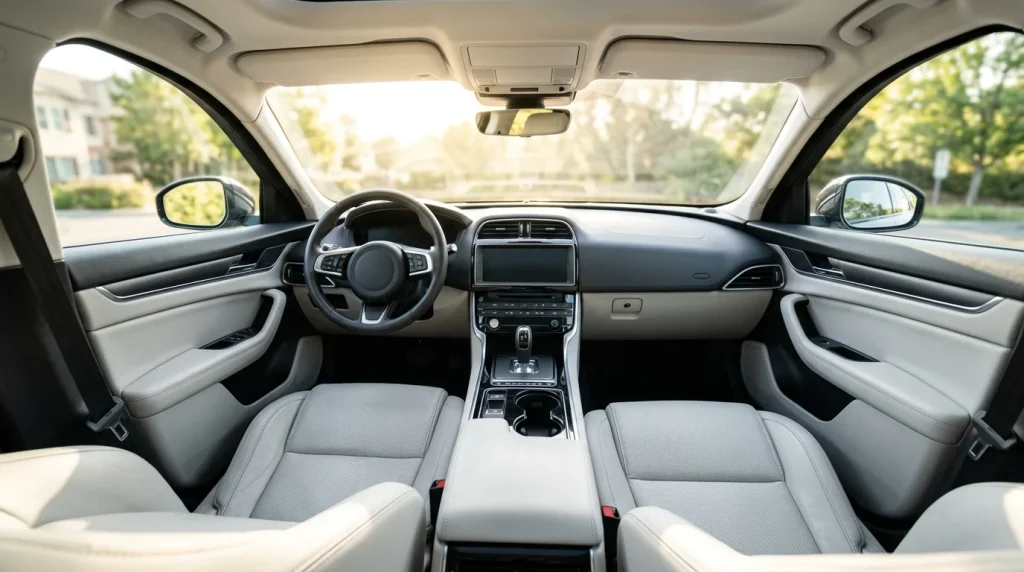
Quick answer: To permanently remove the smell of smoke in a car, you must clean all surfaces, replace the cabin air filter, and run an ozone generator. Simple air fresheners only mask the odor, while ozone oxidizes tar and nicotine molecules at a molecular level. A complete treatment takes 1 to 2 days including drying times.
Key takeaways:
- Smoke residue leaves a yellow tar and nicotine film on windows, carpets, and air conditioning ducts.
- Replacing the cabin air filter is mandatory, costing 10 to 25 dollars for parts compared to 100 dollars at dealerships.
- Ozone treatment for 30 to 60 minutes permanently breaks down embedded odor molecules.
- Thirdhand smoke leaves cancer-causing chemicals on surfaces that persist for months and present health risks.
Why Cigarette Smoke Smell Is So Hard to Remove
Cigarette smoke smell is exceptionally difficult to remove because it contains sticky tar and nicotine particles that settle into fabric pores, carpet padding, and climate control ducts. These compounds form a persistent residue that continues off-gassing long after smoking stops. When a person smokes inside a vehicle, the airborne particles do not simply vanish. Instead, they condense into a microscopic, sticky coating that clings to every square inch of the interior.
This residue is not just an aesthetic issue or a minor nuisance. According to a narrative review on PMC, tobacco smoke exposure inside the tight confines of a vehicle cabin leads to severe accumulation of toxic substances. The residue left behind is commonly known as thirdhand smoke. It consists of nicotine and other chemicals that react with indoor air pollutants to form carcinogens. These carcinogens settle deep into seat cushions, headliners, and plastic trim.
Whenever the vehicle is exposed to heat or direct sunlight, these embedded chemicals are re-released into the air, causing the smell to return. Furthermore, the cabin HVAC system acts as a recirculating loop. Once smoke enters the air ducts, it deposits a layer of tar on the evaporator and duct walls. Every time you turn on the fan, you blow those particles back into the cabin, making surface-level cleaning ineffective.
Step-by-Step: How to Get Smoke Smell Out of a Car
Eliminating smoke odor requires a structured, multi-step deep cleaning process that addresses both visible surface grime and hidden climate system channels. This process ranges from thorough vacuuming to fabric extraction and cabin filter replacement. Skipping any of these steps will leave behind active odor sources, meaning the smell will return.
Step 1: Remove Everything and Vacuum Thoroughly
Start by removing all floor mats, seat covers, trash, and personal items from the car. Vacuum the entire vehicle using a high-powered vacuum with a brush attachment. Pay close attention to the seams of the seats, the carpets underneath the seats, and the headliner. Because smoke rises, the fabric on the ceiling of your car absorbs a massive amount of odor. Vacuum the headliner very gently to avoid loosening the adhesive backing.
Step 2: Clean All Hard Surfaces and Glass
Wipe down all plastic, vinyl, wood, and metal surfaces with an all-purpose interior cleaner or a mild degreaser. Smoke creates a sticky, yellowish film on these materials that attracts dust. Upholstery cleaner should be used on leather surfaces, followed by a high-quality leather conditioner. Do not forget to clean all interior glass windows and the windshield. Nicotine deposits build up quickly on glass, leaving a hazy film that worsens night glare. If you notice your window tinting is permanently stained, you can research how much it costs to tint car windows to budget for a complete replacement.
Step 3: Fabric and Carpet Extraction
For cloth seats and carpet floorings, surface cleaning is not enough. You must use a carpet extractor or a heavy-duty steam cleaner. Spray a dedicated fabric shampoo onto the upholstery, agitate it with a stiff-bristled brush, and let it dwell for 10 minutes. Use the extractor to pull the dirty water and dissolved tar out of the fibers. Let the fabric dry completely before moving on to the next step.
Step 4: Neutralize with Baking Soda
Once the carpets and seats are dry, sprinkle baking soda generously over all fabric surfaces. Use a dry brush to work the baking soda into the carpet fibers. Leave the baking soda in place for at least 12 to 24 hours. Baking soda is highly effective because it neutralizes acidic odor compounds chemically instead of just masking them. After the waiting period, vacuum the car thoroughly to remove all white powder residue.
Step 5: Replace the Cabin Air Filter
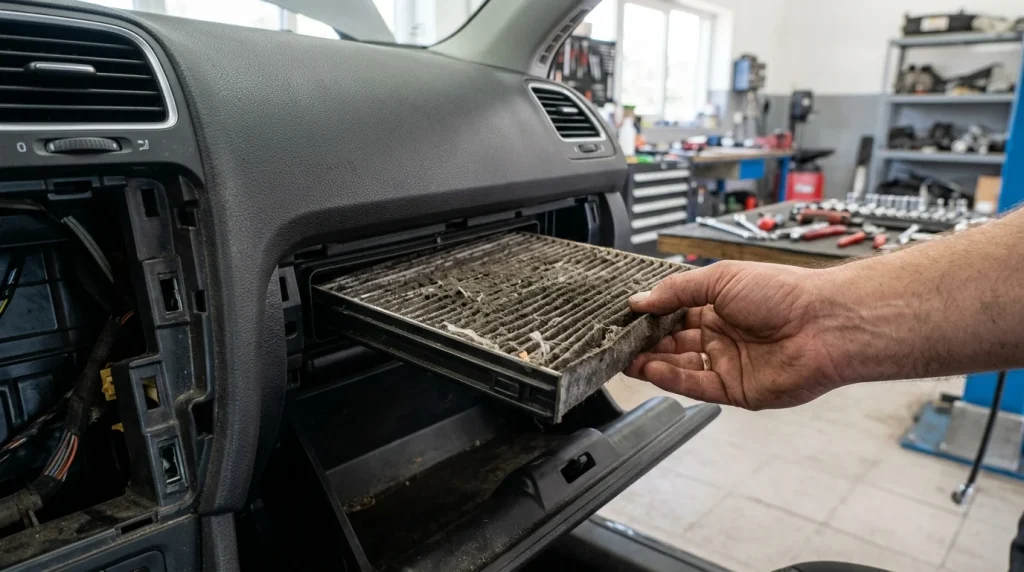
The cabin air filter is responsible for trapping dust, pollen, and smoke particles before they enter the cabin. If someone smoked in the car, this filter is saturated with tar and must be replaced. A replacement cabin air filter costs 10 to 25 dollars at auto parts stores. Replacing it yourself takes under 15 minutes in most vehicles and is usually done through the glove box compartment. This simple DIY task saves you from the dealership service charges that often reach up to 100 dollars.
Step 6: Flush the HVAC System
Even with a new filter, residual smoke particles will still coat the interior of your air ducts. To sanitize the system, start the engine and set the air conditioning to maximum speed with the recirculation mode turned off. Locate the exterior fresh air intake vents at the base of the windshield and spray a dedicated HVAC disinfectant or Lysol spray directly into the intake. Let the fan run for 10 minutes, then switch the system to maximum heat and repeat the process to treat the heater core. Knowing what car has the best air conditioning for the back seat is also helpful if you are considering a vehicle upgrade to improve passenger airflow and ventilation.
Step 7: Final Ventilation and Airing Out
After completing all cleaning steps, open all the car doors and trunk lid in a well-ventilated area. Let the car air out for a few hours. This step allows any chemical smells from cleaners or sanitizers to dissipate, leaving a neutral background. You can find more helpful maintenance tips and guides in our latest automotive news section.
Ozone Treatment: Remove Smoke Smell From Car Permanently
Ozone treatment permanently removes smoke smell from car cabins by generating O3 gas that chemically oxidizes tar, nicotine, and other organic odors on contact. This gas reaches deep into foam cushions, headliners, and ventilation ducts where physical detailing cannot reach. When the ozone molecule interacts with an odor-causing compound, the extra oxygen atom binds to the pollutant, altering its chemical structure and converting it into an odorless substance.
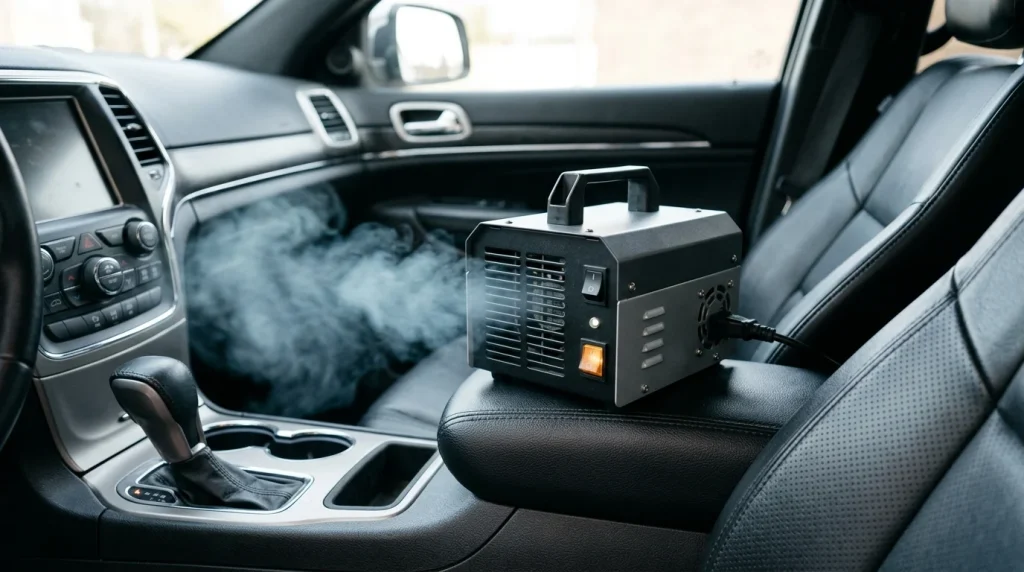
To perform an ozone treatment, place a portable ozone generator inside the cleaned vehicle. Plug the machine into an extension cord and route the wire through a cracked window, sealing the gap with painter’s tape. Start the vehicle, turn the air conditioner to maximum fan speed, and enable the recirculation setting. This setup allows the ozone gas to cycle repeatedly through the HVAC ducts.
Set the generator timer for 30 to 60 minutes depending on the severity of the odor. Once the cycle finishes, open all car doors and let the vehicle ventilate for at least 30 minutes before entering. Portable ozone generator units cost 40 to 120 dollars to buy on Amazon, while professional daily rentals start at 50 to 100 dollars.
Note: Ozone is a lung irritant. You must never stay inside the vehicle during treatment, and you must air out the car cabin with doors open for at least 30 minutes before driving.
The U.S. Environmental Protection Agency warns that ozone generators sold as air purifiers can cause respiratory irritation if inhaled directly. Therefore, strict adherence to safety guidelines is required when using these machines.
DIY Methods: Vinegar and Charcoal
White vinegar and activated charcoal bags are effective natural alternatives for removing mild smoke odors without specialized machinery. Vinegar vapors neutralize alkaline residues, while porous charcoal absorbs airborne organic compounds over time. These methods are excellent for vehicles with light smoke exposure or as maintenance steps after a deep clean.
White vinegar consists of acetic acid, which binds to basic, alkaline compounds found in tobacco smoke. To use this method, fill three or four small bowls with undiluted white vinegar and place them on the floorboards and dashboard overnight. The vinegar smell will be strong initially, but it will dissipate within a few hours of driving with the windows down, taking a portion of the smoke smell with it.
Activated charcoal is another highly porous material that naturally filters volatile organic compounds out of the air. Leaving several linen bags filled with activated charcoal in the door pockets and under the seats will provide continuous odor absorption for up to six months. Standard household white vinegar costs under 5 dollars and neutralizes smoke odors overnight without leaving a permanent chemical residue.
When to Hire a Professional for Detailing Smoke Odor Removal
Professional detailing smoke odor removal is necessary for severe, long-term contamination where tar has deeply penetrated foam backing and headliners. Professional services use industrial extractors, commercial steam cleaning, and high-output ozone generators to guarantee results. If a vehicle was smoked in daily for multiple years, consumer-grade cleaning solutions and light ozone treatments may not be enough to solve the issue.
A professional smoke odor removal service typically includes a complete interior degreasing, hot water extraction of all carpets and seat fabrics, steam cleaning of the headliner, an HVAC duct chemical wash, and an industrial-grade ozone cycle. Professional vehicle detailing smoke odor removal services typically cost 150 to 500 dollars depending on the vehicle size and contamination severity. Many high-end detailing shops offer satisfaction guarantees, promising to retreat the vehicle for free if the smoke odor returns within a specified period.
Expert view: DIY methods work well for vehicles with light smoke exposure, but for a car owned by a heavy smoker for years, the 150 to 500 dollars spent on professional detailing is worth the expense to avoid purchasing expensive equipment.
Frequently Asked Questions
How long does it take to remove smoke smell from a car?
A complete smoke odor removal treatment takes 1 to 2 days. This timeframe includes the hours needed for upholstery shampooing, overnight baking soda application, a 30 to 60 minute ozone cycle, and a final 30 minute airing out session.
Does baking soda actually remove smoke smell or just cover it up?
Baking soda chemically neutralizes smoke odors rather than covering them up. As an amphoteric substance, sodium bicarbonate reacts with acidic and basic odor molecules to convert them into stable, odorless salts, though it must be combined with deep cleaning for heavy buildup.
Can you remove smoke smell from a car without an ozone machine?
Yes, mild smoke odors can be removed without an ozone machine through deep cleaning, vinegar washes, and replacing the cabin filter. However, severe smoke accumulation that has penetrated seat foam and HVAC ducts requires an ozone generator for complete removal.
Will detailing remove cigarette smell from car?
Standard interior detailing will not remove cigarette smell because it only cleans surfaces. You must specifically request a specialized smoke odor removal service that includes deep steam extraction, an HVAC system flush, and commercial ozone treatments.
Is cigarette smoke smell in a car dangerous?
Yes, the smell indicates the presence of thirdhand smoke, which contains over 25 cancer-causing chemical compounds. These toxic chemical residues stick to cabin surfaces, can be absorbed through skin contact or breathing, and represent health risks, especially to children.

