

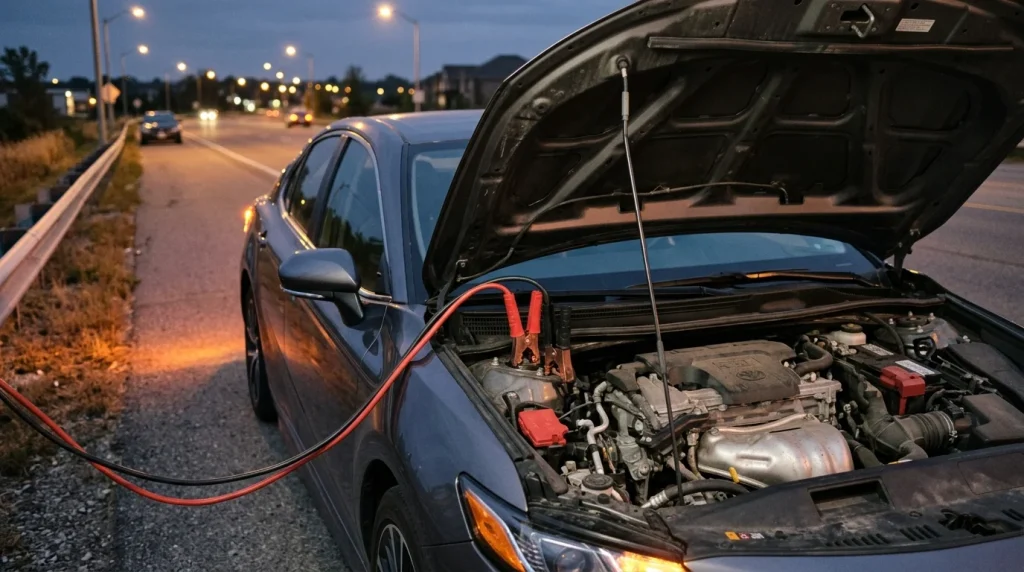
Quick answer: Yes, you can jumpstart a car with a bad alternator, but it is only a temporary solution. A jumpstart bypasses the alternator to start the engine using power from another vehicle’s battery. However, because a failing alternator cannot recharge your battery or sustain the car’s electrical systems, the engine will run solely on the remaining battery power and typically stall within 5 to 30 minutes.
Key takeaways:
- Jumpstarting relies entirely on the donor battery to crank the engine, bypassing your vehicle’s failed alternator during the start.
- A bad alternator cannot recharge your battery once the jumper cables are removed, leading to a quick electrical depletion.
- Modern vehicles with complex onboard computers and electronics will drain the battery and stall much faster than older models.
- Turning off heavy electrical loads like the air conditioning, heater, and radio can slightly prolong your limited driving time.
- If your vehicle stalls immediately after you disconnect the jumper cables, the alternator is almost certainly the culprit.
Why You Can Jumpstart a Car with a Bad Alternator (and Why It Fails)
Jumpstarting works because the jumper cables establish a direct electrical connection between the donor vehicle’s charging system and your starter motor. When you turn the ignition key, the starter motor draws the necessary cold cranking amps directly from the working vehicle’s battery, completely bypassing your own charging system.
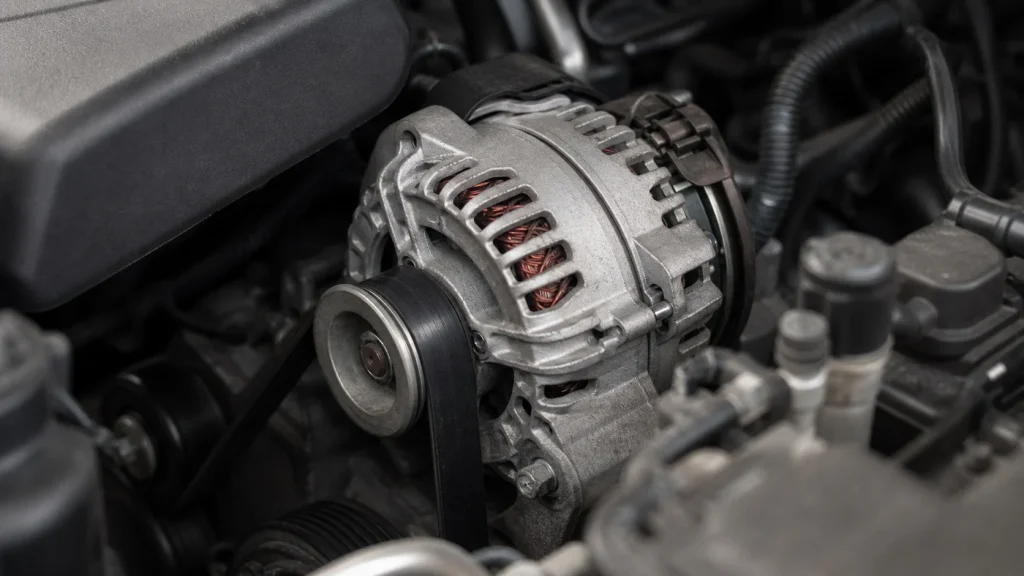
Once the engine is running and you disconnect the cables, the vehicle must transition to its own power supply. In a healthy vehicle, the alternator takes over to convert mechanical energy from the engine into electrical power, which runs the onboard electronics and recharges the battery.
If the alternator is faulty, this conversion process fails. The battery becomes the sole power source for the entire vehicle, running ignition coils, sensors, fuel pumps, and computer modules without any replenishment. According to the American Automobile Association (AAA) in AAA’s automotive advice, a car with a bad alternator will inevitably stall once the battery runs out of enough power to keep it running. AutoZone’s technical advice also highlights that a jumpstart is merely a temporary solution, meaning you should only use it to drive the vehicle directly to a repair shop.
How Long Will a Car Run After a Jumpstart with a Bad Alternator?
If you manage to start a car with a bad alternator, it will generally run for 5 to 30 minutes before stalling. The exact duration depends on three critical variables:
- Battery Condition and Age: A relatively new battery with a high reserve capacity can store more electrical energy and keep the engine running longer. An older battery will drain rapidly.
- Electrical Load: Running the air conditioning, heater, radio, or headlights draws massive amounts of current. Disabling all non-essential electronics preserves battery reserve power.
- Vehicle Electronics: Modern vehicles equipped with digital screens, driver assist sensors, and electric power steering demand far more electricity than older, simpler cars.
Analysis: In older vehicles, a driver could sometimes travel several miles on a dying battery because the engine relied on simple mechanical systems. In modern, highly computerized vehicles, a drop in system voltage below approximately 10.5 volts will cause the engine control unit to shut down immediately, stalling the engine regardless of speed.
Warning: Driving a vehicle that relies solely on battery power is highly dangerous. If the battery drains completely while driving, you will lose electric power steering assist and vacuum brake booster support, making the vehicle extremely difficult to steer and stop.
Bad Alternator vs. Bad Battery: How to Spot the Difference
Observing how the vehicle behaves immediately after a jumpstart is the most reliable way to diagnose the problem. If the car starts and continues to run normally after you disconnect the jumper cables, the issue is likely a discharged battery. If the vehicle stalls shortly after the cables are removed, the alternator is failing.
Common warning signs of a failing alternator include:
- Dimming or flickering headlights that change brightness as engine RPMs shift.
- Erratic electrical accessory behavior, such as power windows moving slowly.
- A battery warning light or “ALT” warning illuminated on the instrument cluster.
- Growing, whining, or squealing noises from the engine bay, which typically indicate worn alternator bearings or a slipping serpentine belt.
If a slipping or broken serpentine belt is the root cause of your charging issues, it may also fail to spin the water pump. This can cause both charging failure and severe engine overheating. Recognizing how can you tell if your car is overheating is critical in this scenario, as driving with a compromised cooling system can cause permanent engine block damage. For general automotive troubleshooting and guides, you can visit the Autvex News hub to browse diagnostic resources.
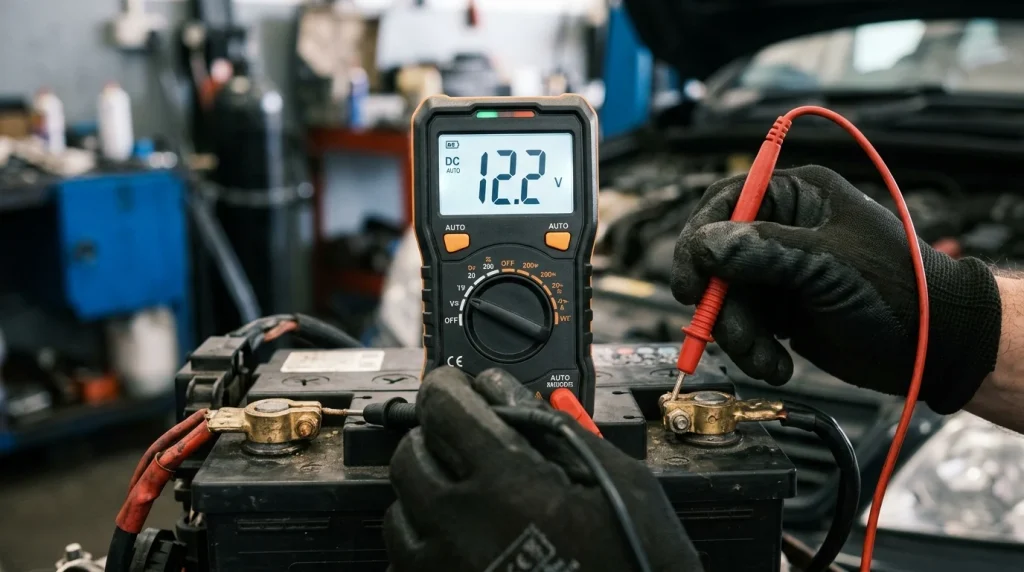
A multimeter can confirm the diagnosis. With the engine off, a healthy battery should read approximately 12.6 volts. Once the engine is running, a functional alternator should raise the voltage reading to between 13.5 and 14.5 volts. If the voltage remains below 13.0 volts while the engine runs, the alternator is not charging the battery.
How to Safely Jumpstart a Car with a Bad Alternator
When jumpstarting a car with a bad alternator, follow standard safety procedures to protect both vehicles’ electrical systems from voltage spikes:
- Position the Vehicles: Park the donor vehicle close enough for the cables to reach, but do not let the vehicles touch. Turn off both engines and set the parking brakes.
- Connect the Positive Cables: Attach one red positive (+) clamp to the positive terminal of the dead battery. Connect the other red positive clamp to the positive terminal of the working donor battery.
- Connect the Negative Cables: Attach one black negative (-) clamp to the negative terminal of the donor battery. Connect the final black negative clamp to an unpainted metal surface on the engine block or frame of the dead car (ground).
- Start the Engines: Start the donor vehicle and let it idle for two to three minutes. Then, attempt to start the car with the bad alternator.
- Disconnect Carefully: Once the engine starts, remove the cables in the exact reverse order of connection. Do not allow the metal clamps to touch each other while any clamp is connected to a battery.
After the vehicle starts, leave all electrical accessories turned off and drive directly to a mechanic or service center. Do not turn the engine off, as the battery will not have enough charge to restart the vehicle.
Frequently Asked Questions about Bad Alternators
Will a car start at all if the alternator is completely dead?
Yes, a car can start if the battery has a sufficient charge. The starter motor draws its cranking current directly from the battery, not the alternator. However, once the engine starts, it will drain the battery quickly and stall.
Can a bad alternator ruin a new battery?
Yes. A failing alternator can drain a battery to a completely discharged state multiple times, which damages the lead-acid cells and permanently reduces battery capacity. In rare cases, a malfunctioning voltage regulator inside the alternator can overcharge the battery, causing it to swell and leak acid.
Can you jumpstart a car in the rain?
Yes, but you must take precautions. Keep the electrical connection points dry, ensure the jumper cable clamps do not touch wet metal surfaces, and avoid standing in deep puddles of water while handling the cables.
How much does it cost to replace a bad alternator?
Alternator replacement typically costs between $350 and $800, depending on the vehicle’s make and model. The alternator assembly itself accounts for $150 to $400, while professional labor rates make up the remaining balance.

