

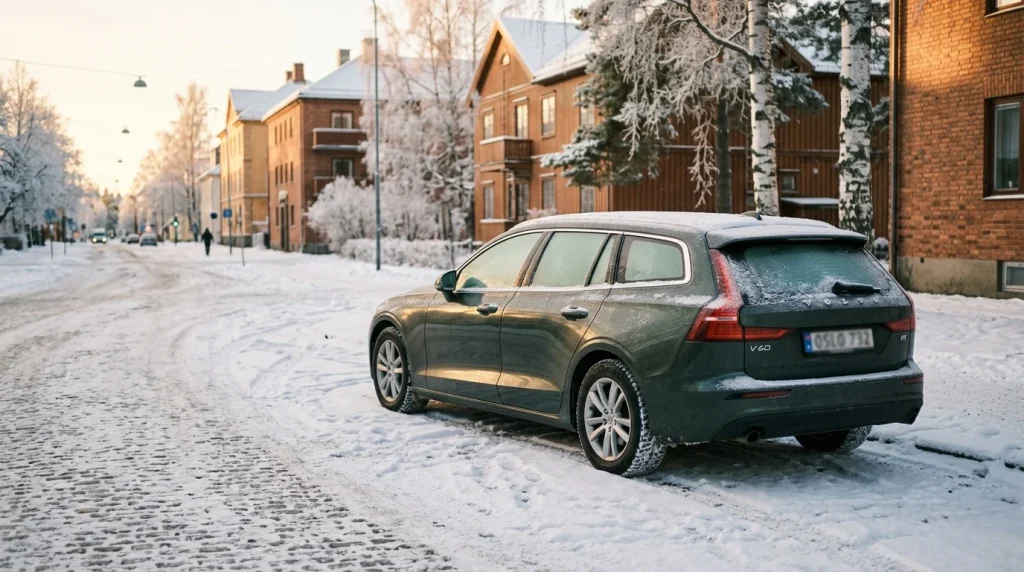
Quick answer: When a car wont start in cold but battery is good, the issue is typically that the battery loses up to 60% of its strength at 0 F (-18 C) while the engine requires 2 to 2.5 times more power to crank due to thickened engine oil. Simple voltage checks do not show cold-weather cranking capability, meaning a resting 12.6V battery can still fail under a starter load.
Key takeaways:
- Battery capacity drops by 35% at 32 F and 60% at 0 F, even if the voltage multimeter reads a normal 12.6 volts.
- Thickened engine oil creates severe resistance, requiring the starter motor to draw significantly more current to turn the crankshaft.
- Fuel line freezing, worn spark plugs, and faulty coolant temperature sensors can prevent an engine from firing even if it cranks normally.
- Corrosion or loose connections at the battery terminals block current flow, mimicking a dead battery or starter.
Why a “Good” Battery Can Still Fail in Cold Weather
A common winter frustration is turning the key on a freezing morning only to hear a slow, labored groan, even though your battery is brand new or tested fine on a multimeter. The explanation lies in the difference between electrical voltage and actual cranking current under load.
Voltage vs. Cold-Cranking Amps
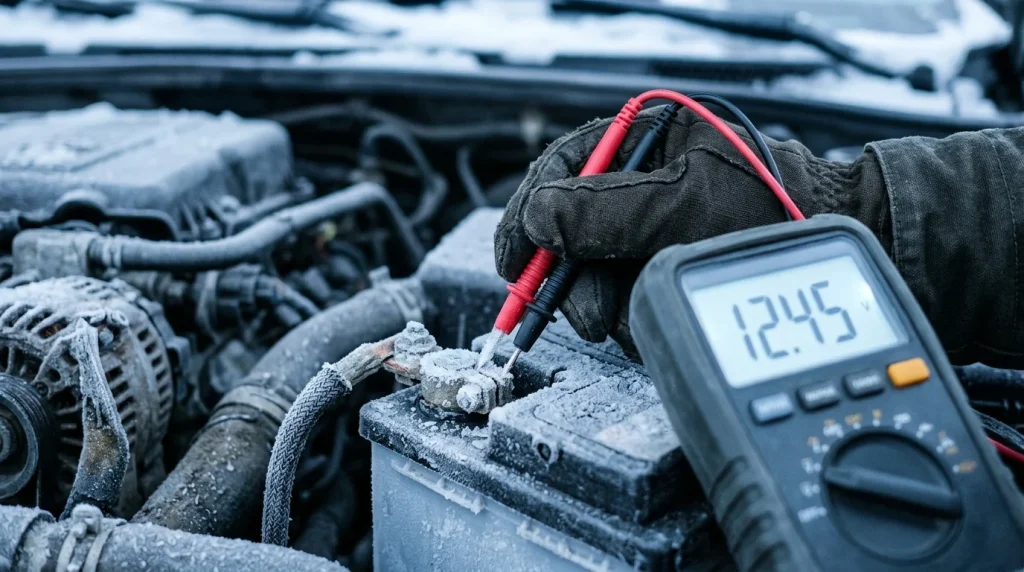
A standard automotive multimeter measures resting voltage. A fully charged battery shows 12.6 volts. However, resting voltage is static pressure. It does not reflect how much current the battery can deliver under a heavy starter load in sub-freezing temperatures. Cold Cranking Amps (CCA) measure the volume of current a battery can deliver at 0 F (-18 C) for 30 seconds while maintaining a minimum of 7.2 volts.
When temperatures drop, the chemical reactions inside a lead-acid battery slow down. The electrolyte solution becomes more viscous, which increases internal resistance. While the battery can easily supply 12.6V to power your headlights or radio, it may drop below the critical 9.6V starting threshold the moment the starter motor draws hundreds of amps. According to a technical guide on battery performance by the Lancer Service guide, static voltage is highly deceptive in winter, and only a load test can confirm starting reliability.
Temperature Impact on Battery Capacity and Engine Cranking Demand
Cold weather delivers a double blow to your vehicle starting system. As ambient temperatures fall, your battery available capacity decreases while the energy required to turn over the engine increases. This relationship is illustrated in the table below:
| Temperature | Battery Capacity Remaining | Engine Cranking Power Required |
|---|---|---|
| 80 F (27 C) | 100% (Baseline) | 100% (Baseline) |
| 32 F (0 C) | 65% | 155% |
| 0 F (-18 C) | 40% | 210% to 250% |
Data compiled from winter starting metrics shows that at 0 F (-18 C), your battery is operating at less than half its normal strength, while your engine requires more than double the power to spin the crankshaft. This disparity is why marginal batteries fail immediately during the first freeze of the season.
The Only True Test: Load Testing
Visual inspections and simple multimeter voltage checks cannot measure CCA capacity. The only way to verify if a battery has enough starting power is through a load test. A load tester applies an electrical draw that simulates the starter motor draw, checking if the battery voltage holds above 9.6 volts for 15 seconds.
If you suspect your battery is weak, most auto parts stores will perform a load test free of charge. Automotive standards recommend replacing any battery if its tested CCA capacity drops below 75% of the rating printed on the manufacturer label.
Other Causes When the Battery is Healthy
If a professional load test confirms your battery is healthy, several other mechanical and electrical components can cause cold-start issues. Understanding these factors is key to troubleshooting when your car wont start in cold but battery is good.
According to diagnostic records from the Batteries Store Canada report, starting failures can be categorized by their mechanical symptoms:
| Cranking Symptom | Potential Cause | Immediate Action |
|---|---|---|
| Slow, heavy cranking | Thickened engine oil, worn starter motor | Check oil grade, attempt jump start |
| Rapid clicking sound | Low battery charge, loose terminal connections | Clean and tighten terminals, jump start |
| Single loud click, no crank | Faulty starter solenoid, jammed starter gear | Tap starter motor, check starter relay |
| Normal cranking speed, no start | Frozen fuel lines, bad sensors, bad spark plugs | Prime fuel pump, check fuel level |
| Complete silence, no dash lights | Broken main ground, dead battery fuse | Check fuses, inspect battery cables |
Viscosity Issues: Thickened Engine Oil
Cold weather increases the viscosity of engine oil, turning it from a free-flowing lubricant into a thick substance resembling molasses. The thicker the oil, the more resistance the crankshaft encounters as it tries to spin.
Using the wrong viscosity grade for winter driving increases starter load. For instance, a 10W-30 conventional oil thickens significantly more at 0 F (-18 C) than a synthetic 0W-20 or 5W-30 oil. The technical data provided by TEC 2000 technical review indicates that high-viscosity oils can increase cranking resistance by up to 300% in sub-zero conditions, making it difficult for even a healthy starter to achieve the RPMs needed for ignition.
For winter operations, always consult your owner manual and switch to a winter-weight synthetic oil, which flows much faster at startup and reduces engine wear.
Starter Motor Drag and Solenoid Issues
The starter motor is responsible for physically spinning the engine flywheel to initiate combustion. In cold weather, the starter must pull more amperage from the battery to overcome thick oil and cold metal contraction.
A starter that performs adequately in summer can fail in winter due to worn internal copper brushes, failing armature bearings, or a weak solenoid. If the internal starter resistance is too high, the motor will draw excessive current, causing the dashboard lights to dim severely while cranking the engine very slowly.
Expert view: Starter motors wear out gradually. A starter that draws more than 250 amps on a warm day will easily draw over 400 amps in freezing weather, tripping safety limits or draining a good battery in just a few cranking attempts.
Fuel Delivery and Line Freezing Issues
When an engine cranks at a normal speed but does not start, the problem is usually a lack of fuel or spark, rather than an electrical power issue.
Fuel line freezing is a common culprit in cold climates. Water condensation can accumulate inside the fuel tank, especially when the tank is regularly kept less than half full. This moisture settles at the bottom, enters the fuel lines, and freezes into ice blocks that stop fuel flow.
In diesel vehicles, cold weather causes wax crystals in the fuel to precipitate, a process known as fuel gelling. Gelled fuel clogs the fuel filter and injectors, starving the engine. Keeping the tank full and using winter-blend fuels or anti-gel additives helps prevent these blockages.
Faulty Sensors and Electrical Connections
Modern engines rely on sensors to manage the air-to-fuel ratio during startup. A cold engine requires a much richer fuel mixture (more fuel, less air) because gasoline does not vaporize easily in cold air.
The coolant temperature sensor tells the engine control unit (ECU) how cold the block is. If this sensor fails and reports that the engine is warm, the ECU will supply a lean mixture. This causes the engine to crank normally but fail to fire because the air-fuel mixture is too lean to ignite.
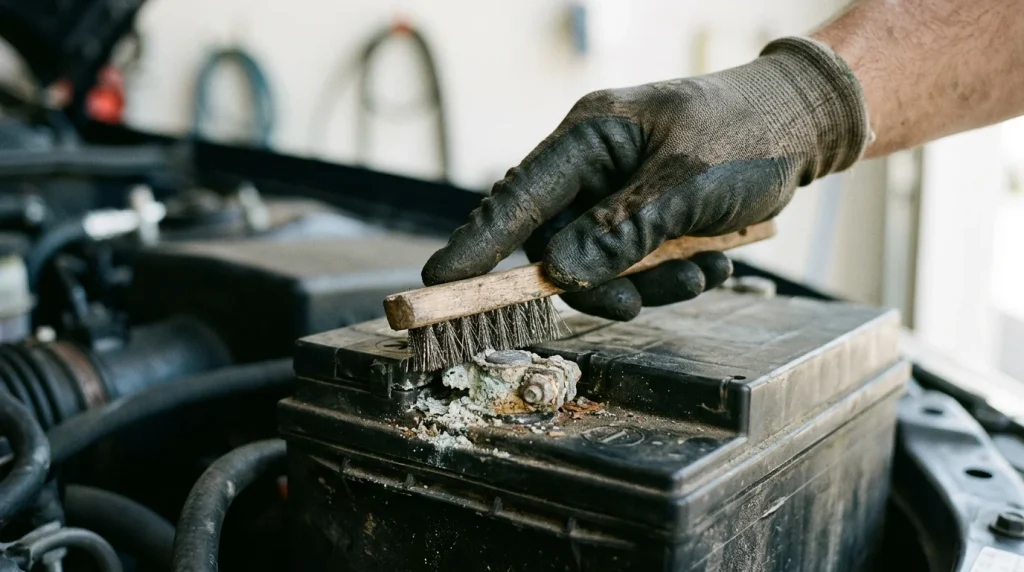
Additionally, loose or corroded battery terminals increase electrical resistance. White or green lead-sulfate corrosion on the battery posts acts as an insulator, blocking the high current required by the starter. According to community archives at the Car Talk Community, cleaning terminals is the most overlooked repair that resolves cold-start failures.
Diagnosing Cold-Start Issues by Sound
To identify the fault when your car wont start in cold but battery is good, turn the key and listen closely to the sounds coming from the engine bay.
Labored Cranking (Rrr… Rrr… Rrr)
- What it sounds like: The engine spins, but it is slow, heavy, and sounds like it is struggling.
- Primary causes: The battery cannot supply enough current under load (low CCA), or the engine oil is too thick for the current temperature.
- Diagnostic step: Hook up jumper cables to a running vehicle. If the engine immediately cranks at normal speed and starts, your battery is weak under load and requires replacement.
Rapid Clicking (Click-Click-Click-Click)
- What it sounds like: A machine-gun clicking noise when you turn the key, with no engine rotation.
- Primary causes: The battery charge is too low to keep the starter solenoid engaged, or there is a loose connection at the battery terminals.
- Diagnostic step: Inspect the battery cables. If they are tight, clean off any corrosion using a wire brush and a baking soda-water solution, then try jumping the car.
Single Click or Clunk
- What it sounds like: You turn the key, hear one loud click, and then complete silence.
- Primary causes: The starter solenoid is engaging the gear, but the starter motor itself is jammed, worn out, or lacks the power to turn.
- Diagnostic step: Locate the starter motor and tap the housing gently with a hammer or wrench while an assistant turns the ignition key. This can temporarily align worn brushes to get you started.
Normal Crank, No Ignition
- What it sounds like: The engine spins freely at its normal, fast cranking speed, but it refuses to catch and start running.
- Primary causes: Fuel delivery failure due to frozen fuel lines, a weak fuel pump, or a faulty sensor misreporting engine temperature.
- Diagnostic step: Prime the fuel system by cycling the key, and verify if there is spark at the spark plugs.
How to Get Your Car Started in the Cold
If you are stranded in cold weather, use these steps in order to safely start your vehicle.
Step 1: Minimize Electrical Draw
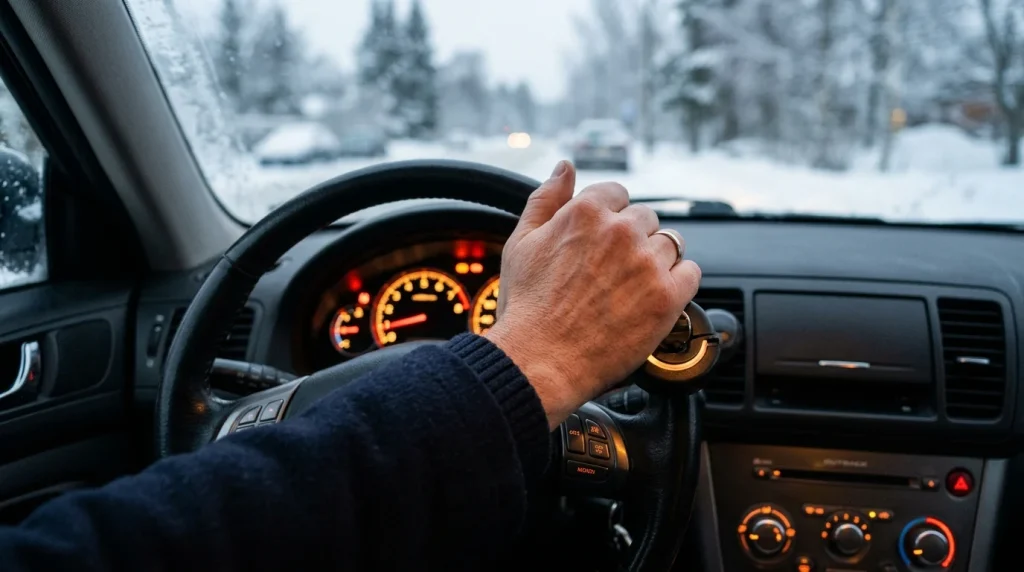
Turn off all vehicle accessories before turning the key. Ensure the headlights, cabin heater, heated seats, radio, and windshield wipers are switched off. This ensures the battery entire output is directed to the starter motor.
Step 2: Cycle the Ignition Key
Turn the ignition key to the ON position (where dashboard lights turn on, but the engine does not crank) and hold it there for 10 seconds. You should hear a faint hum from the fuel pump priming the lines. Turn the key back to OFF, wait 5 seconds, and repeat this process three times. Priming builds up fuel pressure and helps clear minor ice blockages in the lines.
Step 3: Use the Correct Cranking Technique
For fuel-injected engines, do not pump the gas pedal. Turn the key and crank the engine for no more than 10 to 15 seconds. If the engine does not start, stop immediately. Continuous cranking builds up heat and can burn out the starter motor. Allow the starter to cool for a full 60 seconds before making another attempt.
Step 4: Perform a Jump Start
If the engine cranks slowly, connect jumper cables to a donor car or use a portable jump starter. Keep the donor vehicle running for 5 to 10 minutes before attempting to start your car. This transfers surface charge and warms your cold battery, increasing its capacity.
Step 5: Clean and Tighten Terminals
If you hear clicking, pop the hood and check the battery terminals. Grasp the cables and check if they wiggle. Loose terminals must be tightened with a wrench. If you see white powdery corrosion, pour hot water over the terminals to melt it away, dry them thoroughly, and try starting again.
Step 6: Push Starting (Manual Transmissions Only)
If you drive a manual vehicle and the starter is dead, you can bypass it entirely. Turn the ignition key to ON, press the clutch pedal down, select second gear, and have helpers push the car to approximately 5 to 10 mph. Release the clutch pedal quickly. The momentum will spin the engine and start it.
Preventing Cold-Start Problems
Taking preventative measures before winter arrives is the most effective way to avoid starting failures.
- Install a Battery with Higher CCA: When replacing your battery, choose one that exceeds your vehicle original equipment manufacturer (OEM) requirements. If your engine requires 650 CCA, buying an AGM battery rated for 750 or 800 CCA provides a safety margin as the battery ages.
- Use Synthetic Oil: Synthetic oils maintain fluid flow at much lower temperatures than conventional oils. While standard oil can solidify at sub-zero temperatures, synthetic oil continues to lubricate, reducing starting resistance.
- Keep Fuel Tanks Full: Keep your fuel gauge above the half-way mark during winter. This leaves less air space inside the tank, preventing condensation from forming and freezing inside the fuel lines.
- Utilize an Engine Block Heater: In regions where temperatures regularly drop below 10 F (-12 C), installing an engine block heater is highly recommended. Plugging the heater into a household outlet overnight keeps the coolant and engine block warm, reducing oil thickness and starter load.
- Park Indoors: Whenever possible, park your vehicle inside a garage. Even an unheated garage provides shelter from wind chill and keeps the vehicle 10 F to 20 F warmer than the outdoor air, easing the starting process.
If you are preparing your vehicle for cold weather, reviewing our guide on how long it takes a car to cool down can help you manage engine heat cycles, while keeping track of the latest automotive news will keep you updated on winter vehicle recalls and safety alerts.
Frequently Asked Questions
Why does my car struggle to start in cold weather even with a new battery?
Even a new battery loses starting capacity when temperatures drop, losing 35% of its strength at freezing and up to 60% at 0 F (-18 C). Additionally, cold temperatures thicken engine oil, which increases the resistance the starter must overcome. If the engine oil is thick or the starter motor is aging, a new battery may still struggle to turn the engine over.
How do I know if my battery has enough cold-cranking amps?
A load test is the only definitive way to measure a battery’s CCA capacity. Simple voltage checks do not simulate the load of starting an engine. If a professional load test shows that your battery’s CCA output has fallen below 75% of its original rating, it should be replaced.
Can I damage my car by trying to start it repeatedly in cold weather?
Yes. Cranking the engine continuously for more than 15 seconds generates extreme heat inside the starter motor, which can burn out its electrical windings. Repeated starting attempts also drain the battery completely. Always limit cranking to 10 to 15 seconds and wait at least one minute between tries.
Does using a remote starter help in cold weather?
Remote starters allow you to warm up the engine and cabin from indoors, but they do not help the engine start. If your battery lacks the power to turn the engine over or if your fuel lines are frozen, a remote starter will fail to crank the engine just like a manual turn of the ignition key.
At what temperature do car batteries start having trouble?
Car batteries begin to experience reduced chemical efficiency around freezing (32 F or 0 C), where they lose roughly 35% of their capacity. The impact becomes severe when temperatures reach 0 F (-18 C) or below, dropping battery capacity by 60% and doubling engine starting resistance.

