

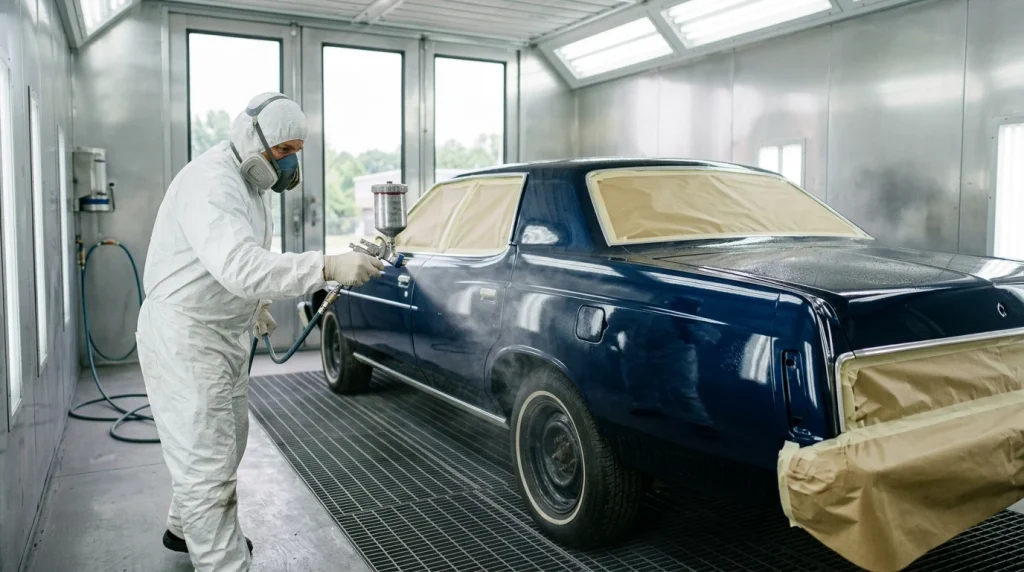
Quick answer: A professional car paint job typically takes 3 to 10 days for most vehicles, requiring approximately 40 to 80 labor hours of active work. Simple same-color resprays on well-maintained cars can be completed in 2 to 4 days, while full color changes and custom restorations involving deep bodywork often require 2 to 3 weeks. DIY car painting projects in a home garage typically stretch across 2 to 6 weeks due to tool limitations and extended curing times between coats.
Key takeaways:
- Professional refinishing takes 3 to 10 days, driven by preparation and curing rather than spraying.
- Surface preparation represents up to 90% of the active labor hours required for a quality finish.
- Paint becomes dry to the touch in hours but requires 30 to 90 days to cure chemically.
- Average professional costs range from $1,000 to $10,000+, with a mid-range average near $4,000.
Timeline Breakdown by Paint Job Type
The total time your vehicle spends in the body shop is directly determined by the scope of the refinishing work. Localized repairs require minimal disassembly, while full repaints and color changes demand extensive labor.
| Paint Job Type | Typical Calendar Time | Active Labor Hours | Primary Objective |
|---|---|---|---|
| Spot / Touch-up Repair | Hours to 1 day | 1 to 2 hours | Repairing small chips and scratches |
| Single Panel Repaint | 1 to 3 days | 4 to 12 hours | Refinishing a door, fender, or bumper |
| Basic Full Respray | 3 to 5 days | 30 to 40 hours | Same-color repaint with minimal prep |
| Standard Full Repaint | 5 to 10 days | 40 to 60 hours | Moderate prep with minor dent repairs |
| Full Color Change | 1 to 2 weeks | 60 to 80 hours | Painting jambs, engine bay, and trunk |
| Custom / Show Quality | 3 to 6 weeks | 100+ hours | Multi-stage finishes and hand-polished layers |
A single panel repair, such as a bumper respray, is relatively quick but still requires time for disassembly and paint blending. If you need to fix a bumper, the process can take up to 3 days to ensure the new paint matches the rest of the vehicle. For a comprehensive cost breakdown of these localized bumper repairs, refer to the bumper repair cost guide.
For a standard same-color repaint on a sedan, the vehicle is typically in the shop for a week. Larger vehicles like trucks and SUVs naturally require more time because of the larger surface area that must be sanded, masked, and sprayed.
The Step-by-Step Automotive Refinishing Process
Understanding each phase of the automotive refinishing process explains why quality paint work cannot be rushed. The actual spraying of the paint is one of the shortest steps in the entire timeline.
According to the Inter-Industry Conference on Auto Collision Repair (I-CAR), surface preparation represents approximately 90% of the active labor hours in any professional refinishing job, as even minor imperfections in sanding or masking are amplified once the clear coat is applied.
Stage 1: Inspection, Disassembly, and Bodywork (1 to 5 Days)
Before any sanding begins, technicians inspect the vehicle panel by panel. They identify rust spots, dents, and signs of previous poor repairs. Technicians then remove trim pieces, door handles, headlights, and badges to ensure paint does not seal these components to the body. Bodywork follows, which includes pulling out dents, applying body filler, and sanding the filler until it matches the original contours of the car body.
Stage 2: Sanding and Surface Preparation (4 to 8 Hours)
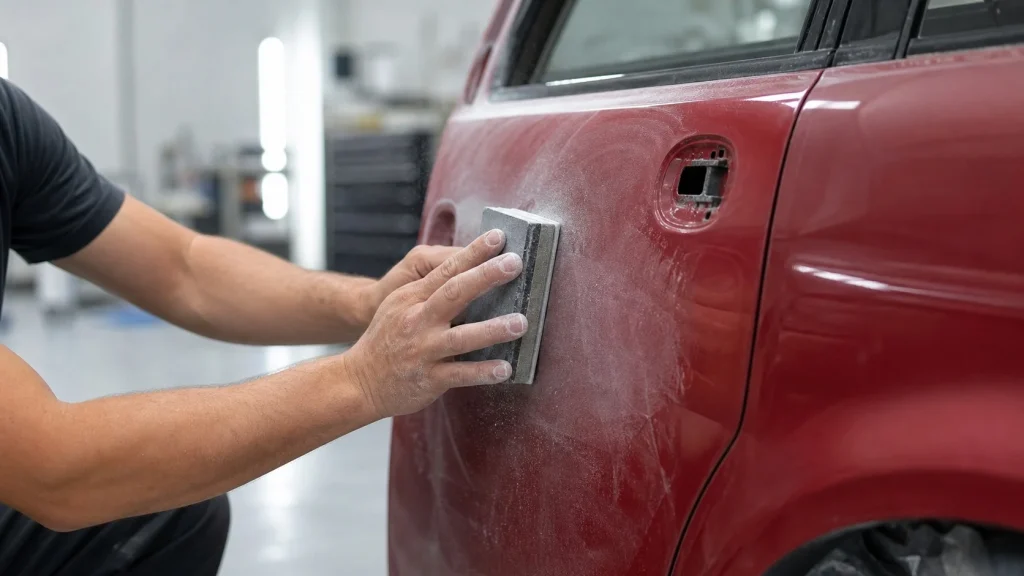
Once the metal is straight, the entire surface must be sanded. Sanding removes the glossy clear coat of the old paint, creating a textured surface that allows the new primer to adhere properly. Technicians use progressive sandpaper grits, starting with coarse grits and finishing with fine grits. After sanding, the vehicle is washed with wax-and-grease remover. Technicians then mask off all windows, seals, and openings using specialized automotive tape and protective paper.
Stage 3: Priming and Block Sanding (2 to 4 Hours)
A high-build primer is sprayed onto the prepared panels. The primer fills in micro-scratches left by the sanding process and provides a corrosion-resistant barrier. After the primer dries, technicians perform block sanding. They use a long sanding block to highlight any remaining high or low spots on the panels. Any imperfections found during block sanding must be corrected before moving to the paint booth.
Stage 4: Paint Application (Base Coat) (4 to 10 Hours)
The vehicle enters a clean, pressurized spray booth. Technicians apply a sealer coat to ensure uniform color adhesion. Next, they spray 2 to 3 coats of base coat (color paint), allowing 10 to 20 minutes of flash time between each coat for the solvents to evaporate. The environmental controls inside the booth are critical during this stage to prevent dust particles from settling on the wet paint.
Stage 5: Clear Coating (2 to 4 Hours)
Once the base coat has flashed off, the technician applies 2 to 3 layers of clear coat. The clear coat provides the glossy finish and contains chemical blockers that protect the underlying color coat from ultraviolet radiation, environmental contamination, and minor scratches.
Stage 6: Drying, Curing, and Final Polishing (24 Hours to 3 Days)
While the paint is dry to the touch within hours, it must cure before final assembly. Professional shops use heated bake cycles to speed up this step.
According to the National Institute for Automotive Service Excellence (ASE) refinishing standards, controlled baking temperatures of 140 degrees Fahrenheit (60 degrees Celsius) in a sealed spray booth are typically used to accelerate the initial curing process from hours to less than forty minutes.
After baking, the vehicle sits to allow the clear coat to harden. Finally, technicians wet-sand the clear coat with ultra-fine sandpaper (2,000 to 3,000 grit) to remove texture (orange peel) and buff the paint to a mirror-like shine before reassembling the vehicle.
Key Factors That Extend Car Painting Timelines
Several common variables can delay your vehicle’s return from the paint shop:
- Rust and Corrosion Repair: Sanding over rust will cause the new paint to bubble and fail within months. Technicians must cut out rusted metal, weld in patch panels, and grind the welds flat, which can add 2 to 5 days to the schedule.
- Complete Color Changes: Changing the color of a vehicle requires painting the inside of the door jambs, the underside of the hood, and the trunk area. This demands complete vehicle disassembly, including removing the doors and hood, which doubles the labor time.
- Custom Finishes: Multi-stage paints, such as tri-coat pearls, metallic flakes, and custom stripes, require complex masking and additional spraying steps that extend the booth time.
- Shop Backlog: Collision repair facilities often experience backlogs during winter months due to increased accident rates. Your vehicle may sit in a queue for several days before work begins.
Paint Drying vs. Curing: Post-Paint Care Rules
Car owners often confuse drying with curing. Understanding the difference is vital to protecting your investment during the initial weeks.
- Drying is a physical process where solvents evaporate from the paint film, making the surface dry to the touch. This occurs within 1 to 4 hours.
- Curing is a chemical process where the resin molecules cross-link and bond together to form a hard, durable shield. This process takes 30 to 90 days.
During the curing phase, the clear coat remains soft and vulnerable to chemical and physical damage. The solvents inside the paint must continue to escape through microscopic pores.
Analysis: Fresh clear coat is highly susceptible to chemical etching and micro-scratching. Introducing wax or sealants during the first 60 days blocks the escaping solvents, trapping them inside the paint layers. This trapped solvent causes the finish to turn cloudy, bubble, or peel prematurely.
Note: Ambient temperature and humidity heavily influence curing times. Painted vehicles cured in warm, dry climates harden faster than those in cold, humid areas.
To prevent ruining your new paint job, follow these timeline-based maintenance rules:
- First 24 Hours: Avoid driving the vehicle. Let it rest in a dust-free environment.
- First 14 Days: Wash the car only by hand using cool water and mild car wash soap. Do not use commercial drive-through car washes, as the stiff brushes will scratch the soft clear coat.
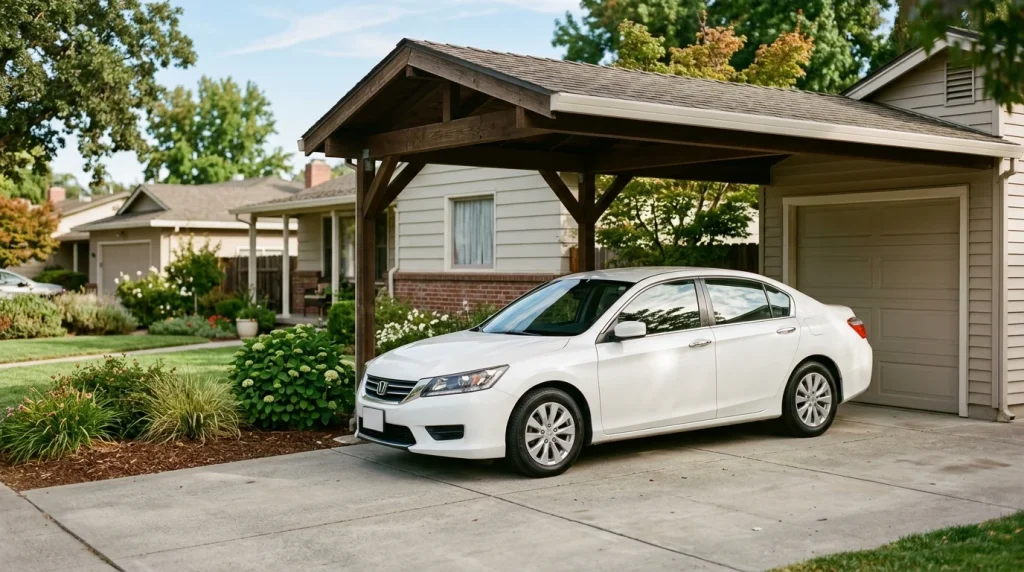
- First 30 Days: Park in shaded areas when possible, but avoid parking under trees. Tree sap, bird droppings, and acid rain can chemically etch the soft paint. Wipe away contaminants immediately with low-pressure water.
- First 60 Days: Do not apply wax, paint sealants, or ceramic coatings. Do not use silicon-based polishes.
Professional Shop vs. DIY Garage: A Realistic Comparison
Many automotive hobbyists consider painting their vehicles at home. While doing so saves money on labor, it requires a significant time commitment and specialized equipment.
| Factor | Professional Body Shop | DIY Home Garage |
|---|---|---|
| Total Calendar Time | 3 to 10 days | 2 to 6 weeks |
| Active Labor Hours | 40 to 80 hours | 60 to 100+ hours |
| Work Environment | Pressurized, heated dust-free booth | Open garage subject to wind and dust |
| Equipment Used | Commercial spray guns, heavy compressors | Consumer-grade HVLP guns, small compressors |
| Curing Method | Heated forced baking (140 degrees F) | Air drying at ambient temperature |
| Safety Equipment | Supplied-air respirators, explosion-proof fans | Standard cartridge masks, box fans |
DIY projects take longer because home garage painters must work in stages, painting a few panels at a time due to space limitations. Additionally, without a heated booth, painters must wait 24 hours between sanding steps and paint coats, extending a one-week job into a multi-weekend project.
How Much Does a Professional Car Paint Job Cost in 2026?
According to Kelley Blue Book, the general cost of painting a car in 2026 ranges from $1,000 for a basic single-stage job to over $10,000 for high-quality custom work, with a mid-range average near $4,000.
| Paint Quality Tier | Average Price Range | Material & Labor Details |
|---|---|---|
| Basic Respray | $1,000 to $1,500 | Single-stage synthetic enamel, minimal surface prep, door jambs excluded |
| Mid-Tier Quality | $2,000 to $5,000 | Two-stage basecoat/clearcoat paint, dent removal, sanded and primed base |
| Premium Refinishing | $5,000 to $10,000 | High-grade polyurethane paint, complete block sanding, door jambs painted |
| Custom / Show Quality | $10,000 to $20,000+ | Multi-stage colors, custom graphics, fully color-sanded and hand-rubbed finish |
Labor rates make up approximately 50% to 60% of the total invoice. If you are debating between painting your vehicle or applying a vinyl wrap, you should weigh the long-term durability of paint against the lower upfront cost of wraps. To compare these options in detail, read our wrap vs. paint cost guide.
For information on other automotive maintenance topics, you can browse our complete collection of articles in the Autvex news hub.
Frequently Asked Questions
How long does it take to paint a car at Maaco or similar budget shops?
Budget shops typically complete basic repaints in 2 to 3 days. They achieve this fast turnaround by minimizing disassembly, performing very little surface prep, and using fast-drying single-stage paints. While convenient, these jobs often show paint peeling or overspray on rubber trim within a few years.
Can I drive my car right after it’s painted?
It is recommended to wait at least 24 hours before driving your vehicle. While the paint feels dry, it is still soft. Road debris, bugs, and dust can easily embed themselves in the fresh clear coat during the first day of driving.
How long does it take to repaint just one panel?
Repainting a single panel, such as a car door or fender, takes 1 to 3 days. The technician must remove the panel, repair surface damage, apply primer, spray the base and clear coats, and blend the paint into adjacent panels to prevent a visible color difference.
Why do some paint jobs take weeks while others take days?
The timeline difference is determined by the amount of bodywork and disassembly required. A simple same-color respray requires minimal prep and takes 3 to 5 days. A complete restoration with rust repair, body filler work, and a full color change requires hundreds of labor hours, extending the timeline to 3 to 6 weeks.
How long does DIY car painting take in a garage?
A DIY project in a home garage typically takes 40 to 80 hours of active labor spread over 3 to 6 weeks. Home painters must work slower to manage dust, wait longer for coats to air-dry without a bake oven, and sand panels by hand without professional pneumatic tools.

