

Quick answer: When determining how long does it take to settle a car accident claim, the timeline can range from a few weeks for minor property damage to a year or more for cases involving severe bodily injuries or disputed fault. The overall duration is largely driven by medical treatment and state insurance laws, rather than administrative processing.
Key takeaways:
- Property-only claims usually resolve in a few weeks, while bodily injury claims require waiting until treatment ends.
- Maximum Medical Improvement (MMI) is the primary milestone that insurance adjusters wait for before making final settlement offers.
- No-fault states speed up minor claims through Personal Injury Protection (PIP) but limit direct lawsuits against at-fault drivers.
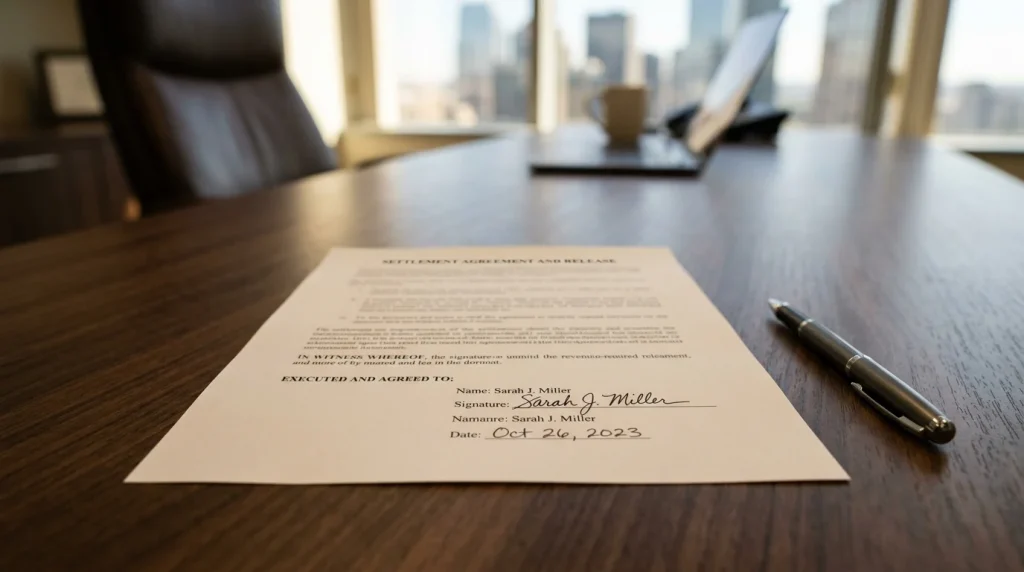
- A signed release form is legally binding and permanently bars you from seeking additional compensation later.
- State statutes of limitations set hard deadlines for lawsuits and continue running during negotiations.
Average Timeline to Settle a Car Accident by Claim Complexity
The duration of a car accident settlement is primarily determined by the complexity of the case and the severity of the damages. According to legal resources like FindLaw, property damage claims resolve much faster than personal injury claims because vehicle repair costs are straightforward to calculate.
The table below outlines typical ranges for different scenarios:
| Claim Scenario | Typical Settlement Timeline | Primary Timeline Drivers |
|---|---|---|
| Minor Property Damage Only | 2 to 4 weeks | Clear liability, vehicle repair estimates, and insurance adjuster availability. |
| Minor Injury (Soft Tissue) | 1 to 3 months | Short medical treatment duration and straightforward bills. |
| Moderate Injury | 3 to 6 months | Ongoing medical therapy and gathering of treatment records. |
| Severe Injury or Disputed Fault | 6 months to 2+ years | Extended recovery to reach Maximum Medical Improvement, liability disputes, or litigation. |
In addition to property repair, some vehicle damage claims become highly complex if a car is declared a total loss. For more insights on how vehicle status affects claims, check out our latest automotive news for advice on what happens when a car is written off.
What Recent Driver Surveys Reveal
A recent 2026 LegalShield survey of more than 1,000 U.S. drivers who filed auto insurance claims within the prior three years highlighted key benchmarks:
- Nearly 70% of drivers finalized their settlements within two weeks, with 12% signing a release within 24 hours of the accident.
- 37% of respondents reported receiving a payout that was lower than they expected or were unsure if the amount was fair.
- 48% expressed that they wished they had taken additional steps before signing, such as capturing more scene photographs (25%) or maintaining detailed expense records (21%).
- 63% incurred unexpected secondary costs, such as premium increases (29%), rental car fees (25%), or outstanding medical bills (22%).
- 43% spent six or more hours managing calls and paperwork.
David Stonecipher, a consumer protection expert at LegalShield, warned: “The process moves fast by design, and most drivers do not realize they have the power to slow it down.” He emphasized that a settlement release is final, terminating your right to request more money if complications arise later.
Maximum Medical Improvement (MMI): The Core Pace-Setter
Maximum Medical Improvement (MMI) is the medical milestone where an injured person’s condition has stabilized and is unlikely to improve further with additional treatment. It is the single most critical factor in personal injury timelines.

Insurers generally refuse to negotiate final injury payouts until MMI is reached. The reason is financial precision. Until your doctor confirms you have reached MMI, the total cost of your medical care (including future physical therapy, surgeries, or permanent impairments) cannot be calculated. Accepting a settlement before reaching MMI requires guessing these future costs. If your recovery takes longer or requires costlier interventions than guessed, you cannot reopen the claim; the signed release bars any future recovery.
Analysis: Adjusters frequently push for rapid settlements early in the recovery process. While a quick check is appealing, settling before reaching MMI transfers all financial risk from the insurance company to the injured victim.
Note: For cases involving minor cuts or bruises that heal fully within days, waiting for MMI is brief. For severe orthopedic or neurological injuries, reaching MMI can take a year or longer, extending the settlement clock accordingly.
No-Fault vs. At-Fault Insurance Systems: State Jurisdictions
Your geographic location dictates how your claim is processed and how quickly you receive compensation. The United States is split into at-fault (tort) and no-fault jurisdictions.
According to the Insurance Information Institute, no-fault insurance systems require drivers to carry Personal Injury Protection (PIP) coverage. Under this framework, your own insurance company pays for your medical bills and lost wages up to the policy limit, regardless of who caused the crash.
This system generally accelerates payouts for minor injuries because it bypasses the need to prove liability before receiving medical coverage. However, no-fault states restrict your right to sue the other driver. You can only step outside the no-fault system and file a lawsuit against the at-fault motorist if your injuries or medical expenses exceed a specific verbal or monetary threshold set by state law.
In at-fault states, the driver who caused the accident is financially responsible for all damages. To recover compensation, you must file a claim with the at-fault driver’s insurer. Because the insurer will not pay until liability is established, disputes over who was at fault can delay settlements by months.
The Step-by-Step Car Accident Settlement Process
A standard insurance claim moves through several distinct phases:
- Investigation (Days to Weeks): The insurance company reviews police reports, inspects vehicle damage, and interviews witnesses to assign liability.
- Medical Treatment (Weeks to Months): The injured party undergoes treatment until reaching MMI.
- Demand Package Compilation (Weeks): The claimant or their attorney gathers all medical bills, records, proof of lost wages, and expert reports to build a demand letter.
- Negotiation (Weeks to Months): The insurer reviews the demand package and responds with an initial offer, kicking off negotiations.
- Release Signing (Days): Once both parties agree on a figure, the claimant signs a legally binding release.
- Disbursement (1 to 3 Weeks): The insurer issues a check. If an attorney is involved, the check is deposited into a trust account to resolve medical liens before the remaining funds are paid out.
According to the Maryland-based personal injury firm Miller & Zois, insurers typically take 15 to 90 days to evaluate a demand package and make an initial offer. However, they note that in most states, there is no statutory timeline requiring third-party insurers to respond to demands at all, which can drag out pre-suit negotiations.
When to Reject a Fast Settlement Offer: The Risk of Signing Early
If an insurance adjuster calls you within days of an accident offering a quick check, caution is warranted. Insurance companies use early, low-ball offers to settle claims before victims understand the full extent of their injuries or consult an attorney.
Accepting a fast settlement is only advisable if:
- The accident involved only property damage with no bodily injuries.
- The vehicle repair costs are fully documented and agreed upon.
- You did not suffer any physical symptoms and have been cleared by a medical professional.
If you are experiencing any pain or undergoing treatment, reject early offers. After signing the release, you cannot demand additional payment if you require surgery or miss work later.
If a severe collision has occurred, the immediate aftermath involves both legal and physical safety checks. For instance, mechanical damage can cause hidden issues. If your engine compartment was impacted, recognizing signs your car is overheating is vital to prevent catastrophic engine failure while driving a damaged vehicle.
When a Lawsuit Becomes Necessary (and the Statute of Limitations Deadline)
While most car accident claims are resolved through insurance negotiations, some require filing a lawsuit. Litigation is usually necessary if:
- The insurer disputes who caused the accident.
- The insurer refuses to negotiate in good faith or offers a payout far below the actual damages.
- The policy limits of the at-fault driver are insufficient, requiring litigation to pursue other assets or coverage.
Filing a lawsuit significantly extends the timeline. According to statistics from Nolo, a car accident lawsuit that proceeds all the way to trial typically takes at least one year to complete. The discovery phase alone (where both sides exchange evidence, take depositions, and hire experts) often takes six to twelve months. However, the vast majority of lawsuits still settle out of court before a trial begins, often during mediation.
The most critical deadline to monitor is the statute of limitations. This is the legal window in which you must file a lawsuit. According to the Enjuris state-by-state statute of limitations guide, these deadlines vary by jurisdiction, ranging from one year to six years depending on the state (for example, Alabama has a two-year limit for personal injury claims). The statute of limitations clock continues running while you negotiate with the insurance company. If you fail to file a lawsuit before the deadline passes, you lose your legal right to recover compensation permanently.
Frequently Asked Questions
How long does a car accident settlement take on average?
Timelines vary widely. Minor property damage claims often settle in two to four weeks. Personal injury claims typically take three to six months for moderate injuries, and a year or more for severe injuries or cases with disputed liability.
Why is my car accident settlement taking so long?
The most common reasons for delays are ongoing medical treatment (waiting to reach MMI), disputes over who was at fault, or delays by the insurance company in evaluating your demand package. High-value claims also face stricter scrutiny from adjusters.
How long after signing the release do you get the check?
Once you sign the release of claims, the insurance company typically issues the check within one to three weeks. If you are represented by an attorney, the funds are deposited into a trust account to pay off outstanding medical bills or health insurance liens before the final balance is disbursed to you.
Does a lawsuit lengthen the settlement timeline?
Yes. Filing a lawsuit extends the timeline by months or even years due to court scheduling, discovery, and depositions. However, filing a lawsuit also pressures insurers to make higher settlement offers, and most cases resolve before reaching a trial.
What is the statute of limitations for a car accident?
The statute of limitations is the state-mandated deadline to file a lawsuit after an accident. According to Enjuris, deadlines range from one to six years depending on the state. If you do not file before this deadline, you forfeit your right to sue.
Should I accept the first settlement offer?
You should reject the first offer if you are still undergoing medical treatment, as it is likely a low-ball figure that will not cover future expenses. For property-only damage with fully resolved repairs, accepting an early offer is generally safe.

