


Quick answer:
If you want to know how to find a tracking device on your car, you must systematically inspect the vehicle’s exterior (such as the wheel wells and bumpers) and its interior cabin (including the OBD-II port and fuse box). For active cellular trackers, you can use a radio frequency (RF) detector, while modern smartphones can scan for Bluetooth-based devices like AirTags.
Key takeaways:
- Start with a visual inspection of the exterior, focusing on the front and rear bumpers and inside the wheel wells.
- Unexplained battery drain or strange radio interference are common electrical signs of an active, hardwired tracker.
- Smartphones can only scan for Bluetooth trackers; dedicated RF detectors are required to find active cellular GPS units.
- If you suspect stalking, take photographs of the device and its wiring in place before contacting law enforcement.
Warning Signs Your Car Is Being Tracked
Before crawling under your vehicle with a flashlight, it is helpful to understand the warning signs that indicate your vehicle might be carrying a hidden transmitter. Active GPS trackers require constant power and signal transmission, which often leaves telltale electronic signatures.
The most common warning sign of a hardwired tracking device is an unexplained parasitic draw on the vehicle battery. Unlike magnetic trackers that run on internal batteries, hardwired units splice directly into the car’s electrical system. If your car struggles to start after sitting idle for just a couple of days, it could indicate that a hidden device is continuously drawing power. If a hidden tracker causes a complete parasitic drain, you might need to jumpstart your vehicle. For emergency procedures, see our guide on how to jumpstart a car with a bad alternator.
Another indicator of an active transmitter is radio frequency interference. Active trackers transmit location data via cellular networks. This digital transmission can create electromagnetic interference with your car’s audio system, resulting in static, clicking noises, or buzzing over the AM radio frequency when the vehicle is running. Finally, the most alarming sign is when an estranged individual or acquaintance repeatedly appears at your exact location without explanation.
Tools Needed for a Car Bug Sweep
While a basic manual inspection is a good starting point, using the correct tools makes finding hidden surveillance equipment much easier and more reliable.
To perform a thorough vehicle sweep, assemble the following tools:
- High-Lumen Flashlight: A bright light is essential for illuminating dark corners of the undercarriage, engine bay, and under the dashboard.
- Extendable Inspection Mirror: A mirror with a telescoping handle allows you to look underneath the bumpers, behind wheel liners, and along the frame rails without having to jack up the vehicle.
- Radio Frequency (RF) Detector: A dedicated RF detector sweeps for active wireless signals (such as 3G, 4G, 5G, or GSM transmissions) sent by real-time GPS trackers. According to vehicle security guidelines from BrickHouse Security, using a high-quality detector is critical for locating cellular trackers that only transmit intermittently.
- Smartphone Alerts: Ensure that your smartphone’s built-in alert systems are active. Both iOS and Android devices feature native safety settings to warn you if an unrecognized Bluetooth tracker (like an Apple AirTag) is moving with you.
It is important to note that while smartphones are excellent at detecting commercial Bluetooth trackers, they cannot identify cellular GPS units or passive loggers. Passive GPS loggers do not transmit a signal; they store location history locally on an internal memory card, which must be retrieved physically by the person who placed it. Finding these passive devices requires a physical inspection.
How to Inspect Your Car for Hidden Trackers
In our vehicle security workshop, we have conducted dozens of car sweeps for concerned owners. We often find that perpetrators rely on the quick install speed of magnetic trackers, but dealership devices are almost always hardwired. A complete vehicle inspection requires checking both the exterior and the interior. You must systematically search the areas where a device can be easily attached or connected to the electrical system.
Step 1: Inspect the Exterior Hiding Spots
Most physical GPS trackers are housed in magnetic, weatherproof black boxes. These are designed to be quickly slapped onto a metallic surface.
Start your exterior sweep by checking the following areas:
- The Undercarriage: Use your flashlight and inspection mirror to examine the metal frame rails. Pay close attention to the area near the fuel tank and the exhaust system shielding, as these provide flat, metallic surfaces out of plain sight.
- Behind the Bumpers: The plastic bumpers of modern cars are empty shells. Reach up behind the front and rear bumpers to feel for small boxes attached to the bumper supports or tucked into the cavities.
- Wheel Wells: Inspect the plastic fender liners inside the wheel wells. Stalkers often tuck small magnetic trackers behind these liners where they can still receive clear GPS signals from the sky.
- License Plate Cavities: Check behind the front and rear license plates, as small devices can be taped or mounted to the back of the brackets.
Step 2: Search the Vehicle Cabin
If the exterior is clear, move inside the passenger cabin. Tucking a device inside the cabin protects it from the elements but limits GPS signal reception.
Search these interior areas systematically:
- Under the Seats: Slide both the driver and passenger seats fully forward and backward. Check the underside of the seats, the tracks, and the upholstery seams for foreign boxes attached with tape, zip ties, or Velcro.
- Dashboard and Glove Box: Look underneath the dashboard on both the driver and passenger sides. Check for loose wires, raw electrical tape, or plastic modules zip-tied to brackets.
- Trunk and Spare Tire Compartment: Open the trunk and lift the floor panel. Check around the spare tire, inside the jack storage compartment, and behind the fabric trunk liners.
Step 3: Check the OBD-II Port and Fuse Box
The easiest way to power a tracker is to plug it directly into the vehicle’s diagnostic and power ports.
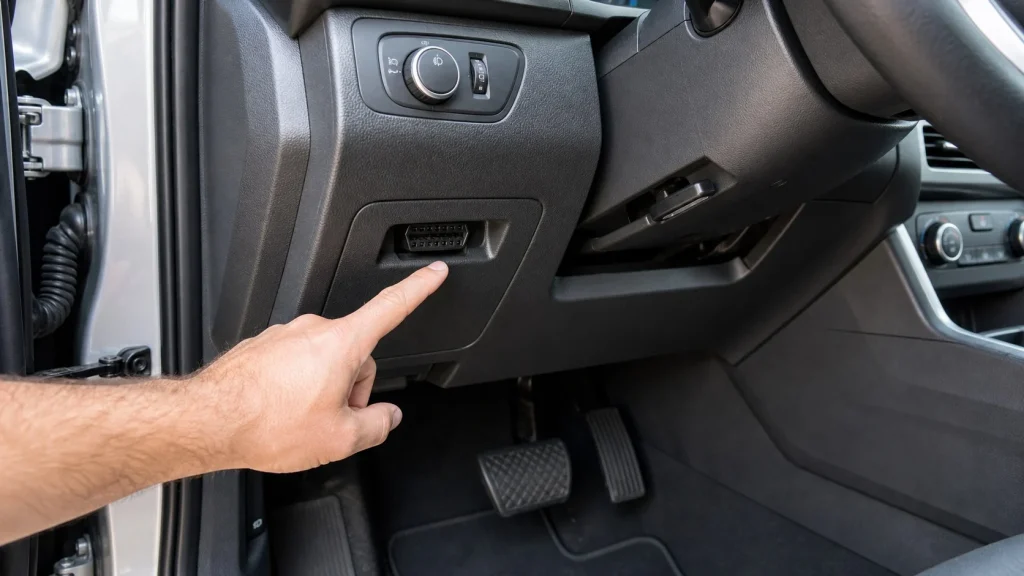
First, locate the OBD-II port under the driver’s side dashboard. This port provides continuous 12V power. If you find a small plastic dongle plugged into the diagnostic port, unplug it immediately.
Next, open the interior fuse panel, which is typically located in the driver’s side footwell or behind the glove box.
Analysis: Hardwired dealership-installed trackers are often wired directly into the ignition circuit using an add-a-fuse adapter. This allows the tracker to report the ignition status without splicing factory wires.
Examine the fuse block for any non-standard wire taps, add-a-circuit adapters, or aftermarket wiring harnesses running from the fuse slots. If you recently purchased a financed vehicle from a dealership, these taps are highly common.
What to Do If You Find a Tracking Device
Discovering a hidden tracking device on your car can be a distressing experience. Your immediate reaction might be to tear the device off and throw it away, but your response should depend on who placed the device and the nature of the situation.
If you suspect you are being stalked or harassed, the tracking device is critical evidence. Do not touch or remove the device immediately. Touching it can smudge fingerprints or destroy DNA evidence. Instead, take high-resolution photographs of the device, its serial numbers, its exact placement, and any wiring connections.
According to safety guidelines from the National Domestic Violence Hotline, if you discover a tracking device placed by a suspected stalker, do not remove it immediately at your residence. Doing so will alert the perpetrator that the device has been found, potentially escalating the risk of confrontation. Instead, drive to a safe, public space or local police station to report the tracking and have law enforcement handle the device safely.
If the device is a financed vehicle tracker installed by a dealership, the situation is different.
Note: GPS tracker removal is generally legal for vehicles owned outright, but financed or leased cars may have tracking requirements written into the contract. Removing a lender-installed tracker could violate the terms of your financing agreement.
If the vehicle is fully paid off and you own it outright, you are legally entitled to remove any tracking devices. Simply unplug the unit from the OBD-II port or disconnect the wiring harness from the fuse box. For more automotive guides, check out the Autvex News section.
FAQs About Car Tracking Devices
Can a GPS tracker drain my car battery?
Yes, particularly hardwired tracking units that draw continuous power from the vehicle’s electrical system. While magnetic trackers rely on internal batteries, hardwired units spliced into the fuse box can cause a parasitic draw. If a vehicle sits idle for several days, this constant draw can deplete a healthy battery.
How long does it take to find a tracking device?
Based on benchmark tests from security specialists like BrickHouse Security, a detailed manual inspection takes an average car owner about 30 to 60 minutes. A professional technician using advanced signal detection tools can typically complete a comprehensive physical and electronic scan in 15 to 20 minutes.
Will my phone detect a GPS tracker on my car?
A smartphone will only detect Bluetooth-based trackers, such as Apple AirTags or tile-style trackers, using native operating system alerts. Smartphones cannot detect traditional cellular GPS trackers, which broadcast over mobile networks, or passive GPS loggers. Detecting these devices requires physical inspection or an RF detector.
Is it legal to remove a GPS tracker from my car?
If you own the vehicle outright, it is entirely legal to remove any tracking device. However, if the vehicle is financed or leased, the financing contract may contain a clause permitting the lender to track the vehicle. Removing a dealership tracker in this case could violate your contract and lead to repossession.

