

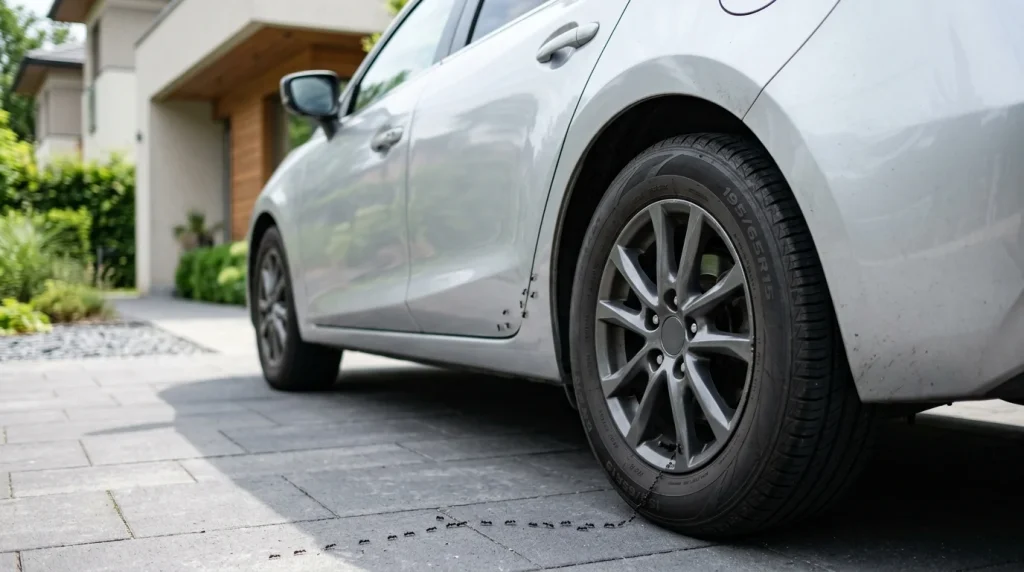
Quick answer: Getting rid of ants in your car requires a systematic approach of removing food sources, vacuuming the cabin to erase pheromone trails, and placing targeted gel baits under the seats. You must avoid using aerosol bug sprays inside the cabin because they leave toxic chemical residues and fail to eliminate the queen ant at the colony source.
Key takeaways:
- Scout ants enter cars searching for food, water, or shelter, leaving chemical trails for others to follow.
- Deep vacuuming physically removes ants and disrupts their invisible navigational scent markers.
- Gel baits are the most effective solution because worker ants carry the poison back to the nest.
- Fire ants are drawn to electrical fields and can cause severe damage by chewing through car wiring.
- Parking under trees exposes your vehicle to sticky sap, which attracts ants as strongly as food.
Why Ants Invade Vehicles (Even Clean Ones)
Ants enter vehicles searching for food, moisture, or shelter from extreme weather conditions. Even if you maintain a clean vehicle, a single dropped crumb or a sticky soda residue in a cup holder is enough to attract scout ants. These scouts lay down a pheromone trail that directs the rest of the colony straight into your car.
Where you park is just as critical as what you leave inside. Parking near overgrown grass, soil beds, or directly over anthills makes your car a convenient target. Additionally, ants often hitch a ride inside grocery bags, potted plants, or cardboard boxes placed in the cabin or trunk.
Certain ant species, such as pavement ants, sugar ants, and red imported fire ants, present different hazards. According to Franklin Hernandez, founder of NaturePest, aggressive species like red imported fire ants can cause severe electrical malfunctions by chewing through wire coatings, which may trigger check engine lights or even lead to vehicle fire hazards.
According to researchers at the Texas A&M AgriLife Extension Service, fire ants are attracted to active electrical currents and fields. When an ant makes contact with an active point and is shocked, it releases alarm pheromones that recruit other worker ants to the scene. This mass accumulation can cause short circuits and melt relays in automotive electrical systems. For more DIY vehicle maintenance tips, visit our news hub.
Analysis: While common ants are attracted to sugars and grease inside the car cabin, fire ants are particularly dangerous because they target the engine bay and electrical systems. If you notice unexplained electrical issues combined with ant sightings around the dashboard, you may have a wiring infestation.
Step 1: Remove All Food and Moisture Sources
Eliminating the food supply is the foundation of any pest control effort. Ants will completely ignore poison baits if they have easy access to preferred organic food sources like old french fries, sugary drinks, or candy wrappers.
Begin by clearing out all trash from the vehicle. Inspect under the seats, inside the glove compartment, center console, door pockets, and the trunk. Wipe down all hard surfaces using an ammonia-free glass cleaner or warm, soapy water. Pay special attention to cup holders and the crevices around the gear shifter where spilled beverages tend to accumulate and dry into sticky residues.
Do not overlook moisture sources. Ants require water to survive and are frequently attracted to condensation from the car air conditioning system or damp floor mats. Dry out any wet areas and check for cabin leaks if you notice persistent dampness.
Step 2: Thoroughly Vacuum the Cabin and Erase Scent Trails
Vacuuming physically removes active ants and disrupts the invisible chemical maps they use to navigate. Without these pheromone paths, remaining ants become disoriented and cannot recruit additional foragers from the nest.
Use a high-powered vacuum cleaner with a narrow crevice tool to clean the entire interior. Focus on seat seams, underneath seat rails, beneath the pedals, and inside storage compartments. Remove the floor mats and vacuum both sides of the carpet fibers.
Note: Always empty the vacuum canister or discard the bag immediately after use. Do this far away from your vehicle and home to prevent the captured ants from escaping and crawling back inside.
If your car cabin is also dealing with stubborn odors, check out our guide on how to get pot smell out of a car for deep cleaning tips.
Step 3: Apply Targeted Ant Gel Baits (Avoid Aerosol Sprays)
To eliminate the infestation, you must kill the queen at the nest. Aerosol insect sprays only kill the worker ants you see, leaving the main colony intact. Furthermore, sprays scatter the surviving ants, which can cause them to fragment and form multiple satellite colonies inside your car.
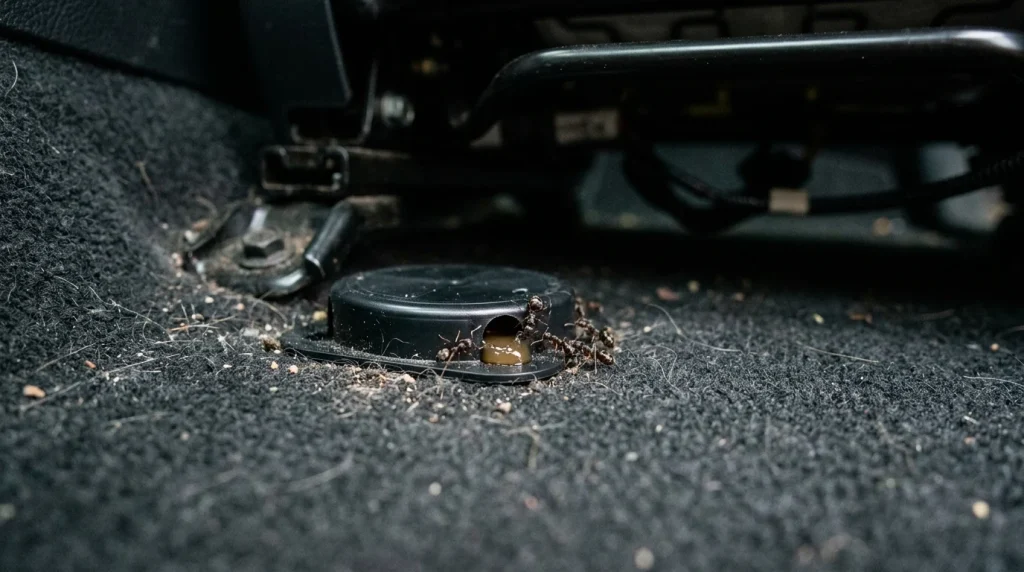
Instead, place sweet liquid or gel baits, such as Terro ant bait, under the front seats or in the trunk. Worker ants eat the sweet bait, carry the slow-acting poison back to the nest, and feed it to the queen. This process eliminates the entire colony within three to seven days.
| Treatment Method | Pros | Cons |
|---|---|---|
| Gel / Liquid Baits | Kills the queen and the entire nest; keeps chemicals contained in bait stations. | Takes 3 to 7 days to show full results; temporarily attracts more ants to the bait. |
| Aerosol Bug Sprays | Provides instant knockdown of visible ants. | Leaves toxic chemical residues; strong odors linger in upholstery; causes colony fragmentation. |
According to safety guidelines from the University of Tennessee Extension, treating infested electrical equipment should ideally be handled by a licensed pest control operator or electrician to prevent personal injury or damage to sensitive components.
Step 4: Use Natural Repellents and Preventative Barriers
For minor infestations or preventative maintenance, natural repellents can safely deter ants without introducing harsh chemical odors into your vehicle cabin.
- Peppermint Oil: Mix 10 to 15 drops of pure peppermint essential oil with water in a spray bottle. Spray this mixture around doors, window seals, and floor mats. The strong scent disrupts the ants’ olfactory senses and breaks their pheromone trails.
- Diatomaceous Earth: Sprinkle a light layer of food-grade diatomaceous earth under your floor mats. This natural powder damages the ants’ exoskeletons on contact, dehydrating and killing them without chemicals.
- White Vinegar: Mix equal parts white vinegar and water to wipe down hard surfaces. The acidic solution neutralizes ant scent trails instantly.
Step 5: Prevent Future Ant Invasions with Smart Parking
Consistent maintenance is key to keeping your vehicle pest-free over the long term. Implementing simple parking and cleaning habits will drastically reduce the risk of a repeat infestation.
- Park Strategically: Avoid parking directly over anthills, near tall grass, or next to garbage bins.
- Avoid Sap Trees: Do not park under trees that drip sweet sap. Sap acts as a powerful attractant and gets transferred from the car roof to the tires, creating a direct pathway for ants.
- Wash Tires and Wheels: Wash your tires and wheel arches weekly. Ants must climb up your tires to enter the cabin, so keeping these areas clean removes entry points.
- Enforce a No-Eating Rule: Restricting food consumption inside the vehicle removes the primary resource that attracts scouts in the first place.
Frequently Asked Questions
Why are there ants in my car if there is no food?
Ants often enter clean cars looking for water, shelter, or warmth during extreme weather conditions. They may also be attracted to tree sap dripped onto the car exterior or be drawn to the electrical fields in the engine bay.
What is the best ant killer for vehicles?
Targeted liquid or gel bait stations are the most effective solution. They allow worker ants to carry the poison back to the nest, which destroys the queen and the root colony. Do not use aerosol sprays inside enclosed vehicle cabins.
Can ants damage my car’s electrical wiring?
Yes, certain species like red imported fire ants are attracted to electrical fields. They can nest inside fuse boxes, chew through wire insulation, and accumulate on electrical contacts, leading to short circuits and system failures.
How long does it take to completely get rid of ants in a car?
A typical ant infestation will clear up within 3 to 7 days after a thorough vacuuming and the placement of gel baits. If ants persist after two weeks, you may need a professional pest control service to locate hidden nests.

