

Quick answer:
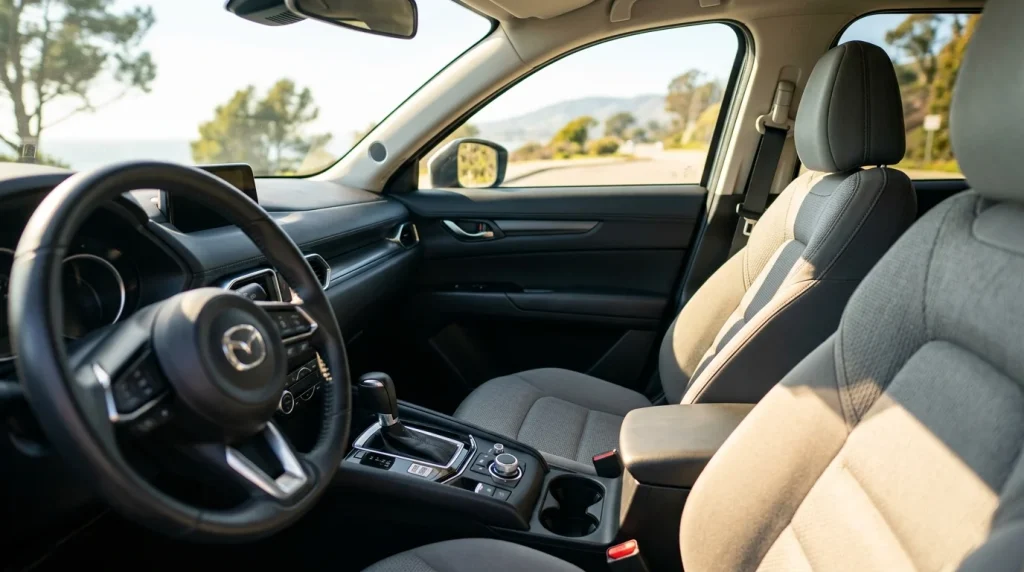
To get pot smell out of a car, clear out all physical debris like ashes or roaches, and ventilate the cabin by running the fan on fresh-air mode for 15 to 30 minutes. Next, deep-clean soft surfaces by vacuuming and steam-cleaning the upholstery, then wipe down hard panels with a 1:1 white vinegar and water solution. Neutralize remaining particles by sprinkling baking soda overnight and placing activated charcoal bags under the seats. Finally, replace the cabin air filter and disinfect the HVAC vents to prevent the odor from recirculating.
Key takeaways:
- Cannabis smoke contains oily terpene resins that bond tightly to porous fabrics, making them return unless physically extracted.
- Air fresheners only mask smoke smells temporarily and fail to eliminate the active chemical compounds embedded in surfaces.
- Detailing the headliner requires spraying a microfiber towel rather than the fabric to protect the underlying glue from dissolving.
- Baking soda and activated charcoal absorb odor molecules chemically, providing a permanent clean instead of a temporary scent cover.
- Changing the cabin air filter is essential, as trapped smoke residue in the filter recirculates odor whenever the fan runs.
- Ozone treatments effectively oxidize stubborn smell compounds but carry health risks and can degrade interior plastics and rubber seals.
Why Cannabis Smoke Clings to Your Car Interior
Cannabis smoke clings to a car interior because of the chemical composition of marijuana smoke. Unlike vapor or steam, marijuana smoke is packed with heavy, sticky, oily particles known as cannabinoids (such as THC) and terpenes (such as myrcene and caryophyllene). These volatile organic compounds do not simply dissipate; they settle onto surfaces and bond with porous fibers.
When smoke is introduced into a closed vehicle cabin, it behaves like an aerosolized oil. The porous fabrics in your car, including the seat cushions, floor carpets, mats, and the cloth headliner, act as giant sponges. Furthermore, the ventilation system draws these oily particles into the cabin air filter and ductwork. As you drive, the heat from the engine and sun warms these surfaces, causing the trapped oils to continuously off-gas. This is why a vehicle that seems fresh in the morning can smell strongly of weed after sitting in the sun.
Why standard air fresheners fail to remove weed odors
Standard cardboard air fresheners and aerosol sprays are designed to mask odors, not remove them. They release heavy synthetic fragrances that overwhelm your olfactory senses, making you temporarily unaware of the smoke smell. However, the oily cannabis resins remain untouched on your seats and carpet. Once the artificial fragrance molecules dissipate, the active cannabis compounds continue to release, bringing the smell back. To completely eliminate the odor, you must physically break down and extract the oily residues.
Step 1: Ventilate the Cabin and Clear Out Residual Debris
Before starting any deep cleaning, you must remove the source of the odor. Search the car thoroughly for any physical remnants of cannabis. Check the cup holders, door pockets, center console, glove box, under the seats, and inside the seat back pockets. Look for loose ashes, roaches, wrapping papers, pipes, or containers. Discard these items immediately in an outdoor trash bin.
Once the car is clear of debris, open all doors and the trunk in a well-ventilated, secure outdoor space. Turn the vehicle’s ignition on, set the climate control fan to its maximum speed, and select the fresh-air intake mode (do not use the recirculation setting). Let the fan run for 15 to 30 minutes. This process flushes out suspended airborne smoke particles, ensuring you are not breathing in stale smoke while cleaning the interior.
Step 2: Deep-Clean Soft Surfaces and Hard Panels
Vacuuming is the first critical line of defense in fabric cleaning. Use a high-powered shop vacuum with a crevice tool to clear out loose ash and dust from seat seams, seat tracks, under the cushions, and along the carpet edges.
After vacuuming, treat the different surfaces of your vehicle systematically:
- Fabric Seats and Carpets: Spray the seats and carpets with an upholstery shampoo. Scrub the fabric gently with a medium-bristled brush to loosen the oily smoke film, then extract the moisture with an upholstery extractor or steam cleaner. The heat from a steam cleaner is highly effective at melting terpene oils away from fabric fibers.
- Hard Panels: Wipe down the dashboard, steering wheel, door panels, window glass, and center console using a 1:1 mixture of white vinegar and water. The mild acetic acid in white vinegar acts as a natural solvent that dissolves sticky resins without damaging plastic, vinyl, or glass. Wipe the surfaces dry with a clean microfiber cloth.
- Floor Mats: Remove all floor mats from the vehicle. Spray them with cleaner, scrub them thoroughly, rinse them with water, and let them dry completely in the sun before putting them back inside the car.
Detailing the headliner safely without damaging the adhesive
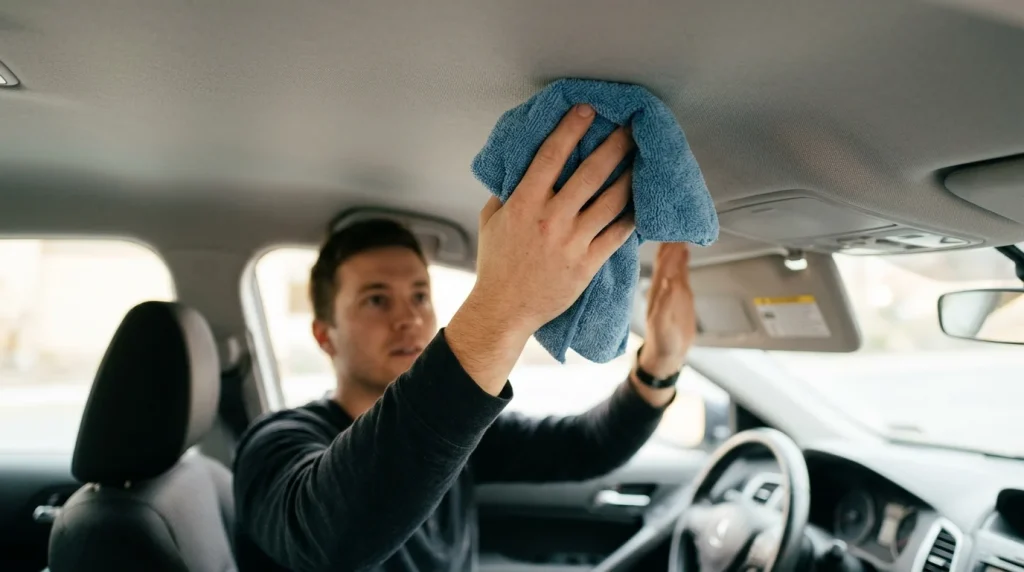
Special attention must be given to the headliner, as smoke rises and deposits heavily on the ceiling fabric. However, cleaning the headliner is risky due to its delicate construction. According to detailing expert Larry Kosilla, founder of AMMO NYC, you should never spray cleaning solutions directly onto the headliner. The excessive moisture can dissolve the heat-sensitive adhesive that bonds the fabric to the backing board, causing the headliner to sag permanently. Instead, spray a mild all-purpose cleaner directly onto a clean microfiber towel, then gently wipe the headliner in a single direction. This lifts the smoke residue safely without soaking the glue.
Step 3: Neutralize Lingering Particles with Baking Soda and Activated Charcoal
Once the physical cleaning is complete, you can use dry chemical absorbers to pull out any microscopic odor compounds that remain trapped in the hard-to-reach fibers.
- Baking Soda: Baking soda (sodium bicarbonate) is a mild amphoteric compound, meaning it can react with both acidic and basic odor molecules to neutralize them. Sprinkle a generous amount of dry baking soda over the dry carpets, floor mats, and cloth seats. Use a dry brush to work the powder lightly into the fibers. Leave the baking soda overnight (or for at least 8 to 12 hours) to absorb lingering moisture and smells, then vacuum it out completely.
- Activated Charcoal: Activated charcoal has been treated with oxygen to open up millions of tiny pores between carbon atoms. These pores act as physical traps for odor molecules through the process of adsorption. Place two to three breathable bags of activated charcoal under the front seats. Unlike baking soda, activated charcoal can be left in the car continuously to trap odors as they arise.
The following table summarizes the differences between common household odor absorbers:
| Household Absorber | Application Method | Best Used For | Safety / Clean-up |
|---|---|---|---|
| Baking Soda | Sprinkle directly on dry fabrics, leave for 8-12 hours, then vacuum. | Seats, floor carpets, and mats with embedded odor. | Safe for fabrics; must be vacuumed thoroughly to avoid white dust. |
| Activated Charcoal | Place breathable bags under seats or in cup holders. | Lingering airborne odors and continuous passive freshness. | Odorless and maintenance-free; replace every 3 to 6 months. |
| White Vinegar | Wipe hard panels (1:1 with water) or place a small bowl overnight. | Hard surfaces, glass, and cutting through sticky resin films. | Acid smell dissipates as it dries; do not spill vinegar bowls on carpets. |
| Coffee Grounds | Place a bowl of dry grounds in the car for 24-48 hours. | Neutralizing strong odors with a pleasant, overriding coffee scent. | Avoid spilling; coffee oils can stain light-colored fabrics. |
Analysis: As highlighted by detailing product manufacturer Chemical Guys in their guides, while dry absorbers like baking soda excel at neutralizing odors on the surface level, they cannot replace deep extraction cleaning. If you skip shampooing or steam cleaning, the underlying oily resin will remain trapped in the deep foam cushions, and the smell will eventually return once the absorbers are saturated.
Step 4: Replace the Cabin Air Filter and Sanitize the HVAC Vents
If your car smells clean initially but smells like pot as soon as you turn on the climate control, the odor is trapped in your vehicle’s HVAC system.
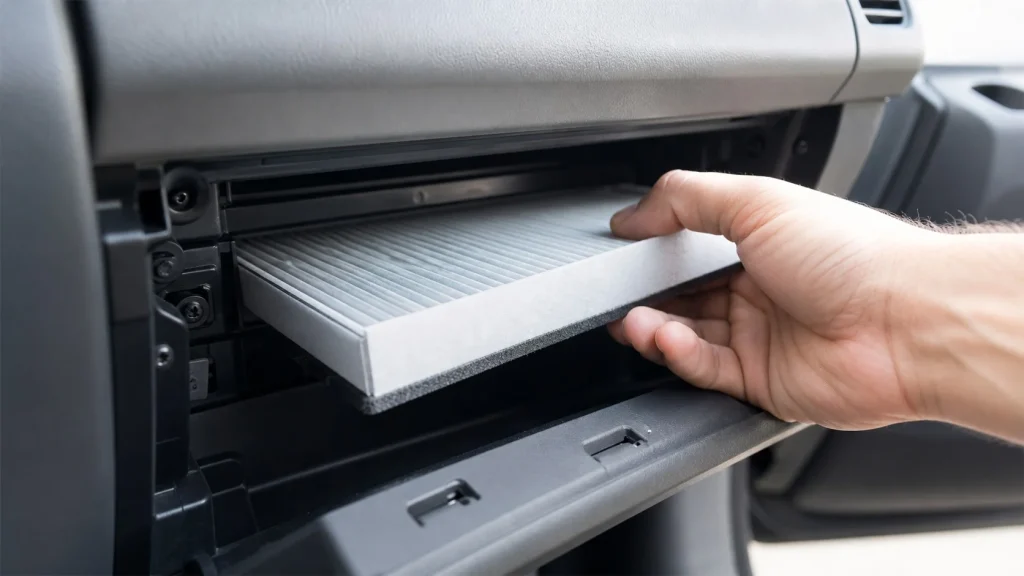
First, locate and replace the cabin air filter. On most modern cars, this filter sits in a slot behind the glove box and can be accessed without tools. As a car is smoked in, the cabin filter acts as a screen, trapping smoke particles. Over time, the filter becomes saturated and recirculates the smell. When replacing it, choose a carbon-activated cabin filter rather than a standard paper one, as the carbon layer actively absorbs gases and odors.
After installing the new filter, sanitize the ductwork. Turn on the vehicle, set the AC to high, select the fresh-air mode (not recirculate), and roll down the windows. Locate the exterior fresh-air intake vents (the cowl vents at the base of your windshield on the outside of the car). Spray an aerosol duct disinfectant or Lysol directly into these intake grates for 30 seconds. The blower fan will pull the disinfectant through the entire duct network, killing bacteria and neutralizing smoke film settled inside the vents.
Replacing your cabin air filter is a simple DIY task that should be done every 12,000 to 15,000 miles. For a complete vehicle health check, you might also want to learn whether you should check oil when the car is hot or cold during your routine garage maintenance. Additionally, while idling your car to run the AC on high during ventilation or filter changes, monitor your coolant temperature. If you suspect any cooling issues, read how can you tell if your car is overheating to recognize the warning signs of engine damage.
Step 5: Treat Stubborn Odors with Enzymes or Ozone Generators
For vehicles that have been smoked in heavily over several years, home remedies may not be sufficient. You will need to use stronger chemical or physical treatments.
- Enzyme Cleaners: These sprays contain active proteins that speed up chemical reactions. Instead of covering the smell, they break down the organic compounds of the cannabis terpenes on a molecular level. Spray the enzyme cleaner directly onto seats and carpets, and let it dry naturally.
- Ozone Generators: An ozone generator uses electrical discharges to split oxygen ($O_2$) molecules into single atoms, which then bind with other $O_2$ molecules to form ozone ($O_3$). Ozone is an unstable gas that reacts with organic odor molecules, oxidizing them and breaking their chemical bonds.
Is ozone treatment safe for your car’s interior materials?
Note: The United States Environmental Protection Agency (US EPA) cautions that ozone generators sold as air cleaners can cause respiratory irritation and lung damage at high concentrations. According to safety guidelines on the US EPA official website, ozone generators must only be operated in unoccupied spaces. Keep humans and pets away from the vehicle during treatment.
Furthermore, running an ozone generator inside a car presents risks to the vehicle itself. Ozone is a highly corrosive gas. If run too long (more than 30 to 45 minutes), it can degrade rubber seals, dry out leather, and accelerate the cracking of dashboard plastics. Professional detailers on Adams Forums warn that you must never use an ozone generator if the car interior is damp or wet from shampooing. The ozone gas can react with water molecules to form corrosive nitric acid, which can ruin fabrics, corrode metal components, and create toxic fumes that linger in the cabin. Always ensure the car is 100% dry before running an ozone machine, and air out the vehicle for at least 30 to 60 minutes afterward before driving.
Frequently Asked Questions
How do you get weed smell out of a car fast?
To clear the smell quickly, remove any ash or joint roaches, open all windows, and drive the vehicle at highway speeds for 15 minutes to maximize air exchange. Spray an odor-neutralizer on hard panels and place a bowl of white vinegar or a bag of activated charcoal in the car overnight to absorb the remaining smell.
Does the weed smell keep coming back?
Yes, the smell will return if you only use air fresheners or skip cleaning the cabin air filter and fabrics. Smoke particles settle deeply into seat foam and carpets, and they continuously recirculate through the HVAC filter. Deep extraction cleaning and filter replacement are required for a permanent fix.
What is the best odor neutralizer for cannabis smoke?
For general DIY use, activated charcoal bags are the best passive absorbers, while enzyme sprays are the most effective liquid treatment because they break down terpene resins chemically. For extreme cases, a professional ozone machine provides the deepest sanitization when used safely in a dry, empty cabin.
Can you use baking soda on leather seats?
You should not sprinkle baking soda directly onto leather seats. Baking soda is mildly abrasive and alkaline, which can dry out and scratch delicate leather coatings. Instead, use a dedicated leather cleaner and conditioner, and place baking soda in an open container on the floorboard to absorb smells from the air.
How do you get smoke smell out of a car before selling it?
To prepare a car for sale, vacuum the cabin, steam-clean the carpets, wipe down hard surfaces with vinegar, replace the cabin air filter, and sanitize the vents. If a faint odor remains, run a 30-minute ozone treatment or apply an enzyme spray to ensure the buyer steps into a fresh, odor-free cabin. For more detailed automotive tips and DIY maintenance guides, you can browse our latest automotive articles in the Autvex news section.

