

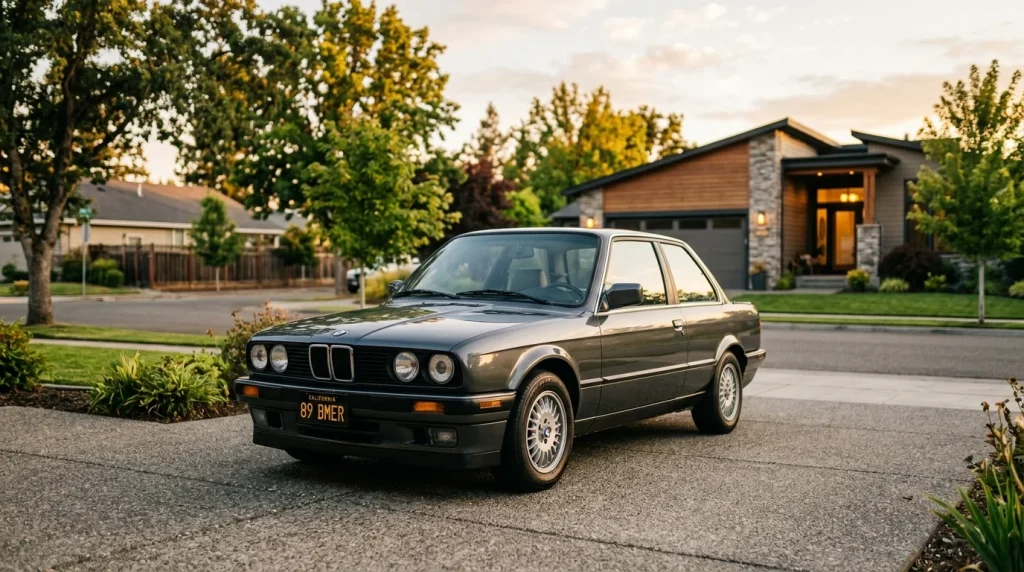
Quick answer: In BMW model names, the “i” stands for fuel injection (indicating a gasoline engine) and the “s” stands for sport. Historically, models like the 318is or 325is represented gasoline-powered vehicles equipped with upgraded sport suspensions, supportive bucket seats, and aerodynamic body kits. For the 2026 model year, BMW is dropping the “i” suffix from gasoline cars, reserving it exclusively as an electric vehicle prefix.
Key takeaways:
- The “i” suffix originally distinguished fuel-injected BMW engines from carbureted models starting in the late 1960s.
- The “s” suffix indicated a factory-installed sport package, adding mechanical upgrades like stiffer dampers and limited-slip differentials.
- BMW is currently phasing out the “i” suffix on gasoline cars, beginning with the 2025 and 2026 X3 M50, 1 Series, and 2 Series models.
- Electric vehicles now carry the “i” prefix (such as the i4, i5, and i7), where the letter denotes innovation and electric drive.
What Does iS Stand For in BMW?
The letters “iS” on a BMW badge denote “Injection” and “Sport”. This specific combination was applied to gasoline-powered models that featured electronic fuel injection alongside factory-installed sport options. These packages differentiated the vehicles from standard variants through upgraded mechanical components and styling details.
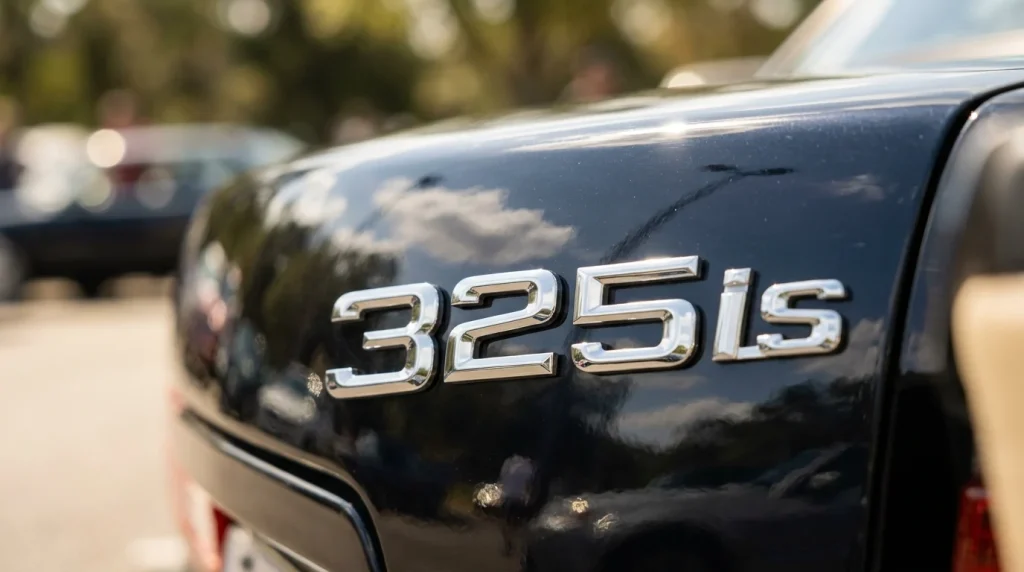
Historically, owning a BMW with an “is” badge meant driving a highly capable, driver-focused machine that sat just below the high-performance Motorsport (M) lineup. Rather than a separate vehicle model, the “is” designation was a shorthand way of indicating that a car was configured with premium sporting upgrades. These upgrades typically included:
- Firm, sport-tuned shock absorbers and stiffer springs.
- Upgraded anti-roll bars to reduce body roll during cornering.
- Bolstered sport bucket seats for enhanced lateral support.
- Aerodynamic body kits, including front air dams and trunk lip spoilers.
- A factory-installed limited-slip differential on selected models.
As automotive marketing and technology evolved, the “is” designation was gradually phased out of production, replaced by the M Sport packages and M Performance models we see today.
The Historical Origins: What the “i” Suffix Means
To understand the full meaning of “is”, it is necessary to look back at the history of the letter “i”. The lowercase “i” at the end of BMW model names stands for fuel injection. Its origins date back to the late 1960s, a time when most automotive manufacturers relied on carburetors to deliver fuel to the engine.
BMW introduced the designation to highlight its new, highly efficient electronic fuel injection systems. Early pioneer models, such as the 1969 BMW 2000tii and the subsequent 2002tii, utilized the suffix to signal this premium engineering feature. In German, the letters stand for “Einspritzung”, but for international markets, the English term “injection” was adopted.
During the 1970s and 1980s, fuel injection was a premium option that offered better fuel efficiency, smoother performance, and more power compared to standard carbureted engines. As fuel injection technology became universal across the automotive industry, BMW chose to keep the lowercase “i” suffix as a styling tradition. It served as a clear marker that the vehicle ran on gasoline, distinguishing it from diesel variants that adopted the lowercase “d” suffix.
The Sport Factor: What the “s” Suffix Means
The lowercase “s” suffix historically represents sport options. When added to the “i” suffix to form “is”, it indicated that the vehicle featured performance-oriented hardware upgrades directly from the factory floor.
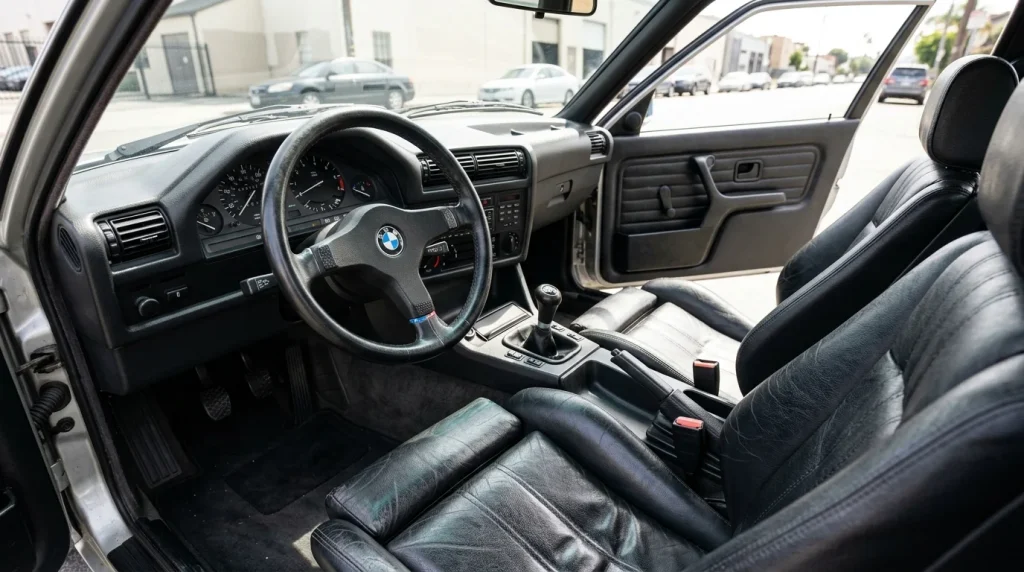
For classic generations like the E30 (1982-1994) and E36 (1990-2000), the sport package was highly sought after. For example, the BMW 325is was a variant of the standard 325i sedan, but packaged as a sporty two-door coupe. It offered major mechanical upgrades designed to appeal to driving enthusiasts.
Unlike modern packages that are often purely cosmetic, the historical “s” upgrades were functional. On the E30 325is, the package included a 25 percent lockup limited-slip differential, stiffer Bilstein gas-pressurized dampers, a thicker front anti-roll bar, an M-Technic steering wheel, and premium leather sport seats. The smaller-displacement 318is followed a similar philosophy, utilizing a high-revving 16-valve four-cylinder engine paired with sport-tuned suspension to deliver an agile, lightweight driving experience.
In the mid-2000s, BMW briefly revived the designation with models like the Z4 sDrive35is. In this application, the “is” meant the roadster was equipped with a higher-output version of the twin-turbocharged inline-six engine, an adaptive M suspension, and a sport exhaust system.
Expert view: The classic “is” models are widely considered the bridge to the modern M Performance lineup. For collectors, an original E30 325is or E36 318is holds substantial value because they represent a bygone era of analog driving feel, mechanical simplicity, and standard performance hardware.
BMW is Dropping the “i” Suffix from Gas-Powered Cars
BMW is implementing a major change to its naming convention. The brand is gradually dropping the terminal “i” suffix from all gasoline-powered vehicles starting with the 2025 and 2026 model years.
This change marks the end of a fifty-year tradition. The decision was confirmed in a detailed Car and Driver report explaining that the move aims to simplify the lineup and prevent customer confusion. Because BMW now produces a large fleet of battery-electric vehicles, having the letter “i” denote “injection” on gasoline cars while using the same letter to identify electric vehicles created unnecessary complexity.
The transition began in 2024 with the introduction of the 2025 BMW X3 M50, which replaced the previous X3 M40i. Similarly, the F70-generation 1 Series and the updated 2 Series Gran Coupe have launched without the terminal “i” suffix. Going forward, gasoline-powered models will end simply with their performance number, while electric models will occupy the “i” designation.
| Old Model Name | New Model Name (2025/2026) | Fuel Type |
|---|---|---|
| BMW X3 M40i | BMW X3 M50 | Gasoline |
| BMW 330i | BMW 330 | Gasoline |
| BMW 540i | BMW 540 | Gasoline |
| BMW M440i | BMW M440 | Gasoline |
The Modern Electric Transition: The “i” Prefix
While the lowercase “i” is disappearing from the trunk lids of gasoline cars, the letter remains a key asset for BMW’s electric vehicle fleet. When the letter “i” appears as a prefix at the start of a model name (such as i4, i5, or i7), it identifies a vehicle from the BMW i sub-brand.
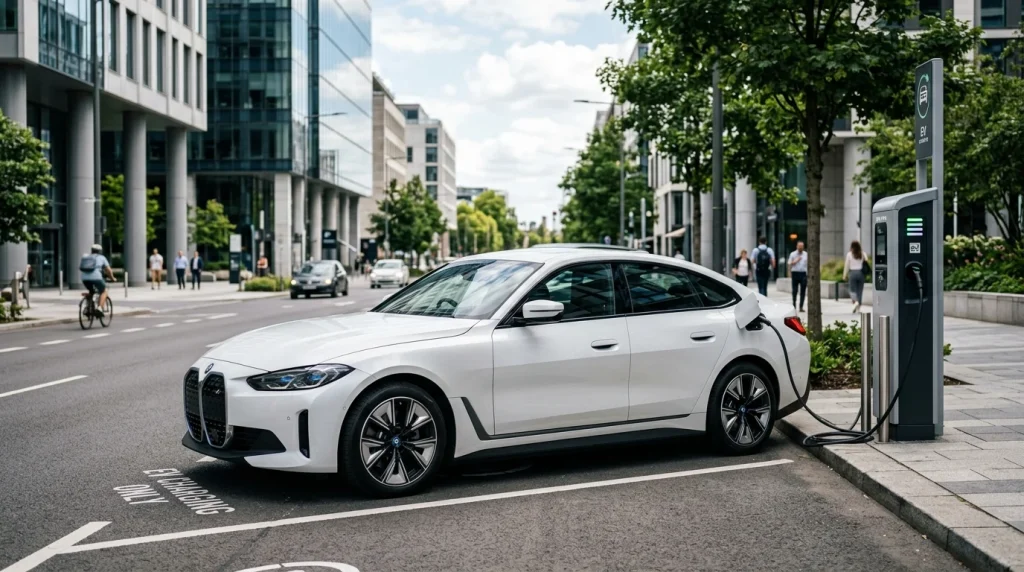
Launched in 2011, the BMW i sub-brand utilizes the “i” to represent “innovation” and sustainable mobility. These vehicles are fully electric or plug-in hybrid models built with advanced electric drivetrains.
For buyers researching the electric vehicle market, knowing the starting prices and ranges of the current fleet is essential. To stay informed on general automotive updates and comparisons, you can browse the latest resources on the Autvex news hub. For those looking to charge their electric BMWs at public charging networks, it is helpful to check if a BMW can charge at a Tesla Supercharger in 2026.
The current US pricing structure for the 2026 BMW electric vehicle lineup starts as follows:
- BMW i4: Starting MSRP begins at $57,900 for the eDrive35 model, offering a balance of sportback utility and electric performance.
- BMW i5: Starting MSRP begins at $68,550 for the eDrive40 executive sedan, featuring high-end digital tech.
- BMW i7: Starting MSRP begins at $106,875 for the eDrive50 luxury sedan, representing the brand’s electric flagship.
Decoding BMW’s Complete Naming System
BMW’s current naming structure follows a systematic logic. By breaking down the numbers and letters, you can easily identify a vehicle’s segment, performance level, and drivetrain configuration.
The first digit of the three-number sequence indicates the series size (from 1 to 8). Generally, odd numbers represent traditional sedans, wagons, and hatchbacks, while even numbers represent sportier coupes, convertibles, and gran coupes.
The subsequent two digits historically represented engine displacement in liters. Today, they indicate a relative performance index. A larger number indicates more horsepower and torque, regardless of whether that power comes from a turbocharged four-cylinder or a turbocharged six-cylinder engine.
BMW also uses specific letter codes to define engine types, drive configurations, and performance tiers:
- d: Diesel engine (primarily available in European markets).
- e: Plug-in hybrid electric vehicle (PHEV), combining a gasoline engine with an electric motor.
- L: Long wheelbase, offering expanded rear legroom on luxury sedans.
- sDrive: Two-wheel drive (rear-wheel drive on most sedans, front-wheel drive on entry-level crossovers).
- xDrive: Intelligent all-wheel-drive system.
- M: Developed by the BMW Motorsport division, indicating high-performance tuning, suspension, and braking systems.
Note: Drivetrain indicators like sDrive and xDrive will continue to accompany the new naming system, allowing buyers to identify all-wheel-drive gasoline models (such as a 330 xDrive) even after the “i” suffix is fully phased out.
Frequently Asked Questions
What does i mean at the end of a BMW model name?
Historically, the lowercase “i” at the end of a BMW model name stands for fuel injection. It was introduced to differentiate modern gasoline engines from carbureted engines. Starting in 2024, BMW began removing this suffix from all new gasoline-powered vehicles to reserve the letter “i” as a prefix for electric cars.
What is the difference between BMW D and I?
The letter “i” indicates a gasoline engine with fuel injection, whereas the letter “d” indicates a diesel engine. For example, a BMW 330d is a diesel-powered 3 Series, while a BMW 330i (or the newer 330) is a gasoline-powered 3 Series. Diesel models are common in Europe but are no longer sold new in the US market.
Why is I petrol in BMW?
The letter “i” represents gasoline because of the German word for injection, “Einspritzung”. Because diesel cars were given the “d” suffix, “i” became the standard label for gasoline vehicles. Since fuel injection was the defining feature of modern gasoline engines, the label stuck as a brand tradition.
Does BMW still use is in model names?
No, BMW does not use the “is” designation on any current production vehicles. The suffix was historically used on models like the 325is, 318is, and the Z4 sDrive35is to represent a sport package with mechanical performance upgrades. Today, sport-oriented models below full M cars are designated as M Performance models.

