

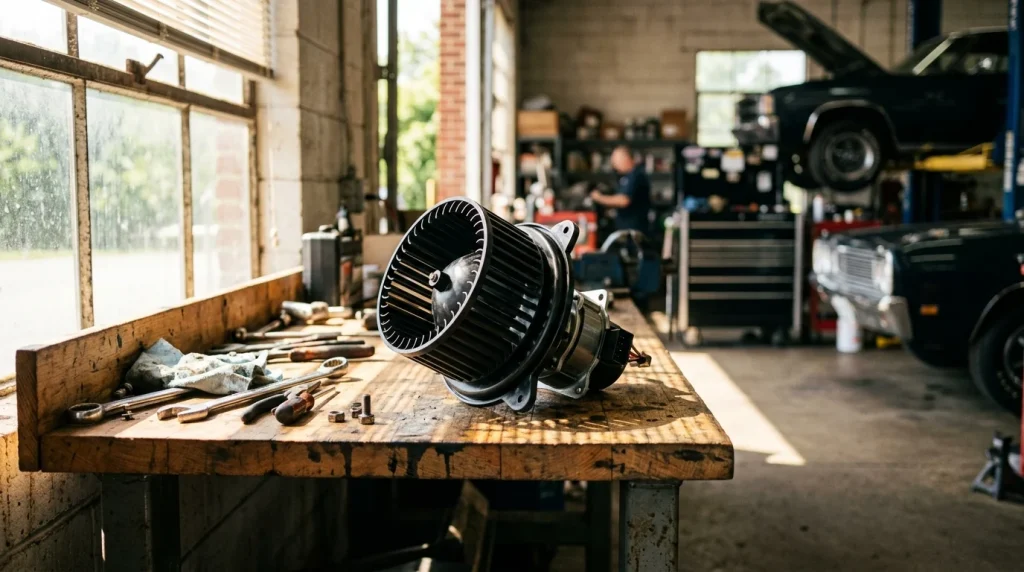
Quick answer: If you are wondering what is a car blower motor, it is the electric cabin fan that pushes heated or cooled air through the dashboard vents of a vehicle. On average, a professional blower motor replacement costs between $389 and $441 in 2026, with parts representing $295 to $302 of the total and labor charging between $94 and $139.
Key takeaways:
- The blower motor generates cabin airflow, whereas the AC compressor cools the refrigerant.
- A fan running only at the maximum speed setting usually indicates a bad resistor, not a failed motor.
- A dirty cabin air filter is the leading cause of premature blower motor and resistor failures.
- Replacing a blower motor is a straightforward DIY task on most domestic and Japanese vehicles.
Blower Motor Function: How It Works
The blower motor is the central fan responsible for air circulation inside a vehicle’s passenger cabin. When the driver activates the heater, air conditioning, or windshield defroster, the blower motor forces air through the ductwork and out of the dashboard vents. It converts 12V electrical energy from the vehicle’s battery into rotational force to spin a cylindrical plastic fan, which is commonly referred to as a squirrel cage due to its circular, cage-like design.
It is important to separate blower motor function from other climate control components. While the AC compressor pressurizes refrigerant to create cold air, and the heater core uses hot engine coolant to warm the air, neither component can push that air into the cabin. The blower motor provides the necessary mechanical force to distribute that conditioned air. For more details on automotive systems and components, you can browse our comprehensive automotive news and repair guides.
An automotive blower motor assembly consists of four primary components:
- The DC Motor: A brushed or brushless electric motor that drives the rotation.
- The Squirrel Cage (Impeller): A plastic wheel with curved blades that moves the air volume.
- The Housing: A plastic assembly that directs airflow into the ventilation ducts.
- The Resistor or Control Module: A separate component that regulates the voltage to control the fan speed.
Where Is the Blower Motor Located?
In the vast majority of modern passenger cars, SUVs, and light trucks, the blower motor is located inside the cabin behind the passenger-side dashboard. It is typically mounted directly underneath or behind the glove box assembly. This interior placement protects the electric motor from moisture, road debris, and extreme engine-bay temperatures.
Accessing the blower motor generally requires removing the passenger footwell trim panel and lowering the glove box. On some older utility vehicles and heavy trucks, the blower motor is instead mounted on the engine-bay side of the firewall. While the engine-bay location provides direct access without taking apart the dashboard, it exposes the housing to environmental wear.
Signs of a Bad Blower Motor
Like any mechanical part containing spinning bearings and electrical windings, a blower motor will degrade over time. Recognizing the early warning signs of wear can prevent a complete loss of heating or cooling during extreme weather.
Watch for the following symptoms of a failing blower motor:
- Weak Airflow: As the internal carbon brushes or commutator copper bars wear down, the motor draws less current and spins slower. This results in noticeably weaker air volume from the vents, even when set to the highest speed.
- Squeaking, Grinding, or Rattling Noises: Dry or worn motor bearings produce high-pitched squealing or grinding noises behind the glove box. A heavy vibration or rattling sound suggests that the plastic squirrel cage has cracked, lost a balancing clip, or trapped external debris such as dried leaves or paper.
- A Burning Smell: If the motor bearings seize, the electrical resistance increases dramatically. The motor will overheat, melting the electrical connector harness or internal wire insulation and emitting a sharp, electrical burning odor.
- Repeatedly Blown Fuses: When a blower motor experiences a short circuit or is physically stuck, it draws excessive electrical current. This surge immediately blows the HVAC system fuse to protect the vehicle’s wiring from fire.
Blower Motor vs. Blower Motor Resistor
Automotive technicians frequently encounter cases where car owners mistake a faulty speed resistor for a failed blower motor. The blower motor resistor is a small module mounted in the airflow path that uses resistors to drop the voltage going to the motor, allowing for different fan speeds.
Blair Lampe, a professional mechanic and automotive writer for the NAPA Know How blog, explains the primary distinction: “Air flows, but only at high speeds, and other settings no longer work.” This occurs because the highest fan speed setting bypasses the resistor entirely, sending full battery voltage directly to the motor. If your fan operates normally on high but is dead on lower settings, you should check the resistor first. However, if the fan does not run on any speed, Lampe recommends: “Testing whether there’s power flowing to the blower in the first place is a good way to rule out a bad motor.” For a deeper dive into speed control circuitry, refer to the NAPA Know How blog.
Electrical safety is critical when diagnosing these components. Richard McCuistian, an ASE Certified Master Automobile Technician with over 30 years of experience, warns about the risks of resistor failure: “Do NOT bypass the blower resistor thermal fuse if you don’t want your car to catch fire!” The resistor’s thermal fuse is designed to melt and cut power if the module overheats. McCuistian also notes that a failing resistor often melts the surrounding plastic connector: “A burned out blower motor resistor connector requires replacing the resistors as well as the resistor connector pigtail, but you need to do a really good job splicing the wires (and don’t get them out of order) or you’ll make bigger problems for yourself.” Detailed testing procedures are available on CarParts.com.
In addition, Denso technical experts point out that cabin airflow directly prevents resistor burnout. Because resistors generate high heat, they are positioned inside the HVAC duct to be cooled by the air coming from the fan. Denso notes that a clogged cabin filter restricts this airflow, causing the resistor to run hot and eventually fail. Therefore, regularly replacing your cabin air filter is essential to protect both the resistor and the blower motor.
Analysis: Distinguishing a failed motor from a failed resistor requires a multimeter. Check for 12V power at the blower motor’s electrical harness connector while the climate control is turned on. If 12V power is present but the motor does not spin, the motor is defective. If no power is present, the issue lies in the resistor, fuse, or control switch.
Note: Working on electrical connectors requires disconnecting the battery to prevent short circuits. Always inspect the plastic harness plug for signs of melting or corrosion, as a degraded connector will quickly ruin a new motor or resistor.
How Much Does a Blower Motor Replacement Cost?
When budgeting for a repair, understanding the cost breakdown helps you evaluate shop quotes. According to the RepairPal cost estimator, a professional blower motor replacement costs between $389 and $441 on average.
| Cost Component | Average Cost Range (2026) |
|---|---|
| Blower Motor Part | $295 to $302 |
| Labor (1 to 2 Hours) | $94 to $139 |
| Total Professional Repair | $389 to $441 |
Parts represent the largest portion of this repair bill, which is unusual compared to labor-intensive automotive services. A typical replacement motor ranges from $50 to $300 depending on whether it is an aftermarket unit or an OEM component. Professional labor costs vary by region, with hourly rates typically ranging between $90 and $160.
Cost Breakdown: DIY vs. Professional Replacement
Deciding whether to replace the blower motor yourself or hire a professional mechanic depends on your vehicle’s layout. A DIY blower motor replacement costs between $50 and $300 for the part, saving you the $90 to $320 in labor fees charged by professional shops.
For most domestic and Japanese vehicles (such as Toyota, Honda, Ford, and Chevrolet), the blower motor is secured by three or four screws under the passenger footwell. This accessible design makes it a straightforward DIY project that can be completed in under an hour with basic hand tools.
However, European luxury cars (such as BMW, Audi, and Mercedes-Benz) or certain minivans often mount the blower motor deep within the center console or behind the steering column. Accessing these units requires removing extensive dashboard trim, steering linkages, or passenger airbag assemblies. In these complex cases, paying for professional labor is highly recommended to avoid damaging expensive interior trim pieces or airbag wiring.
How to Replace a Blower Motor (Step-by-Step)
If you have decided that your vehicle’s blower motor is accessible and you want to perform a DIY replacement, follow this step-by-step guide:
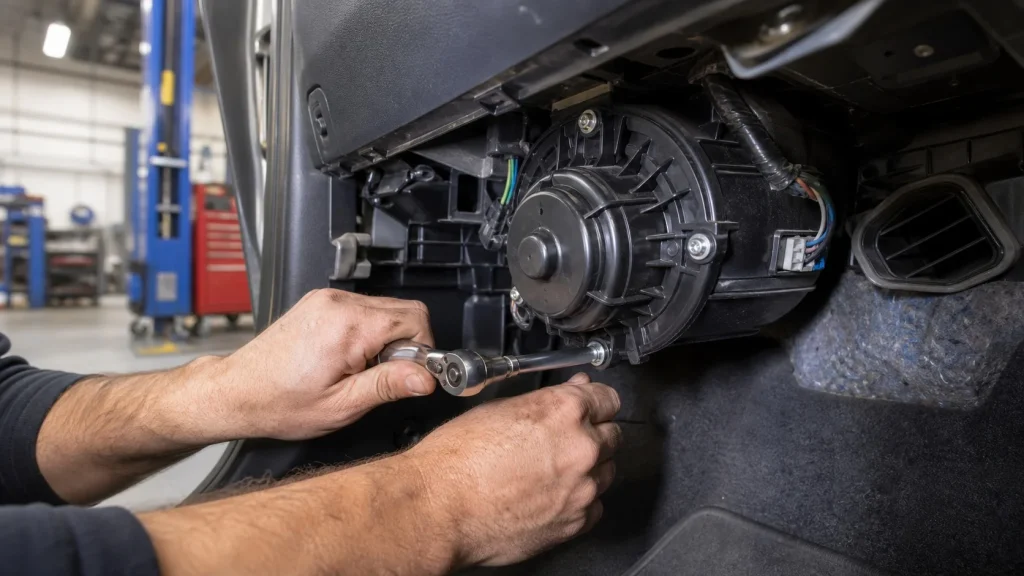
- Disconnect the Battery: Disconnect the negative battery terminal to eliminate any risk of electrical shorts or accidental airbag deployment while working under the dash.
- Remove Under-Dash Panels: Locate the passenger-side footwell. Unscrew and unclip the lower plastic trim panel under the glove box to expose the HVAC housing.
- Drop the Glove Box (If Necessary): Squeeze the outer tabs of the glove box to lower it beyond its stops, or unscrew its mounting hinges to remove it completely for better visibility.
- Unplug the Electrical Harness: Locate the round blower motor assembly. Press the release tab on the electrical connector and pull the plug straight out from the motor.
- Remove the Mounting Screws: Support the weight of the motor with one hand. Use a socket wrench or nut driver to remove the three or four mounting screws securing the motor flange to the HVAC housing.
- Lower and Remove the Motor: Carefully pull the blower motor straight down out of the housing, taking care not to damage the plastic squirrel cage blades.
- Transfer the Fan Cage (If Applicable): If your replacement motor does not include a new plastic squirrel cage, remove the retaining clip or nut from the old motor shaft, slide the cage off, and install it onto the new motor shaft.
- Install the New Motor: Push the new motor assembly straight up into the HVAC housing, aligning the screw holes. Hand-thread the mounting screws to prevent cross-threading, then tighten them securely.
- Reconnect the Harness: Push the electrical plug into the new motor connector until it clicks into place.
- Test the HVAC System: Reconnect the negative battery terminal. Turn on the vehicle’s ignition and cycle the climate control fan through all speed settings to verify smooth, quiet operation before reinstalling the glove box and trim panels.
Frequently Asked Questions About Blower Motors
What happens when a blower motor goes out?
When a blower motor completely fails, no air will flow through the vehicle’s cabin vents. While the AC compressor will still cool the evaporator core and the heater core will still get hot, the lack of air movement means you cannot adjust the temperature inside the cabin or clear moisture from the windows.
Can I drive with a bad blower motor?
Yes, you can drive the car because the blower motor is not connected to the engine, steering, or brakes. However, driving without a functioning blower motor is highly dangerous in cold or wet weather. Without airflow, the windshield defroster cannot clear condensation or frost, severely limiting driver visibility.
How long does a blower motor last?
A typical car blower motor lasts between 10 to 15 years or up to 150,000 miles under normal driving conditions. You can extend the life of the motor by regularly replacing your cabin air filter, which prevents dust and debris from entering the motor bearings and reduces electrical strain.
How hard is it to replace a blower motor?
For the majority of vehicles, replacing a blower motor is a relatively simple DIY repair that takes between 30 minutes to an hour. It only requires a socket set, a screwdriver, and a flashlight. The difficulty only increases significantly on luxury vehicles that require full dashboard disassembly.
To keep your car’s heating and cooling system running at peak performance, you should combine blower motor repairs with proper filter care. Read our cabin air filter maintenance guide to learn how to change your filter and prevent motor strain.

