

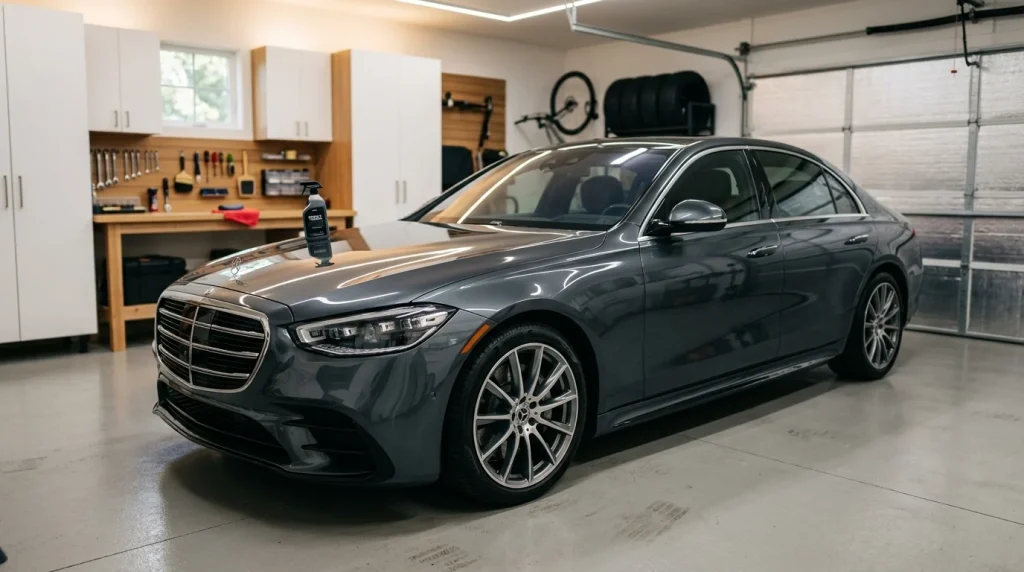
Quick answer: Turtle Wax Hybrid Solutions Ceramic Spray Coating is the best overall ceramic spray wax in 2026, offering 94.5 gloss units and 4-6 months of durability for about $15. Meguiar’s Hybrid Ceramic Wax provides the easiest spray-and-rinse application for beginners at $20, while Griot’s Garage 3-in-1 Ceramic Wax offers enthusiast-level results for $25-30.
Key takeaways:
- Turtle Wax Hybrid Solutions provides the highest gloss meter readings of 94.5 gloss units and lasts 4-6 months per application.
- Meguiar’s Hybrid Ceramic Wax is ideal for beginners due to a simple spray-and-rinse application method on wet paint.
- Griot’s Garage 3-in-1 Ceramic Wax is a premium option that functions well as a topper for existing coatings.
- Real-world durability ranges from 2-6 months, falling short of the 12-month marketing claims on some packages.
Comparison of the Top Ceramic Spray Waxes
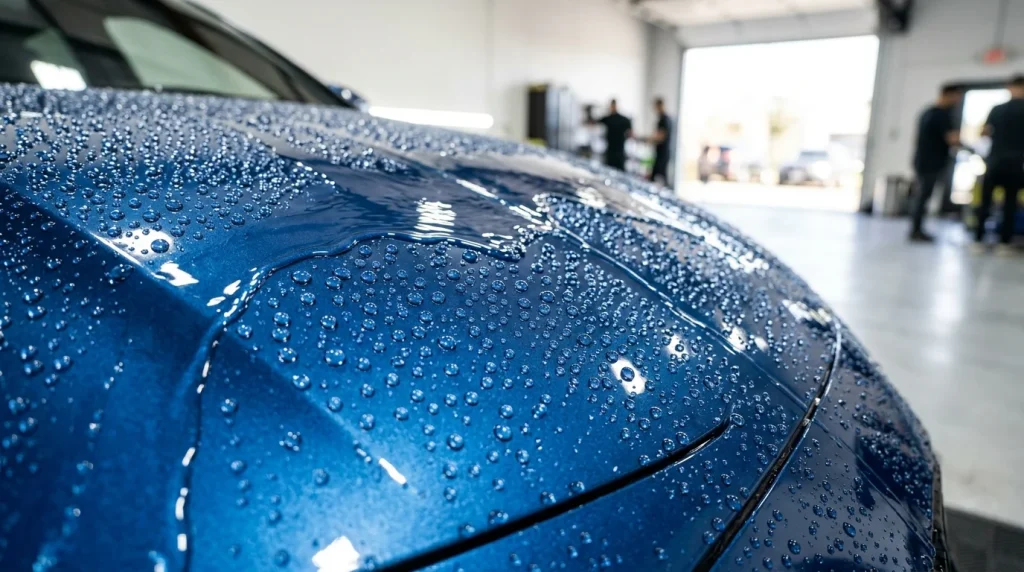
Selecting the right paint protection for your vehicle involves balancing gloss, durability, application ease, and price. In the modern detailing market, SiO2-infused (silicon dioxide) ceramic spray waxes have largely replaced traditional carnauba paste waxes because they offer superior chemical resistance, hydrophobic behavior, and longevity. The table below compares the leading products in the market for 2026 based on independent testing and consumer feedback.
| Product | Price | Durability | Gloss Level | Ease of Use | Best For |
|---|---|---|---|---|---|
| Turtle Wax Hybrid Solutions | ~$15 | 4-6 months | Excellent (94.5 GU) | Medium | Best overall value |
| Meguiar’s Hybrid Ceramic Wax | ~$20 | 3-5 months | Good (93.6 GU) | Easiest | Detailing beginners |
| Griot’s Garage 3-in-1 | ~$25-30 | 3-4 months | Excellent | Easy | Enthusiasts and toppers |
| Chemical Guys HydroSpeed | ~$25-30 | 2-3 months | Very glossy | Medium | Quick maintenance |
| Mothers CMX Ceramic Spray | ~$18 | 2-3 months | Good | Easy | Budget touch-ups |
| Gyeon Q2 CanCoat Evo | ~$35-45 | 12 months | Excellent | Harder | Semi-professional gloss |
For additional automotive detailing reviews and buying guides, check out our news section.
Best Overall: Turtle Wax Hybrid Solutions Ceramic Spray Coating
Turtle Wax Hybrid Solutions Ceramic Spray Coating consistently wins comparison tests for gloss, durability, and value. In gloss meter testing, Turtle Wax hit 94.5 gloss units (GU) at 20 degrees, which is the highest among mainstream ceramic sprays tested. That translates to a mirror-like finish with a 10-12% gloss increase over unprotected paint, especially noticeable on darker colors. Refer to the official Turtle Wax Hybrid Solutions Ceramic Spray Coating product details for more information.
Real-world durability hovers around 4-6 months with regular bi-weekly washing. The hydrophobic properties, such as water beading and sheeting, remain strong through multiple washes. The catch is that application requires more care than a spray-and-rinse approach. You will need to spray, wipe, then flip your towel to buff, plus allow a 24-hour cure time for optimal results. In humid conditions, some users report streaking if they do not work in small sections. At roughly $15 per bottle, the cost per application is hard to beat.
Best for Beginners: Meguiar’s Hybrid Ceramic Wax
Meguiar’s Hybrid Ceramic Wax is the most forgiving ceramic spray on the market. The spray-and-rinse application is simple. Wash your car, spray Meguiar’s onto the wet surface, then rinse off. No wiping, no buffing, and no worrying about streaks. For people who have never detailed a vehicle before, this removes the learning curve entirely.
Gloss levels measure around 93.6 GU, which is slightly lower than Turtle Wax but still produces a warm shine that looks particularly good on white and silver cars. The finish has depth rather than pure mirror reflection. Durability runs 3-5 months under normal washing conditions. That is slightly less than Turtle Wax, but the trade-off for easier application makes sense for most casual users. At around $20 for 26 ounces, Meguiar’s costs more per bottle but offers more product than most competitors.
Best Premium Choice: Griot’s Garage 3-in-1 Ceramic Wax
Griot’s Garage 3-in-1 delivers enthusiast-level results with a pleasant application experience. The formula combines cleaning, polishing, and protecting in one step, which is a genuine time-saver if your paint is not heavily contaminated. Gloss levels rival Turtle Wax, and the product has a pleasant scent compared to chemically-harsh competitors.
Real-world durability ranges from 3-4 months for hydrophobic properties, though the gloss lasts longer. Detailers often use Griot’s as a topper over true ceramic coatings to boost hydrophobic behavior and refresh appearance between full details. The downside is the price. At $25-30 per bottle, you are paying double what Turtle Wax costs for similar performance metrics. If budget matters, it is hard to justify unless you specifically prefer the Griot’s application feel.
Other Top Contenders to Consider
Chemical Guys HydroSpeed Ceramic Quick Detailer
Chemical Guys HydroSpeed produces very glossy results and is often praised as the shiniest of the detailer-tier sprays. Protection lasts around 2-3 months, making it a great maintenance product. The application is straightforward, but the formula is thin and can flash quickly in warm weather, which can lead to streaking on dark paint. At roughly $25-30 per bottle, it is more expensive than Turtle Wax for less durability.
Mothers CMX Ceramic Spray Coating
Mothers CMX falls in the middle tier, offering decent gloss, 2-3 months of durability, and easy application. It is a solid quick detailer for touch-ups between major details. The problem is it does not excel in any single area. Turtle Wax beats it on gloss and durability, while Meguiar’s beats it on ease of use. At $18, it is priced like a premium product but performs like a mid-range one.
Gyeon Q2 CanCoat Evo
Gyeon Q2 CanCoat Evo is a semi-professional ceramic spray that offers a step up from typical consumer waxes. It provides true ceramic coating protection in a sprayable format. It costs around $35-45 per bottle, but it offers a full 12 months of durability. The application process is much more demanding, requiring a thorough paint decontamination and panel wipe-down. It is not recommended for beginners.
Original Cost-of-Ownership and Value Verdict
To understand which is the best ceramic spray wax for cars, we must look beyond the initial purchase price and calculate the actual cost-of-ownership over a year of vehicle maintenance. Most consumer bottles contain between 16 and 26 ounces of product. A standard application on a mid-sized sedan requires about 1.5 to 2 ounces of spray.
Let us break down the costs per ounce and per application:
- Turtle Wax Hybrid Solutions: ~$15 for 16 oz = $0.94 per ounce. At 2 ounces per application, each application costs $1.88. With a 5-month average durability, you need 2.4 applications per year, leading to an annual cost of $4.51.
- Meguiar’s Hybrid Ceramic Wax: ~$20 for 26 oz = $0.77 per ounce. At 2 ounces per application, each application costs $1.54. With a 4-month average durability, you need 3 applications per year, leading to an annual cost of $4.62.
- Griot’s Garage 3-in-1: ~$25 for 22 oz = $1.14 per ounce. At 2 ounces per application, each application costs $2.28. With a 3.5-month average durability, you need 3.4 applications per year, leading to an annual cost of $7.75.
- Gyeon Q2 CanCoat Evo: ~$40 for 6.8 oz (200ml) = $5.88 per ounce. A single application uses about 1 ounce, costing $5.88. Since it lasts 12 months, the annual cost is $5.88.
While Turtle Wax and Meguiar’s represent the best budget-friendly consumer choices, Gyeon CanCoat Evo actually offers competitive annual value because it only requires one application per year. However, Gyeon requires professional-grade prep work. If you do not want to spend hours claying and polishing your paint, Turtle Wax is the value winner, while Meguiar’s is the convenience winner.
The drawbacks of these sprayable products include a susceptibility to water spotting if applied in direct sunlight, and a lack of physical scratch resistance compared to professional coatings.
Expert view: When applying SiO2 sprays, the biggest mistake is using too much product. A light mist is all that is required. Over-applying does not build a thicker protective layer; it only creates a greasy residue that is difficult to buff out and streaks under sunlight.
Ceramic Spray Wax vs. True Ceramic Coating
It is important not to confuse ceramic spray wax with professional-grade liquid ceramic coatings. They are formulated differently and serve different purposes. While sprays are designed for quick application, true coatings are semi-permanent paint sealants that chemically bond to the clear coat.
The comparison table below details the differences:
| Feature | Ceramic Spray Wax | True Ceramic Coating |
|---|---|---|
| Durability | 2-6 months | 2-5 years |
| SiO2 Concentration | 1-5% | 30-70% |
| Prep Work Required | Wash and light clay | Decontamination, polish, and panel wipe |
| Cure Time | 12-24 hours | 24-48 hours (no water), 7 days full cure |
| Price | $15-30 per bottle | $50-150 (DIY kit), $500-1500 (Pro) |
| Hardness | Soft, flexible layer | 9H pencil hardness scale |
According to Road & Track’s ceramic testing data, true coatings offer significantly better resistance to chemical etching and micro-marring. However, the preparation work for a true coating requires hours of paint correction to remove swirls, as the coating will lock in any paint defects underneath.
If you are comparing different levels of paint protection, you might also want to research long-term options like paint protection film or wraps. See our breakdown on how long does vinyl wrap last on a car for pricing and lifespan comparisons. For most daily drivers, ceramic spray wax offers the best balance of effort, cost, and shine.
Note: Ceramic spray waxes are highly sensitive to temperature during application. Avoid applying them if the ambient temperature is below 50 degrees Fahrenheit or above 90 degrees Fahrenheit, as the solvents will not flash correctly.
How to Apply Ceramic Spray Wax for Maximum Longevity
To get the full 4-6 months of durability from a product like Turtle Wax or Griot’s Garage, follow this step-by-step application process.
Step 1: Surface Preparation
The bonding strength of SiO2 polymers depends on paint cleanliness. Wash the vehicle thoroughly with a wax-free, pH-neutral car wash soap. After drying, use a clay bar with a dedicated lubricant to remove embedded metallic fallout and tree sap. If the paint feels rough to the touch, claying is required. For the absolute best bond, perform a panel wipe-down using a 50% isopropyl alcohol solution to strip away any remaining oils or old waxes.
Step 2: Environmental Conditions
Always work in a shaded area, such as a garage or under a carport. Direct sunlight heats the paint panels, causing the spray carriers to evaporate too quickly. This results in severe streaking and uneven coating thickness. The ideal temperature range is between 60 and 80 degrees Fahrenheit.
Step 3: Correct Application Technique
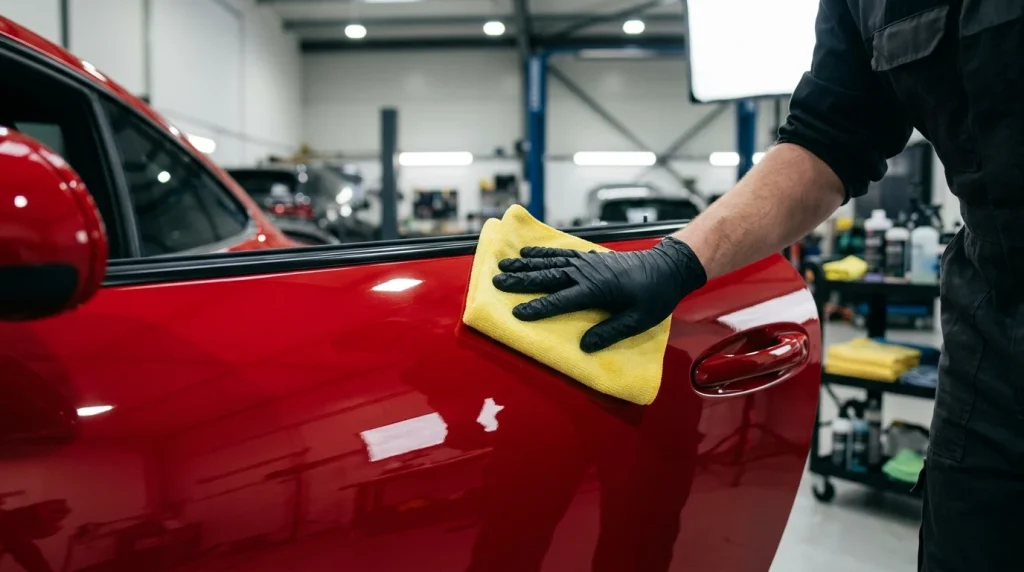
Working one panel at a time, mist the product onto the paint. Use two sprays for a door panel and three to four for the hood. Take a clean, low-nap microfiber towel (about 300 to 350 GSM) folded into quarters, and wipe the product in straight, overlapping lines to ensure even coverage. Immediately switch to a second, high-pile plush microfiber towel and buff the panel to a high gloss. If you notice any high spots or dark streaks, mist a tiny amount of product onto the towel and wipe the area again to level it.
Step 4: Cure Time
Keep the vehicle dry for at least 12 to 24 hours after application. Moisture interferes with the cross-linking process of the SiO2 polymers, which can reduce the durability of the coating by half. If you must apply the product outdoors, check the weather forecast to ensure there is no rain expected overnight.
Frequently Asked Questions
How long does ceramic spray wax actually last?
Realistically, consumer-grade ceramic spray waxes last between 2 and 6 months. High-performing products like Turtle Wax Hybrid Solutions can survive up to 6 months with regular maintenance, while budget quick detailers or rinse-off products may degrade after 2 to 3 months. Durability is heavily influenced by environmental exposure, wash frequency, and the type of soap used.
Is ceramic spray wax worth it compared to traditional car wax?
Yes, ceramic spray wax is highly recommended over traditional carnauba wax. Ceramic sprays offer superior chemical resistance, last three to four times longer, and block UV rays more effectively. They also repel water much better, which helps keep the car cleaner for longer. Traditional paste wax is only preferred by classic car owners who want a warm, organic glow for show events.
Can I apply ceramic spray wax over an existing ceramic coating?
Yes, ceramic sprays are excellent maintenance toppers for professional ceramic coatings. Applying a spray wax every few months helps protect the underlying coating from environmental degradation, refreshes the hydrophobic water-beading performance, and restores the slickness of the paint. Ensure the vehicle is clean and dry before applying.
Why does my ceramic spray wax leave streaks?
Streaking is usually caused by applying the product to hot paint, working in direct sunlight, using too much spray, or employing dirty microfiber towels. If you experience streaking, wipe the area with a damp microfiber cloth to level the product. For stubborn streaks, use a diluted isopropyl alcohol mix to remove the excess wax and reapply.
Do I need to remove old wax before applying ceramic spray?
For optimal bonding and longevity, it is best to remove old waxes and sealants. You can do this by washing the car with a dedicated strip soap or wiping the panels with isopropyl alcohol after claying. If you apply the ceramic spray over old wax, it will bond to the wax rather than the paint, which reduces its overall durability.

