

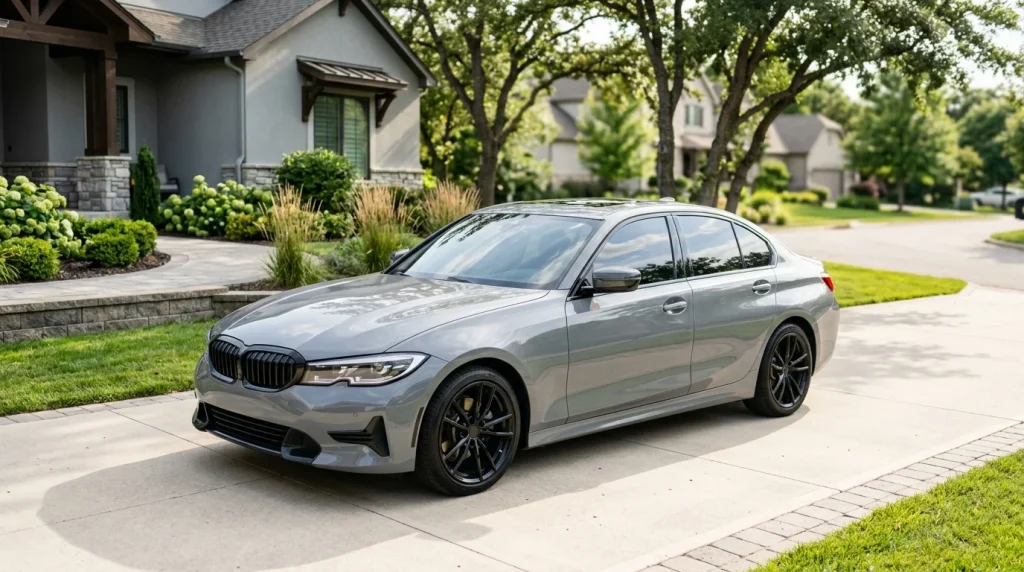
Quick answer: A professionally installed vinyl wrap typically lasts 5 to 7 years on a car under normal driving conditions. The actual lifespan depends on the quality of the material used, the expertise of the installer, and how well you maintain the vehicle. Premium cast vinyl wraps can last up to 10 years when garage-kept, while budget wraps may fail within 2 to 3 years.
Key takeaways:
- Cast vinyl wraps offer a typical service life of 5 to 7 years.
- 3M warrants its Series 2080 wrap film for up to 8 years on vertical surfaces.
- Direct sunlight and heat exposure accelerate vinyl degradation on horizontal panels.
- Hand washing is the recommended method to maintain the wrap’s finish.
- Removing the vinyl before 7 years prevents paint damage from hardened adhesive.
Vinyl Wrap Lifespan by Material and Finish Type
Standard cast vinyl wrap typically lasts 5 to 7 years on a car under normal driving conditions. The type of vinyl material and the specific finish you select play a critical role in determining how long your vehicle wrap will remain in pristine condition. There are two primary types of vinyl film used in the automotive industry: cast vinyl and calendered vinyl.
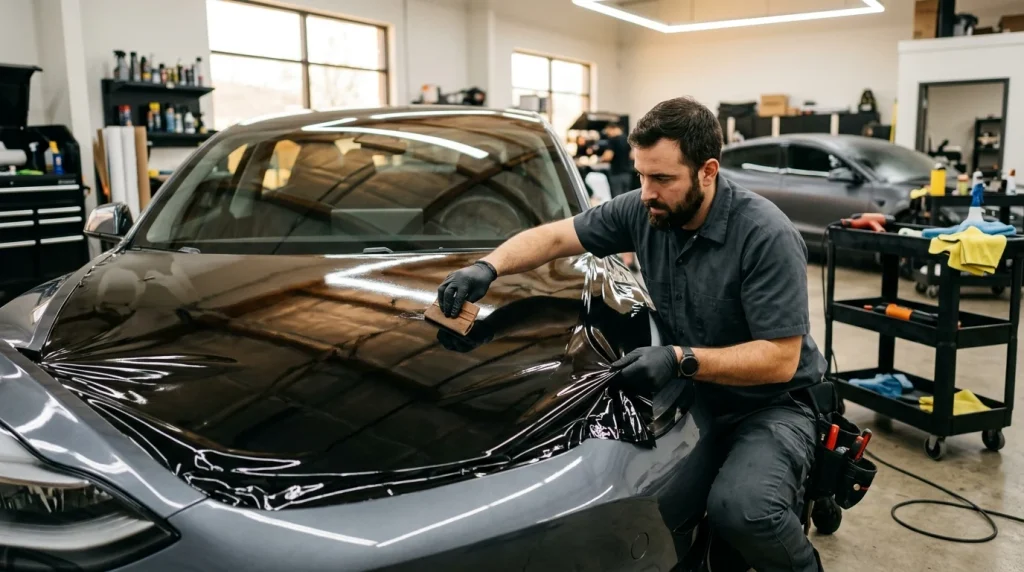
Cast vinyl is the premium choice for full vehicle wraps. It is manufactured by pouring liquid raw ingredients onto a casting sheet, resulting in a thin, flexible, and durable film. Because cast vinyl is baked during production, it has no dimensional memory. This means it can conform to complex body curves, rivets, and recesses without shrinking or lifting over time.
In contrast, calendered vinyl is produced by extruding and rolling a solid mass of PVC. This method creates a thicker, more rigid film that retains a memory of its original flat shape. When applied to curved automotive panels, calendered vinyl is highly prone to shrinkage, cracking, and edge lifting, particularly when exposed to heat. Consequently, calendered film is generally reserved for flat commercial signage or short-term advertising graphics.
The finish of the wrap also influences its longevity. Metallic, matte, and glossy finishes generally offer standard lifespans, while specialty films like chrome require more delicate care. Chrome wraps are particularly fragile because their reflective layer is sensitive to oxidation and UV degradation.
| Wrap Material Type | Average Lifespan | Maximum Lifespan (Optimal Care) |
|---|---|---|
| Standard Cast Vinyl | 5 to 7 Years | 8 to 10 Years |
| Premium UV-Resistant Vinyl | 7 to 10 Years | 10+ Years |
| Calendered (Budget) Vinyl | 2 to 3 Years | 4 Years (Flat Surfaces) |
| Chrome and Specialty Finishes | 1 to 4 Years | 5 Years |
| Commercial Fleet Wraps | 4 to 6 Years | 7 Years |
Factors Affecting How Long Your Car Wrap Lasts
The durability of your vehicle wrap is not a fixed number. It is determined by several interlocking variables, including material quality, installation precision, solar exposure, and your daily washing routine. Understanding these factors helps you plan your maintenance and choose the right materials.
Material Quality and Manufacturer Warranties
The brand and grade of vinyl you select are the most critical determinants of wrap longevity. Premium films from established manufacturers like 3M and Avery Dennison incorporate advanced UV inhibitors and high-grade acrylic adhesives that resist environmental degradation.
For instance, the 3M Wrap Film Series 2080 features a protective film layer on gloss colors to prevent scratching during installation. 3M provides a structured warranty that varies based on the geographic zone and the orientation of the wrap. In Zone 1 (moderate climates), 3M warrants vertical applications for up to 8 years, while horizontal applications (such as hoods, roofs, and trunks) are warranted for 3 years.
Similarly, the Avery Dennison Supreme Wrapping Film offers exceptional conformability and a performance life of up to 12 years for standard black and white vertical applications. However, metallic and specialty finishes from Avery Dennison typically carry a shorter durability rating of 5 years. Both manufacturers reduce their warranty periods for vehicles operated in high-temperature, high-UV desert regions, such as Arizona or Southern California.
Professional Installation Quality
Even the highest-grade cast vinyl will fail prematurely if installed poorly. Professional installation requires meticulous surface preparation, which involves removing all contaminants, grease, and wax from the vehicle’s paintwork. Any dirt left under the vinyl will create bubbles and compromise the adhesive bond.
Furthermore, experienced installers use specific post-heating techniques. After stretching the vinyl over complex curves, they apply a heat gun to release the material’s internal stress and lock it into its new shape. Installers must also seal the edges properly around door jambs, headlights, and bumpers. A poor installation often leads to edge lifting and peeling within the first few months.
Environmental and UV Exposure
UV radiation is the primary enemy of automotive vinyl. Solar rays break down the chemical polymers in the film, leading to color fading, loss of elasticity, and eventual cracking. Horizontal surfaces receive direct sunlight throughout the day, accelerating this degradation process.
| Environmental Stressor | Impact on Wrap Longevity | Mitigation Strategy |
|---|---|---|
| High UV Index (Desert Climates) | Rapid fading and premature cracking | Park in shade or use a car cover |
| Extreme Temperature Fluctuations | Stress on adhesive bonds, edge lifting | Garage storage during peak temperature hours |
| Coastal Salt Air | Corrosive buildup along wrap seams | Wash weekly to remove salt deposits |
| Acid Rain and Pollution | Chemical staining and surface etching | Neutralize with quick detailing spray |
Vehicles kept in climate-controlled garages consistently outlast those parked on open streets. Extreme temperature swings can cause the metal panels of your car to expand and contract, placing additional physical stress on the vinyl adhesive.
Driving Habits and Maintenance Routine
How you drive and maintain your car directly affects how long the wrap looks new. High-mileage drivers who spend hours on the highway face an increased risk of rock chips and road debris impacts. These physical impacts puncture the vinyl, allowing water and dirt to slip underneath.
Furthermore, your cleaning habits are vital. Taking a wrapped car through an automatic car wash with spinning brushes is a major cause of wrap failure. The heavy brushes can scratch the vinyl’s surface and catch on the edges, peeling the wrap off the body panels.
How to Maximize the Lifespan of Your Vehicle Wrap
To get the most out of your investment, you must establish a dedicated care routine. Proper maintenance preserves the wrap’s color, protects the adhesive, and keeps the surface free of damaging contaminants.
Hand Washing and Cleaning Frequency
Hand washing is the gold standard for maintaining a wrapped vehicle. You should wash your car weekly to prevent dirt, bird droppings, tree sap, and bugs from bonding to the vinyl. These biological contaminants are acidic and can permanently stain or etch the film if left on the surface for more than 48 hours.
When washing, follow this safe routine:
- Pre-rinse the vehicle with clean water to wash away loose dirt.
- Use a pH-neutral automotive soap and a soft microfiber mitt.
- Gently wipe the panels from top to bottom, avoiding aggressive scrubbing.
- Rinse thoroughly to ensure no soap residue remains.
- Dry the vehicle immediately with a clean microfiber towel to prevent water spots.
Avoid using high-pressure sprayers close to the wrap’s edges, as the pressure can force water under the film and cause lifting. If you must use a pressure washer, keep the nozzle at least 12 inches away from the surface and maintain an angle perpendicular to the panel.
| Vehicle Usage | Recommended Wash Frequency | Cleaning Method |
|---|---|---|
| Daily Driver (Outdoor Parking) | Weekly | Gentle hand wash |
| Garaged Weekend Car | Every 2 weeks | Hand wash or waterless detailer |
| Show Car / Accent Wrap | Before and after events | Hand wash with premium microfibers |
| Commercial Fleet Vehicle | Twice weekly | Hand wash or touchless pressure wash |
Smart Parking and Protective Storage
Minimizing sun exposure is one of the simplest ways to protect your wrap. Always park in a garage, carport, or under shaded areas when possible. If you must park outdoors for extended periods, consider purchasing a breathable, high-quality car cover to block UV rays and protect the surface from bird droppings.
Note: Do not park under sappy trees or near industrial areas where airborne pollutants can settle on the vinyl. If contaminants do fall on the wrap, clean them immediately with a quick detailer spray.
Utilizing Vinyl-Safe Ceramic Coatings
Applying a ceramic coating specifically formulated for vinyl wraps can add 1 to 2 years of lifespan to the film. Ceramic coatings create a hydrophobic barrier that repels water, dirt, and oil, making the car much easier to clean. They also provide an extra layer of UV protection to prevent color fading.
Professional ceramic coating applications for wrapped vehicles typically cost between $500 and $3,000, depending on the size of the car and the duration of the coating. While it is a significant upfront cost, it preserves the appearance of the wrap and simplifies weekly maintenance.
Premium Vinyl Wrap vs. Car Paint Lifespan
When deciding between wrapping your vehicle or opting for a traditional paint job, longevity and cost are the primary points of comparison. Factory-applied automotive paint is designed to last 10 to 15 years, easily outlasting the 5 to 7 year lifespan of a vinyl wrap.
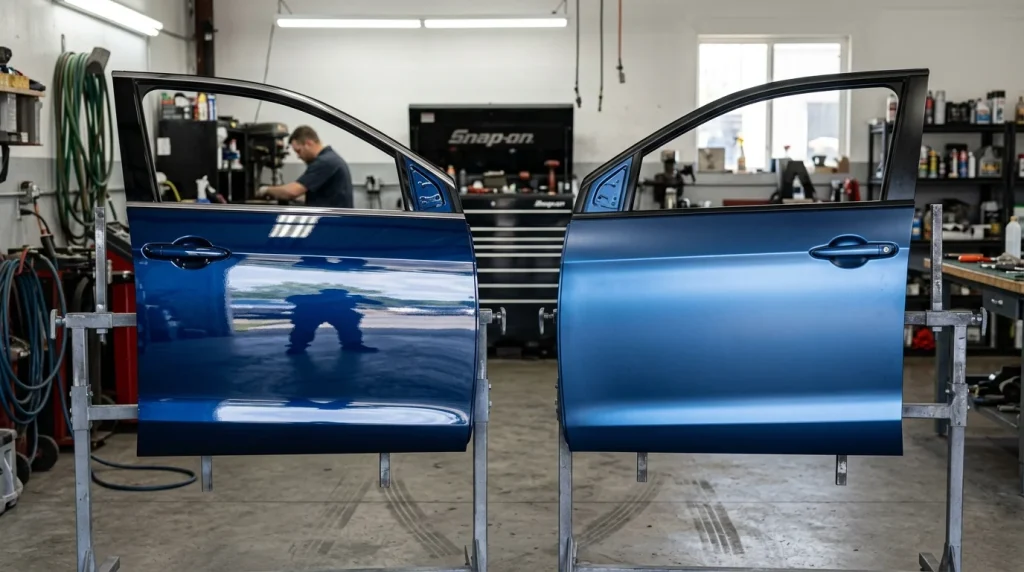
However, a vinyl wrap serves a different purpose. Instead of replacing paint, a wrap protects the underlying factory clear coat from minor scratches, road debris, and UV damage. When it is time to sell the vehicle, the wrap can be removed to reveal pristine factory paint underneath, preserving the car’s resale value. For those interested in buying a car or upgrading their current ride, coordinating a purchase timeline is crucial; you can refer to our guide on how long does it take to buy a car to plan your customization steps.
| Feature | Vinyl Wrap | Factory Car Paint |
|---|---|---|
| Typical Lifespan | 5 to 7 Years | 10 to 15 Years |
| Average Cost | $2,500 to $5,000 | $3,000 to $10,000+ (Quality Paint) |
| Color Variety | Unlimited finishes and prints | Limited to paint pigments |
| Reversibility | 100 percent reversible | Permanent |
| Protection | Acts as a physical shield | Susceptible to clear coat failure |
Signs That Your Car Vinyl Wrap Needs Replacement
Vinyl wrap does not last forever. Recognizing the signs of degradation allows you to remove the wrap before it damages the paint underneath.
Visible Fading and UV Discoloration
Fading is the earliest sign of UV damage. You will notice the colors on the hood, roof, and trunk looking duller than the doors. Once the pigment breaks down, the vinyl loses its protective properties.
Peeling and Lifting Along Panel Edges
Lifting occurs when the adhesive backing fails. This is common around bumpers, wheel wells, and door handles. Once the edges lift, dirt, moisture, and road grime creep underneath, quickly destroying the surrounding adhesive.
Cracking and Bubbling Under the Film
Cracking indicates that the PVC film has become dry and brittle. Bubbling suggests that air or moisture is trapped under the vinyl due to adhesive failure. Both issues allow water to pool on the paint surface, posing a corrosion risk.
Permanent Contamination Stains
If acidic substances like bird droppings or tree sap are left on the wrap, they eat into the material. If a deep wash cannot remove these marks, the vinyl’s protective top layer is compromised.
Severe Texture Degradation
If the wrap feels rough, dry, or sticky to the touch, the plasticizer compounds in the PVC are breaking down. This requires immediate removal.
Risks of Leaving a Vinyl Wrap on Your Car Too Long
Procrastinating on wrap removal can turn a simple upgrade into a costly repair. After 7 years, the acrylic adhesive on the back of the vinyl begins to dry out and crystallize. This process causes the adhesive to bond permanently with the vehicle’s clear coat.
When you attempt to pull off an old, brittle wrap, the vinyl will tear into tiny pieces, requiring hundreds of hours of labor to scrape off. More importantly, the hardened adhesive can pull up the clear coat or paint during removal, leaving you with a damaged surface. A standard wrap removal costs $500 to $1,500, but removing a severely degraded wrap can easily cost double that amount due to the extra labor involved.
Original Cost-of-Ownership and Value Verdict
Analyzing the real cost of ownership is essential before wrapping your vehicle. A high-quality full wrap on a standard sedan costs approximately $3,000. If we assume the wrap lasts 6 years before requiring replacement, the material cost amortizes to $500 per year. Adding an estimated removal cost of $1,000 at the end of the lifecycle, the total cost of ownership is roughly $666 per year.
For enthusiasts who want unique matte or satin finishes, a wrap is highly cost-effective compared to custom paint. A high-quality custom paint job of equivalent style starts at $6,000 and is permanent, which can reduce resale value. A wrap allows you to enjoy a custom look while keeping the factory paint protected.
Who should wrap their car:
- Leased vehicle owners who must return the car in original condition.
- Owners of luxury or exotic cars wanting to protect resale value.
- Car enthusiasts looking for temporary styling modifications.
Who should not wrap their car:
- Owners of vehicles with rust, deep scratches, or peeling paint (vinyl will not hide these defects).
- Drivers looking for a permanent, lifetime color change.
Expert view: If you are wrapping a lease or a high-value sports car, professional installation is non-negotiable. The protection provided to the clear coat pays for itself by preventing paint chips and UV wear that dealers penalize during lease returns.
To keep track of the latest vehicle customization tips and detailed automotive guides, explore the latest resources on the Autvex news hub. Understanding the physics of your car is also helpful; for example, when parking in the sun after a drive, you might wonder how long does it take a car to cool down to manage passenger comfort and vehicle heat. Similarly, keeping your car detailing up to date is crucial, such as knowing how to remove the smell of smoke in a car to maintain the overall interior quality alongside the wrap.
Frequently Asked Questions about Car Vinyl Wraps
How long does a 3M vinyl wrap last?
Under moderate environmental conditions, a premium 3M Wrap Film Series 2080 lasts 5 to 7 years. 3M provides a vertical warranty of up to 8 years and a horizontal warranty of up to 3 years. Proper hand washing and garage storage will maximize the lifespan of these films.
Does vinyl wrap damage car paint?
No, a professional installation on sound factory paint will not cause damage. The vinyl film acts as a shield against light road debris and UV rays. However, if the wrap is left on for more than 7 years, the adhesive can bond permanently and damage the clear coat during removal.
Is it worth wrapping an old car?
It is only worth wrapping if the existing paint is stable and free of rust. Vinyl film conforms to every surface contour, meaning it will highlight paint chips, rust bubbles, and peeling clear coat rather than hide them. If the surface is smooth, a wrap is an excellent cosmetic refresh.
Can you wash a wrapped car in an automatic car wash?
No, automatic car washes with mechanical brushes are highly discouraged. The abrasive bristles can scratch the vinyl finish and catch on seams, leading to premature edge lifting. You should use manual hand washing with pH-neutral soap or a gentle touchless wash instead.
How much does it cost to rewrap a car?
A professional full wrap on an average sedan or compact SUV costs between $2,500 and $5,000. If you are rewrapping a car, you must also budget $500 to $1,500 for the professional removal of the existing wrap, bringing the total rewrap cost to $3,000 to $6,500.

