

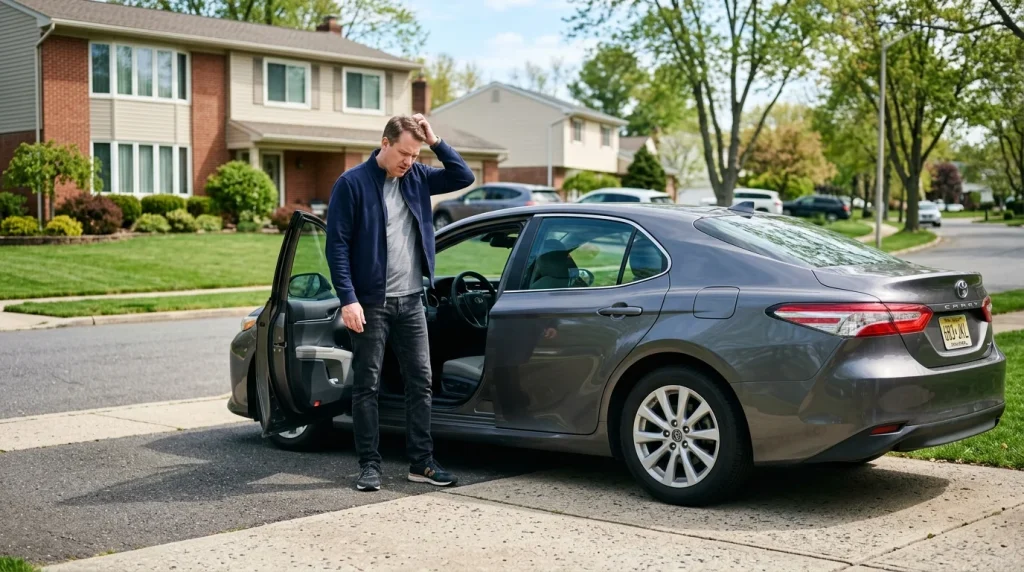
Quick answer: A gasoline odor without a visible liquid leak is almost always caused by escaping fuel vapors rather than liquid fuel pooling on the ground. Because gasoline is highly volatile, small vapor leaks from the evaporative emission control system or tiny seeps from fuel injectors evaporate instantly into the air, leaving no physical puddles but producing a distinct, noticeable smell.
Key takeaways:
- Raw fuel evaporates rapidly at ambient temperatures, meaning vapor leaks rarely leave physical wet patches.
- A loose, cracked, or degraded gas cap is the most common trigger for vapor odors and check engine lights.
- Federal regulations require vehicles to detect vapor leaks down to 0.020 inches to limit hydrocarbon emissions.
- A persistent fuel smell inside the passenger cabin represents a severe safety hazard and requires professional attention.
- Switching the ventilation system to recirculate mode helps isolate whether the odor source is under the hood or near the rear.
Vapor Leaks vs. Liquid Leaks: Why Vapors Smell Without Puddles
Modern automotive fuel networks operate under a sealed, pressurized system designed to satisfy strict environmental requirements. When a driver detects a raw gasoline odor but finds the pavement dry, the culprit is typically escaping vapor rather than liquid fuel. Liquid gasoline is highly volatile and vaporizes within seconds at normal ambient temperatures. Consequently, small seeps or vapor vent leaks dry out before a puddle can form under the vehicle.
The human nose is exceptionally sensitive to gasoline vapors. People can detect the scent of raw fuel at concentrations as low as a few parts per million in the air. This high sensitivity explains why a tiny vapor leak, which poses no visible liquid evidence, can smell strong enough to cause concern. Under federal environmental guidelines, such as the 40 CFR 86.1813-17 regulations, vehicles sold in the United States must utilize completely sealed fuel systems. These systems are legally required to run onboard diagnostic checks capable of identifying vapor leaks as small as 0.020 inches, which is roughly the thickness of a paperclip.
Analysis: Vapor leaks are fundamentally different from high-pressure liquid fuel leaks. High-pressure delivery lines operate at 40 to 65 pounds per square inch for port-injected systems, and over 1,000 pounds per square inch for direct-injection setups. A leak in the pressurized delivery side usually produces a visible spray or drip, creating an immediate fire hazard. A vapor leak from the low-pressure emission control loop escapes slowly and is often harder to pinpoint without professional equipment.
Top 7 Common Causes of Gasoline Odor with No Visible Leak
When a car smells like fuel but leaves no puddle, the issue is typically concentrated in the evaporative emission loop or near the engine intake. Technicians identify seven common faults that produce these exact symptoms:
- Loose or Damaged Gas Cap: The gas cap is the primary seal for the fuel tank. If the rubber O-ring gasket becomes dry, cracked, or dirty, pressurized fuel vapors escape directly from the filler neck.
- Saturated Charcoal Canister: The charcoal canister is filled with activated carbon designed to absorb fuel vapors from the tank. If the canister becomes saturated (often from “topping off” the gas tank during refueling), it can no longer hold vapors, releasing a heavy gasoline smell near the rear of the vehicle.
- Stuck Purge Valve or Vent Valve: The purge valve regulates the flow of vapors from the canister into the engine intake, while the vent valve allows fresh air into the canister during purging. If either valve sticks open or closed, it disrupts the system pressure, allowing vapors to escape.
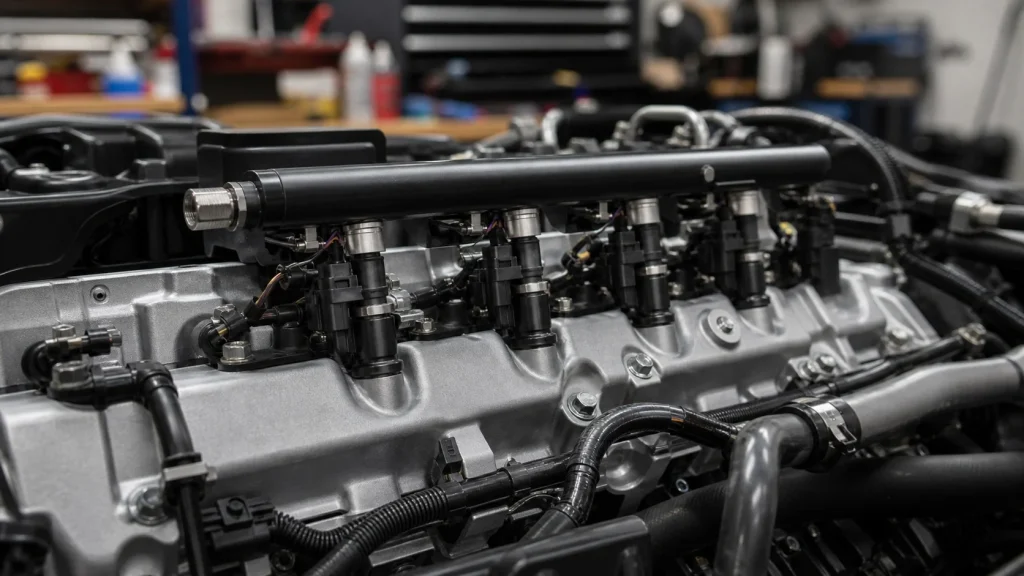
- Worn Fuel Injector O-Rings: Fuel injectors sit directly in the hot engine cylinder head, sealed by small rubber O-rings. When these seals harden and crack from engine heat, raw fuel can seep onto the hot engine block and vaporize instantly, sending fuel odors directly into the cabin vents without dripping onto the ground.
- Cracked Vapor Hoses: The evaporative system relies on a network of rubber and plastic hoses to route vapors from the tank to the engine bay. Over time, engine heat and road vibrations dry out these lines, creating micro-cracks that release fumes.
- Failing Fuel Pressure Regulator: A diaphragm leak inside a vacuum-operated fuel pressure regulator can pull raw fuel through the vacuum hose directly into the engine intake. This causes the engine to run rich, producing a strong unburned gasoline smell from the tailpipe.
- Exhaust System Leaks: An exhaust leak upstream of the catalytic converter releases unburned hydrocarbons into the engine bay, which are then sucked into the passenger cabin through the fresh-air cowl intake at the base of the windshield.
| Cause | Primary Leak Source | Odor Concentration | Associated Diagnostic Codes |
|---|---|---|---|
| Loose Gas Cap | Fuel Filler Neck | Rear of Vehicle | P0455, P0456 |
| Saturated Charcoal Canister | Rear Subframe area | Near Fuel Door | P0440, P0446 |
| Stuck Purge/Vent Valve | Engine Bay / Canister | Front or Rear of Car | P0441, P0443, P0446 |
| Worn Injector O-Rings | Fuel Rail / Intake | Engine Bay | Often None |
| Cracked Vapor Hoses | Underbody Chassis | Mid-Vehicle or Front | P0442, P0456 |
| Faulty Pressure Regulator | Intake Manifold | Engine Bay / Tailpipe | P0172, P0175 (Rich) |
| Exhaust Leak | Manifold / Downpipe | Vents / Cabin at Idle | P0420 (sometimes) |
The Role of the Evaporative Emission Control (EVAP) System
The Evaporative Emission Control system is a sealed assembly designed to capture and recycle volatile organic compounds before they escape into the atmosphere. When fuel sits in the tank, it naturally generates vapors. The EVAP system routes these vapors through a vent line into the charcoal canister, where the activated carbon traps the hydrocarbons.
When the engine reaches normal operating temperature and highway cruising speeds, the engine control unit opens the purge valve. Vacuum from the engine intake manifold pulls the stored vapors out of the charcoal canister and routes them into the cylinders, where they are safely burned during normal combustion.
If a leak develops anywhere in this loop, pressure drops, and the onboard diagnostics system flags a fault. Drivers can monitor these issues using basic scanners to identify specific diagnostic trouble codes. A detailed explanation of warning indicators, including dashboard symbols, is covered in our guide on what does the exclamation point mean in a car.
Step-by-Step Diagnostic Process to Locate the Odor Source
Locating a vapor leak requires a systematic approach, starting with the simplest physical checks before moving to electronic diagnostics:
- Step 1: Check the Gas Cap: Remove the gas cap and inspect the rubber gasket for flat spots, cracks, or dirt. Reinstall it and ensure it clicks firmly. If the seal is degraded, replace the cap with an original equipment manufacturer part.
- Step 2: Isolate the Ventilation System: Start the car and turn on the air conditioning with the fresh-air intake active. If you smell gasoline, switch the system to recirculate mode. If the smell fades within two minutes, the leak is located under the hood (such as injector O-rings or fuel rail connections) or in the exhaust system.
- Step 3: Perform an Under-Hood Visual Inspection: Open the hood and examine the fuel rail, fuel injectors, and regulator. Look for dirt buildup, wet stains, or discolored spots, which indicate slow, weeping leaks that vaporize before hitting the ground.
- Step 4: Retrieve OBD-II Diagnostic Codes: Connect a diagnostic scanner to the OBD-II port under the steering wheel. Look for active or pending codes in the P0440 to P0457 family, which point directly to EVAP system leaks or sensor malfunctions.
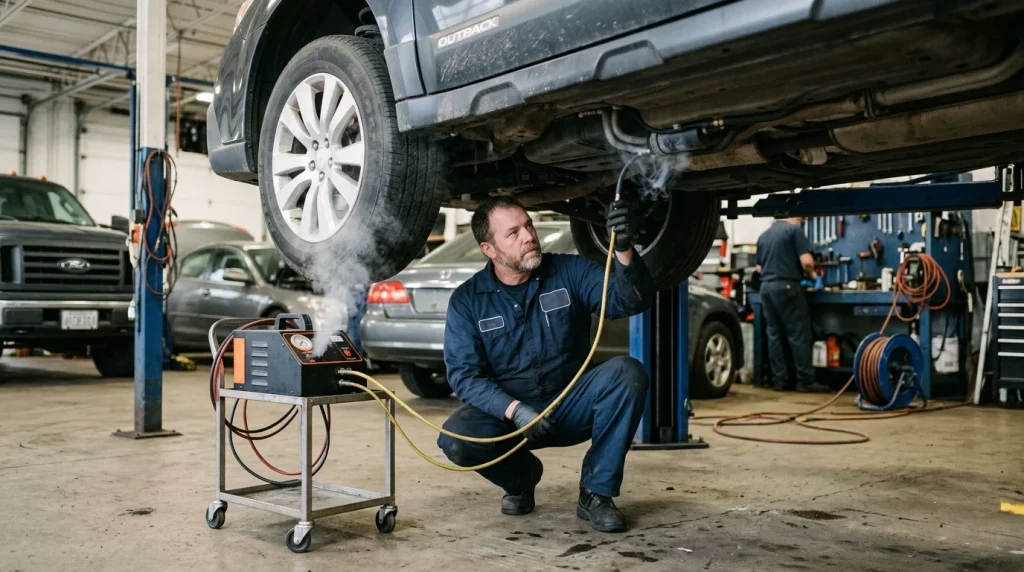
- Step 5: Conduct a Smoke Test: If visual checks and OBD-II codes fail to pinpoint the leak, a professional technician must connect an EVAP smoke machine to the system. This tool pressurizes the sealed lines with a harmless, visible smoke containing UV dye. The technician uses a light to spot the smoke escaping from hairline cracks in plastic canister housings or hidden rubber lines.
Is It Safe to Drive? Assessing the Safety and Fire Risks
Laying down a strict safety threshold is essential when dealing with raw fuel smells. While a minor EVAP system vapor leak that triggers a check engine light is generally safe to drive to a nearby service center, a strong, persistent fuel smell inside the vehicle cabin represents an immediate fire and health hazard.
Gasoline vapors are highly combustible. They can ignite in the presence of hot exhaust pipes, catalytic converters, or minor electrical sparks from the alternator or starter. Furthermore, inhaling fuel vapors over extended periods exposes occupants to toxic hydrocarbons like benzene, causing headaches, dizziness, and nausea.
According to technical trainer Duane “Doc” Watson of Bosch Mobility Aftermarket, any persistent or increasing gasoline smell inside a passenger cabin demands immediate professional inspection rather than continued vehicle operation. Watson warns that ignoring a steady fuel smell can lead to catastrophic component failure if the root cause is a degrading pressure line or a weeping injector seal near hot engine parts.
Furthermore, safety regulators monitor fuel system defects closely because of the extreme risk of vehicle fires. For example, the National Highway Safety Administration published NHTSA Safety Recall Report 25V536, which covered 23,656 Chevrolet Corvette vehicles. The recall report identified a defect where fuel could leak onto ignition sources during refueling, presenting a direct fire risk.
Caution: If you smell gas inside the cabin while driving, pull over safely, turn off the engine immediately, and exit the vehicle. Do not park the car in an enclosed home garage, as trapped vapors can build up and ignite from household ignition sources like water heater pilot lights. Have the car towed to a repair facility for a professional inspection.
Estimated Repair Costs for EVAP and Fuel System Components
The cost to resolve a gasoline odor depends entirely on which component has failed. Replacing a gas cap is an inexpensive fix, whereas replacing a canister or fuel rail lines requires specialized labor and expensive replacement parts.
The pricing table below outlines typical parts and labor ranges across the United States. These figures reflect average independent shop rates for 2025 and 2026, excluding local taxes and shop disposal fees. Detailed diagnostic and repair data are sourced from Steer’s fuel leak diagnosis guide.
| Repair Item | Parts Cost | Labor Cost | Total Estimated Range |
|---|---|---|---|
| Gas Cap Replacement (OEM) | $15 – $40 | $0 (DIY) | $15 – $40 |
| EVAP Smoke Test (Diagnostic) | N/A | $75 – $130 | $75 – $130 |
| EVAP Purge or Vent Valve | $30 – $90 | $80 – $150 | $110 – $240 |
| Charcoal Canister Assembly | $120 – $350 | $100 – $220 | $220 – $570 |
| Fuel Injector O-Ring Set (All cylinders) | $15 – $50 | $120 – $300 | $135 – $350 |
| Fuel Pressure Regulator | $60 – $180 | $90 – $160 | $150 – $340 |
| EVAP Vapor Hose Replacement | $10 – $60 | $70 – $180 | $80 – $240 |
Frequently Asked Questions About Vehicle Gasoline Odors
Can a car smell like gas without leaking fuel?
Yes. Liquid gasoline evaporates rapidly at ambient temperatures. The fuel vapors can escape through microscopic cracks in the rubber lines, a degraded gas cap seal, or a saturated charcoal canister. Because the human nose detects gasoline at very low concentrations, you will smell the fuel vapors even though no liquid puddle forms under the vehicle.
What DTC codes indicate an EVAP leak?
The OBD-II system uses several diagnostic trouble codes to pinpoint evaporative system faults. The most common codes are P0440 (general EVAP system malfunction), P0442 (small leak detected), P0455 (gross or large leak detected), and P0456 (very small leak detected). Other related codes include P0441 (incorrect purge flow) and P0446 (vent control circuit fault).
Will a loose gas cap really cause a strong fuel odor?
Yes, a loose gas cap is the leading cause of evaporative system warnings. The cap seals the fuel filler neck to maintain system pressure. If the cap is not tightened until it clicks, or if the internal rubber seal is dry-rotted, vapors will vent into the air. This escapes near the rear wheel well, creating a strong odor and triggering the check engine light.
How much does it cost to fix an EVAP leak?
A simple EVAP repair like replacing the gas cap costs between $15 and $40. If the leak is caused by a faulty purge valve or vent solenoid, expect to pay between $110 and $240. More complex issues, such as replacing a cracked charcoal canister or tracing hidden leaks with a smoke machine, can range from $220 to over $570 depending on the vehicle model.
To learn more about keeping your vehicle in peak operating condition, visit the Autvex news hub for the latest maintenance guides and safety alerts.

