

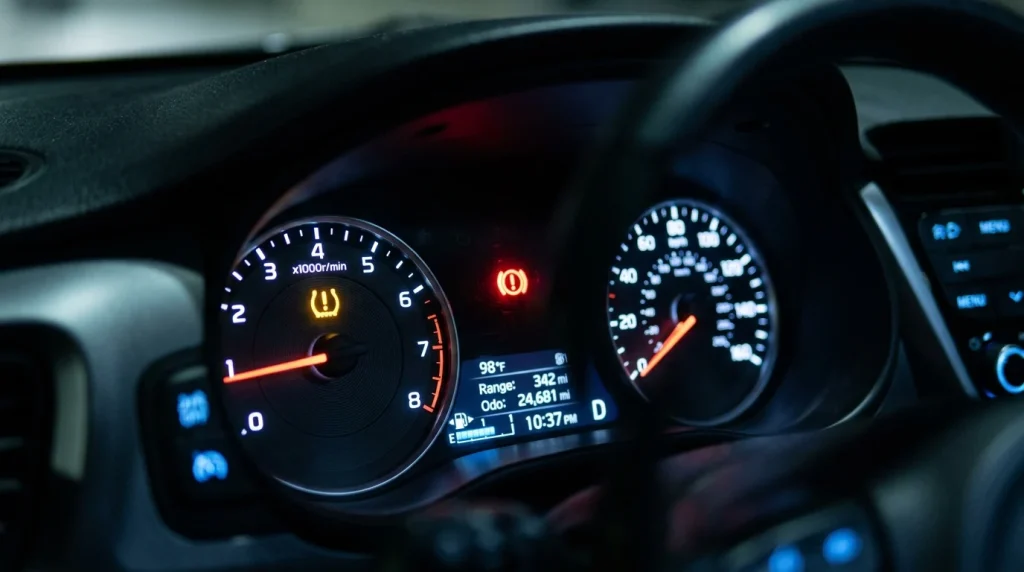
Quick answer: An exclamation point on a car’s dashboard indicates a warning that requires attention, with the specific meaning depending on the symbol’s shape and color. A horseshoe-shaped outline with an exclamation point signals low tire pressure (TPMS). A circle with an exclamation point denotes a braking system issue, such as low brake fluid or an engaged parking brake. A triangle with an exclamation point acts as a master warning light, indicating a general system fault that is typically accompanied by a secondary message. Power steering systems also feature a steering wheel icon next to an exclamation point.
Key takeaways:
- The horseshoe symbol with an exclamation point represents the Tire Pressure Monitoring System (TPMS), showing that one or more tires are underinflated by 25% or more.
- A circled exclamation point warns of brake system problems; a red indicator requires stopping immediately, while a yellow indicator warns of less critical issues like worn brake pads.
- The triangle exclamation point is a master warning light that signals general system faults, requiring you to check the dashboard display for specific warning messages.
- Warning light colors indicate urgency: red demands an immediate, safe stop to prevent damage, while yellow or amber indicates caution and the need for prompt inspection.
Color-Coded Urgency: Red vs. Yellow Dashboard Lights
Modern vehicle dashboards rely on standardized color coding to communicate how quickly a driver must respond to an illuminated symbol. Understanding these colors prevents minor issues from escalating into major repairs or safety hazards.
- Red Warning Lights: Red indicates a critical malfunction or an immediate safety hazard. If a red exclamation point illuminates (such as the brake system or engine temperature warning), you must pull over safely as soon as possible, turn off the engine, and investigate the issue. Driving with a red warning light can lead to catastrophic component failure or accidents.
- Yellow or Amber Warning Lights: Yellow or amber indicates a non-critical system fault or a maintenance reminder. While the vehicle remains drivable, you should drive with caution and have the vehicle inspected soon. Common examples include the tire pressure monitoring system (TPMS) light or a minor engine sensor warning.
- Green or Blue Lights: Green or blue lights are not warning indicators. Instead, they confirm that a specific system (such as cruise control or high beams) is active.
Horseshoe with an Exclamation Point: Tire Pressure Warning (TPMS)
The warning light that looks like a U-shaped horseshoe with tread marks at the bottom and an exclamation point in the center is the Tire Pressure Monitoring System (TPMS) light. This is the most frequent dashboard warning light drivers encounter.

When this light turns on and stays solid, it means that at least one of your tires is underinflated by 25% or more compared to the vehicle manufacturer’s recommended pressure. Driving on underinflated tires compromises handling, reduces braking efficiency, accelerates tire wear, and lowers fuel economy.
How Cold Weather Triggers the TPMS Light
Tire pressure is highly sensitive to ambient temperature changes. For every 10-degree Fahrenheit drop in temperature, tire pressure decreases by approximately 1 PSI (pound per square inch).
On cold mornings, you may notice the TPMS light illuminates when you start your car. As you drive, the friction between the tires and the road generates heat, causing the air inside the tires to expand and the pressure to rise. This expansion often causes the warning light to turn off on its own after 10 to 15 minutes of driving. However, if the light continues to appear on subsequent cold starts, it indicates the baseline tire pressure is too low and must be adjusted.
How to Reset the Tire Pressure Warning Light
To clear the TPMS light, you must first ensure all tires are inflated to the correct pressure. Follow these steps:
- Locate the vehicle’s tire pressure placard, which is typically found on the driver-side door jamb. Do not use the maximum pressure rating printed on the tire sidewall.
- Measure the tire pressure when the tires are cold (meaning the car has been parked for at least three hours).
- Inflate all four tires (and the spare tire, if equipped with a sensor) to the recommended PSI.
- Drive the vehicle at speeds above 15 mph for roughly 10 to 20 minutes. Many modern TPMS systems automatically relearn the correct pressures and turn off the warning light.
If the light does not turn off automatically, you can reset the system manually. Depending on your vehicle model, this is done by pressing and holding the TPMS reset button (usually located under the steering column or inside the glove box) until the light flashes three times, or by navigating the vehicle’s infotainment screen under vehicle settings to initiate TPMS calibration.
A flashing TPMS light (blinking for 60 to 90 seconds upon starting the vehicle and then remaining solid) indicates a sensor malfunction or a dead sensor battery, rather than a pressure issue. This requires diagnostic scanning at a service center. If your tires are properly inflated but you experience handling issues or uneven wear, you should also check if your wheels are aligned. Learn more about how long it takes to align a car to plan your maintenance schedule.
Circle with an Exclamation Point: Brake System Malfunction
A circle enclosed by parentheses or brackets with an exclamation point in the center represents a brake system warning. Because braking is critical for safety, this light must never be ignored.
Common Causes of the Brake Warning Light
- Engaged Parking Brake: The most common reason for this light is that the handbrake or electronic parking brake is still partially or fully engaged. Ensure the parking brake is completely released before driving.
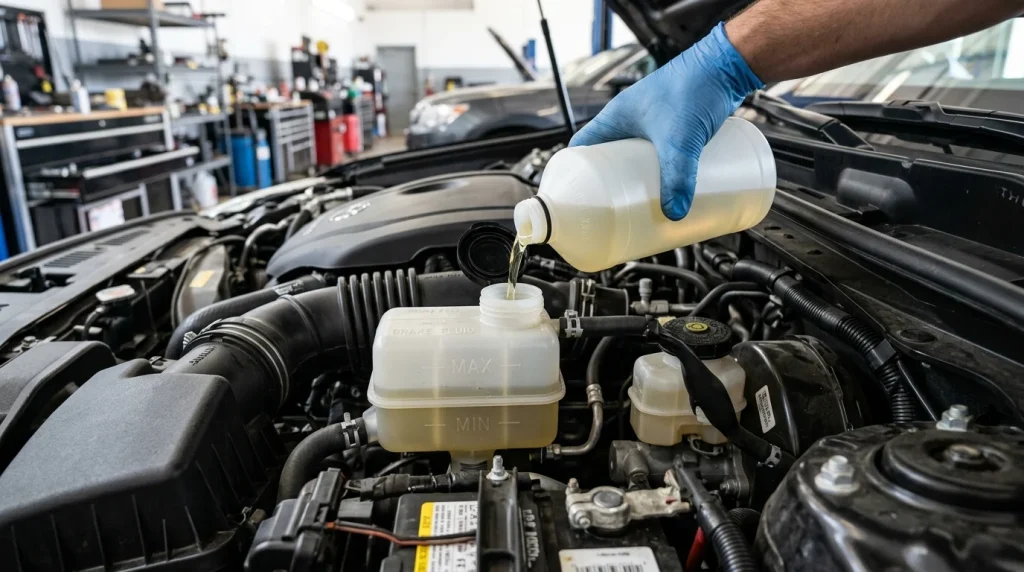
- Low Brake Fluid: A sensor in the brake fluid reservoir detects when the fluid drops below the minimum level. Low fluid can point to a leak in the brake lines or normal wear of the brake pads, which draws more fluid into the calipers.
- Worn Brake Pads: Extreme brake pad wear causes the brake fluid level to drop. If the warning light is accompanied by squealing, grinding, or a spongy brake pedal, the pads must be replaced immediately.
- Anti-Lock Braking System (ABS) Fault: An ABS fault usually triggers a separate “ABS” light, but it can also illuminate the primary brake warning light on some vehicles.
If a red brake warning light remains illuminated after releasing the parking brake, stop the vehicle safely. Low brake fluid or loss of hydraulic pressure can lead to complete brake failure. If the light is amber or yellow, the system has detected a less severe issue (such as worn pads or a sensor fault), allowing you to drive carefully to a repair shop.
Triangle with an Exclamation Point: The Master Warning Light
A triangle containing an exclamation point is the master warning light, also known as the general caution indicator. This symbol indicates that the vehicle’s onboard computer has detected a fault in one or more systems, but the issue does not have its own dedicated dashboard icon.
The master warning light almost always appears alongside another warning light or a text message on the multi-information display screen.
Yellow Triangle vs. Red Triangle Warnings
- Yellow or Amber Triangle: Signals a non-critical issue. Common causes include a burned-out exterior bulb, low windshield washer fluid, an open door, a low fuel level, or a scheduled maintenance reminder.
- Red Triangle: Signals a critical fault that requires immediate attention. In hybrid or electric vehicles, a red triangle often points to a hybrid battery pack malfunction or an electrical powertrain fault. In conventional vehicles, it can indicate a sudden drop in engine oil pressure or an overheating engine.
If you see a red triangle alongside an engine temperature warning, pull over immediately. Driving with an overheating engine can warp the cylinder head or destroy the engine block. Check your coolant level, and ensure you use the correct coolant for BMW or other European vehicles to avoid chemical incompatibility. If the warning relates to oil pressure, check the dipstick and refer to a guide on how many quarts of oil a car takes before attempting to top it off.
Steering Wheel with an Exclamation Point: Power Steering Fault
A steering wheel icon placed next to an exclamation point indicates a malfunction in the power steering system. This warning applies to both older hydraulic power steering systems and modern Electronic Power Steering (EPS) systems.
In hydraulic systems, the most common trigger is low power steering fluid caused by a leak in the hoses, pump, or steering rack. In EPS systems, the light is usually triggered by an electrical fault, a failing steering motor, or a sensor misalignment.
What Happens When Power Steering Fails
If the power steering warning light illuminates while driving, the vehicle will not suddenly stop steering. However, you will lose steering assistance. Turning the steering wheel will require significantly more physical effort, particularly at low speeds or when parking.
Maintain a firm grip on the steering wheel, reduce your speed, and pull over to a safe area. Check the power steering fluid level if your car uses a hydraulic system. For electronic systems, turning the ignition off and on again may reset the steering module and temporarily clear the light, but the vehicle must still be scanned for diagnostic trouble codes to locate the root cause.
Brand-Specific Exclamation Warning Systems
Different manufacturers utilize the exclamation point warning in brand-specific ways, which can cause confusion when switching between makes.
Honda Vehicle Stability Assist (VSA) Warning
On Honda and Acura vehicles, a yellow triangle containing an exclamation point is tied directly to the Vehicle Stability Assist (VSA) system, which manages traction control and electronic stability.
- Flashing Light: If the triangle flashes while driving on snow, ice, or wet pavement, the system is actively working to prevent the tires from slipping. This is normal operation.
- Solid Light: If the light remains on constantly, it indicates the VSA system has malfunctioned or has been manually turned off via the dashboard switch. While the vehicle remains drivable, traction control and electronic stability assistance will be unavailable.
BMW and European Drivetrain Malfunctions
BMW, Mercedes-Benz, and other European manufacturers often pair the triangle exclamation point with the Dynamic Stability Control (DSC) system. Additionally, European vehicles use the master warning light to indicate a drivetrain malfunction.
A drivetrain warning indicates a fault in the engine, transmission, or electronic differential. The vehicle’s computer may limit engine RPM and power (a condition known as “limp mode”) to protect the engine from damage. These warnings become more frequent as vehicle components age. If you drive an older model, understanding the common signs of when BMWs start to break down can help you decide between repair and replacement.
Safe Actions to Take When an Exclamation Light Appears
- Note the Light Color: Red requires immediate action; yellow indicates caution.
- Examine the Instrument Cluster: Look for secondary warning lights (such as the engine temperature, battery, or oil pressure icons) or messages on the digital display.
- Release the Parking Brake: If the brake warning light is on, double-check that the parking brake is fully disengaged.
- Inspect the Tires: If the TPMS light is on, inspect the tires for punctures, low pressure, or damage.
- Read the Owner’s Manual: Every manufacturer documents the exact behavior of their dashboard symbols. Keep the manual in the glove box for quick reference.
- Scan for Codes: If a warning light remains on, connect an OBD2 scanner to the vehicle’s diagnostic port to read the specific trouble codes stored in the computer.
For comprehensive maintenance guides, diagnostic tips, and automotive industry news, explore the Autvex News directory.
FAQs
What does a yellow exclamation mark mean on my dashboard?
A yellow exclamation mark indicates a non-critical system warning. The exact meaning depends on the surrounding symbol: a horseshoe shape indicates low tire pressure, a circle indicates a brake system issue (such as worn brake pads), and a triangle represents a general master warning that is typically paired with another dashboard message.
Can I drive with the exclamation point light on?
Yes, if the light is yellow or amber, you can drive carefully to a nearby repair facility. If the exclamation point is red (especially the brake warning or engine temperature warning), do not continue driving. Pull over safely, turn off the engine, and have the vehicle towed or inspected.
Why does my tire pressure light come on when it’s cold?
Cold air contracts, causing the air pressure inside the tires to drop. For every 10-degree Fahrenheit decrease in temperature, tire pressure drops by about 1 PSI. If the baseline pressure is already low, this temperature drop can trigger the TPMS light on cold mornings.
How do I reset the exclamation point light after fixing the problem?
For the TPMS light, driving the vehicle for 10 minutes at speeds above 15 mph usually resets the light automatically once correct tire pressure is restored. Some cars require using a physical TPMS reset button or initiating a calibration sequence through the vehicle’s infotainment screen. For other warning lights, correcting the underlying system fault will turn off the light.
What if multiple warning lights come on at once?
Multiple warning lights illuminating simultaneously often signal a charging system fault, a failing alternator, or a weak car battery. When the battery voltage drops, the vehicle’s sensors cannot communicate properly with the main computer, triggering false warnings across multiple systems. Have the battery and charging system tested first.

