

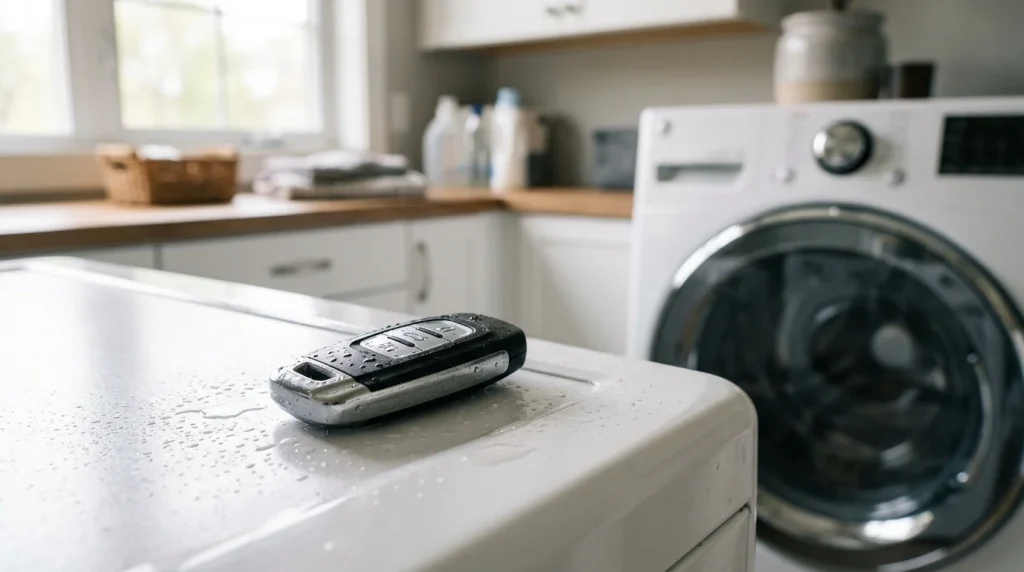
Quick answer: Yes, a remote Audi car key can work after being laundered, but success depends on rapid disassembly and proper drying. Because modern washing machines spin at up to 1,600 RPM, soapy water often penetrates the fob seals. You must immediately extract the CR2032 battery, wash the electronics with isopropyl alcohol to remove detergent, and dry for 24 to 48 hours.
Key takeaways:
- Soapy water under RPM pressure forces detergent inside, causing corrosion.
- Do not press any buttons while the fob is wet to avoid short-circuits.
- Isopropyl alcohol displaces water and dissolves soap residue safely.
- The separate engine starting transponder often survives even if the remote doors function dies.
- Replacement key fobs cost $600 to $1,000 at dealerships including ODIS setup.
Why Laundered Keys Sometimes Survive
Laundered Audi keys survive because of water-resistant rubber membranes and separate passive transponder chips that do not require battery power. The transponder starts the vehicle via induction, meaning the car will run even if the active door-unlocking remote board is permanently fried. Modern Audi smart keys are engineered with a multi-layered design. The outer plastic shell houses a rubber gasket meant to repel light moisture, like rain or accidental splashes. Underneath this seal lies the printed circuit board (PCB) which manages the active buttons for locking, unlocking, and trunk release.
However, a standard wash cycle exposes the key fob to water immersion, heat, and high rotational speeds. Modern washing machines spin at speeds ranging from 1,200 to 1,600 RPM. This creates enough centrifugal force to push soapy water past the rubber seals and onto the delicate electronic circuit board. The detergent added to the wash contains alkaline minerals and surfactant chemicals. When these chemicals sit on the copper traces of the board, they initiate an oxidation process that corrodes the metal.
Despite this risk, keys frequently survive. If the water does not establish an active electrical bridge between contacts while the battery is inside, no short-circuit occurs. Additionally, the immobilizer transponder is a separate component. It operates on passive radio frequency identification (RFID) technology, which receives its power wirelessly from the vehicle’s transceiver coil near the steering column. Because the transponder is solid-state and sealed in plastic, it is highly immune to liquid damage.
What to Do Immediately After Finding Your Washed Key
The moment you retrieve a laundered Audi key, you must keep it powered down. Removing the battery is the single most critical step because electrical currents running through wet circuits cause immediate and permanent electrolytic corrosion. Many owners make the mistake of pressing buttons immediately to check if the remote still functions. Pressing a button completes the electrical circuit, sending voltage across wet contacts. This instantly creates short-circuits that can burn out microprocessors or desolder tiny resistors.
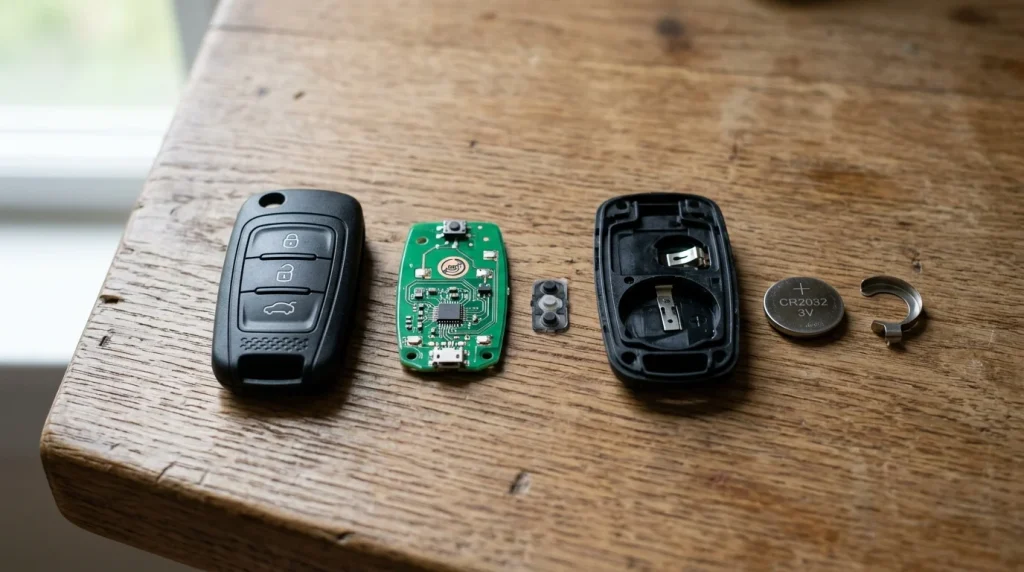
Disassembling the key fob is necessary to allow air circulation. Different generations of Audi keys require slightly different disassembly methods. For newer models (2020 to 2026), you slide out the mechanical key blade and use it as a lever to release the battery tray or split the housing. For older flip-style keys, you must pry open the back cover using a flat tool. Always work gently to avoid cracking the plastic retaining tabs.
Step 1: Remove the Battery Immediately
Slide open the Audi emergency key blade and pry the casing apart to remove the CR2032 battery. This stops the electrical flow and prevents the copper traces on the circuit board from oxidizing. According to battery specifications from manufacturers like Energizer, a standard CR2032 lithium coin cell operates at a nominal 3.0V. When water connects the positive and negative terminals on the board, it drains this voltage rapidly, leaving a path of copper oxide in its wake.
To remove the battery, press the release button on the side of the fob and pull out the physical metal key. Insert the tip of the key blade into the release slot of the battery compartment. Apply gentle pressure to slide the battery holder out of the fob body. Place the wet battery aside. Do not reinsert it, even if you dry it, as laundry detergents can corrode the battery casing and cause acid leaks.
Step 2: Rinse With Isopropyl Alcohol
Submerge the bare circuit board in 90% or higher isopropyl alcohol for 30 to 60 seconds to dissolve soapy laundry residue. Alcohol displaces water and evaporates cleanly without leaving mineral deposits. While using water to clean a wet device sounds counterintuitive, the goal is to remove the chemical detergent film left behind by the laundry wash.
Do not use tap water, as it contains chlorine, calcium, and other minerals that create a conductive bridge when dry. High-purity isopropyl alcohol absorbs water molecules and flushes away the soap. Pour a small amount of alcohol into a clean container, drop the circuit board in, and agitate it gently. Remove the board and let the excess liquid drain off.
Step 3: Dry the Key Fob Thoroughly
Allow all disassembled key components to dry for 24 to 48 hours in a warm, dry area. Avoid heat sources like hair dryers or ovens, as excessive heat warps the plastic casing and desolders surface-mounted components. Do not place the key fob in direct sunlight, which can overheat the plastic housing and compromise the rubber gasket seals.
A common piece of advice is to submerge the wet electronics in a bowl of uncooked rice. However, rice is not the most effective drying medium. Rice contains fine starch dust that can enter the crevices of the buttons and build up on the electrical contacts, leading to mechanical stickiness or failed connections. Instead, place the components in a sealed container with several packets of silica gel. If silica gel is unavailable, leaving the parts disassembled on a clean paper towel in a well-ventilated room is the safest method.
Step 4: Clean Contact Points
Gently scrub the battery contact terminals with a cotton swab dipped in isopropyl alcohol to remove white corrosion. Ensuring clean contact points is critical for stable voltage delivery. Over time, even minor water exposure can create a thin layer of oxidation on the metal contacts.
Examine the contacts under a bright light. If you see white, green, or gray crust, dip a cotton swab in alcohol and rub the affected areas until the metal shines. If the battery contact fingers appear bent or loose, use a small tool to gently bend them back into position to ensure they make a tight connection with the new battery.
Step 5: Install a Fresh Battery and Test
Always install a brand-new CR2032 battery rather than reinserting the washed one. The wash cycle often short-circuits the battery cell, leaving it with insufficient voltage under load. Even if a battery tester shows a reading near 3.0V, the cell may fail under the load required to transmit a signal to the vehicle.
Place the fresh CR2032 battery into the tray, ensuring the positive side faces the correct direction. Slide the tray back into the key fob housing until it clicks. Walk to your Audi and test the buttons. Test the unlock and lock functions first. If the remote buttons do not respond immediately, you may need to perform a synchronization sequence, which involves inserting the key into the door lock or holding it next to the steering column.
Signs Your Key Fob Is Damaged Beyond Repair
Permanent water damage is signaled by rapid battery drainage, warm key casings, or buttons that only function intermittently. If the key fob drains a fresh battery within a few days, the circuit board has a short-circuit. This occurs when copper traces on the circuit board are eaten away by corrosion or when minerals form a permanent bridge between electronic traces.
Another sign of permanent damage is reduced range. If you have to stand right next to the driver’s side door to unlock the car, the RF transmitter has been compromised. Sticking buttons or a spongy feel when pressing the remote indicates that the inner rubber membrane has collapsed or is holding trapped detergent residue.
| Symptom | Probable Cause | Action |
|---|---|---|
| Complete lack of response | Short-circuit or burned microprocessor | Key fob replacement required |
| Rapid battery drain (2 to 3 days) | Permanent electrical bridge on PCB | Key fob replacement required |
| Reduced transmission range | Weakened antenna coil or low voltage | Clean board again; replace battery |
| Proximity start works but buttons do not | Damaged RF circuit; transponder intact | Use emergency blade; plan replacement |
Expert view: If your Audi key fob functions intermittently after being dried, replace it soon. Hidden corrosion beneath microchips will continue to grow, leading to complete lockout at an inconvenient time.
Your Audi Can Still Start Even With a Dead Remote
Even if the remote lock/unlock circuit is ruined, you can still unlock the door manually and start the engine. The Audi immobilizer reader in the steering column uses magnetic induction to read the transponder chip. This passive transponder chip operates independently of the remote entry board and does not require battery power. The chip is energized by the electromagnetic field emitted by the vehicle’s ignition transceiver.
To enter your vehicle, slide the mechanical key blade out of the fob. Locate the key cylinder on the driver’s door handle. On many modern Audi models, this cylinder is concealed beneath a plastic cap. Insert the key blade into the slot under the door handle cap, gently pry the cap off, and turn the key manually to unlock the door.
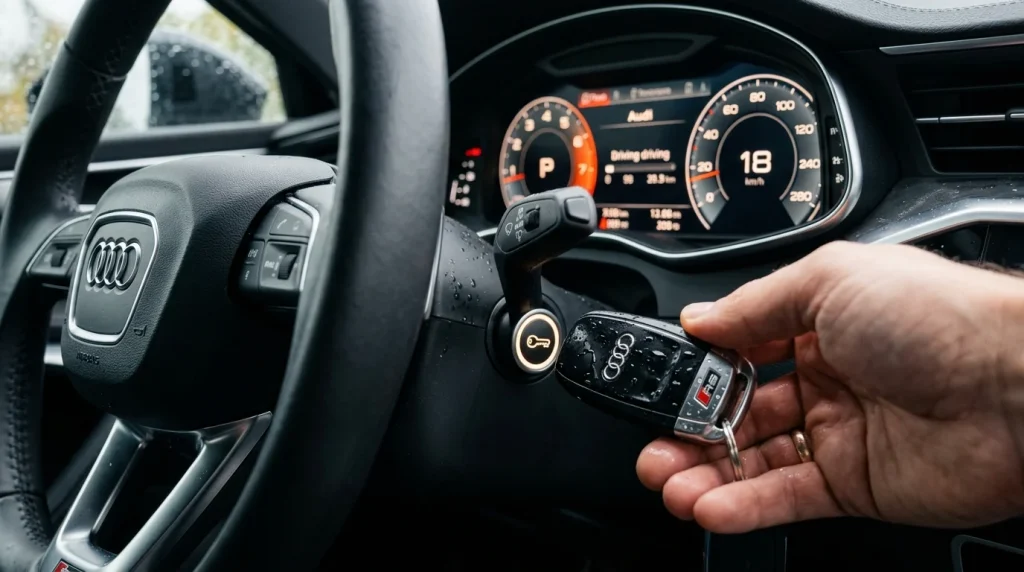
Once inside, the car alarm may trigger because the vehicle has not received the electronic unlock signal. To silence the alarm and start the engine, hold the back of the key fob directly against the key symbol embossed on the steering column. While holding the key in place, press the start button. The vehicle will read the transponder, deactivate the immobilizer, and start the engine. You can find more detail on vehicle operations in the Autvex news hub.
Replacement Options and Costs
Replacing an Audi smart key costs between $600 and $1,000 at authorized dealerships, whereas a specialized automotive locksmith can charge between $150 and $400. Audi keys require connection to the factory server in Germany for programming. Unlike older vehicles where a duplicate key could be programmed using on-board sequences, modern Audi security systems (including the B9 and C8 platforms) use a secure gateway.
To order a replacement key at an authorized dealership, you must present proof of ownership. This includes the vehicle registration, the land title or loan document, and your photo identification. The dealership must verify your identity to ensure the key request is legitimate, preventing unauthorized vehicle duplication. The new key is ordered from the factory using your Vehicle Identification Number (VIN) and is programmed at the dealership using the Offboard Diagnostic Information System (ODIS). To locate an authorized center, check the Audi USA website.
Alternatively, specialized automotive locksmiths can program replacement keys. However, the locksmith must be registered as a Vehicle Security Professional through the National Automotive Service Task Force NASTF website. This credential allows them to access the security credentials required to connect to Audi security servers. If a locksmith does not have this registry access, they will not be able to pair the new key fob to your vehicle’s immobilizer. While some owners ask if Audi charges for navigation, hardware issues like key replacement are more direct out-of-pocket costs.
| Provider | Average Cost | Turnaround Time | Security Protocol |
|---|---|---|---|
| Audi Dealership | $600 to $1,000 | 2 to 5 business days | Factory server verification |
| Licensed Locksmith | $150 to $400 | Same day (mobile) | NASTF VSP verification |
| Online Fob Purchase | $80 to $200 (parts only) | 3 to 7 days shipping | Requires separate locksmith programming |
Note: Replacement keys for modern Audis (2020 to 2026 models) cannot be self-programmed and require specialized transponder cloning tools.
Preventing Future Accidents
Prevent key laundering by using brightly colored keycases or dedicated key hooks near the door. Making pocket-checking a habit before washing clothes prevents costly replacements. You can also invest in water-resistant key fob covers. These silicone or plastic sleeves wrap tightly around the fob, sealing the battery compartment and the seams.
Additionally, keeping a designated backup key in a secure location, like a home safe, ensures that you are not stranded if your primary key is washed. Whether you need to operate a standard keyless ignition or verify the towing capacity of an Audi Q7, Audi security systems run on similar encryption across models.
Frequently Asked Questions
Can an Audi key fob survive the washing machine?
Yes, many Audi key fobs survive the washing machine if you remove the battery immediately and clean the board. The passive transponder chip is sealed and highly resilient, though the remote door lock board is vulnerable to detergent deposits.
How long should I wait before testing my washed Audi key?
Wait at least 24 to 48 hours before testing. Putting a battery in a damp key fob causes a short-circuit, which can instantly burn out the microchip.
Will my Audi start if the key fob remote doesn’t work after washing?
Yes, the engine will still start because the transponder chip operates passively via magnetic induction. Hold the fob directly against the designated spot on the steering column and press the start button.
How much does it cost to replace a water-damaged Audi key?
A replacement key costs $600 to $1,000 at a dealership due to required server programming. A specialized locksmith might charge $150 to $400 depending on the model.
Should I put my wet key fob in rice?
No, do not use rice as it introduces fine starch dust into the electronic components. Use silica gel packets or leave the disassembled key to air-dry in a warm room.

