
You may also like:
- 【Explained】If Airbags Deploy, Is the Car Totaled? (The 2025 Cost vs. Value Guide)
- 【Explained】What Happens When Your Car Is Totaled But Still Drivable?
- 【Explained】How Many Miles Is Good for a Used Car? (Why Maintenance Matters More)
- 【Explained】When Does the 2-Hour Car Seat Rule End for Babies?
- 【Explained】How Many Square Feet Is a 2 Car Garage? (A Complete Guide)
MSRP stands for Manufacturer’s Suggested Retail Price – the price automakers recommend dealers charge for new vehicles, displayed on the federally-mandated Monroney window sticker. The crucial word “suggested” means this price is negotiable, with dealers legally able to charge more (market adjustments) or less (negotiated discounts) than MSRP depending on supply, demand, and your negotiation skills.

What Does MSRP Stand For – Definition and Meaning
Understanding MSRP is fundamental to navigating the car buying process, yet many buyers walk into dealerships without fully grasping what this acronym means and how it impacts their purchase price. The MSRP serves as the cornerstone of automotive pricing, establishing a baseline that influences every aspect of your negotiation. According to Autvex automotive experts, nearly 40% of car buyers don’t realize the MSRP is merely a starting point rather than a fixed price.
MSRP Meaning and Full Form
The MSRP represents a carefully calculated price point that manufacturers establish based on production costs, market research, and desired profit margins. This standardized pricing system emerged from the Automobile Information Disclosure Act of 1958, sponsored by Senator Mike Monroney, requiring transparent pricing disclosure on all new vehicles[1]. The manufacturer analyzes competitor pricing, target demographics, and economic conditions to determine this suggested figure.
Manufacturer’s Suggested Retail Price
Each automaker – whether Ford, Toyota, BMW, or Tesla – independently determines the MSRP for their vehicles based on proprietary formulas incorporating material costs, labor, research and development, and target profit margins. This price includes the base vehicle, standard equipment, and mandatory destination charges but explicitly excludes dealer-specific additions. The manufacturer communicates this price to all dealers nationwide, ensuring consistent baseline pricing across different regions.
What Is the List Price of a Car
The list price and MSRP are essentially synonymous terms in automotive sales, both referring to the manufacturer’s recommended selling price before any negotiations or adjustments. Some international markets use “list price” more commonly, while American dealerships predominantly display “MSRP” on window stickers. This price represents what manufacturers believe represents fair market value for their product, though actual transaction prices often vary significantly.
MSRP Sticker Price and Monroney Sticker
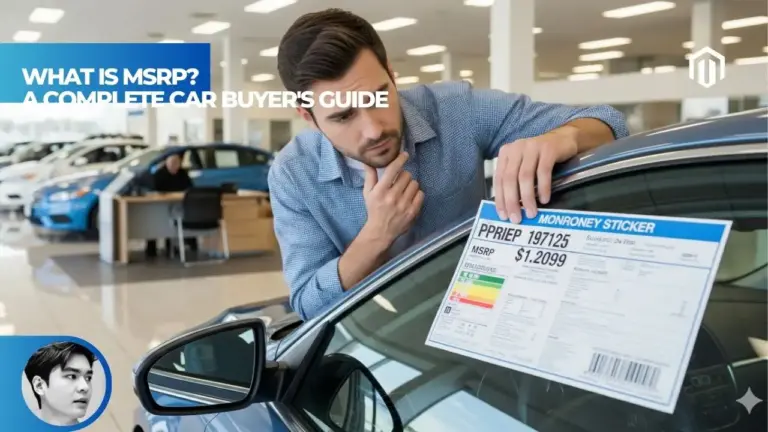
The Monroney sticker, that ubiquitous window label on every new car, serves as the official documentation of a vehicle’s MSRP and included features. Federal law mandates this 11 by 17-inch sticker must remain affixed to the vehicle until final sale, ensuring pricing transparency[2]. The car buying process legally requires dealers to display this information prominently.
The sticker contains standardized information including the base MSRP, itemized optional equipment pricing, total MSRP, fuel economy ratings, and safety ratings. Dealers often add their own supplemental sticker alongside the Monroney label, listing dealer-installed accessories, preparation fees, and market adjustments. Understanding the distinction between these stickers helps buyers identify negotiable versus non-negotiable charges.
What Is RRP (Recommended Retail Price)
RRP represents the international equivalent of MSRP, commonly used in European and Asian markets to denote manufacturer-suggested pricing. While functionally identical to MSRP, RRP terminology appears more frequently in import documentation and international automotive publications. Some luxury European brands like Audi and BMW may reference RRP in their global marketing materials, though U.S. dealerships convert this to MSRP for consistency.
MSRP vs Other Car Pricing Terms
Navigating automotive pricing requires understanding the relationship between various price points that influence your final purchase cost. Each pricing term represents a different perspective on the vehicle’s value, from manufacturer costs to market dynamics. These distinctions become crucial leverage points during negotiation, potentially saving thousands of dollars on your purchase.
MSRP vs Invoice Price
The gap between MSRP and invoice price represents the dealer’s theoretical profit margin, though the actual profit structure proves far more complex. Understanding this relationship provides essential context for realistic negotiation expectations. Dealers receive additional compensation through holdbacks, incentives, and volume bonuses that aren’t reflected in the invoice price.
What Is Invoice Price
Invoice price represents what the dealership purportedly pays the manufacturer for the vehicle, typically running 5% to 20% below MSRP depending on the vehicle segment[3]. Luxury vehicles generally carry higher margins, while economy cars operate on tighter spreads. This price appears on the dealer’s purchase invoice from the manufacturer, though it doesn’t reflect the true dealer cost after accounting for holdbacks and incentives.
What Is Dealer Cost
True dealer cost extends beyond invoice price to include hidden profit mechanisms like holdback (typically 2-3% of MSRP), manufacturer-to-dealer incentives, volume bonuses, and financing kickbacks. These additional revenue streams mean dealers can sell at invoice price and still generate profit. Holdback alone can represent $500-1,500 on a typical vehicle, paid quarterly by manufacturers to dealers[3].
MSRP vs Sticker Price
While often used interchangeably, sticker price can exceed MSRP when dealers add their own markups and installed accessories. The Monroney sticker shows only the manufacturer’s pricing, while the final sticker price includes dealer additions. This distinction becomes critical when evaluating advertised prices versus actual costs.
Dealers frequently install accessories like window tinting, floor mats, wheel locks, and paint protection, adding these costs to a supplemental sticker. These dealer-installed options carry profit margins exceeding 50%, making them highly negotiable[4]. Smart buyers scrutinize these additions, often refusing unnecessary add-ons that inflate the sticker price beyond MSRP.
MSRP vs Out-the-Door Price (OTD)
The out-the-door price represents your actual financial commitment, encompassing all costs required to drive the vehicle home. This figure typically exceeds MSRP by 8-15% after including taxes, registration, documentation fees, and dealer charges[5]. Focusing negotiations on OTD price rather than MSRP alone prevents surprise charges from undermining your negotiated savings.
| Price Component | Typical Range | Negotiable? |
|---|---|---|
| MSRP | Base price | Yes |
| Sales Tax | 0-10% of purchase price | No |
| Registration/Title | $50-500 | No |
| Documentation Fee | $100-800 | Sometimes |
| Dealer Add-ons | $500-5,000 | Yes |
| Market Adjustment | $0-50,000+ | Yes |
MSRP vs Dealer Price
Dealer price reflects what the dealership actually charges customers, which may deviate significantly from MSRP based on market conditions. In high-demand situations, dealer prices exceed MSRP through market adjustments, while oversupplied models sell below MSRP. This flexibility allows dealers to maximize profit during shortages or move inventory during slow periods.
MSRP vs Market Value and Fair Market Value
Fair market value represents the average transaction price buyers actually pay for specific vehicles in your geographic area, often differing from MSRP by thousands of dollars. Services like Kelley Blue Book and Edmunds aggregate transaction data to calculate these figures, providing realistic price expectations. Autvex research shows that understanding fair market value improves negotiation outcomes by an average of $2,100.
Market value fluctuates based on seasonality, fuel prices, model year transitions, and economic conditions. Convertibles command premiums in spring, while 4WD vehicles see increased demand before winter. These temporal variations can swing market values 5-10% above or below MSRP throughout the year[5].

What Is Included in MSRP
Understanding MSRP components helps identify which costs are manufacturer-mandated versus dealer-added, clarifying negotiation boundaries. Federal regulations standardize MSRP inclusions, ensuring consistent pricing transparency across all manufacturers and dealerships. This knowledge prevents dealers from misrepresenting standard features as optional extras.
Base MSRP Components
Base MSRP encompasses the vehicle’s fundamental price including standard equipment, basic warranty coverage, and essential safety features required by federal regulations. This figure represents approximately 85-90% of the total MSRP for most vehicles[1]. Standard equipment varies by model but typically includes basic infotainment systems, cloth seating, standard wheels, and mandated safety equipment like airbags and stability control.
Manufacturers must include all federally-mandated safety equipment in the base MSRP, preventing these items from being marketed as optional extras. The base price also incorporates the manufacturer’s standard warranty, typically covering 3 years/36,000 miles bumper-to-bumper and 5 years/60,000 miles powertrain protection. Any extended warranty offerings represent additional costs beyond MSRP.
Does MSRP Include Destination Fee and Freight
Yes, legitimate MSRP always includes the destination charge, also called freight or delivery fee, which covers transportation from factory to dealership. This mandatory charge ranges from $900-2,000 depending on vehicle size and shipping distance[2]. Federal law requires this charge be identical for all dealers nationwide, regardless of actual distance from the manufacturing plant.
Destination fees appear as a separate line item on the Monroney sticker but form an integral part of the total MSRP. Some dealers attempt to add additional “delivery” or “freight” charges beyond the manufacturer’s destination fee – these represent pure profit and should be challenged. The destination charge remains non-negotiable since it’s set by the manufacturer, not the dealer.
Does MSRP Include Taxes and Fees
No, MSRP explicitly excludes all taxes, government fees, and dealer-imposed charges, which add substantially to your final purchase price. Sales tax alone adds 6-10% to the MSRP depending on your state and local tax rates[4]. Registration, title, and license fees vary by state but typically total $200-800 for new vehicles.
Documentation fees, also called processing or administrative fees, represent dealer profit centers ranging from $100-900 depending on state regulations[5]. Some states cap these fees while others allow unlimited charges. Used car purchases often carry similar fee structures, though amounts may differ.
Does MSRP Include Dealer Add-Ons
MSRP never includes dealer-installed accessories or services, which appear on supplemental stickers and carry substantial markups. Common dealer add-ons include paint protection ($500-1,500), nitrogen-filled tires ($100-200), window etching ($200-400), and extended warranties ($1,000-3,000). These items typically carry profit margins of 200-500% over actual cost[4].
Dealers often present add-on packages as mandatory, but legally you can refuse any dealer-installed option not explicitly ordered. Pre-installed items like window tinting or pinstriping prove harder to refuse but remain negotiable. Smart buyers research add-on actual costs and either negotiate substantial discounts or refuse them entirely.
Is MSRP Negotiable – Understanding the “Suggested” Price
The “S” in MSRP carries tremendous importance for car buyers, establishing that manufacturers cannot dictate actual selling prices to independent dealerships. This legal distinction, rooted in franchise laws and anti-trust regulations, creates the negotiation opportunity that can save buyers thousands. Understanding negotiability factors empowers buyers to approach dealers with confidence and realistic expectations.
Can You Negotiate Below MSRP
Yes, negotiating below MSRP remains standard practice in normal market conditions, with average transaction prices historically running 2-8% below MSRP for volume brands[6]. Successful negotiation depends on market conditions, vehicle availability, time of year, and your preparation. Slow-selling models, previous model years, and high-inventory vehicles offer the greatest negotiation potential.
Paying Under MSRP
Achieving prices below MSRP requires understanding market dynamics and dealer motivations. End-of-month quotas, model year closeouts, and excess inventory create opportunities for substantial discounts. Previous year models often sell at significant discounts when new versions arrive. Dealers facing storage costs for aging inventory show increased flexibility, particularly after vehicles remain unsold for 60+ days.
How Much Below MSRP to Offer
Initial offers should target 3-5% below MSRP in normal markets, though high-supply situations may support 7-10% discounts[6]. Research invoice prices to establish realistic targets, aiming to pay between invoice and MSRP for popular models. Start negotiations from invoice price plus $500-1,000 for fair dealer profit, adjusting based on market conditions and vehicle demand.
Is MSRP a Fair Price
MSRP represents a reasonable price only for high-demand, low-supply vehicles where negotiation proves impossible. In normal markets, paying full MSRP means leaving money on the table that could be saved through basic negotiation. Fair pricing typically falls between invoice and MSRP, with the exact point determined by supply-demand dynamics.
Manufacturer incentives, including cash rebates, low-interest financing, and lease specials, effectively reduce MSRP without requiring negotiation. These incentives can total $2,000-7,000 on slow-selling models[3]. Smart buyers stack manufacturer incentives with negotiated dealer discounts for maximum savings.
MSRP Is Just a Suggestion
Legal precedent establishes that manufacturers cannot enforce MSRP compliance on independent dealers, making it truly a “suggested” price. Dealers maintain complete autonomy over their pricing strategies, whether charging premiums for scarce models or discounting slow movers. This independence creates the price variation that savvy buyers exploit through comparison shopping.
The suggested nature of MSRP means identical vehicles at neighboring dealerships might vary thousands of dollars in actual selling price. Online car buying services and dealer competition for internet leads have increased pricing transparency, though significant variations persist. Buyers willing to travel or wait for the right opportunity consistently achieve better pricing outcomes.
Dealer Incentives and Factory Rebates
Manufacturer-to-consumer incentives directly reduce your purchase price without affecting dealer profit, making them powerful negotiation tools. These incentives include cash rebates ($500-5,000), special financing (0-1.9% APR), and lease support (reduced money factors). Timing purchases to coincide with incentive periods can save thousands beyond negotiated discounts.
Dealer incentives, distinct from consumer rebates, provide additional profit margins dealers may share during negotiation. Volume bonuses, quarterly targets, and model-specific promotions create hidden flexibility in dealer pricing. These behind-the-scenes incentives explain why seemingly identical deals vary between dealerships and time periods.
Dealer Market Adjustments and Markups (2025 Reality)
The automotive market’s post-pandemic dynamics have normalized dealer markups that were once rare, fundamentally altering the traditional MSRP negotiation paradigm. Understanding these market adjustments helps buyers navigate a landscape where paying above MSRP has become common for desirable vehicles. These markups reflect genuine supply-demand imbalances but also opportunistic profit-taking by some dealers.
What Is an ADM (Additional Dealer Markup)
Additional Dealer Markup (ADM) or market adjustment represents pure profit added above MSRP when dealers believe market conditions support premium pricing. These markups range from modest $500-2,000 adjustments to extreme $50,000+ premiums on limited-edition vehicles[7]. Unlike dealer-installed accessories that theoretically add value, ADM provides nothing tangible beyond the privilege of purchasing a scarce vehicle.
ADM appears on dealer addendum stickers alongside the official Monroney label, though presentation varies widely. Some dealers transparently list “Market Adjustment: $5,000” while others obscure markups within mandatory package deals. The Federal Trade Commission permits these markups as legal business practices, though some manufacturers discourage excessive ADM through dealer agreements.
Paying Over MSRP for a New Car
Current market realities mean many buyers face above-MSRP pricing for popular models, particularly electric vehicles, hybrids, and performance variants. Kelley Blue Book reports average transaction prices exceeded MSRP by $1,000-3,000 throughout 2022-2024 for numerous models[7]. This reversal of traditional negotiation dynamics requires adjusted buyer strategies.
Why Are Cars Selling for Over MSRP
Microchip shortages, supply chain disruptions, and production constraints created vehicle scarcity that persists into 2025 despite improving conditions. Popular models maintain 30-60 day supplies versus the traditional 60-90 days, enabling dealer markups[8]. High demand for fuel-efficient vehicles, driven by fluctuating gas prices, further supports premium pricing for hybrids and EVs.
Dealers justify markups through basic economics – when demand exceeds supply, prices rise to balance the market. Limited allocations of popular models mean dealers might receive only 2-3 units monthly, encouraging premium pricing. The rise of online car buying paradoxically increased price transparency while cementing market adjustments as visible price components.
Is It Illegal to Charge Over MSRP
No federal law prohibits dealers from charging above MSRP, as dealers operate as independent businesses free to set their own prices. State franchise laws actually protect dealer pricing autonomy, preventing manufacturers from dictating selling prices. While manufacturers may pressure dealers to avoid excessive markups, they cannot legally mandate MSRP compliance.
Some states have attempted legislation limiting markups during emergencies or for essential vehicles, but these remain exceptions. Consumer protection laws require honest pricing disclosure but don’t cap actual prices. The free market ultimately governs dealer pricing, with competition and consumer choice serving as primary restraints on excessive markups.
How to Avoid Paying Over MSRP
Avoiding markups requires patience, flexibility, and strategic shopping across multiple dealerships and timeframes. Consider less popular colors, configurations, or slightly different models that might avoid markup premiums. Comparison shopping between competing brands often reveals alternatives without markups.
Strategies for avoiding markups include:
- Factory ordering at MSRP (requires 3-6 month wait)
- Shopping in rural or oversupplied markets
- Timing purchases during slow seasons (winter for sports cars)
- Considering previous model years still in inventory
- Joining manufacturer loyalty programs for protected pricing
- Using broker services that guarantee MSRP pricing
- Expanding search radius to include out-of-state dealers

Key Takeaways
- MSRP means Manufacturer’s Suggested Retail Price – emphasis on “suggested” as it’s negotiable
- The Monroney sticker displays MSRP by federal law, but dealers can legally charge more or less
- Invoice price runs 5-20% below MSRP, representing theoretical dealer cost before hidden profits
- MSRP includes base price and destination fee but excludes taxes, registration, and dealer add-ons
- Normal markets see transactions 2-8% below MSRP, but current conditions often require paying above
- Market adjustments (ADM) add $500-50,000+ pure profit for high-demand vehicles
- Out-the-door price matters more than MSRP – focus negotiations on total cost including all fees
Decision Path / Next Steps
Begin your car buying journey by researching the MSRP, invoice price, and fair market value for your target vehicle using resources like Kelley Blue Book, Edmunds, and TrueCar. This knowledge establishes realistic price expectations and negotiation boundaries before engaging dealers. Create a spreadsheet comparing these prices across multiple trim levels and competing models.
Contact multiple dealerships via email or online forms to request out-the-door pricing quotes, explicitly asking about any market adjustments or required add-ons. Compare these quotes against fair market value to identify the best opportunities, being prepared to travel for significant savings. For high-demand vehicles with markups, consider factory ordering at MSRP if you can wait 3-6 months.
When negotiating, focus on the complete out-the-door price rather than getting distracted by monthly payments or trade-in values. Be prepared to walk away from excessive markups or unnecessary add-ons, as your willingness to leave often motivates better offers. Consider timing your purchase around model year changes, holiday sales events, or month-end when dealers face quotas. Document all pricing agreements in writing before finalizing any deal, and review the final paperwork carefully to ensure it matches your negotiated terms.
FAQs
What does MSRP stand for?
MSRP stands for Manufacturer’s Suggested Retail Price, the price that automakers recommend dealers charge for new vehicles, though it’s negotiable based on market conditions.
What is the difference between MSRP and sticker price?
They’re typically the same when referring to the manufacturer’s price, though sticker price may include dealer-added items beyond the manufacturer’s MSRP, appearing on supplemental window stickers.
Is MSRP the final price you pay for a car?
No, the final out-the-door price includes taxes (6-10%), registration fees ($200-800), dealer documentation fees ($100-900), and any negotiated adjustments above or below MSRP.
Is MSRP negotiable?
Yes, the “suggested” in MSRP means dealers can sell for more or less than this price based on market conditions, with typical negotiations achieving 2-8% below MSRP in normal markets.
Does MSRP include taxes and fees?
No, MSRP only includes the vehicle base price and destination charge – it excludes sales tax, registration, title fees, and dealer documentation fees which add 8-15% to the total.
Does MSRP include the destination charge?
Yes, legitimate MSRP always includes the mandatory destination/freight charge ($900-2,000) for transporting the vehicle from factory to dealership, shown separately on the Monroney sticker.
What is the difference between MSRP and invoice price?
Invoice price is what the dealer allegedly pays the manufacturer (typically 5-20% below MSRP), while MSRP is the suggested retail price – though dealers have hidden profits beyond this spread.
Why are dealers charging more than the MSRP?
High demand and low inventory allow dealers to add “market adjustments” above MSRP, especially for popular, fuel-efficient, or limited production vehicles where supply can’t meet demand.
What is a “market adjustment” on a car?
A market adjustment or ADM (Additional Dealer Markup) is pure profit dealers add above MSRP for high-demand vehicles, ranging from $500 to $50,000+ with no additional value provided.
Is it illegal for a dealer to sell a car over MSRP?
No, it’s completely legal as dealers are independent businesses free to set prices – manufacturers cannot legally force dealers to sell at MSRP due to franchise laws.
What is the “out-the-door” price (OTD)?
The total final price including the negotiated vehicle price (MSRP +/- adjustments), plus taxes, registration, title fees, dealer fees, and any add-ons – typically 8-15% above the base vehicle price.
How much below MSRP should I offer?
Start with offers 3-5% below MSRP in normal markets, researching invoice price to aim between invoice plus $500-1,000 and MSRP, though high-demand vehicles may require paying full MSRP or above.
Is the MSRP the same at every dealership?
Yes, manufacturers set identical MSRPs nationwide for the same model and options, but actual selling prices vary dramatically by dealer based on local market conditions, competition, and inventory levels.
References
- National Highway Traffic Safety Administration. (2025). Automobile Information Disclosure Act – Monroney Sticker Requirements. nhtsa.gov. https://autvex.com/what-is-msrp/
- Wikipedia. (2025). Monroney Sticker – History and Requirements. wikipedia.org. https://autvex.com/what-is-msrp/
- Edmunds. (2025). Car Invoice Prices, MSRP and Car Market Value Guide. edmunds.com. https://autvex.com/what-is-msrp/
- Car and Driver. (2023). Car MSRP vs Invoice: Everything You Need to Know. caranddriver.com. https://autvex.com/what-is-msrp/
- CarAutoWheels. (2025). 2025 Car Buying: MSRP vs Invoice Price vs Market Value Explained. carautowheels.com. https://autvex.com/what-is-msrp/
- AutoTrader. (2025). Car Invoice Price and Dealer Markup: Tips for Buying a Vehicle. autotrader.com. https://autvex.com/what-is-msrp/
- J.D. Power. (2022). What Are Dealer Market Adjustments On Cars. jdpower.com. https://autvex.com/what-is-msrp/
- Kelley Blue Book. (2025). How to Avoid Dealer Markups in 2025: Buyer Beware. kbb.com. https://autvex.com/what-is-msrp/

I am a senior automotive analyst at Autvex. Expert vehicle evaluations, in-depth reviews, and objective analysis helping readers make informed automotive decisions with years of industry experience.