


Quick answer: The 2022 Audi e-tron GT represents an attractive second-hand performance bargain in 2026, with used market prices dropping to $33,000-$45,000 for standard models and $55,000-$65,000 for the RS trim, representing a 60-65% depreciation from the original $102,400+ MSRP. However, buyers must carefully weigh this financial opportunity against several critical NHTSA battery and suspension recalls before finalizing a purchase.
Key takeaways:
- Used 2022 models have depreciated up to 65%, trading between $33,000 and $45,000 for standard trims and $55,000 and $65,000 for the RS.
- Multiple active safety recalls affect this first-year model, including high-voltage battery short circuits (24V-726) and passenger airbag faults (25V-227).
- EPA range is limited to 238 miles for the standard Quattro and 232 miles for the RS, though real-world highway driving frequently reaches 250+ miles.
- The 2025 refresh introduces a larger 105 kWh battery pack (97 kWh usable) and 670-912 hp options, accelerating the older model’s value drop.
Used 2022 Audi e-tron GT Market Pricing and Depreciation
For luxury electric vehicle buyers, the steep depreciation curve of first-generation EVs has created unprecedented buying opportunities. The 2022 model year of the grand tourer originally entered the market with a starting manufacturer suggested retail price of $102,400 for the Premium Plus trim, while the Prestige trim began at $110,195, and the high-performance RS variant commanded a base price of approximately $139,900.
Kelley Blue Book and Edmunds appraisal data shows that used e-tron GT values have declined significantly. Standard Premium Plus models in good condition currently trade between $33,000 and $37,000, while trade-in values have dipped as low as $30,000-$33,000. Prestige trims command a slight premium, generally selling between $38,000 and $45,000. Used RS models, despite their exceptional performance, are now readily available on the dealer retail market for $55,000 to $65,000.
Subsequent model years have also experienced resale declines, though they maintain a distinct pricing buffer. For example, buyers looking at the 2023 Audi e-tron GT or the 2024 Audi e-tron GT will find that these later iterations generally command $5,000-$10,000 more than their 2022 counterparts, primarily due to shorter service lives and fewer open safety campaigns.
| Trim Level | Original Base MSRP | 2026 Used Retail Price | 2026 Estimated Trade-In |
|---|---|---|---|
| Premium Plus | $102,400 | $33,000-$37,000 | $30,000-$33,000 |
| Prestige | $110,195 | $38,000-$45,000 | $34,000-$38,000 |
| RS e-tron GT | $139,900 | $55,000-$65,000 | $48,000-$53,000 |
This severe depreciation is primarily driven by three factors: the rapid evolution of EV battery tech, the expiration of original federal tax incentives, and the launch of the heavily updated 2025 model.
Official NHTSA Safety Recalls for the 2022 Model Year
As a first-year model, the 2022 model year has been subject to several significant safety recall campaigns monitored by the National Highway Traffic Safety Administration. Potential used buyers must verify that these campaigns have been successfully completed on any vehicle under consideration.
High-Voltage Battery Module Short Circuit (Recall 24V-726)
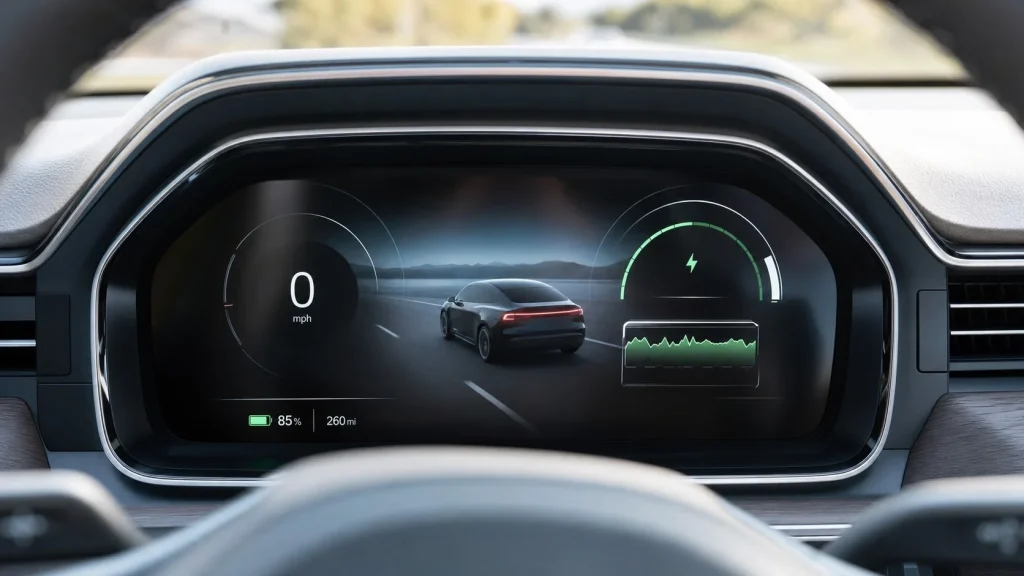
This is the most critical recall, covering approximately 6,499 units of the 2022-2024 e-tron GT and RS e-tron GT. The high-voltage battery modules, manufactured by LG Energy Solution, can experience internal short circuits. This defect can lead to thermal overload and pose a significant fire risk. As an interim safety measure, Audi advised owners to limit charging to 80% capacity. The final remedy involves installing advanced diagnostic software at authorized dealerships, with physical battery module replacements performed free of charge where diagnostic anomalies are detected. This campaign supersedes and expands the earlier recalls 24V-228 and 24V-229.
Front Passenger Airbag Malfunction (Recall 25V-227)
A manufacturing defect in the front passenger occupant detection system can cause the airbag to switch off even when the seat is occupied by an adult. If this occurs, a warning light indicating “Passenger Airbag OFF” will typically illuminate on the dashboard, and the airbag will fail to deploy in the event of a collision.
High-Voltage Battery Housing Sealant Issues
In specific global markets, Audi recalled units due to a deterioration of the high-voltage battery housing sealant. If the sealant degrades, moisture can penetrate the battery pack, leading to short circuits and localized thermal events. Authorized service centers resolve this by inspecting the battery housing and applying updated sealant compounds.
Portable Charging Cable Overheating (Recall 23V-842)
This campaign addresses the 220V/240V industrial charging cable supplied with the vehicle. When operating at the 100% charging capacity setting on older household electrical outlets, the cable can place excessive load on the home infrastructure, causing the outlet or cable to overheat and melt. The remedy is a free replacement cable featuring integrated temperature sensors (part number 7PP971678GA, which replaced the original 7PP971678ED cord).
Suspension Damper Retaining Rings (Recall 22V-927)
Affecting early production runs on the shared J1 platform, this recall covers defective front suspension retaining rings that can crack or dislodge, leading to a sudden loss of vehicle control. Dealerships inspect and replace the front strut assemblies as needed.
2022 Audi e-tron GT Performance and Technical Specifications
Despite the recall history, the performance metrics of the 2022 e-tron GT remain highly competitive in the modern EV landscape. The vehicle is built on the shared Porsche-developed J1 performance platform, utilizing dual permanent-magnet synchronous motors and standard quattro all-wheel drive.
- Powertrain: Dual-motor AWD layout with an innovative two-speed automatic transmission on the rear axle.
- Standard Quattro Output: 469 horsepower continuously, with up to 522 horsepower and 464 lb-ft of torque available in 2.5-second boost intervals.
- RS e-tron GT Output: 590 horsepower continuously, rising to 637 horsepower and 612 lb-ft of torque in boost mode.
- Acceleration: The standard Quattro variant completes the 0-60 mph sprint in 3.9 seconds, while the RS model achieves it in 3.1 seconds.
- Battery Pack: A 93.4 kWh gross capacity lithium-ion battery, with a usable capacity of 85.0 kWh.
- Charging Architecture: 800-volt charging system capable of accepting a peak DC fast-charging rate of 270 kW, enabling a 10% to 80% charge in approximately 22.5 minutes under optimal conditions.
Real-World Driving Range vs EPA Estimates
The official EPA ratings for the 2022 e-tron GT are relatively conservative compared to modern long-range competitors. The base Quattro model is EPA-rated at 238 miles of range, while the RS model is rated at 232 miles on a full charge.
However, real-world testing and owner reports indicate that these figures are easily achievable and often exceeded in moderate driving conditions. Under ideal ambient temperatures, highway efficiency runs at a constant 70 mph have regularly yielded 250 to 270 miles of range.
Conversely, cold weather operation highlights the limitations of the first-generation thermal architecture. In freezing winter temperatures, the high-voltage battery can lose 20% to 30% of its effective capacity, dropping the highway range to between 170 and 190 miles, which necessitates more frequent fast-charging stops on long-distance journeys.
Used 2022 vs New 2025 Audi e-tron GT Comparison
The launch of the heavily refreshed 2025 model year represents a significant leap forward in standard technology, battery capacity, and raw power. This generation shift has directly accelerated the depreciation of the older 2022 models.
- Battery Upgrades: The 2025 model utilizes an updated 105 kWh gross battery pack (97 kWh usable) that is 25 pounds lighter than the older 93.4 kWh unit due to revised chemistry.
- Power Output Inflation: The new entry-level S trim produces 670 horsepower, which easily surpasses the 2022 range-topping RS model’s 637 horsepower. The 2025 RS Performance variant produces a staggering 912 horsepower, completing the 0-60 mph run in a brief 2.4 seconds.
- DC Charging Speeds: Peak charging power has increased from 270 kW to 320 kW. This shortens the 10% to 80% charge window to 18 minutes, adding up to 174 miles of range in just 10 minutes.
- EPA Range: The base 2025 model achieves an EPA-rated range of 300 miles, representing a 62-mile advantage over the 2022 model year.
- Price Gap: With the new 2025 model starting at $126,795, the price premium over a used 2022 model is roughly $80,000-$90,000, presenting a stark choice for prospective buyers.
Prospective buyers can read our detailed 2025 Audi e-tron GT review to evaluate the newer standard features.
Used 2022 Audi e-tron GT Reliability and Buying Verdict
When analyzing the overall reliability of the 2022 model, the mechanical foundation has proven robust, with minimal drivetrain failures reported outside of safety recalls. Early battery degradation data indicates minor capacity losses of approximately 2% to 3% annually, which is well within industry norms. The remaining factory high-voltage battery warranty of 8 years or 100,000 miles (which transfers to second owners) provides substantial peace of mind.
However, first-year teething issues remain common. Owners frequently report minor infotainment system freezes, intermittent cruise control faults, and random safety warning messages that can require dealership software reflashes.
Analysis: The used 2022 model is a classic high-risk, high-reward purchase. It delivers 90% of the luxury experience of a new model at less than 40% of the price. The vehicle represents a spectacular value if it is purchased with a Certified Pre-Owned warranty or after a thorough dealership check confirming that all safety recalls are closed. Buyers who frequently travel long distances or lack home charging infrastructure should look elsewhere, but for daily commuters, it is an unmatched performance bargain.
For those interested in the broader model line, the main Audi e-tron GT category page provides further model year comparisons and buying advice.
Frequently Asked Questions About the 2022 Audi e-tron GT
Is the 2022 Audi e-tron GT a reliable used car?
The mechanical motors and structural chassis are highly reliable, but the model has a high number of technical recalls. Buyers should only purchase a used model if the service history confirms that all critical recalls, especially the battery module short circuit campaign, have been resolved.
What are the main recalls on the 2022 Audi e-tron GT?
The primary safety campaigns include the high-voltage battery module short circuit recall (24V-726), passenger occupant detection airbag malfunction (25V-227), front suspension retaining rings (22V-927), and portable 240V charging cable overheating (23V-842).
What is the real-world range of the 2022 Audi e-tron GT?
While the EPA rates the car at 238 miles, real-world highway driving in moderate weather typically yields 250-270 miles. In winter conditions, this range can drop to 180 miles.
Should I buy a used 2022 model or a new 2025 model?
The used 2022 model is the superior financial decision, offering similar performance and luxury for half the cost. The new 2025 model is only necessary if you require more than 250 miles of daily driving range or desire the absolute quickest acceleration times.

