

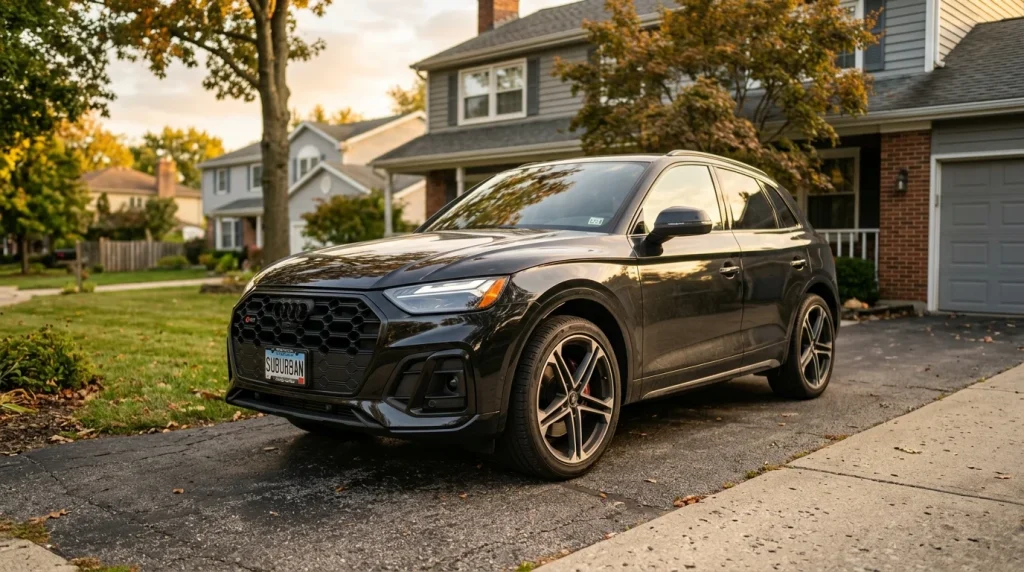
Quick answer: The 2023 Audi SQ5 delivers sports car acceleration and family crossover utility, powered by a 349-horsepower turbocharged V6 that reaches 60 mph in 4.7 seconds. However, safety tests from the Insurance Institute for Highway Safety reveal marginal rear passenger protection, and ownership costs can escalate due to premium fuel requirements and rapid tire wear.
Key takeaways:
- Used market prices for the 2023 model range from $35,000 to $43,000 depending on mileage and condition.
- The turbocharged 3.0-liter V6 engine provides instant throttle response with 369 pound-feet of torque.
- The updated moderate overlap crash test scored a marginal rating for rear occupant safety.
- Common issues include MMI software glitches and early oil leaks from the timing chain cover.
Used Market Pricing and Trim Levels
The 2023 Audi SQ5 was originally offered in three primary trim levels: Premium, Premium Plus, and Prestige. In the current used market, values have depreciated significantly, presenting a compelling value proposition compared to brand-new luxury crossovers.
According to data from Kelley Blue Book, the national average purchase prices for used 2023 models vary by trim:
- Premium: Originally starting at $55,800, used examples now average around $36,700.
- Premium Plus: Originally starting at $60,500, used examples now average around $39,500. This is the most common trim found on used car lots.
- Prestige: Originally starting at $65,700, used examples now average around $41,700 to $43,300 depending on optional packages.
When compared to adjacent model years, the used market offers several choices. Buyers seeking a newer design or updated infotainment features can look at the 2024 Audi SQ5 or the fully redesigned 2025 Audi SQ5. Conversely, those looking for maximum depreciation savings might consider the older 2022 Audi SQ5, 2021 Audi SQ5, or even the 2020 Audi SQ5, which shares similar pre-facelift powertrain characteristics.
Analysis: The Premium Plus remains the sweet spot for used buyers. It includes crucial features like the panoramic sunroof, active lane assist, and the Virtual Cockpit digital gauge cluster. The base Premium trim lacks standard active safety tech that buyers expect at this price point, while the top-tier Prestige commands a premium that may not be fully recovered at resale.
Engine Specifications and Driving Dynamics
Under the hood, the 2023 Audi SQ5 features a 3.0-liter single-turbocharged V6 engine. This powerplant generates 349 horsepower at 5,400 rpm and 369 pound-feet of torque starting at an incredibly low 1,370 rpm. Power is routed through an eight-speed Tiptronic automatic transmission and Audi’s standard quattro all-wheel-drive system.
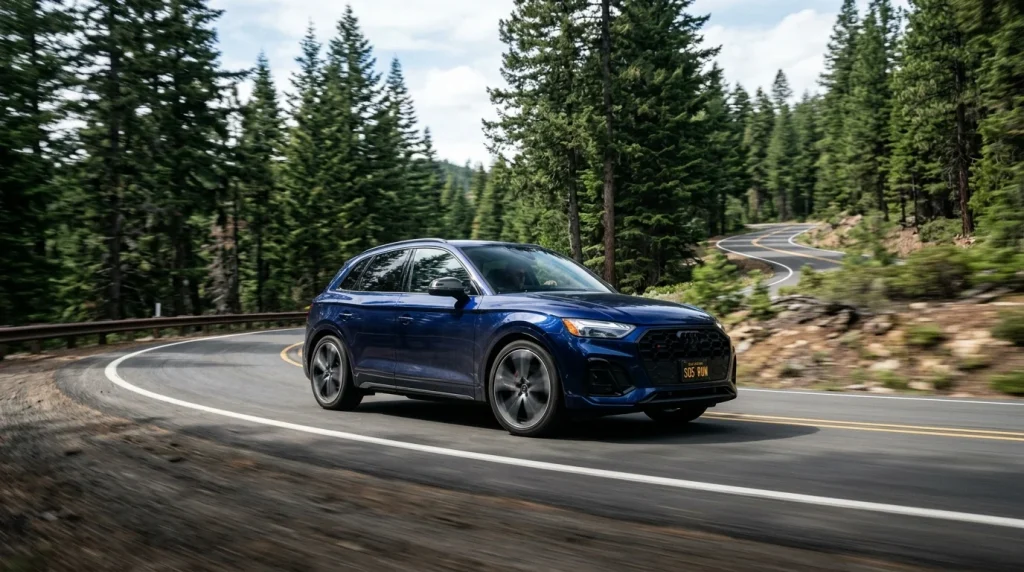
According to instrumented testing conducted by Car and Driver, the SQ5 launches from zero to 60 mph in 4.7 seconds and completes the quarter-mile sprint in 13.5 seconds. Top speed is electronically limited to 155 mph.
The key to the SQ5’s dual personality is the optional S Sport package, which adds an adaptive air suspension and a sport rear differential. The air suspension allows the driver to adjust the ride height and stiffness. In Comfort mode, the vehicle glides over road imperfections, making it an excellent highway cruiser. In Dynamic mode, the suspension lowers and stiffens, mitigating body roll and allowing the crossover to corner with impressive agility.
However, the driving experience is not perfect. The variable-ratio steering system lacks tactile feedback, feeling somewhat numb and disconnected on twisty roads. While the vehicle is highly capable, it prioritizes high-speed stability and comfort over raw driver engagement.
Interior Technology and Cabin Comfort
The interior of the 2023 SQ5 represents a benchmark for build quality and digital integration. The dashboard is dominated by a 10.1-inch central touchscreen running Audi’s MMI touch infotainment system, complemented by the 12.3-inch Virtual Cockpit gauge cluster.
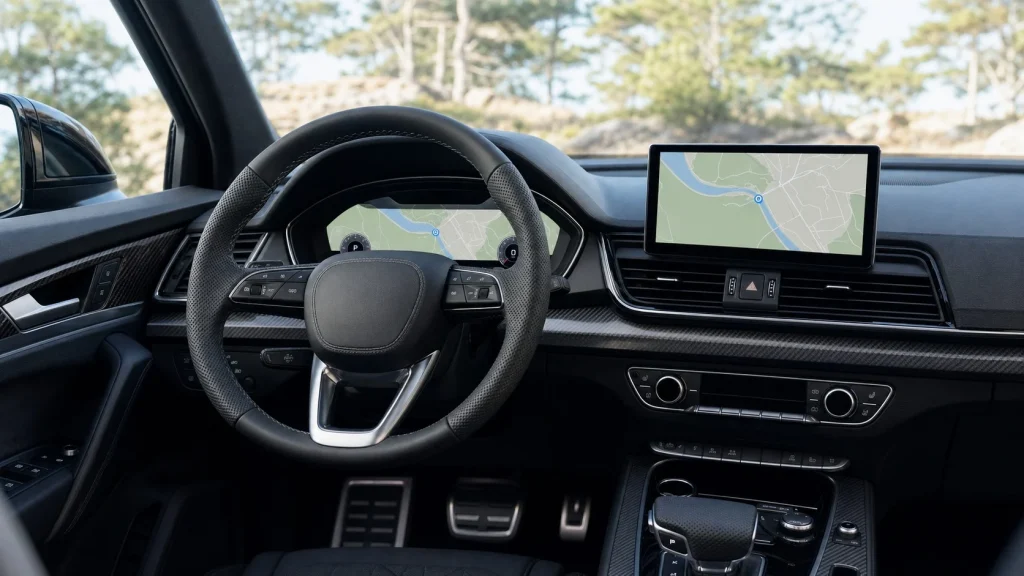
The Virtual Cockpit remains a standout feature, allowing the driver to display full-screen Google Earth navigation maps directly behind the steering wheel. Apple CarPlay and Android Auto compatibility are standard, though some owners report occasional connection dropouts.
Material quality is exceptionally high, featuring carbon fiber accents, brushed aluminum trim, and standard sport seats upholstered in a combination of leather and Dinamica microfiber. The optional Fine Nappa Leather package adds diamond-stitched leather seating surfaces.
Passenger space is generous in the front row, with highly adjustable seats that offer excellent support. Rear seat passengers have adequate legroom, though taller adults may find headroom slightly restricted by the sloping roofline on the Sportback variant. Cargo capacity measures 25.9 cubic feet behind the second row, expanding to 54.0 cubic feet with the rear seats folded flat. This is slightly below average for the compact luxury crossover segment.
Safety Ratings: IIHS Crash Test Surprise
While the Q5 platform on which the SQ5 is built has historically earned top safety marks, updated testing criteria from the Insurance Institute for Highway Safety (IIHS) revealed notable weaknesses.
In the updated moderate overlap front crash test, which evaluates rear passenger protection, the Q5 platform received a Marginal rating. Dummy data indicated a higher risk of head and neck injuries for rear occupants. Additionally, in the updated side impact test, which uses a heavier barrier moving at a higher speed to simulate modern midsize SUVs, the vehicle earned an Acceptable rating rather than the top Good rating, with rear passenger pelvis protection scoring marginal.
Despite these updated tests, the 2023 Audi SQ5 still earned Good ratings in traditional categories:
- Small overlap front (driver and passenger sides): Good
- Original moderate overlap front: Good
- Roof strength: Good, with a strength-to-weight ratio of 5.16
- Front crash prevention (vehicle-to-vehicle): Superior, avoiding collisions entirely in tests at 12 mph and 25 mph
Headlight performance varies by trim level. The Prestige trim features LED projector headlights that earned a Good rating. However, the Premium and Premium Plus trims feature LED reflectors that scored only Acceptable due to inadequate illumination on gradual left curves. Nighttime pedestrian crash prevention also scored poorly, earning No Credit as the automatic emergency braking system failed to mitigate collisions in dark conditions.
Common Reliability Issues and Maintenance Costs
While the 3.0-liter turbocharged V6 is a mature engine design, used buyers must look out for several documented mechanical and electrical vulnerabilities.
According to consumer reviews collected by Edmunds, a small percentage of owners have experienced significant issues early in the vehicle’s lifespan:
- Timing Chain Cover Leaks: A known issue on the Audi 3.0T engine is oil weeping from the timing chain cover assembly. In some cases, this can present as a minor oil leak before 25,000 miles, requiring extensive labor to reseal.
- MMI Infotainment Glitches: Software bugs are the most common source of complaints. Owners report that the MMI screen can freeze, lose stored radio favorites, or fail to connect to Apple CarPlay wirelessly.
- Rapid Tire Wear: The optional 21-inch wheels look excellent but utilize performance-oriented summer tires. Due to the vehicle’s weight and torque, these tires often wear out in less than 20,000 miles, costing upwards of $350 per tire to replace.
- Coolant Pump Failure: Some owners have reported coolant leaks stemming from the water pump housing, which is made of plastic and can warp over time.
Annual fuel costs are another consideration. The EPA rates the 2023 SQ5 at 19 mpg city, 24 mpg highway, and 21 mpg combined. Audi requires premium unleaded gasoline (91 octane or higher). At average annual driving distances, owners should expect to spend approximately $2,500 per year on fuel.
Standard maintenance follows a 10,000-mile interval. Major services, including spark plug replacement at 40,000 miles, can cost between $600 and $900 at authorized dealerships, though independent specialists typically offer lower rates.
Competitor Comparison: SQ5 vs. X3 M40i vs. Macan S
The compact luxury performance crossover segment is highly competitive. The table below details how the 2023 Audi SQ5 compares to its chief German rivals:
| Specifications | 2023 Audi SQ5 | 2023 BMW X3 M40i | 2023 Porsche Macan S |
|---|---|---|---|
| Engine | 3.0L Turbo V6 | 3.0L Turbo Inline-6 | 2.9L Twin-Turbo V6 |
| Horsepower | 349 hp | 382 hp | 375 hp |
| Torque | 369 lb-ft | 369 lb-ft | 383 lb-ft |
| 0-60 mph Time | 4.7 seconds | 4.4 seconds | 4.6 seconds |
| Fuel Economy (Combined) | 21 mpg | 23 mpg | 19 mpg |
| Used Market Avg Price | $39,500 (Premium Plus) | $44,000 | $51,000 |
The BMW X3 M40i offers superior straight-line performance and better real-world fuel economy, thanks to its mild-hybrid system. The Porsche Macan S handles significantly better, offering genuine sports car steering feel, but it demands a substantial price premium on the used market and offers less rear legroom. The SQ5 positions itself as the comfortable, tech-forward daily driver that balances performance with ride compliance.
Pros and Cons
Pros:
- Exceptionally comfortable ride when equipped with the optional S Sport adaptive air suspension.
- Standard quattro all-wheel drive provides excellent traction in winter weather conditions.
- Virtual Cockpit remains one of the best digital gauge clusters in the automotive industry.
- Mature V6 engine delivers immediate low-end torque with minimal turbo lag.
Cons:
- Updated IIHS safety ratings reveal marginal rear passenger head and neck protection in frontal crashes.
- Numb steering feel lacks engagement compared to the BMW X3 M40i and Porsche Macan S.
- High tire replacement costs on models equipped with the optional 21-inch wheels.
- High depreciation makes buying a brand-new model financially unwise, though it benefits used buyers.
Final Verdict: Is a Used 2023 Audi SQ5 Worth Buying?
The 2023 Audi SQ5 remains a highly competent luxury crossover that successfully bridges the gap between daily commuter comfort and weekend performance. It offers a quieter, more compliant ride than its BMW competitor and a more modern cabin than the Porsche Macan.
However, safety-conscious buyers must weigh the marginal rear seat crash test scores, especially if the vehicle will be used regularly for carrying children. Additionally, potential owners must budget for premium fuel and higher-than-average maintenance costs.
For buyers who prioritize cabin technology, straight-line performance, and winter traction, a certified pre-owned or well-inspected used SQ5 represents an appealing buy. For more details on other model years and overall specifications, visit the main Audi SQ5 hub.
Frequently Asked Questions about the 2023 Audi SQ5
Is the 2023 Audi SQ5 reliable?
Reliability is average. While the V6 engine and transmission are durable, some owners report early oil leaks from the timing cover and frequent software glitches with the MMI infotainment system. A pre-purchase inspection is highly recommended.
Did the 2023 Audi Q5/SQ5 lose its Top Safety Pick rating?
Yes. Due to the updated IIHS moderate overlap front crash test, which resulted in a marginal rating for rear passenger safety, the 2023 model did not maintain its Top Safety Pick Plus status, though it remained a basic Top Safety Pick under older criteria.
How does the 2023 SQ5 compare to the Porsche Macan?
The Porsche Macan offers much sharper handling and steering precision. However, the SQ5 with adaptive air suspension offers a more comfortable ride, a more spacious cabin, superior digital technology, and a significantly lower used purchase price.
What fuel does the 2023 SQ5 require?
Premium unleaded fuel with an octane rating of 91 or higher is required. Using lower octane fuel can result in engine knock, reduced fuel economy, and potential long-term engine damage.

