

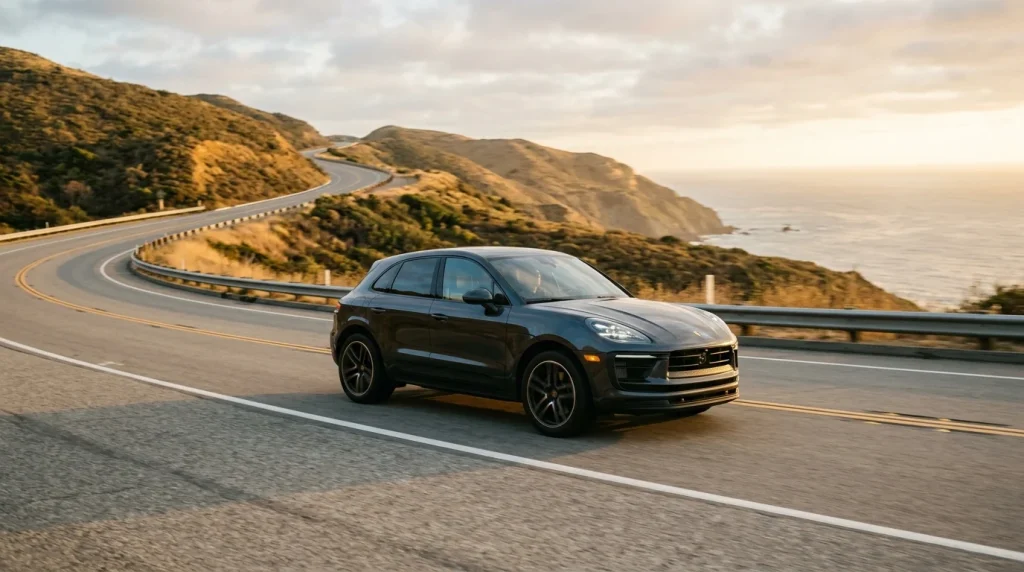
Quick answer: The 2024 Audi SQ5 remains a fast and highly comfortable performance SUV, powered by a 349-horsepower turbocharged V6 that reaches 60 mph in 4.7 seconds. However, updated safety crash tests by the Insurance Institute for Highway Safety (IIHS) revealed significant rear-passenger crash safety deficits, scoring only Marginal in moderate overlap front protection.
Key takeaways:
- Turbocharged 3.0-liter V6 engine delivers 349 horsepower and 369 pound-feet of torque.
- Standard Quattro all-wheel drive provides excellent winter traction and cornering confidence.
- Optional S Sport air suspension combines precise sporty handling with high highway ride quality.
- Recent IIHS testing downgraded safety scores for rear passengers to Marginal and side impact safety to Acceptable.
- Reliability is mixed, with some owners reporting head gasket and electronic cluster failures at low mileage.
Specifications and Pricing Breakdown
The compact luxury performance SUV segment requires a delicate balance of mechanical capability and value. The 2024 Audi SQ5 is available in three distinct trim levels: Premium, Premium Plus, and Prestige. Each tier builds on the same performance foundation while adding safety features, technology, and interior upgrades.
Trim Levels and MSRP
Pricing for the SQ5 starts at $58,895 for the entry-level Premium trim. Moving up to the Premium Plus model increases the starting price to $62,995. The top-tier Prestige trim, which includes luxury items such as Matrix-design headlights and a head-up display, starts at $67,095. These prices represent the manufacturer’s suggested retail price (MSRP) before options, destination charges, or dealer markups, according to pricing guides on TrueCar.
Mechanical and Performance Specs
Under the hood, all trims share the identical powertrain and chassis setup. The key specifications include:
| Specification | Details |
|---|---|
| Engine Type | 3.0-liter Turbocharged V6 |
| Horsepower | 349 hp @ 5,400 rpm |
| Torque | 369 lb-ft @ 1,370 rpm |
| Transmission | 8-speed Tiptronic automatic |
| Drivetrain | Quattro all-wheel drive |
| 0-60 mph Acceleration | 4.7 seconds |
| EPA Fuel Economy | 19 city / 24 highway / 21 combined mpg |
| Fuel Tank Capacity | 18.5 gallons |
| Basic Warranty | 4 years / 50,000 miles |
Performance and Driving Dynamics
The heart of the SQ5 is its engine, which delivers power in a manner that separates it from standard four-cylinder luxury crossovers. The turbocharged V6 utilizes a single twin-scroll turbocharger mounted inside the V of the engine block to shorten the path of exhaust gases and maximize throttle response.
V6 Power Delivery and Quattro Traction
With 369 pound-feet of torque available at a low 1,370 rpm, the V6 offers immediate acceleration. There is virtually no turbo lag when accelerating from a stop or passing on the highway. Power is managed by an eight-speed Tiptronic automatic transmission that handles shifts cleanly. The standard Quattro all-wheel-drive system continuously monitors traction, sending power to the wheels with the most grip. In dry conditions, the system maintains a rear bias for a sportier feel, but it can quickly divert power to the front axle when slip is detected.
Optional S Sport Package and Handling
While the standard steel suspension is capable, the optional S Sport package represents a crucial upgrade for enthusiasts. According to testing by Car and Driver, the optional adaptive air suspension transforms the vehicle’s dynamics. This setup allows the driver to adjust the ride height and damper stiffness. In Dynamic mode, the vehicle lowers by 0.6 inches to reduce the center of gravity and body roll. In Comfort mode, the air springs soften to absorb broken pavement, creating a compliant highway ride. The S Sport package also adds a sport rear differential, which actively distributes torque between the left and right rear wheels to help rotate the vehicle through tight corners.
However, the steering system remains a weak point. The electrically assisted steering wheel feels light and lacks road feedback. While precise, it does not communicate road textures to the driver’s hands, making it feel less engaging than the steering in the Porsche Macan.
Cabin Comfort, Space, and Technology
The interior of the SQ5 is designed around a modern, driver-centric layout. The cabin features high-quality materials, with carbon fiber inlays and aluminum accents standard across all trims.
Virtual Cockpit and Infotainment Systems
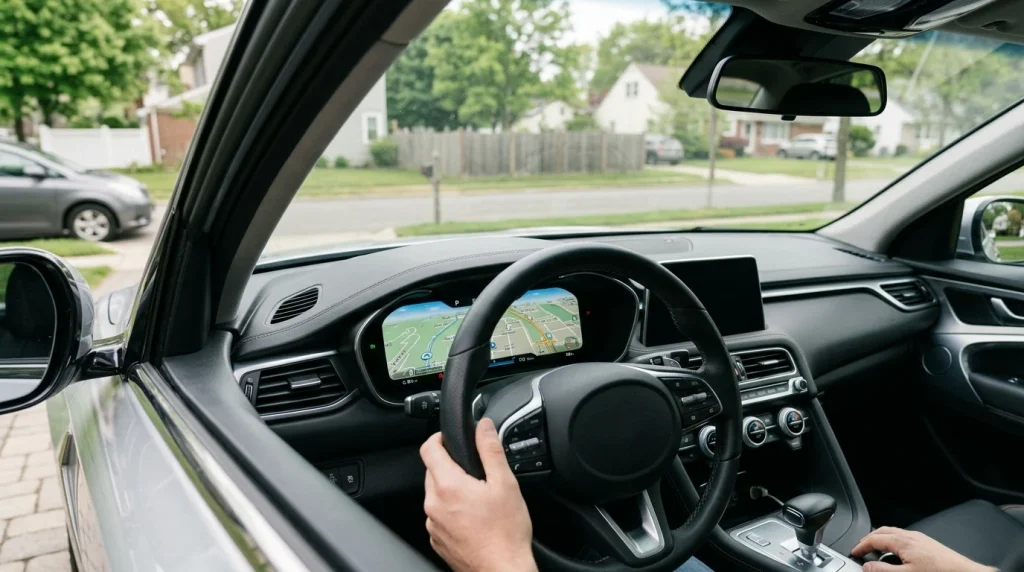
Audi’s digital gauge cluster, known as the Virtual Cockpit, remains a standout technology feature. The 12.3-inch screen displays critical driving data alongside high-resolution Google Earth mapping. The driver can customize the layout to show a large tachometer, traditional gauges, or a full-screen navigation map. The central infotainment system uses a 10.1-inch touchscreen mounted high on the dashboard. The menus are easy to navigate, and wireless Apple CarPlay and Android Auto are standard. The system provides clear haptic and acoustic feedback, though some users may miss the physical rotary control dial found in older model years.
Passenger Space and Cargo Capacity
Comfort is excellent for front-seat occupants, who get standard sports seats with supportive side bolsters. On the Prestige trim, these seats are wrapped in quilted Nappa leather. The rear seat offers adequate legroom for adults, but the sloping roofline slightly limits headroom for taller passengers. The cargo area provides 25.8 cubic feet of space behind the rear seats, which expands to 54.0 cubic feet when the 40/20/40 split-folding rear seats are laid flat. This space is highly practical, though it lags slightly behind some boxier utility vehicles in the segment.
Safety Ratings: The Updated Crash Test Concerns
Safety is a critical consideration for luxury family vehicles, and the 2024 SQ5 has faced new challenges due to updated testing criteria. Because the SQ5 shares its structural platform with the standard Audi Q5, safety ratings from the IIHS apply directly to both models.
IIHS Crash Test Results
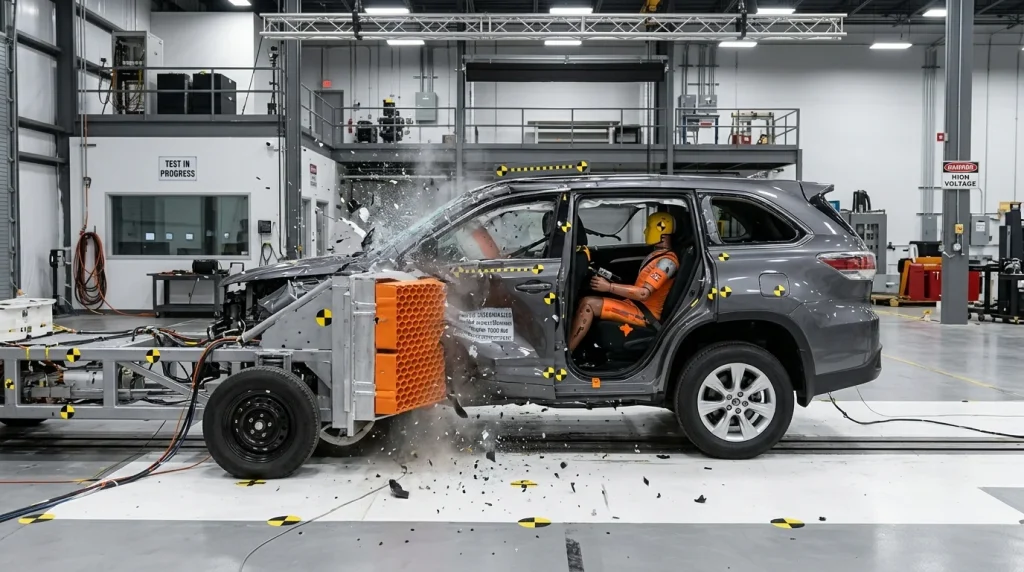
While the vehicle previously scored highly in older crash test configurations, the updated IIHS tests revealed structural weaknesses. According to the official IIHS safety report, the platform earned a Marginal rating in the updated moderate overlap front test.
This updated test places a second dummy in the rear seat directly behind the driver. The testing data showed that the rear dummy’s lap belt slipped from the pelvis up onto the abdomen during the crash simulation, which significantly increases the risk of internal abdominal injuries. Additionally, the dummy’s head came close to hitting the front seatback, and measurements indicated elevated neck tension.
The updated side impact test, which uses a heavier barrier moving at a higher speed to simulate a modern SUV collision, resulted in an Acceptable rating instead of Good. The rear passenger dummy recorded Marginal pelvis protection and Acceptable torso protection during the side-impact test.
Headlights and Driver Assist Tech
The quality of the active safety systems and headlights varies by trim level. The Prestige trim is equipped with Matrix-design LED headlights that earned a Good rating from the IIHS. However, the Premium and Premium Plus trims feature standard LED headlights that scored only Acceptable due to limited visibility on gradual left curves.
Active driver assistance features, including adaptive cruise control with lane guidance and active lane assist, perform reliably on marked highways. However, the vehicle’s nighttime pedestrian crash prevention system earned only a Marginal rating. In testing at 37 mph with low beams active, the system failed to slow down or mitigate the impact with an adult dummy crossing the road.
Reliability Issues and Ownership Costs
Prospective buyers must weigh the vehicle’s performance against historical reliability data and the ongoing expenses of luxury car ownership.
Common Mechanical and Electronic Failures
Owner reports compiled by Edmunds highlight several potential problem areas. Some owners have documented major mechanical issues at low mileage, including head gasket failures and timing chain housing leaks before reaching 25,000 miles. These repairs are typically covered under the 4-year or 50,000-mile factory warranty, but they suggest potential long-term durability issues once the warranty coverage expires.
Electronic system malfunctions are also reported. These include complete instrument cluster shutdowns, unexpected pre-sense active safety warnings, and airbag sensor errors. A pre-purchase inspection by an Audi specialist is strongly recommended if buying a pre-owned model.
Maintenance and Fuel Expenses
The ongoing cost of ownership is high. The turbocharged V6 requires premium fuel (91 octane or higher) to prevent engine knock and preserve performance. Given the EPA combined rating of 21 mpg and an 18.5-gallon fuel tank, owners can expect annual fuel costs to range from $2,400 to $2,800 under average driving conditions, depending on local fuel prices.
Tires represent another significant expense, especially on models equipped with the optional 21-inch wheels. The sport tires fitted to these wheels offer excellent grip but wear out quickly, often requiring replacement every 20,000 to 30,000 miles. Replacing a set of four high-performance tires can easily cost $1,400 to $1,600, according to pricing guides on Kelley Blue Book.
Competitor Comparison
The SQ5 competes directly with other sport-tuned compact luxury crossovers. The table below compares the base specifications and pricing of the key competitors:
| Model | Starting MSRP | Horsepower | 0-60 mph | Combined MPG |
|---|---|---|---|---|
| 2024 Audi SQ5 | $58,895 | 349 hp | 4.7 sec | 21 mpg |
| BMW X3 M40i | $61,900 | 382 hp | 4.4 sec | 23 mpg |
| Mercedes-AMG GLC 43 | $64,900 | 385 hp | 4.7 sec | 20 mpg |
| Genesis GV70 3.5T Sport | $59,150 | 375 hp | 4.6 sec | 21 mpg |
The BMW X3 M40i offers slightly quicker acceleration and better fuel economy, but it has a firmer standard ride. The Genesis GV70 provides more standard features and a longer warranty but lacks the track-tested heritage of the German brands.
Pros and Cons
Pros:
- Smooth, immediate throttle response from the turbocharged V6.
- Optional air suspension offers an excellent balance of comfort and control.
- High-resolution Virtual Cockpit technology remains highly intuitive.
- Standard Quattro system delivers reassuring traction in wet and snowy conditions.
Cons:
- Marginal IIHS crash rating for rear-passenger safety in updated tests.
- Steering lacks feedback and feels disconnected from the road.
- High tire wear rates and expensive replacement costs for 21-inch wheels.
- Mixed reliability reports concerning early electronic and engine component wear.
Final Verdict: Who Should Buy the 2024 Audi SQ5?
The 2024 Audi SQ5 remains a highly versatile vehicle for buyers who want sports car performance without sacrificing utility. It serves as a comfortable daily driver and a capable highway cruiser.
However, the Marginal rating in rear-passenger safety should cause families to hesitate, especially if children or adults frequently occupy the second row. For those who prioritize rear occupant safety or long-term reliability, alternative options are worth exploring.
If you are considering other model years of this performance SUV, check out our detailed guides for the 2023 Audi SQ5, 2022 Audi SQ5, and the older 2021 Audi SQ5. For those interested in the newest updates, our review of the redesigned 2025 Audi SQ5 details the latest generation’s changes. You can also explore the depreciation trends of the 2020 Audi SQ5 if buying pre-owned is your primary goal. For a complete historical overview of the model line, visit the main Audi SQ5 hub.
Analysis: The SQ5 occupies a middle ground in its class. It is not as sharp or aggressive as the Porsche Macan, nor is it as powerful as the BMW X3 M40i. Instead, it prioritizes everyday comfort and tech usability, making it easier to live with on a daily basis.
Note: All safety and recall data are based on standard testing procedures current for the 2024 model year. Buyers should verify if specific vehicles have outstanding recalls or software updates completed at an authorized dealership.
Frequently Asked Questions
Is the 2024 Audi SQ5 reliable?
Reliability is mixed. The 3.0-liter V6 engine is structurally robust, but owner reports document head gasket failures and minor oil leaks at low mileage. Electrical cluster issues and active safety sensor failures are also common.
Did the 2024 Audi SQ5 lose its Top Safety Pick rating?
Yes, the platform did not secure the highest IIHS safety awards for 2024 due to the Marginal score in the updated moderate overlap front crash test and the Acceptable score in the updated side crash test.
How does the 2024 SQ5 compare to the Porsche Macan?
The Porsche Macan provides sharper handling and superior steering feedback. However, the SQ5 offers a more spacious rear seat, better standard infotainment technology, and a more comfortable ride on rough roads when equipped with the optional air suspension.
What fuel does the 2024 Audi SQ5 require?
Premium unleaded fuel (91 octane or higher) is required. Using lower octane fuel can result in engine knock, reduced fuel economy, and decreased performance.

