

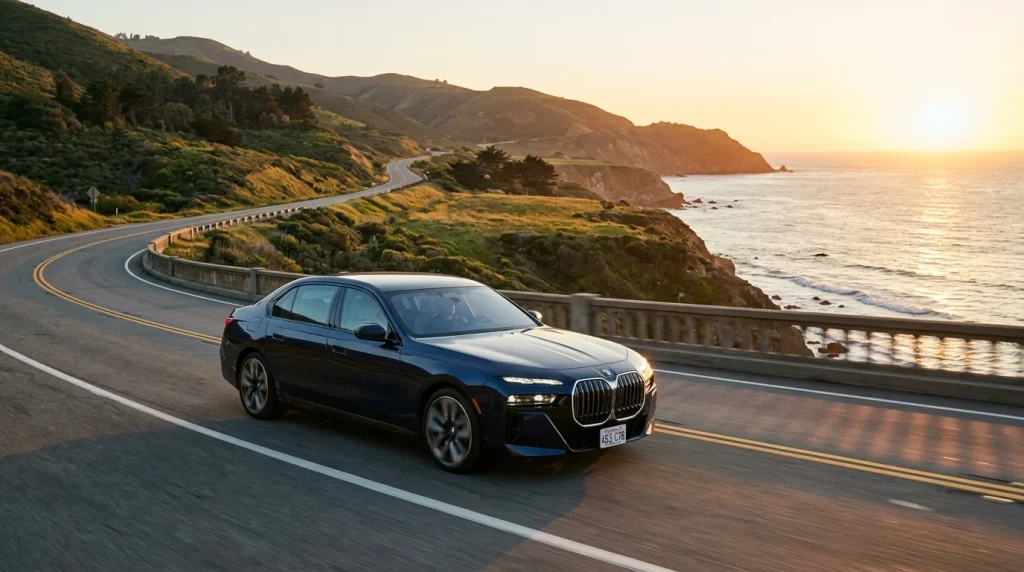
Quick answer: The 2026 BMW 7-Series is a carryover luxury flagship sedan that starts at $99,300 and reaches $124,700 depending on the trim. It offers three refined powertrain options: a turbocharged inline-six, a plug-in hybrid with 34 miles of electric range, and a potent twin-turbo V8. Key updates for the 2026 model year include standard digital key functionality across the lineup, while the hands-free gesture control system has been discontinued.
Key takeaways:
- Pricing begins at $99,300 for the base 740i and goes up to $124,700 for the V8-powered 760i xDrive.
- Powertrain choices include a mild-hybrid inline-six, a 483-horsepower plug-in hybrid, and a 536-horsepower V8.
- A digital key function is now standard, and gesture control is discontinued.
- The cabin features a standard curved display running iDrive 8.5 with wireless smartphone integration.
2026 BMW 7-Series Pricing and Trim Levels
BMW has raised the starting prices by $2,000 for the 2026 model year. A destination fee of $1,175 applies to all configurations. The lineup consists of four distinct gasoline and plug-in hybrid trims, while the all-electric BMW i7 remains a separate model.
The entry-point is the rear-wheel-drive 740i, followed by the all-wheel-drive 740i xDrive. Buyers seeking electric efficiency can select the 750e xDrive plug-in hybrid, while those wanting maximum performance can opt for the V8-powered 760i xDrive.
| Trim | Drivetrain | Starting MSRP | Key Standard Features |
|---|---|---|---|
| 740i | Rear-Wheel Drive | $99,300 | 19-inch wheels, air suspension, curved display, standard digital key |
| 740i xDrive | All-Wheel Drive | $102,300 | AWD system, heated steering wheel, active roll stabilization |
| 750e xDrive | All-Wheel Drive | $110,000 | Plug-in hybrid powertrain, 14.4-kWh battery, hybrid drive modes |
| 760i xDrive | All-Wheel Drive | $124,700 | 4.4-liter twin-turbo V8, 20-inch wheels, active steering |
According to Edmunds pricing guides, the average market transaction price for the 7-Series often falls 3 to 4 percent below MSRP, which can translate to savings of $3,300 to $4,200 depending on dealership stock. For buyers looking at the previous generations, the 2025 BMW 7-Series and the 2024 BMW 7-Series offer similar design elements but lack the standard digital key features.
BMW includes three years or 36,000 miles of complimentary scheduled maintenance. This is a solid benefit that German rivals like Mercedes-Benz do not offer.
Powertrains, Driving Dynamics, and Performance
The 2026 BMW 7-Series lineup offers three powertrains that cater to different driving needs. Every model is paired with a smooth eight-speed automatic transmission.
The 740i and 740i xDrive utilize a 3.0-liter turbocharged inline-six engine with a 48-volt mild hybrid system. It generates 375 horsepower and 398 lb-ft of torque. According to BMW estimates, the 740i sprints from zero to 60 mph in 4.9 seconds. The fuel economy is impressive for a large sedan, rated at 25 mpg city and 31 mpg highway (28 mpg combined).
The 750e xDrive plug-in hybrid combines the inline-six engine with an electric motor to produce 483 horsepower and 516 lb-ft of torque. It features a 14.4-kWh usable battery pack that delivers an EPA-estimated 34 miles of all-electric range. This range is useful for local driving, though it is shorter than the 58 miles of electric range achieved by the Mercedes-Benz S580e in independent testing.
For maximum output, the 760i xDrive features a twin-turbocharged 4.4-liter V8 engine with a mild hybrid system. It produces 536 horsepower and 553 lb-ft of torque. In professional testing by Car and Driver, the V8 accelerated from zero to 60 mph in just 3.5 seconds. This result is faster than BMW’s official 4.2-second claim. The V8 also returned a highway fuel economy of 30 mpg on a 75-mph test route, exceeding its official 26 mpg EPA estimate. You can read more about how this powertrain compares to earlier models in our review of the 2023 BMW 7-Series.
Analysis: While the V8 offers incredible acceleration, the 7-Series is not a sports sedan. The steering lacks feedback, and the air suspension exhibits body roll under sudden acceleration. This car is engineered for high-speed highway cruising and passenger comfort, rather than carving canyon roads.
Cabin Luxury and Technology Integration
Inside the cabin, the 7-Series features a modern layout dominated by the BMW Curved Display. This system combines a 12.3-inch gauge cluster and a 14.9-inch touchscreen under a single glass surface. The infotainment runs on iDrive 8.5, which responds quickly and supports over-the-air updates. Wireless Apple CarPlay and Android Auto are standard.
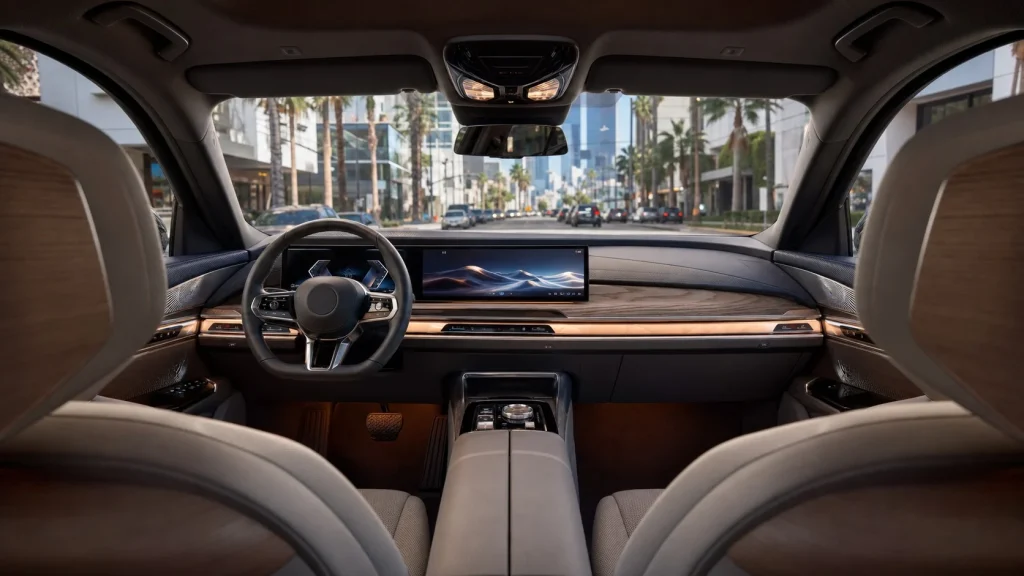
BMW has removed most physical buttons, placing controls for the climate system and driving modes inside the touchscreen. While this creates a clean dashboard, some drivers find the menus distracting to use while driving.
Rear Executive Lounge and Theater Screen
The rear seat experience can be upgraded with the Executive Lounge package. This $7,250 package adds power-reclining rear seats, massage functions, and a massive 31.3-inch Theater Screen. This screen folds down from the ceiling and uses built-in Amazon Fire TV to stream 8K content via a 5G connection. While this setup offers first-class entertainment, the screen blocks rearward visibility when deployed.

…
The cabin materials are exceptional. Buyers can choose from Merino leather, open-pore wood, glass controls, and cashmere seat inserts. The cargo capacity is 19.1 cubic feet, which can easily fit up to six carry-on bags.
Original Verdict: Who Should Buy the 2026 BMW 7-Series?
The 2026 BMW 7-Series functions as a high-tech sanctuary on wheels. It is a great choice for buyers who want cutting-edge cabin features, hands-free highway driving assistance up to 85 mph, and a bold exterior design.
However, the car demands that you accept its digital interface. If you prefer physical knobs for temperature adjustments or want a traditional cabin, the Genesis G90 offers a more conservative layout at a lower price point. The Mercedes-Benz S-Class also provides a quieter highway ride and more supple air suspension.
If you want the best balance of price and performance, the base 740i remains the best value in the lineup. It provides ample power and better fuel economy than the V8, leaving room in your budget to add packages like the Driving Assistance Professional Package.
You can compare this model year with previous versions in the BMW 7-Series lineup page to see how the flagship sedan has evolved.
Frequently Asked Questions
Is the 2026 BMW 7-Series reliable?
The 2026 BMW 7-Series is expected to match the average reliability ratings of its predecessors. Owner feedback compiled by Edmunds shows average ratings of 3.9 out of 5 stars, with most complaints directed at the complex tech interface rather than mechanical failures. The standard warranty covers four years or 50,000 miles, and the complimentary three-year maintenance plan helps offset service costs.
Which 2026 BMW 7-Series trim should I buy?
The base 740i is the recommended choice for most buyers. The turbocharged inline-six engine provides plenty of power, hitting 60 mph in under five seconds, while returning 28 mpg combined – better efficiency than the V8’s 20 mpg. Buying the 740i saves at least $10,000 compared to the hybrid and $25,000 compared to the V8, allowing you to add options like the Driving Assistance Professional Package.
How much does a fully-loaded 2026 BMW 760i xDrive cost?
A fully optioned 760i xDrive can easily surpass $150,000. Key options that drive up the price include the Executive Lounge package with the Theater Screen ($7,250), the Bowers and Wilkins sound system ($4,800), and the BMW Individual paint and upholstery options ($5,450).
What is new for the 2026 BMW 7-Series compared to 2025?
Updates for the 2026 model year are very minor. A digital key function is now standard across all trims, allowing you to use your smartphone as a vehicle key. BMW has also discontinued the hands-free gesture control system due to low customer engagement. This is the final year of the current configuration before a major mid-cycle refresh arrives for 2027.

