

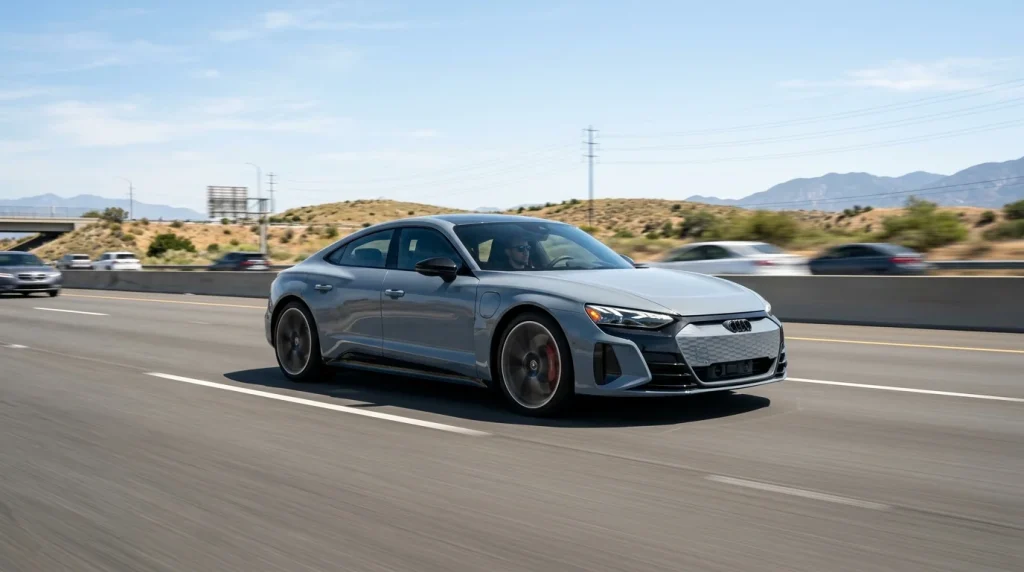
Quick answer: The best Audi sports car for ultimate performance in mid-2026 is the RS e-tron GT Performance. Priced at $170,500, this electric flagship produces 912 horsepower and achieves a tested 2.1-second 0-60 mph sprint, making it the fastest production Audi ever built. For those seeking traditional combustion engines, the RS 6 Avant Performance is the top pick at $130,700, offering 621 horsepower in a highly practical wagon body.
Key takeaways:
- The RS e-tron GT Performance is Audi’s quickest accelerating model, featuring 912 horsepower and a 2.1-second tested 0-60 mph time.
- The limited-run Audi Nuvolari is a V8 hybrid supercar producing 1,001 PS, replacing the discontinued R8 as the brand’s halo model.
- The new RS 5 Plug-in Hybrid is Audi Sport’s first high-performance hybrid, combining a V6 twin-turbo with an electric motor for 639 horsepower.
- Audi’s performance lineup in 2026 spans electric, plug-in hybrid, and traditional combustion models, starting from $52,000 to $170,500.
Which Audi Sports Car Should You Buy?
Choosing the right Audi performance model in 2026 depends on your daily driving requirements, budget, and powertrain preference. Audi Sport has diversified its lineup to accommodate buyers transitioning to electric mobility, those who want plug-in hybrid flexibility, and traditional internal combustion engine (ICE) enthusiasts.
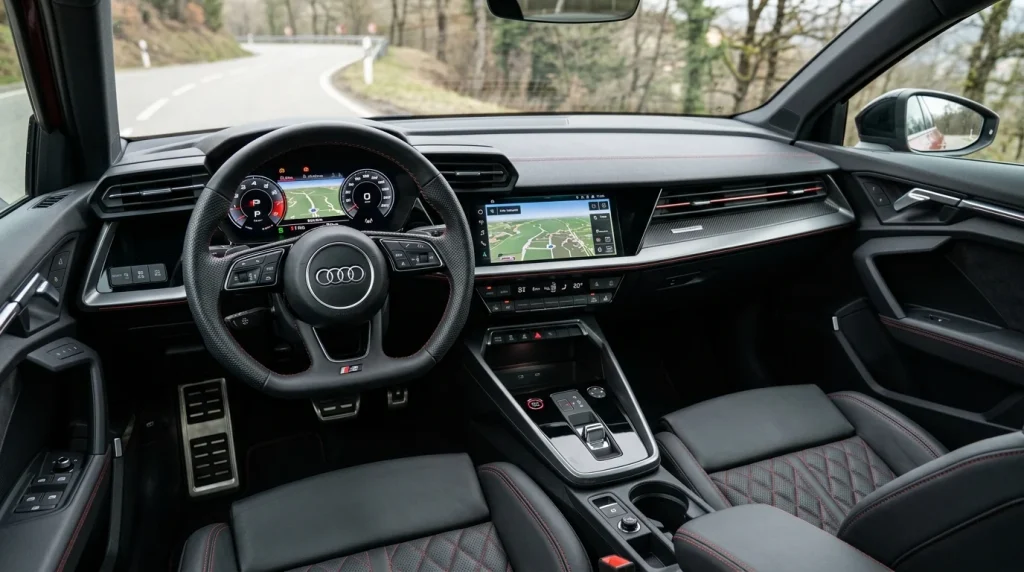
For more information on current automotive releases, you can check out the latest Autvex News updates.
The table below matches key buyer profiles with the recommended Audi models:
| Buyer Profile | Recommended Model | Starting Price | Core Reason |
|---|---|---|---|
| Ultimate Acceleration | RS e-tron GT Performance | $170,500 | 912 HP, 2.1s tested 0-60, Porsche J1 platform |
| Performance and Utility | RS 6 Avant Performance | $130,700 | 621 HP twin-turbo V8, 59.3 cubic feet cargo space |
| Plug-In Hybrid Flexibility | RS 5 Plug-in Hybrid | TBD | 639 HP V6 PHEV, 50 miles of WLTP electric range |
| Iconic Combustion Character | RS 3 Sedan | $66,100 | 394 HP turbocharged 5-cylinder engine, torque-splitter |
| Daily Commuting Balance | S5 Sedan | $63,300 | 362 HP V6, comfortable ride quality for city driving |
| Accessible Performance | S3 Sedan | $52,000 | 328 HP turbo 4-cylinder, standard torque-splitter AWD |
Complete Audi Sports Car Lineup Comparison
Audi’s performance portfolio is split between the track-capable RS tier and the daily-friendly S tier. To help you visualize the differences, here is a complete side-by-side comparison of the key sports models available:
| Model | Starting Price (MSRP) | Horsepower | 0-60 mph Time | Powertrain Type | Body Style |
|---|---|---|---|---|---|
| RS e-tron GT Performance | $170,500 | 912 HP | 2.1 seconds | Dual-Motor Electric | 4-Door Sedan |
| RS 6 Avant Performance | $130,700 | 621 HP | 3.5 seconds | 4.0L Twin-Turbo V8 | 4-Door Wagon |
| RS 7 Performance | $131,195 | 621 HP | 2.9 seconds | 4.0L Twin-Turbo V8 | 4-Door Fastback |
| S e-tron GT | $104,900 | 670 HP | 3.3 seconds | Dual-Motor Electric | 4-Door Sedan |
| RS 5 Plug-in Hybrid | TBD | 639 HP | 3.5 seconds | V6 twin-turbo PHEV | 4-Door Sedan/Wagon |
| RS 3 Sedan | $66,100 | 394 HP | 3.6 seconds | 2.5L Turbo 5-Cylinder | 4-Door Sedan |
| S5 Sedan | $63,300 | 362 HP | 4.5 seconds | 3.0L Turbo V6 | 4-Door Sedan |
| S3 Sedan | $52,000 | 328 HP | 4.4 seconds | 2.0L Turbo 4-Cylinder | 4-Door Sedan |
Detailed Rankings of the Best Audi Sports Cars
To provide a deeper analysis, we have ranked the current sports car models. Each review outlines key performance specifications, daily usability, strengths, and limitations.
#1. RS e-tron GT Performance – The Ultimate Electric Flagship
The RS e-tron GT Performance stands as the most powerful production vehicle in Audi’s history. Sharing its J1 800-volt architecture with the Porsche Taycan, it features an upgraded 105 kWh battery pack that supports DC fast charging up to 320 kW. This charging capability allows the car to charge from 10% to 80% in just 18 minutes.
According to a press statement by Gernot Döllner, CEO of AUDI AG:
“With the e-tron GT models, we are setting new standards in performance. The increased charging power and electric all-wheel drive ensure improved long-distance capability and considerably more performance. The newly developed chassis offers an unprecedented range between driving comfort, ride comfort, and driving dynamics.”
| Feature | Specification |
|---|---|
| Base MSRP | $170,500 |
| Powertrain | Dual-Motor Electric |
| Horsepower | 912 HP (with launch control) |
| 0-60 mph (Tested) | 2.1 seconds |
| EPA-Estimated Range | 278 miles |
| Maximum DC Charge Rate | 320 kW |
Analysis: The decision to tune the RS e-tron GT Performance for grand touring comfort rather than aggressive track performance aligns with Audi’s brand identity. It provides a distinct alternative to the firmer Porsche Taycan, offering buyers a highly daily-drivable electric vehicle.
Note: Charging performance is optimal on 350 kW DC fast chargers, but cold weather can temporarily reduce charging speeds and range.
Strengths:
- Supercar-level 2.1-second tested acceleration.
- Ultra-fast 320 kW charging capability.
- Balanced active suspension that delivers grand touring comfort.
Limitations:
- High starting price of $170,500.
- Rear seat headroom is limited by the sloping fastback roofline.
- Performance levels are rarely exploitable on public roads.
#2. RS 6 Avant Performance – Best Performance Wagon
For enthusiasts who refuse to choose between supercar speed and family utility, the RS 6 Avant Performance remains the benchmark. Under the hood sits a twin-turbocharged 4.0L V8 paired with a mild-hybrid system.
| Feature | Specification |
|---|---|
| Base MSRP | $130,700 |
| Powertrain | 4.0L Twin-Turbo V8 |
| Horsepower | 621 HP |
| Torque | 627 lb-ft |
| Cargo Space | 59.3 cubic feet (rear seats folded) |
| Drivetrain | Quattro AWD with sport differential |
The RS 6 Avant provides a spacious interior that easily accommodates luggage or sports equipment. Audi Sport also offers a highly exclusive, track-oriented RS 6 GT variant inspired by the classic Audi 90 quattro IMSA GTO race car, though production is capped globally.
Strengths:
- Exceptional cargo utility with 59.3 cubic feet of space.
- Visceral exhaust note from the twin-turbo V8.
- Premium cabin with standard sport seats and high-end materials.
Limitations:
- High starting price of $130,700.
- Poor fuel economy with an EPA rating of 17 mpg combined.
- Wagon styling is polarizing for some luxury car buyers.
#3. RS 7 Performance – Best Four-Door Fastback
The RS 7 Performance features the exact same V8 powertrain as the RS 6 Avant, but wraps it in a low-slung, highly aerodynamic fastback body. This aerodynamic shape helps the RS 7 achieve a quicker 2.9-second tested 0-60 mph sprint.
| Feature | Specification |
|---|---|
| Base MSRP | $131,195 |
| Powertrain | 4.0L Twin-Turbo V8 |
| Horsepower | 621 HP |
| 0-60 mph (Tested) | 2.9 seconds |
| Cargo Space | 25.0 cubic feet |
| Braking (70-0 mph) | 143 feet (with optional ceramic brakes) |
The RS 7 Performance includes standard rear-wheel steering, which significantly improves low-speed maneuverability while stabilizing high-speed cornering.
Strengths:
- Sleek and aggressive Sportback silhouette.
- Tested 2.9-second acceleration makes it faster off the line than the RS 6.
- Practical hatchback trunk utility with 25 cubic feet of space.
Limitations:
- The fastback roofline compromises rear-seat headroom.
- Shares identical V8 performance figures with competitors like the BMW M8.
- Maintenance costs for the brakes and V8 engine are very high.
#4. S e-tron GT – The Electric Grand Tourer
The S e-tron GT serves as the starting point for Audi’s electric grand tourer range. With 670 horsepower, it offers plenty of speed while prioritizing ride comfort and range over track performance.
| Feature | Specification |
|---|---|
| Base MSRP | $104,900 |
| Powertrain | Dual-Motor Electric |
| Horsepower | 670 HP |
| 0-60 mph (Claimed) | 3.3 seconds |
| EPA-Estimated Range | 300 miles |
| Maximum DC Charge Rate | 270 kW |
The S e-tron GT is tuned to deliver a softer ride than the RS variants, making it a highly refined daily driver.
Strengths:
- Starting price is $65,600 cheaper than the RS e-tron GT Performance.
- Longer 300-mile range.
- Extremely quiet and vibration-free cabin.
Limitations:
- Steering engagement is less communicative than the Porsche Taycan.
- Tight rear-seat legroom.
- Infotainment interface takes time to master.
#5. RS 5 Plug-in Hybrid – The Hybrid Pioneer
The new RS 5 Plug-in Hybrid represents a major powertrain shift for Audi Sport. Replacing the previous V6 twin-turbo model, it combines a 2.9L twin-turbo V6 with a 130 kW electric motor and a 25.9 kWh battery pack, delivering a combined 639 horsepower.
If you are considering a pre-owned model from the previous generation, be sure to read the Audi A5 years to avoid guide to identify more reliable model years.
| Feature | Specification |
|---|---|
| Base MSRP | TBD |
| Powertrain | 2.9L Twin-Turbo V6 PHEV |
| Combined Horsepower | 639 HP |
| Combined Torque | 825 Nm (approx. 608 lb-ft) |
| Electric-Only Range | Approximately 50 miles (WLTP) |
| Battery Capacity | 25.9 kWh (22.0 kWh usable) |
The RS 5 PHEV features a new electromechanical torque-vectoring rear differential that manages traction across the rear wheels.
Strengths:
- Highly efficient with a 50-mile electric commuting range.
- Substantial power increase over the predecessor (444 HP to 639 HP).
- Versatile power delivery that blends electric torque and V6 top-end pull.
Limitations:
- Weighs over 5,000 lbs (2,300 kg) due to battery and motor components.
- Cargo space is slightly reduced to accommodate hybrid electronics.
- US market availability and final pricing are still pending.
#6. RS 3 Sedan – Most Accessible RS Model
The RS 3 features Audi’s legendary 2.5-liter turbocharged 5-cylinder engine, which is celebrated for its unique firing order and rally-inspired exhaust sound.
| Feature | Specification |
|---|---|
| Base MSRP | $66,100 |
| Powertrain | 2.5L Turbocharged 5-Cylinder |
| Horsepower | 394 HP |
| Torque | 369 lb-ft |
| 0-60 mph (Claimed) | 3.6 seconds |
| Drivetrain | Quattro with torque-splitter rear differential |
The RS 3’s torque-splitter rear differential uses two multi-plate clutches to send up to 100% of rear torque to a single wheel, reducing understeer.
Strengths:
- Renowned 5-cylinder engine with a highly distinct exhaust note.
- Accessible starting price for a full RS model.
- Highly agile handling in a compact footprint.
Limitations:
- Option packages easily push the final price past $75,000.
- Extremely tight rear-seat legroom.
- The interior plastics in the lower dashboard feel cheap compared to the RS 5.
#7. S5 Sedan – Balanced Daily Sport Sedan
The S5 Sedan offers V6 performance in a comfortable package. Powered by a 3.0-liter turbocharged V6, it serves as an excellent commuter for buyers who want sporty looks without the stiff ride of the RS 5.
| Feature | Specification |
|---|---|
| Base MSRP | $63,300 |
| Powertrain | 3.0L Turbo V6 |
| Horsepower | 362 HP |
| Drivetrain | Quattro AWD |
| Body Styles | Sedan, Sportback |
Strengths:
- Refined V6 engine with smooth power delivery.
- Highly comfortable suspension tune for daily highway cruising.
- Classic executive sedan styling.
Limitations:
- Lacks the visceral, aggressive styling of the RS models.
- Acceleration is modest compared to the similarly priced S3.
- Exhaust sound is highly muted.
#8. S3 Sedan – Entry-Level Audi Sport Performance
The S3 Sedan is the most affordable model in the Audi Sport lineup, starting at $52,000. For the 2026 model year, Audi has updated the S3 to include standard torque-splitter technology from the RS 3, making it highly agile.
Proper engine maintenance is critical for these high-performance inline-4 setups. For basic upkeep, knowing whether you should check oil when the car is hot or cold is essential for accurate dipstick readings.
| Feature | Specification |
|---|---|
| Base MSRP | $52,000 |
| Powertrain | 2.0L Turbo 4-Cylinder |
| Horsepower | 328 HP |
| 0-60 mph (Claimed) | 4.4 seconds |
| Highway Fuel Economy | 32 mpg |
Strengths:
- Most affordable model in the lineup at $52,000.
- Excellent fuel efficiency at 32 mpg highway.
- Features the torque-splitter differential for sharp cornering dynamics.
Limitations:
- Lacks the prestige of the V6 or V8 engines.
- Trunk space is small.
- Standard trim consolidates options, offering less customization.
The Audi Nuvolari: The Legendary V8 Hybrid R8 Successor
Unveiled in June 2026, the Audi Nuvolari serves as the spiritual successor to the mid-engine Audi R8, which concluded production in 2023. departure from previous rumors of a fully electric successor, the Nuvolari utilizes a high-performance plug-in hybrid V8 setup.
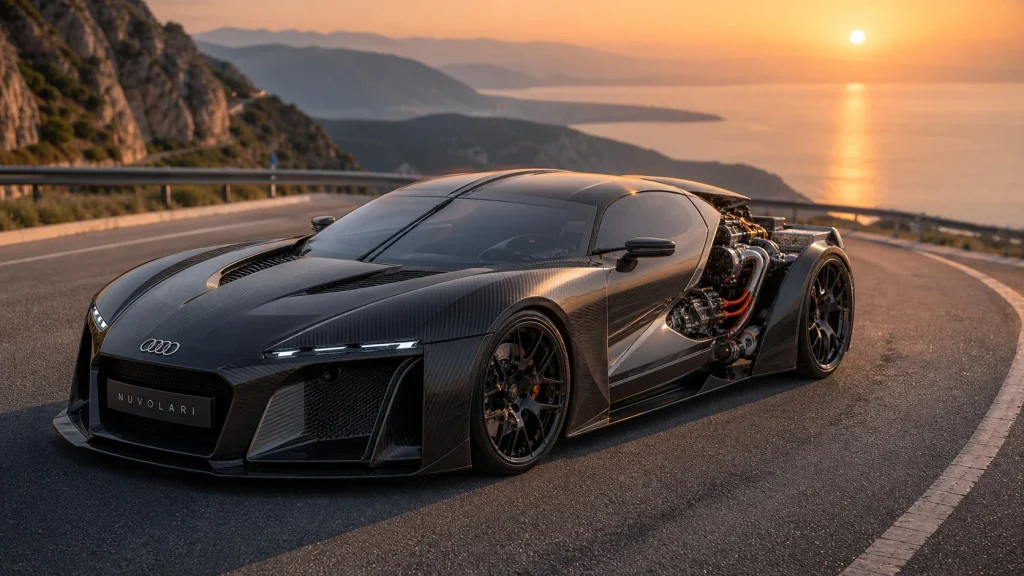
The supercar is named in honor of Tazio Nuvolari, the legendary Italian racing driver who competed for Auto Union in the 1930s.
According to Rolf Michl, Managing Director of Audi Sport GmbH:
“With the RS e-tron GT, we are pioneers of e-mobility in the high-performance segment. It marks the entry into the purely electric RS world of Audi and, as a highly emotional image bearer, is an important milestone for the entire brand.”
The Nuvolari is built on a carbon-fiber chassis shared with the Lamborghini Temerario:
- Powertrain: A 4.0-liter twin-turbocharged V8 engine paired with a three-motor hybrid system.
- System Output: 1,001 PS (987 HP / 736 kW).
- Acceleration: 0 to 100 km/h (62 mph) in 2.6 seconds.
- Top Speed: Exceeds 217 mph (350 km/h).
- Production: Strictly limited to 499 units worldwide.
- Pricing: Approximately $700,000 USD (around €600,000).
Deliveries are expected to begin in the first half of 2027. Given its extreme price tag and limited production, the Nuvolari serves as a collector’s vehicle rather than a standard consumer performance choice.
Electric vs. ICE vs. Hybrid: Choosing Your Audi Performance Powertrain
With Audi offering electric, hybrid, and traditional combustion models, choosing the right powertrain is key. The table below compares the representative models for each type:
| Factor | Electric (RS e-tron GT Performance) | Hybrid (RS 5 PHEV) | ICE (RS 6 Avant Performance) |
|---|---|---|---|
| Horsepower | 912 HP | 639 HP | 621 HP |
| 0-60 mph Time | 2.1 seconds | 3.5 seconds | 3.5 seconds |
| Primary Range | 278 miles (Battery) | ~50 miles EV + Gas tank | ~400 miles (Gas tank) |
| Exhaust Note | Synthetic Sport Sound | V6 exhaust + electric quiet | Raw V8 rumble |
| Refueling Time | 18 mins (10-80% DC) | 2 hours (Level 2) / 5 mins Gas | 5 minutes (Gasoline) |
High-performance ICE setups generate massive thermal loads, so understanding how to tell if your car is overheating can save your engine block from permanent damage.
Who should go electric
Buyers who prioritize the absolute fastest straight-line acceleration and have home charging capability. The RS e-tron GT Performance is objectively the fastest production vehicle Audi has ever built, out-sprinting all combustion models.
Who should stay ICE
Buyers who value mechanical feedback, long-distance driving without charging stops, and the classic V8 exhaust rumble. The RS 6 Avant and RS 7 Performance offer a level of engagement and utility that electric vehicles cannot match.
Who should go hybrid
Buyers who want local, electric-only commuting efficiency during the work week but desire full V6 combustion power and unrestricted highway range for long-distance weekend trips. The RS 5 PHEV bridges these needs perfectly.
Frequently Asked Questions About Audi Sports Cars
What is the fastest Audi sports car?
The RS e-tron GT Performance is the fastest accelerating Audi production car, achieving a tested 2.1-second 0-60 mph sprint. By total power output, the limited-edition Audi Nuvolari supercar is the most powerful, producing 1,001 PS from its V8 hybrid setup, though its 0-62 mph acceleration is 2.6 seconds.
Does Audi still make the R8?
No, the Audi R8 was discontinued in 2023. Its spiritual successor is the Audi Nuvolari, a V8 hybrid supercar producing 1,001 PS, unveiled in June 2026. Production is capped at 499 units worldwide with a price tag of around $700,000 USD.
What is the cheapest Audi RS model?
The cheapest full RS model is the RS 3 Sedan, starting at $66,100. For buyers who want entry-level performance below the RS tier, the S3 Sedan starts at $52,000.
How much horsepower does the RS e-tron GT have?
The RS e-tron GT Performance produces 912 horsepower from its dual-motor electric setup when launch control is active. The entry-level S e-tron GT produces 670 horsepower.
What is the Audi Nuvolari?
The Audi Nuvolari is a limited-run V8 hybrid supercar producing 1,001 PS, built on a carbon-fiber space frame shared with the Lamborghini Temerario. It is restricted to 499 units globally.
Is the RS 5 a hybrid now?
Yes, the new-generation RS 5 is a plug-in hybrid. It combines a twin-turbo 2.9L V6 with a 130 kW electric motor for a total output of 639 horsepower, offering approximately 50 miles of WLTP electric range.
What is the best Audi sports car for daily driving?
The S5 Sedan ($63,300) offers the best balance, combining smooth V6 power with a comfortable suspension setup. The S3 ($52,000) is the most fuel-efficient option, returning 32 mpg on the highway.
How does the RS e-tron GT compare to the Porsche Taycan?
Both vehicles share the same J1 800-volt platform, electric motors, and battery packs. However, the Audi is tuned for grand touring comfort, offering a slightly softer ride and a quieter cabin, whereas the Porsche Taycan is tuned for direct track handling.

