

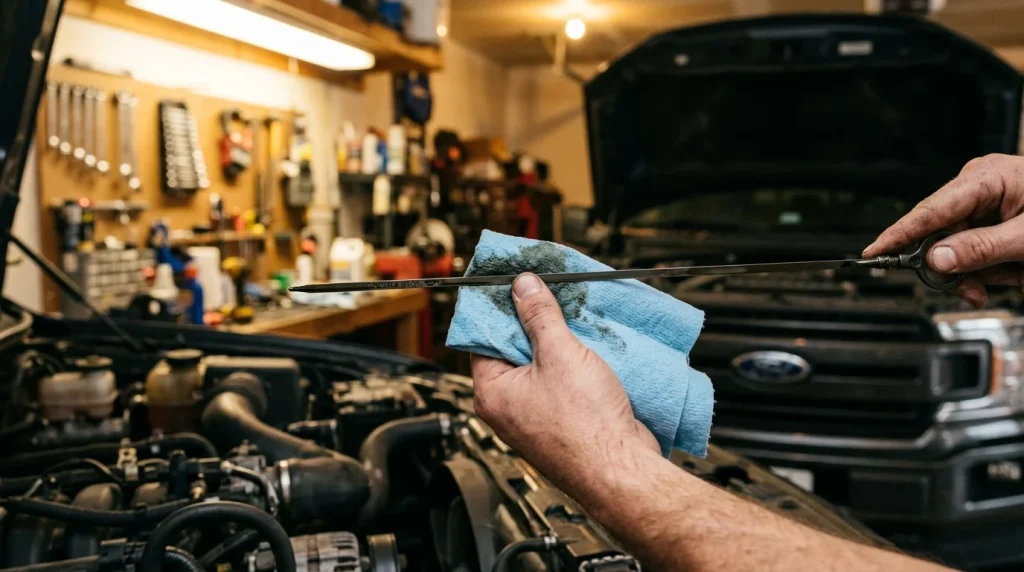
Quick answer:
When deciding do you check oil when car is hot or cold, the general recommendation is to check the level when the engine is warm but has rested for 5 to 10 minutes after being shut off. This allows the fluid to flow easily while giving it enough time to drain back down into the oil pan for an accurate reading. Alternatively, checking it when completely cold, such as in the morning before starting the vehicle, also provides a highly reliable and safe measurement.
Key takeaways:
- Turn the ignition off before checking; never measure your engine oil while the vehicle is running due to safety risks and splash-induced errors.
- Wait 5 to 10 minutes after driving to let hot oil drain from the cylinder head back down to the oil pan.
- Checking the oil immediately after driving leads to a false low reading, which risks overfilling and damaging the engine.
- Modern luxury brands, including BMW, Mercedes-Benz, and Audi, often require warm checks at full operating temperature via electronic dashboard sensors.
- Park on perfectly level ground to ensure the oil settles evenly and prevent the dipstick from registering an incorrect fluid level.
The Core Answer: Should You Check Oil Hot or Cold?
The temperature of your engine oil directly affects its viscosity and distribution throughout the engine block. The ultimate goal of checking engine oil is to measure the total volume of lubricant resting in the oil pan at the bottom of the crankcase.
According to official advice from the auto care specialists at Mobil 1 Ask Our Auto Experts, drivers should check the oil level either before turning on the engine or 5 to 10 minutes after shutting it down. This time frame ensures that all active lubricant has drained back into the oil pan to provide an accurate measurement.
If you pull the dipstick immediately after turning off the key, a significant volume of oil remains trapped in the upper valve train, cylinder heads, and camshaft galleries. This lag in drain-back time causes the dipstick to show a false low reading.
| Engine State | Advantages | Disadvantages |
|---|---|---|
| Cold Check (Before starting) | Maximum drain-back achieved; highly consistent baseline reading; zero risk of burns from hot components. | Cold oil is thicker and can be slightly harder to read clearly on crosshatched dipsticks. |
| Warm-But-Rested (5 to 10 minute wait) | Accurately accounts for thermal expansion; matches the diagnostic specifications of many modern car brands. | Requires waiting patiently after driving; checking too soon yields inaccurate results. |
| Immediately Hot (0 minute wait) | None. This is an incorrect checking method that should be avoided. | Guarantees a false low reading, prompting owners to overfill the engine. |
Analysis:
The main cause of variation between hot and cold dipstick readings is not the physical expansion of the oil, but rather the settling time. Motor oil does expand when heated, but the expansion of a standard 5-quart capacity at operating temperature is less than one-eighth of an inch on a standard dipstick. This minor change is easily offset by waiting for the fluid to settle.
The Expert Debate: Cold Check vs. Warm Check
Automotive organizations and veteran mechanics have long debated the absolute best time to pull the dipstick. Different guidelines exist because both methods have valid engineering justifications.
In the cold-check camp, the AAA Club Alliance states that in many vehicles, the best time to take an oil reading is after the car has been parked overnight on a level surface and the engine is cold. The primary benefit of an overnight rest is that gravity has pulled every drop of oil back into the sump, leaving a clear and clean line on the metal dipstick. This recommendation is supported by the AAA Auto Repair Guide, which advises drivers to ensure the engine is cold and not running.
Conversely, many manufacturers have recalibrated their dipsticks for warm oil. In a syndicated automotive column published by the Seattle PI / Car Talk, automotive experts Tom and Ray Magliozzi noted that Ford Motor Company and General Motors started recommending that people check their oil when the engine is warm. When these manufacturers design their engines, they calibrate the dipstick indicator lines based on the volume of oil at operating temperature, which is roughly 212°F (100°C).
Note:
If you are unsure which method to use, always check your vehicle’s owner’s manual. The manufacturer’s instructions are the ultimate authority for your specific vehicle model. If the manual is unavailable, a warm-but-rested check (waiting 10 minutes after driving) is the safest default choice that works for most cars.
Manufacturer Guidelines: How Automakers Calibrate Dipsticks
Different automotive brands use different engineering tolerances for their lubrication systems. This results in varied guidelines across brands:
- Toyota, Honda, and Subaru: These brands generally recommend checking the oil level when the engine is cold. If the vehicle was recently driven, they advise waiting at least 5 minutes to let the oil drain back.
- Ford and General Motors: Many models from these American manufacturers specify a warm-engine check. For heavy-duty trucks with larger capacities, warm checks are standard practice.
- BMW, Mercedes-Benz, and Audi/Volkswagen: High-performance European cars typically require a warm-engine check. Because these engines use complex variable valve timing systems and large oil capacities, the dipsticks are calibrated to read correctly only after the oil has fully warmed up and expanded.
Understanding these manufacturer-specific guidelines is just as important as knowing other basic maintenance details, such as how long does it take to replace a car battery or how to spot early alternator wear.
Step-by-Step Guide: How to Check Your Engine Oil Safely
To obtain a precise measurement and avoid engine damage, you must follow a methodical checking process.
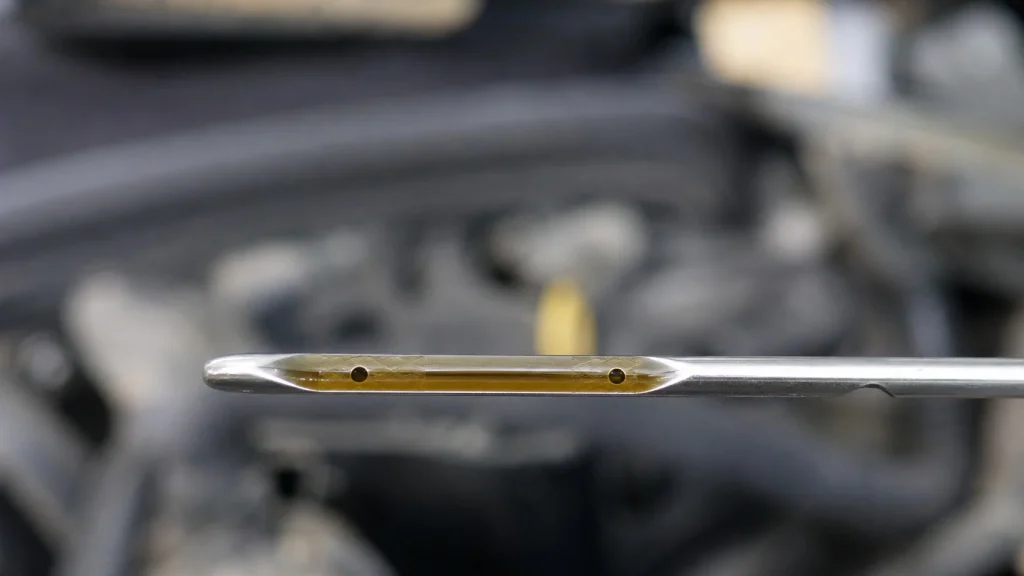
According to the maintenance guidelines published by Consumer Reports, here is the correct procedure:
- Park on Level Ground: Park the car on a flat surface. If the vehicle is parked on an incline, the oil will pool toward one side of the pan, causing the dipstick to register a level that is too high or too low.
- Turn Off the Engine: Ensure the engine is shut off. Do not check oil with the car running, as this creates a severe safety hazard from spinning belts and hot oil spray.
- Wait 5 to 10 Minutes: Allow the oil to drain from the top of the engine back into the pan.
- Locate and Pull the Dipstick: Open the hood and find the dipstick handle, which is usually bright yellow or orange. Pull it out completely.
- Wipe the Dipstick Clean: Use a clean, lint-free cloth or paper towel to wipe all oil off the blade. This removes any oil that splashed up the guide tube while driving.
- Reinsert and Read: Push the dipstick all the way back into the tube until it is fully seated. Pull it out again and keep it horizontal. Inspect the oil film on the tip.
The level must sit between the two markings, which might be dots, lines, or a crosshatched pattern. If the oil is at or below the lower line, you must add oil immediately.
Always add oil in small increments. Pour in half a quart, wait a minute for the fluid to reach the pan, and recheck. Overfilling the oil pan can cause the crankshaft to whip the lubricant into a foam, preventing the oil pump from building pressure and leading to severe engine damage. If your engine ever fails to start due to other issues, such as a fuel delivery failure, you may need to learn how to start a car with a bad fuel pump rather than focusing on the oil level.
The Future of Oil Checking: Electronic Sensors in 2026 Vehicles
As automotive technology evolves, the physical dipstick is rapidly disappearing. Many new passenger vehicles have replaced the dipstick with electronic oil level sensors that display readings directly on the dashboard screen.
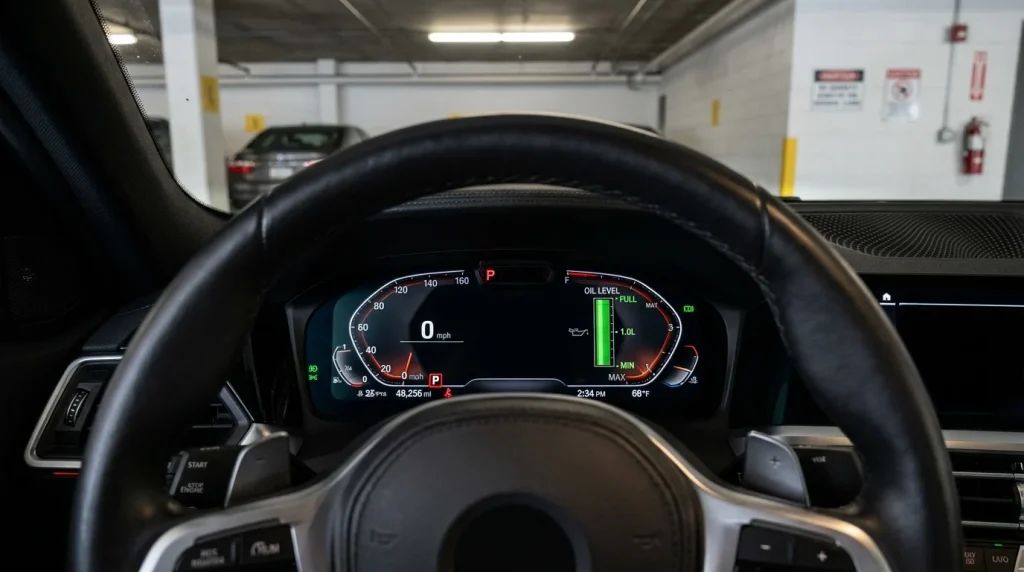
This technological shift is highly prevalent in modern German luxury vehicles, including models that often appear in reliability reviews like the Audi A4 years to avoid or the Audi A3 years to avoid. These vehicles rely on ultrasonic and thermal sensors mounted inside the oil pan to track fluid levels in real time.
For these sensor-based systems, checking the oil when it is cold is not possible. If you try to check the level in the morning, the dashboard menu will show a message stating that the engine must reach full operating temperature before a reading can be calculated.
To use these electronic systems, you must drive the car for 10 to 15 minutes to warm up the oil, park on a level surface, and let the vehicle idle or sit for a few minutes while the computer measures the oil level.
Frequently Asked Questions
How long to wait to check oil after driving?
You should wait at least 5 to 10 minutes after shutting off the engine before checking the oil level. This wait time allows the motor oil that was pumped to the top of the engine during operation to drain back down into the oil pan, ensuring the dipstick shows the correct level.
Can you overfill oil if you check it when hot?
Yes, you can easily overfill the engine if you check the oil immediately after driving without waiting. Because the oil has not settled, the dipstick will show a false low level. If you add oil based on this incorrect reading, the engine will become overfilled once the remaining oil drains down, risking aeration and seal damage.
Do you check oil with the car running?
No, you must never check engine oil with the car running. Checking the oil while the engine is running will yield an inaccurate reading because the oil is actively circulating. Additionally, it poses a safety risk, as you could get injured by moving engine components or splashed by hot oil.
Does oil expand when it gets hot?
Yes, motor oil expands slightly when heated to normal operating temperatures. However, this thermal expansion is very small, resulting in a negligible change on the dipstick compared to the difference caused by oil circulating throughout the engine block during operation.
For more detailed guides and the latest automotive maintenance tips, visit the Autvex News hub.

