

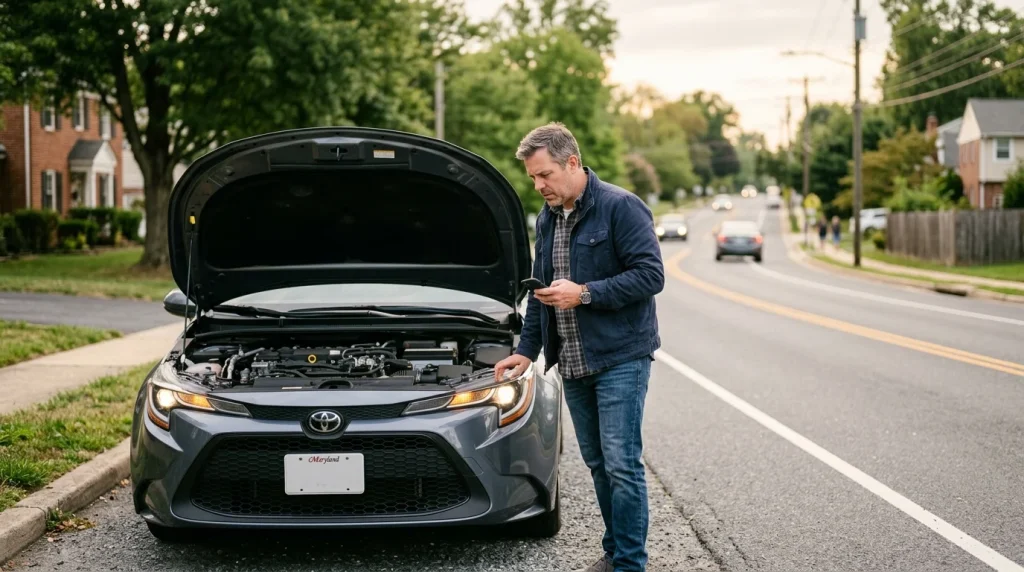
Quick answer: When a car will not jump start but the dashboard lights turn on, the issue is typically not a dead battery. Low-draw components like interior lights only require 5 to 10 amps to function, whereas a starter motor demands a massive surge of 125 to over 250 amps to crank the engine. If connecting healthy jumper cables fails to start the vehicle, the starting circuit is encountering high electrical resistance from corroded battery terminals, a failed starter motor, a seized starter solenoid, or a blown ignition relay.
Key takeaways:
- Dashboard lights draw under 10 amps, while starter motors require 125 to 250-plus amps to turn the flywheel.
- A single click when turning the ignition key points directly to a failed starter motor or solenoid.
- Rapid clicking suggests low voltage reaching the starter, usually caused by loose or corroded battery clamps.
- Complete silence when attempting to start indicates a broken control path, such as a bad relay or ignition switch.
The Amperage Mismatch: Why Your Lights Work But the Engine Won’t Crank
Many drivers are confused when their headlights and radio function perfectly, yet the engine refuses to crank even when connected to a running donor vehicle. This situation occurs because of a significant difference in electrical current demands. Low-draw electronic systems operate on a small trickle of current, whereas cranking an internal combustion engine requires a massive burst of energy.
Accessory circuits, including the instrument cluster, radio, and interior dome lights, draw very little current, typically between 5 and 20 amps. In contrast, the starter motor must draw massive amperage to rotate the heavy engine flywheel. According to the Automotive Service Excellence (ASE) study guidelines, starter current draw specifications vary by engine size and configuration:
- Four-cylinder gasoline engines: 125 to 150 amps
- Six-cylinder gasoline engines: 150 to 175 amps
- Eight-cylinder gasoline engines: 200 amps or more
- Diesel engines: 350 to 650 amps, depending on displacement and compression ratios
If a battery is severely depleted or has high internal resistance, it may retain enough surface charge to power low-draw accessories, but its voltage will collapse instantly under the hundred-amp load required by the starter motor. A jump-start might fail to bypass this if the electrical flow is blocked by physical barriers in the circuit.
Analysis: When you connect jumper cables, you are attempting to supply external amperage to the electrical system. If the lights come on but the starter does not crank, the bottleneck is located past the main electrical feeds, indicating that the starter assembly or the high-current wiring is compromised.
Note: Always ensure the donor car is running and the jumper cable clamps have bitten through dirt or corrosion to make clean contact before diagnosing other components.
4 Common Causes When a Jump Start Fails But Lights Turn On
If the starting system does not respond to a jump-start, the electrical current is either blocked from reaching the starter motor or the motor itself cannot operate. Technicians look for four primary causes in the starting circuit.
Failed Starter Motor or Solenoid
The starter motor is an electric assembly mounted near the junction of the engine and transmission. Inside the motor, spring-loaded carbon brushes wear down over time, preventing electricity from spinning the armature. Additionally, the starter solenoid, which acts as a magnetic switch to slide the starter gear into the engine flywheel, can suffer from burnt electrical contacts. When these contacts burn, the solenoid engages but fails to pass high-amperage current to the motor.
High Resistance at Battery Terminals
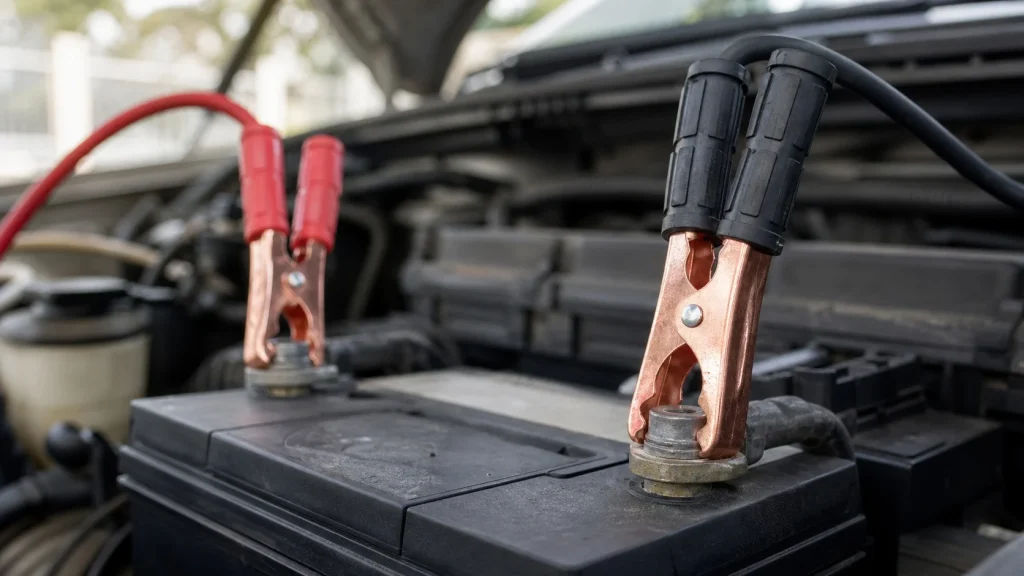
Corrosion is one of the most common causes of failed jump-starts. As lead-acid batteries age, they release hydrogen gas, which reacts with the metal terminals to form a white, crusty layer of lead sulfate. The American Automobile Association (AAA) notes in its guides that even a thin layer of terminal corrosion can completely block electricity from flowing. This high resistance might allow 5 amps through for the dashboard indicators, but it blocks the 200 amps required by the starter motor.
Blown Starter Relay or Ignition Fuse
The ignition switch on your steering column does not send high-amperage current directly to the starter. Instead, turning the key sends a tiny electrical signal to a starter relay in the engine bay fuse box. The relay acts as an electromagnetic switch, closing a larger internal contact to send high-current battery power directly to the starter solenoid. If the relay coil burns out or the ignition fuse blows, the starting signal is cut short, preventing cranking.
Faulty Ignition Switch or Safety Switches
An ignition switch has multiple internal contacts that distribute power to different circuits. If the start contact wears out, the switch will power the dashboard and radio in the “on” position but will fail to send a crank signal when turned to the “start” position. Similarly, safety interlock switches, such as the neutral safety switch on automatic transmissions or the clutch switch on manual gearboxes, will block the start signal if they malfunction.
Analysis: Determining whether the issue is a dead battery or a charging system fault is the first step in avoiding unnecessary replacements. For instance, knowing how to jumpstart a car with a bad alternator can help clarify if the issue is a charging failure or a starter circuit block.
Sound Diagnostics: What the Noise at Key Turn Tells You
When diagnosing a starting failure, the sound heard when turning the key or pressing the start button provides immediate clues. Listening closely helps isolate the failing component in the starting loop.
According to AAA technical advisories, starting sounds indicate specific system failures:
| Crank Sound | Probable Cause | Electrical Circuit Issue |
|---|---|---|
| Single Loud Click | Failed starter motor or burnt solenoid contacts | The solenoid is engaging, but the starter motor is physically unable to spin. |
| Rapid Clicking | Low voltage at starter or bad ground path | Insufficient current is reaching the solenoid, causing it to rapidly engage and disengage. |
| Complete Silence | Blown fuse, bad starter relay, or failed safety switch | The start signal is blocked before it can reach the starter solenoid. |
| Engine Cranks Slowly | High resistance in starter circuit or mechanical drag | Excessive resistance reduces voltage, slowing down the cranking speed. |
Step-by-Step Troubleshooting for Drivers
If you are stranded with a car that won’t start but has working dashboard lights, you can use these diagnostic steps to narrow down the cause and potentially start the vehicle.
Step 1: Perform a Visual Inspection
Open the hood and inspect the battery clamps. If you see a white or blue crust on the terminals, use a wire brush or a battery terminal cleaner to scrub the corrosion away. Ensure the clamps are tight; if you can twist them by hand, they are too loose to carry the starting current.
Step 2: Test the Safety Interlock Switches
If the starter is silent, try starting the car in Neutral instead of Park. On automatic vehicles, the neutral safety switch can wear out or become misaligned. Moving the shifter to Neutral (N) and turning the key can sometimes complete the circuit. For manual cars, press the clutch pedal down firmly to ensure the safety switch is depressed.
Step 3: Check Battery Voltage Under Load
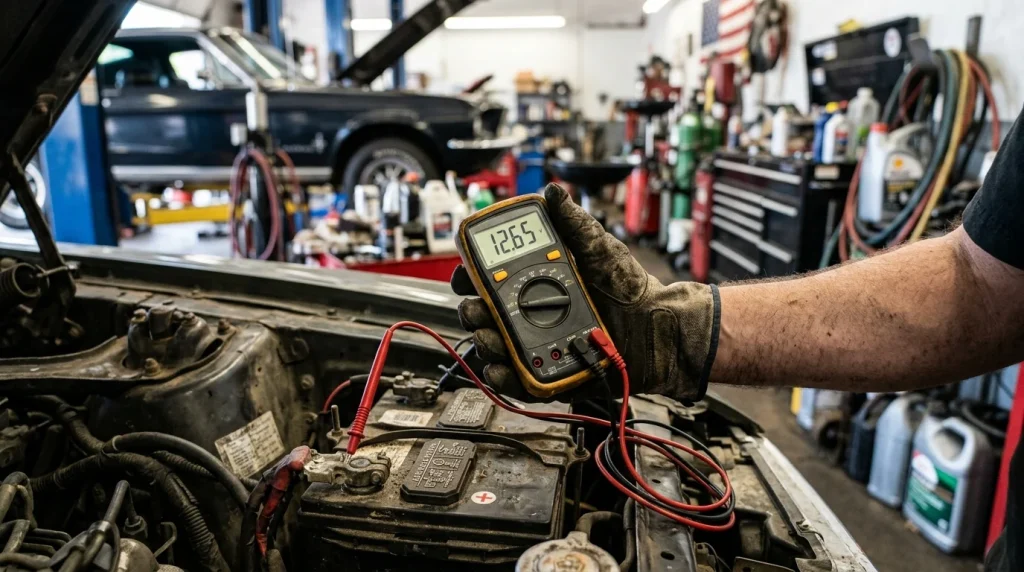
Use a multimeter to measure the battery voltage across the terminals. A fully charged battery should read 12.6 volts at rest. If the voltage drops below 10 volts when you attempt to crank the engine, the battery lacks the capacity to turn the engine, meaning it must be charged. You can read about how long it takes to charge a car battery to understand the recovery process.
Step 4: The Starter Tapping Trick
If the starting system clicks once but won’t rotate, locate the starter motor under the hood. Using a solid object like a wrench or hammer, tap the starter casing gently while an assistant turns the ignition key. This minor vibration can temporarily realign worn electrical brushes inside the motor, allowing the starter to engage one last time so you can drive to a repair shop.
Starter Replacement Cost and Repair Analysis
When a starter motor fails, replacement is the standard remedy. The average cost to replace a starter motor typically ranges from $566 to $787, depending on vehicle design and local labor rates.
- Replacement Parts: A new or remanufactured starter motor costs between $200 and $400.
- Labor Fees: Professional installation costs range from $150 to $400.
The biggest factor in starter replacement labor is accessibility. On inline-four engines, the starter is usually mounted on the exterior of the block, allowing a mechanic to swap it out in under an hour. However, on many modern V6 and V8 engines, the starter motor is located under the intake manifold. Replacing it requires removing fuel rails, gaskets, and intake ducting, which adds several hours of labor to the repair bill.
Frequently Asked Questions
Can a completely dead battery cause the lights to work but not start?
Yes. A battery can have a dead cell or lose its cranking capacity while maintaining enough voltage to run low-draw devices. Dashboard lights and radio screens draw very little amperage, so they can function even when the battery is far too weak to spin the starter motor.
How do I know if my starter relay is bad?
A bad starter relay will typically result in complete silence when you turn the ignition key. You can test it by swapping the starter relay in your fuse box with an identical, working relay from a non-critical circuit, such as the horn or air conditioning relay, to see if the engine cranks.
How many miles does a starter motor last?
A standard starter motor is built to last between 100,000 and 150,000 miles. However, frequent short trips, excessive engine starts, oil leaks dripping onto the starter body, or extreme cold weather can cause the internal components to fail prematurely.
If you have diagnosed a starter failure, it is recommended to have the vehicle towed to a professional repair facility. For more detailed guides on diagnosing electrical issues, browse our collection of automotive news and guides.

