

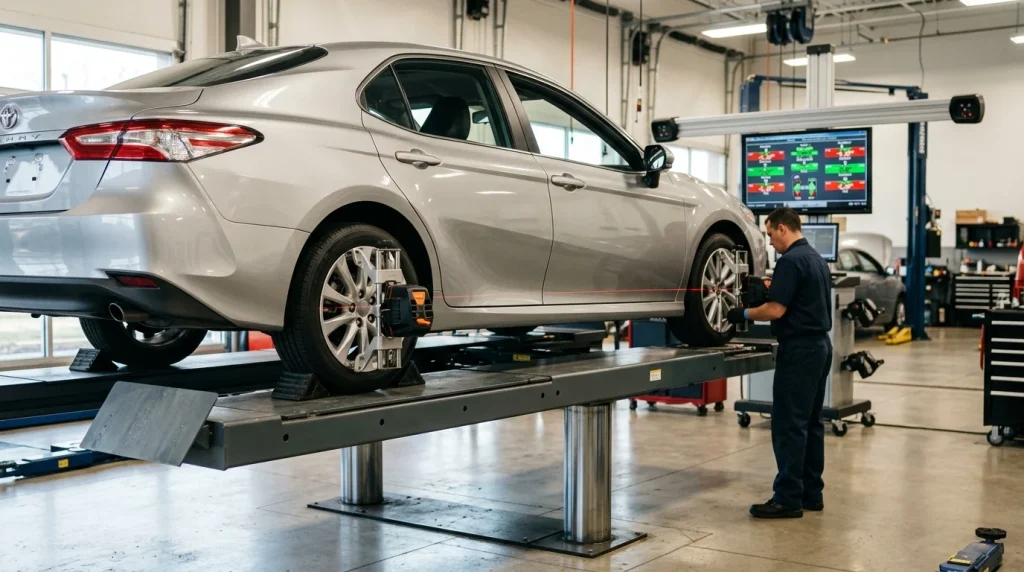
Quick answer: A standard wheel alignment typically takes 30 to 90 minutes. A front-end (two-wheel) alignment requires 30 to 60 minutes, while a four-wheel alignment takes 60 to 90 minutes under normal shop conditions. However, newer electric vehicles requiring advanced driver assistance system (ADAS) sensor calibration or vehicles with rusty, seized suspension components can extend the total service time to 2 or 3 hours.
Key takeaways:
- Mainstream front-end alignments take 30 to 60 minutes, while modern four-wheel alignments require 60 to 90 minutes.
- Electric vehicles and models equipped with active ADAS sensors require specialized calibration that increases service time to 1.5 to 3 hours.
- Worn steering components like tie rods or ball joints must be replaced before alignment, adding 1 to 2 hours of labor.
- Misaligned wheels reduce tire life by 30% to 40% and decrease fuel efficiency, making regular checks highly cost-effective.
Wheel Alignment Time by Service Type
The duration of a wheel alignment service depends heavily on the type of suspension system your vehicle uses. Modern vehicles require different alignment methods, which directly dictates how long the vehicle will spend on the technician’s lift.
According to tire manufacturer data published in Pirelli’s tire maintenance guidelines, a standard wheel alignment should generally take an hour or less under normal conditions. However, the specific mechanical setup of your vehicle determines which of the four main alignment types you receive:
| Alignment Type | Service Time | Best Suited For | Key Focus Areas |
|---|---|---|---|
| Front-End (2-Wheel) | 30 – 45 Minutes | Older trucks and sedans with solid rear axles | Front toe and camber adjustment only |
| Thrust Alignment | 45 – 60 Minutes | Rear wheel drive vehicles with solid rear axles | Aligning front wheels to the rear axle thrust line |
| Four-Wheel Alignment | 60 – 90 Minutes | Front-wheel, all-wheel, and 4WD vehicles | Adjusting front and rear suspension components |
| Performance/Specialty | 90 – 120 Minutes | Sports cars and lifted off-road trucks | Precision custom angles and tight tolerances |
Most passenger vehicles built after 2000 feature independent rear suspension systems. This mechanical design requires a full four-wheel alignment to ensure that both axles are tracking in perfect parallel alignment.
If your vehicle is pulled or exhibits uneven tire wear, a technician will scan all four wheels. Even if only the front wheels show symptoms of misalignment, adjusting the rear toe and camber is necessary to keep the steering wheel centered and prevent the vehicle from dog-tracking down the highway.
Modern Factors That Extend Wheel Alignment Duration
While a standard alignment might take under an hour, several real-world variables can push the time past the ninety-minute mark. Knowing these factors can help you determine whether to wait in the lobby or drop the vehicle off for the day.
Suspension Complexity and Vehicle Type
Vehicle class dictates the complexity of the steering and suspension systems. Standard compact sedans have simple adjustment points that are easy to access. High-performance sports cars, luxury SUVs, and heavy-duty commercial trucks feature multi-link suspensions with numerous adjustable control arms, eccentric bolts, and ball joints.
A standard sedan can be aligned in 45 minutes. A luxury sports car with complex active dampers and adaptive steering geometry may require a specialized mechanic up to two hours to calibrate within tight factory tolerances.
Electric Vehicles and ADAS Sensor Calibration
The rapid adoption of electric vehicles (EVs) and advanced driver assistance systems (ADAS) has changed the alignment landscape. EVs like the Tesla Model 3 and Model Y are significantly heavier than their internal combustion counterparts due to large battery packs. This extra weight puts more stress on suspension bushings, control arms, and link pins, requiring technicians to check components closely for deformation.
Furthermore, any vehicle equipped with lane-keep assist, adaptive cruise control, or automatic emergency braking has a steering angle sensor (SAS) that communicates with front-facing radar and cameras. When a technician adjusts the physical alignment of the wheels, they must also perform a digital calibration of the SAS.
If the digital sensor is not calibrated to match the new physical wheel angles, the ADAS autopilot systems may malfunction or trigger dashboard error lights. This dual digital-and-physical calibration process adds 30 to 60 minutes to the service, pushing total time to 1.5 to 3 hours.
Rusty Bolts and Worn Suspension Components
In states that experience severe winter weather, road salt accelerates rust formation on the underside of vehicles. Over time, rust can seize the adjusters, sleeves, and tie-rod locknuts. Technicians must often use penetrating oils, torch heat, or specialized extraction tools to loosen these components without breaking them. Working through rusted adjusters can easily double the time of an alignment.
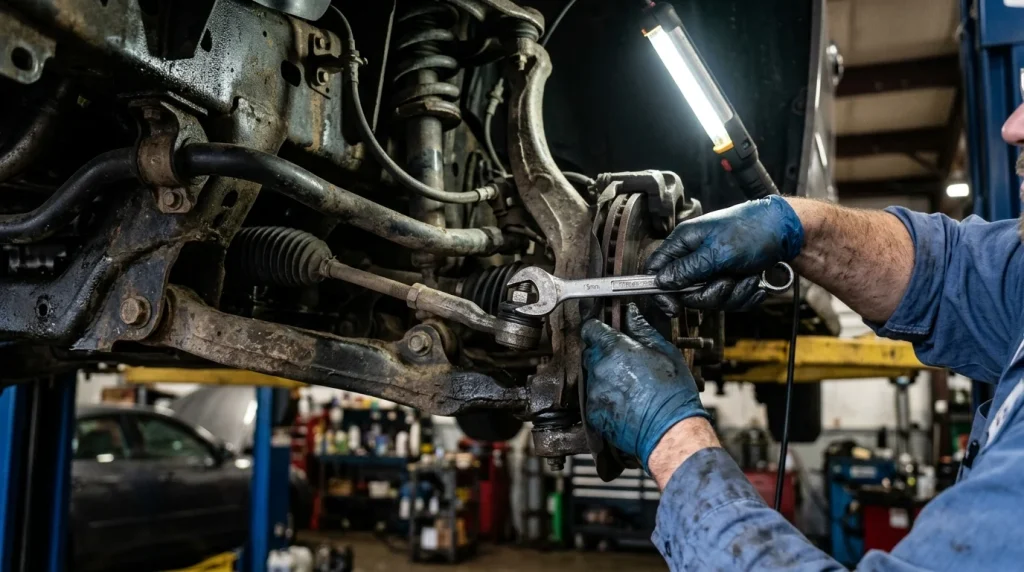
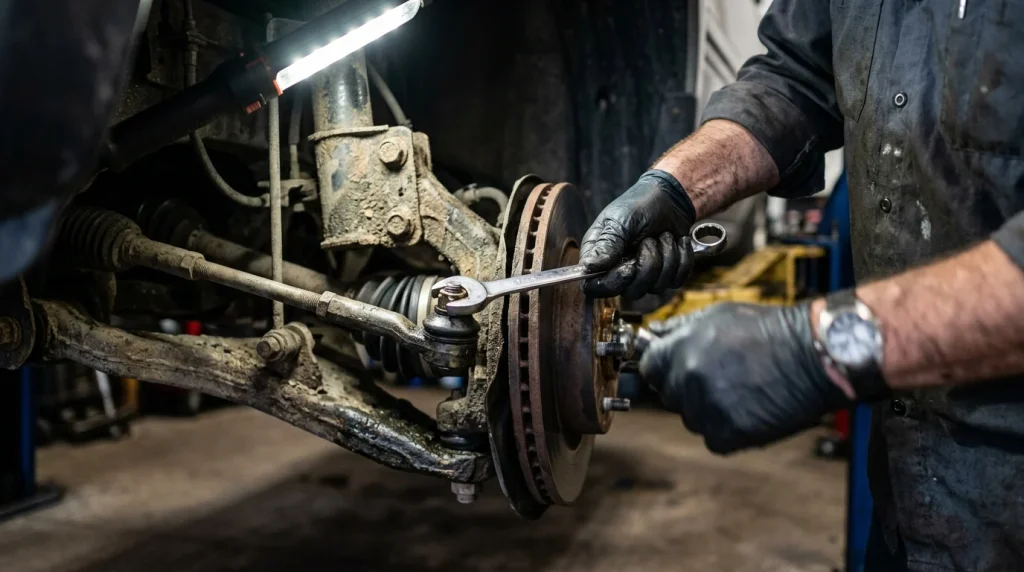
Additionally, a vehicle cannot be aligned if there is play in the steering or suspension. If the pre-alignment inspection reveals worn ball joints, bad tie-rod ends, or cracked control arm bushings, these parts must be replaced first.
Performing an alignment on worn parts is useless because the wheels will immediately shift out of specification once the vehicle is driven. Replacing a tie-rod end adds 30 to 60 minutes, while replacing control arms or ball joints can add 1 to 2 hours of labor before the actual alignment process even begins.
If you have recently noticed that your car makes a noise when turning, you should prepare for the possibility of component replacement during your alignment visit.
Shop Queue and Equipment Quality
Your wait time at the shop is rarely just the time your car spends on the alignment rack. Busy national chains like Firestone or Walmart may have a back-log of vehicles. Even if the mechanical work takes 45 minutes, your car might sit in the lot for an hour before being pulled into the service bay.
Additionally, shops utilizing modern 3D digital imaging alignment machines can read wheel specs in under five minutes. Older shops using manual laser grids or mechanical gauges will take much longer to obtain accurate measurements.
Expert view: For vehicles with active lane-keep assist or semi-autonomous driving systems, always confirm if the service facility performs an ADAS reset alongside the physical alignment. Skipping the sensor calibration can cause the vehicle to pull actively even after the mechanical alignment is perfect.
What Technicians Do During the Alignment Process
To understand why a wheel alignment requires 30 to 90 minutes, it is helpful to look at the step-by-step procedure performed by a professional technician. A proper alignment is a high-precision calibration that requires specialized training.
Step 1: Pre-Alignment Inspection (10 – 15 Minutes)
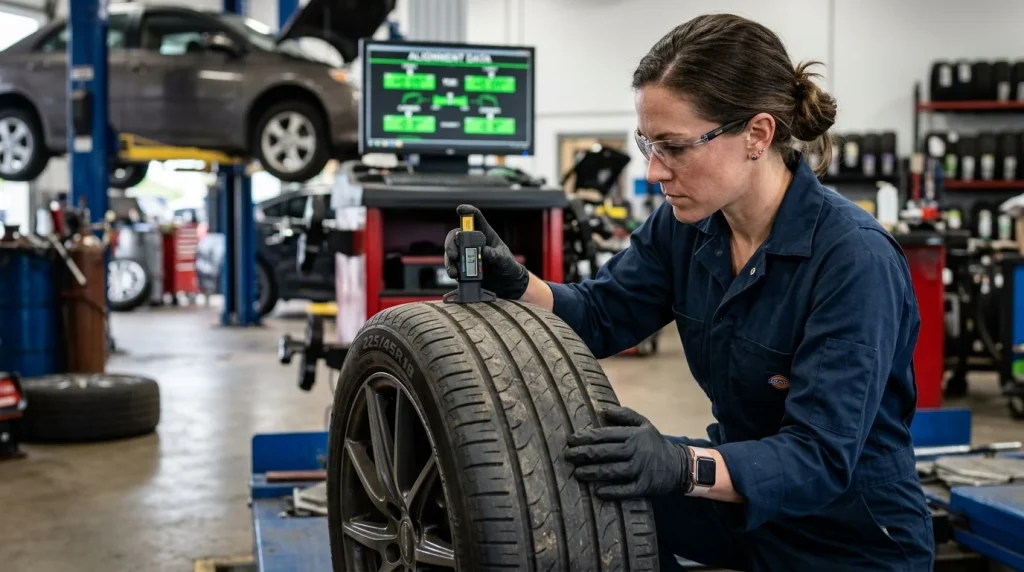
The technician lifts the vehicle and performs a hands-on shake test of the wheels to check for play in the wheel bearings, tie rods, ball joints, and steering rack. They also measure tire tread depth, inspect wear patterns, and adjust the air pressure in all four tires to match the manufacturer placard. If any steering components are loose or tires are under-inflated, the alignment readings will be inaccurate.
Step 2: Setup and Measurement (10 – 15 Minutes)
The vehicle is driven onto the alignment rack. The technician mounts specialized alignment heads or reflective targets to the outer lip of all four wheels.
The vehicle is then rolled forward and backward on the rack while the camera system tracks the targets. This process, known as rolling compensation, allows the computer to calculate the current alignment angles.
Step 3: Mechanical Adjustments (15 – 45 Minutes)
Using the live feedback on the computer screen, the technician adjusts three primary angles:
- Toe: The inward or outward angle of the tires when viewed from directly above. Incorrect toe is the leading cause of rapid tread wear.
- Camber: The inward or outward tilt of the tire when viewed from the front of the vehicle. Incorrect camber causes wear on the inner or outer edge of the tire.
- Caster: The angle of the steering pivot axis when viewed from the side. Caster affects steering stability, cornering return, and self-centering.
The technician starts by locking the steering wheel in a perfectly straight position. They then adjust the rear toe and camber first, followed by the front toe, camber, and caster.
Step 4: Verification and Test Drive (10 – 15 Minutes)
Once the angles match the manufacturer specifications, the technician locks down all adjustment bolts to the correct torque settings. The computer prints a before-and-after report showing the final angles. Finally, the targets are removed, and the technician takes the car for a short test drive to verify that it tracks straight, does not pull under braking, and has a centered steering wheel.
Average Cost of a Wheel Alignment in 2026
Wheel alignment costs vary depending on your geographic location, your vehicle type, and the service provider you choose. Because labor rates have risen, prices in 2026 are slightly higher than in previous years.
According to data compiled from Jiffy Lube’s wheel alignment service data, the national average for a standard wheel alignment ranges from $50 to $168, though highly specialized alignments can exceed this range. The table below outlines typical costs based on service type:
| Service Type | Cost Range (2026) | Labor Time | Target Vehicles |
|---|---|---|---|
| Front-End Alignment | $65 – $125 | 30 – 45 Min | Older trucks, simple commuter cars |
| Four-Wheel Alignment | $100 – $175 | 60 – 90 Min | Most modern passenger cars and SUVs |
| EV / Luxury / Specialty | $150 – $300 | 90 – 120 Min | Tesla, Audi, BMW, modified 4×4 trucks |
| Lifetime Alignment Package | $175 – $250 | Unlimited | Drivers keeping vehicles for 3+ years |
Where you choose to have the service performed also impacts the total bill. Dealerships charge the highest rates but have specialized factory scan tools for electronic steering systems. Independent auto repair shops provide competitive pricing with comparable mechanical quality.
| Shop Category | Average Price (4-Wheel) | Equipment Level | Recommended For |
|---|---|---|---|
| Independent Repair Shops | $80 – $130 | Standard Digital Racks | Out-of-warranty domestic/Asian cars |
| National Chain Centers | $90 – $150 | High-Volume Aligners | Convenient quick-services, lifetime packages |
| Franchised Dealerships | $150 – $250 | Factory OEM Diagnostic Tools | New vehicles, luxury brands, complex EVs |
Autvex Original Analysis: Ownership Costs and Alignment Value
Many drivers wonder if spending $100 to $150 on an alignment is worth the investment. To evaluate the true value of this service, it is helpful to look at a simple cost-of-ownership comparison.
Consider a standard set of four passenger car tires, which costs an average of $600 to $800 including installation. If your vehicle is misaligned, the tires will wear out unevenly at an accelerated rate. Severe toe misalignment can destroy a new set of front tires in less than 5,000 miles.
On average, driving with a misaligned suspension reduces total tire lifespan by approximately 30% to 40%. A set of tires rated for 50,000 miles may need to be discarded at just 30,000 miles. This translates to an unnecessary ownership cost of $180 to $320 over the life of the tires.
Additionally, misaligned wheels increase rolling resistance, causing your vehicle’s engine to work harder to maintain speed. This drag reduces fuel economy by 2% to 7%. For a commuter driving 15,000 miles per year, a 5% drop in fuel efficiency translates to an extra $80 to $120 spent annually at the gas pump.
Who Should Buy a Lifetime Alignment Package?
Many national service chains offer a lifetime alignment package for around $200. This package allows you to bring your car in for an alignment check every 6,000 miles or twice a year at no additional charge.
This package is highly cost-effective if you plan to keep your vehicle for more than three years, or if you regularly drive on rough municipal roads with deep potholes. However, if you lease your vehicle or plan to sell it within 18 months, paying for a single, one-time alignment is the smarter financial choice.
Note: Routine alignments should always be performed when installing a new set of tires. Mounting expensive new rubber onto a vehicle with bad alignment angles will immediately start an uneven wear pattern, which cannot be fully corrected later even if the vehicle is aligned.
Signs Your Vehicle Is Due for an Alignment Check
You should not always wait for your annual service checkup to get your alignment checked. Suspension components can shift out of spec slowly over time, or instantly after a single hard impact.
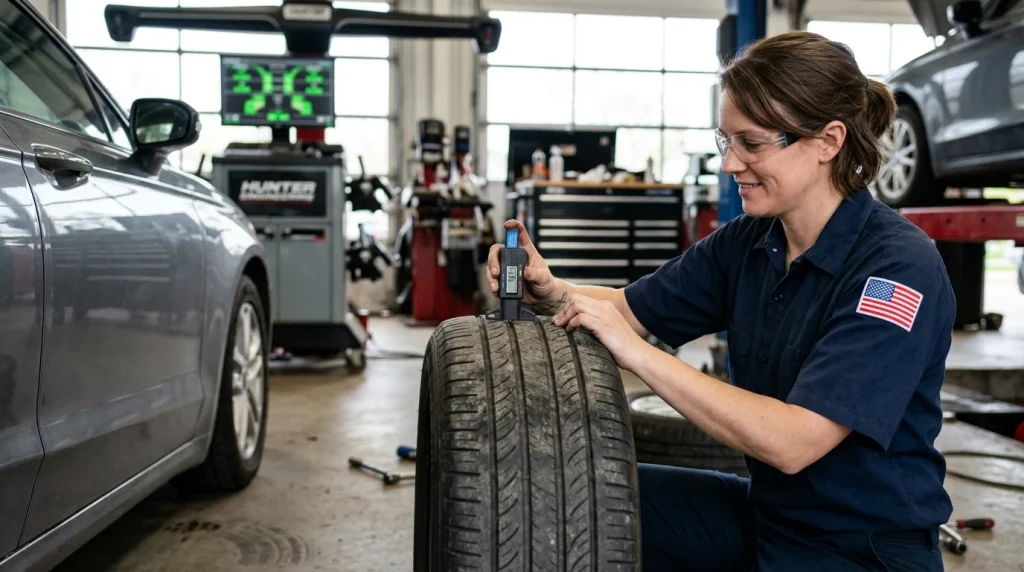
If you have experienced any of the following symptoms, we recommend scheduling an inspection at our Autvex news hub to prevent premature tire damage:
- Vehicle Pulls to One Side: If you loosen your grip on the steering wheel on a flat, straight road and the car drifts toward the shoulder, your alignment is off.
- Off-Center Steering Wheel: When driving straight, the steering wheel emblem should be perfectly level. If the wheel is cocked to the left or right, your toe angles need adjustment.
- Uneven Tire Wear: Check your front tires for feathering or heavy wear on the inside edge. If the inside tread blocks feel sharp when you rub your hand across them, your camber is incorrect.
- Squealing Tires on Turns: Misaligned wheels drag sideways through corners. If your tires squeal at low speeds when parking or turning normal corners, it is a sign of toe drag.
- Steering Wheel Vibration: While wheel vibration is often caused by unbalanced tires, severe alignment issues or worn steering linkage can also cause a shimmy in the steering wheel at highway speeds.
If you suspect your vehicle is drifting, check if you are also dealing with other seasonal issues like a car that won’t start in the cold but the battery is good, as winter driving conditions frequently cause both problems.
Frequently Asked Questions
How long does a 4-wheel alignment take?
A four-wheel alignment typically takes 60 to 90 minutes under normal conditions. This service involves adjusting both the front and rear suspension angles. The process can take longer if the technician encounters rusted adjustment bolts, aftermarket suspension components, or if they need to perform digital calibrations on steering angle sensors or lane-assist systems.
How long does a 2-wheel alignment take?
A two-wheel alignment, also known as a front-end alignment, takes approximately 30 to 45 minutes. This service only adjusts the toe and camber angles on the front axle. It is primarily performed on older cars, trucks, and SUVs that have a solid rear axle with no factory-designed adjustment points.
Can I drive my car if it needs an alignment?
Yes, you can drive a vehicle that is out of alignment, but it is not recommended for extended periods. Misaligned wheels reduce handling stability, cause the vehicle to drift, increase tire wear by up to 40%, and decrease fuel economy. If the misalignment is severe enough to cause a strong pull, it can create a safety hazard during emergency maneuvers.
How often should I get a wheel alignment?
Most mechanics recommend having your wheel alignment checked every 6,000 to 10,000 miles, or about once a year. You should also get an alignment check immediately after hitting a deep pothole, scraping a curb, installing a new set of tires, or replacing steering components like tie rods, shocks, or control arms.
Is a wheel alignment worth it?
Yes, a wheel alignment is highly cost-effective. A standard alignment costing $100 to $150 protects your investment in a set of tires worth $600 to $1,200. By keeping your tires wearing evenly, proper alignment extends tire life, improves your vehicle’s fuel economy, and reduces stress on steering gear.

