

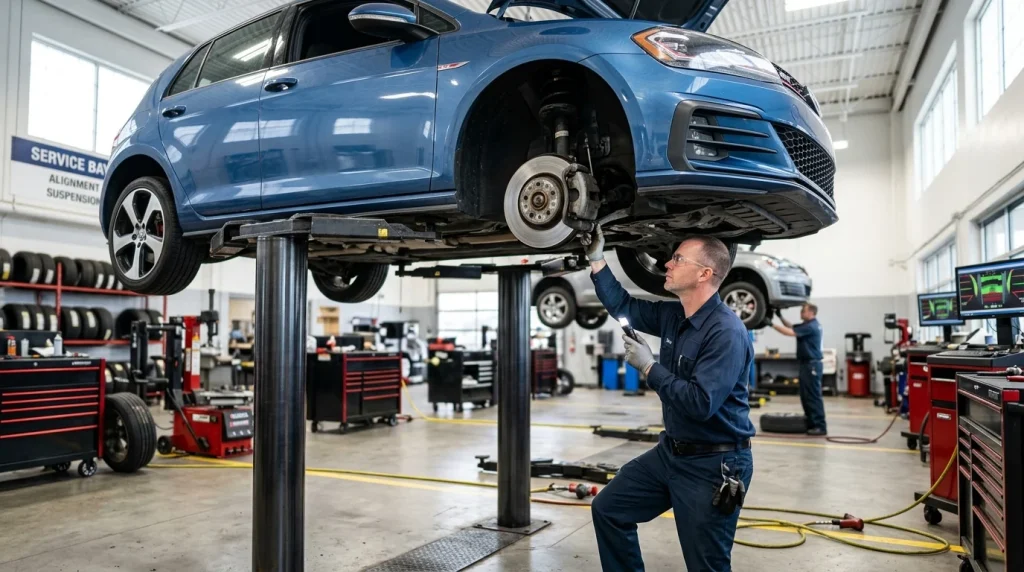
Quick answer:
Your car makes a noise when turning because of worn steering, suspension, or drivetrain components, or low power steering fluid. Common symptoms include clicking from worn CV joints, whining from low power steering fluid, and grinding from failing wheel bearings. Diagnostic and repair costs in 2026 range from $20 for a fluid top-off to $1,500 for a steering rack replacement.
Key takeaways:
- Clicking or popping during sharp turns usually indicates a worn CV joint, costing $250 to $1,200 per side to replace.
- Whining or groaning points to low power steering fluid or a failing pump, with replacement costs averaging $700 to $925.
- Grinding or humming that increases with vehicle speed signals a bad wheel bearing, typically costing $300 to $800 per wheel.
- Clunking or popping at low speeds over bumps points to worn ball joints or tie rods, which are critical safety hazards.
Quick Diagnosis by Steering Noise Type
To diagnose why does my car make a noise when i turn, matching the specific sound to the vehicle’s mechanical systems is the most effective first step. Different components emit distinct auditory signatures when they begin to fail. For example, a sharp clicking sound is mechanically distinct from a low-frequency hum or a high-pitched belt squeal.
| Steering Noise Type | Most Likely Failing Component | Average 2026 Repair Cost | Urgency & Safety Risk |
|---|---|---|---|
| Clicking or popping during sharp turns | Worn outer CV joint | $250 – $1,200 per side | Moderate (inspect within weeks) |
| Whining or groaning at low speeds | Low power steering fluid / failing pump | $700 – $925 (pump replacement) | Moderate (check fluid immediately) |
| Humming or grinding at speed | Failing wheel bearing | $300 – $800 per wheel | High (safety risk, replace promptly) |
| Clunking or knocking over bumps | Worn ball joints or tie rod ends | $250 – $600 per component | Critical (immediate inspection required) |
| High-pitched squealing on sharp turns | Worn serpentine belt / low tire pressure | $75 – $200 (belt replacement) | Low to Moderate |
| Creaking or popping at parking speeds | Strut mount bearings | $300 – $600 per corner | Low (annoying but not immediate hazard) |
Identifying these noises early allows you to address steering and suspension wear before it leads to a complete breakdown on the road.
Clicking or Popping Noise: Worn CV Joints
A rhythmic clicking or popping noise that becomes prominent during sharp turns almost always indicates worn CV joints. Constant velocity (CV) joints are crucial drivetrain components that transfer rotational power from the transmission to the drive wheels at a constant speed, allowing the suspension to move and the wheels to steer.
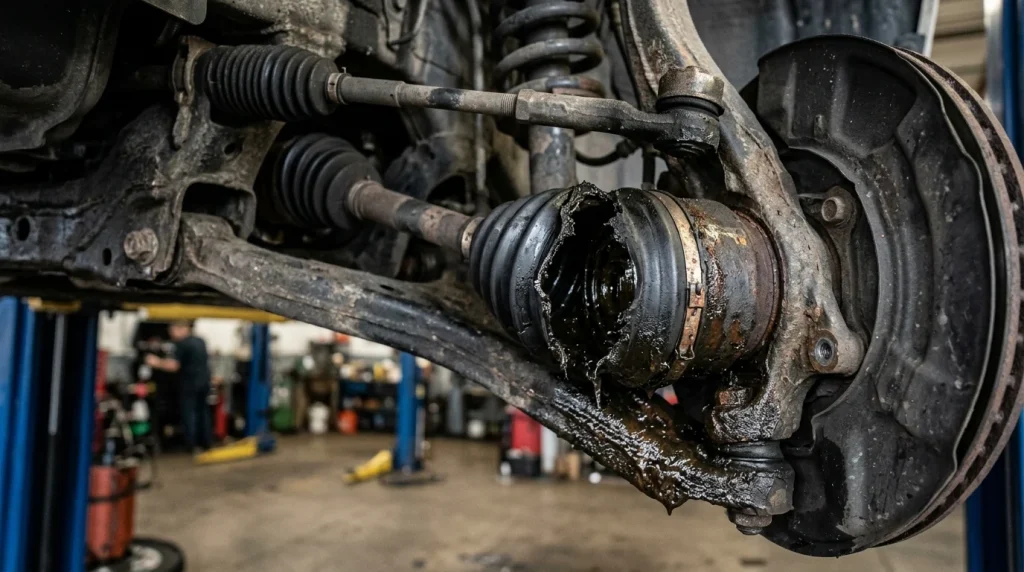
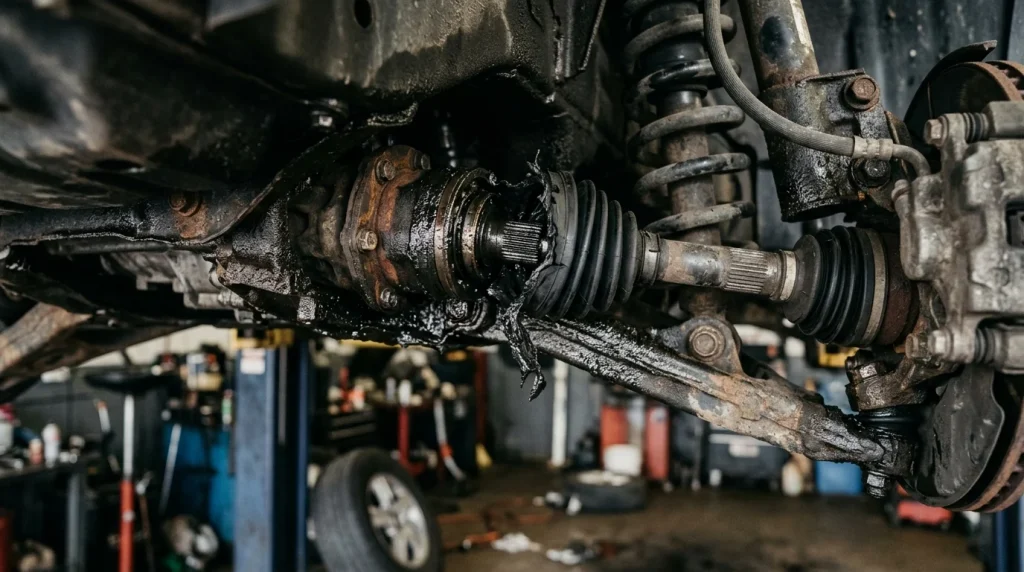
The problem begins when the protective rubber CV boot tears. This boot holds the specialized grease that lubricates the joint. When the boot is compromised, road dirt, sand, and water enter the joint, while the essential grease escapes. Without proper lubrication, the metal bearings grind against each other, creating a clicking sound.
This noise is particularly noticeable when you turn and accelerate at the same time. The outer CV joints undergo the highest stress during tight turns. If you suspect CV joint failure, you can perform a simple check: find an empty parking lot, steer the car fully in one direction, and drive in reverse circles. If the clicking becomes louder, the outer CV joint on the loaded side is damaged.
Replacing a worn CV joint or the entire axle assembly is necessary to prevent the axle from breaking completely, which would leave you stranded. In 2026, the average cost to replace a CV axle ranges from $250 to $1,200 per side, depending on the vehicle type, labor rates, and part quality. Mainstream front-wheel-drive sedans sit at the lower end of this range, while luxury all-wheel-drive SUVs lie at the higher end. For detailed pricing structures, refer to the thecostguys.com guide on CV joint replacement or read through empireautoprotect.com for the latest CV joint replacement cost analysis.
Whining or Groaning Noise: Power Steering Issues
A whining or groaning sound when turning the steering wheel at low speed is a classic indicator of a power steering system malfunction. The hydraulic power steering system relies on pressurized fluid to make steering effortless. When that pressure drops or air enters the system, noise is generated.
Low Power Steering Fluid Levels
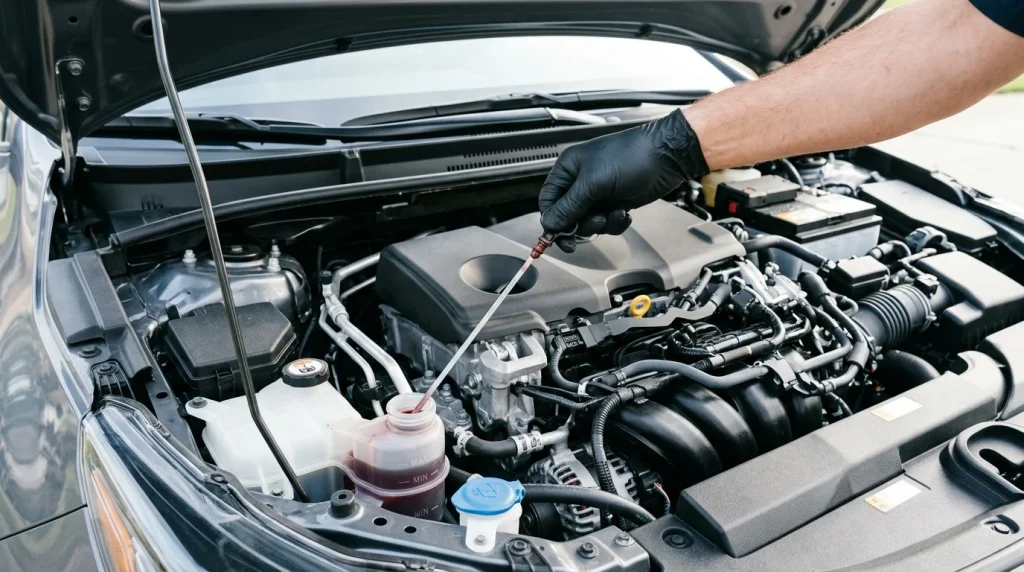
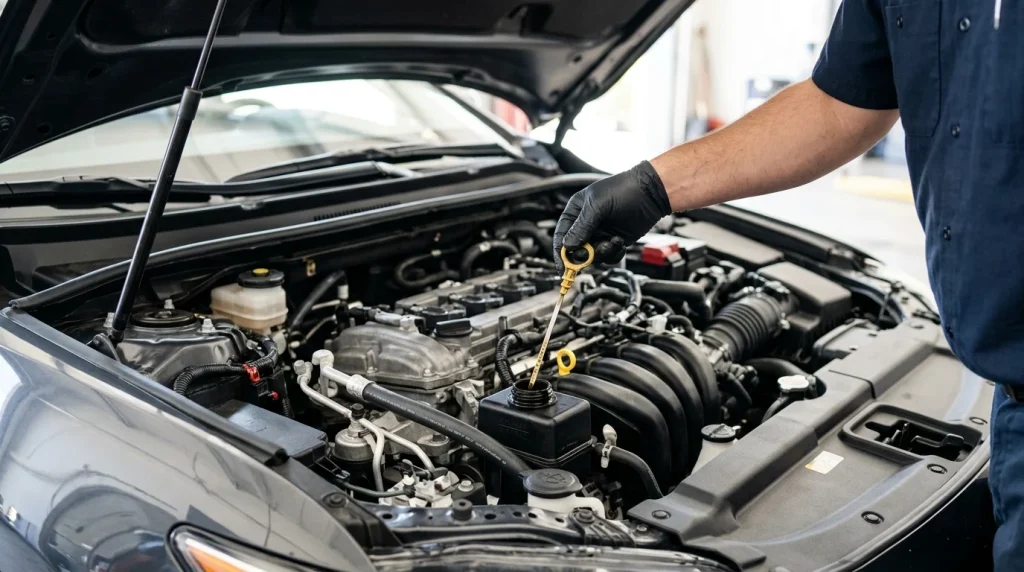
Low power steering fluid is the most common cause of steering noise. The fluid acts as both a hydraulic medium and a lubricant for the pump. If the fluid level drops, the pump draws in air, resulting in a loud whining noise when you turn the wheel.
Checking the reservoir is a simple diagnostic step. If the fluid level is low, topping it off with the manufacturer-recommended fluid will often resolve the noise. However, because power steering is a closed system, a low fluid level always indicates a leak. Leaks typically develop in the steering rack seals, the power steering hoses, or the pump reservoir itself. Driving with a power steering leak will eventually burn out the pump. Top-off fluid costs under $20, while professional leak repairs range from $150 to $500.
Failing Power Steering Pump
If the power steering fluid is at the correct level but the whining continues, the power steering pump itself may be worn out. Internal wear reduces the pump’s ability to maintain hydraulic pressure, making the steering wheel stiff and hard to turn, especially at low speeds.
A failing pump must be replaced to prevent total loss of steering assist. According to nationwide automotive repair estimators, a professional power steering pump replacement in 2026 costs between $700 and $925, depending on whether you use OEM or aftermarket parts. To compare options, you can read thecostguys.com overview of power steering pump replacement prices.
Loose or Worn Serpentine Belt
If you hear a high-pitched squeal when turning the wheel fully to one side, it could be a slipping serpentine belt. The engine uses this belt to drive the power steering pump pulley. If the belt is old, cracked, loose, or contaminated with oil, it will slip on the pulley under the high load of a tight turn. Replacing a serpentine belt is a quick procedure, typically costing between $75 and $200.
Grinding or Humming Noise: Failing Wheel Bearings
A constant humming, roaring, or grinding noise that increases in volume as the vehicle speeds up is a sign of a failing wheel bearing. Wheel bearings are sets of steel balls or rollers held together by a metal ring, allowing the wheel hub assembly to rotate smoothly around the axle.
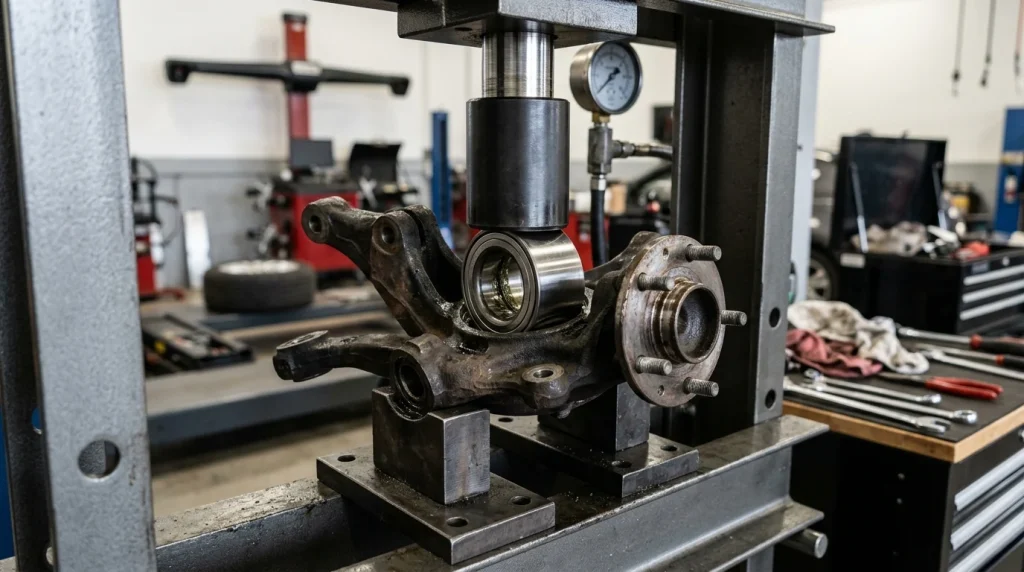
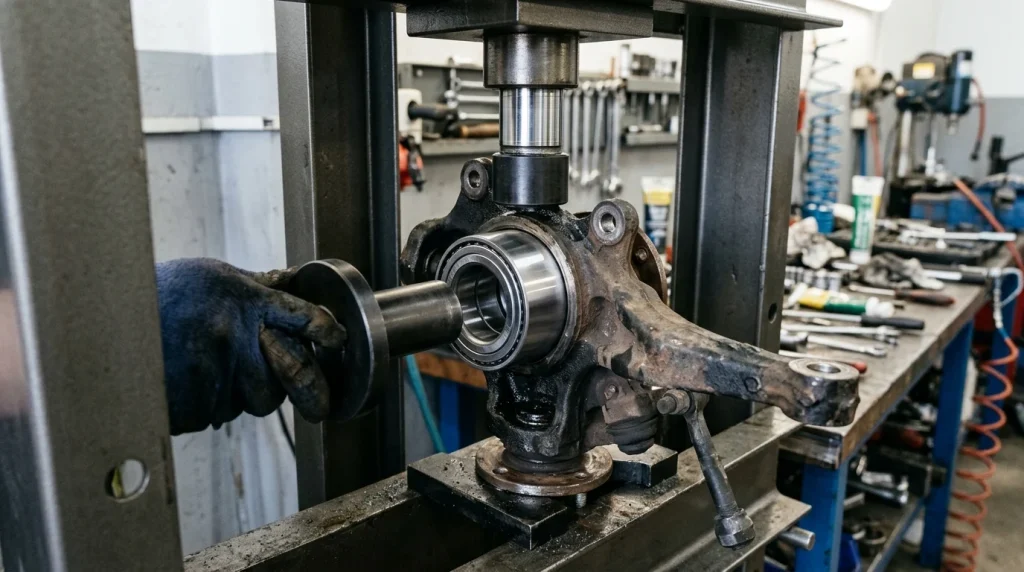
Over time, moisture, dirt, and high mileage degrade the grease inside the bearing, leading to metal-on-metal friction. A bad wheel bearing creates a noise that is often confused with tire road noise. However, unlike tire noise, wheel bearing noise changes pitch when you steer. When you turn the car, the vehicle’s weight shifts. This loads the bearing on one side and unloads the bearing on the other side.
For example, if you turn the steering wheel to the right, the weight shifts to the left side. If the left wheel bearing is bad, the grinding noise will become louder. If you turn to the left, the weight shifts to the right side, making the noise quieter if the left bearing is the issue.
Driving on a severely worn wheel bearing is extremely dangerous. The friction can build up enough heat to weld the bearing components together, causing the wheel to lock up at high speed, or the wheel assembly could separate from the car entirely. Replacing a wheel bearing and hub assembly in 2026 costs between $300 and $800 per wheel. Luxury vehicles and those with complex all-wheel-drive configurations require more labor, pushing costs to the higher end. For a complete cost breakdown, consult the thecostguys.com resource on wheel bearing replacement cost estimates.
Clunking, Knocking, or Creaking: Suspension Component Wear
The suspension system keeps your tires in contact with the road while absorbing bumps. When suspension joints and bushings wear out, the loose metal parts clank together when you steer or drive over uneven surfaces.
Worn Ball Joints
Ball joints act as the pivot points connecting the control arms to the steering knuckles, allowing the front wheels to steer left and right while moving up and down. As the internal lubrication dries out or the protective boot tears, the joint develops excessive play. Worn ball joints produce a dry creaking sound or a metallic clunk when turning, especially at low speeds or when driving over speed bumps.
A failed ball joint can cause the wheel to collapse outward, leading to a catastrophic loss of control. Replacing a single ball joint costs between $250 and $600. Some vehicles require replacing the entire control arm to get a new ball joint, which increases parts cost. For more details on these parts, check the thecostguys.com guide on ball joint replacement costs.
Loose Tie Rod Ends
Tie rods connect the steering gear to the steering knuckles, translating the motion of the steering wheel to the tires. The outer tie rod ends have small ball joints that wear out over time. When they become loose, they create a knocking or popping sound during turns, and the steering wheel may feel loose or wander. Replacing a tie rod end costs between $150 and $350 per side, including the mandatory wheel alignment required after steering repairs.
Failing Strut Mount Bearings
Struts are major suspension components that integrate the shock absorber and coil spring. The top of the strut assembly mounts to the vehicle body using a plate that contains a bearing. This bearing allows the strut to rotate as you turn the wheels. When the strut mount bearing wears out, it binds and releases, creating a popping or creaking sound at very low speeds, such as when parallel parking. Replacing strut mounts costs between $300 and $600 per side, as the entire strut assembly must be disassembled.
Control Arm Bushings
Control arm bushings are rubber or polyurethane sleeves that isolate the control arms from the vehicle frame. As these bushings crack and dry out, the metal arm shifts inside the mount, causing squeaking or clunking sounds during turns and braking. Replacing control arm bushings or the control arms themselves costs between $400 and $900 per arm.
Heavy Grinding When Turning and Braking: Brake System Issues
Sometimes, the noise you hear when turning is actually coming from the brakes, especially if the sound changes when you apply the brake pedal.
Worn Brake Pads and Rotors
If you hear a harsh grinding noise while turning and braking, your brake pads are likely worn down to the metal backing plate. Brake pads have thin metal wear indicators that squeal when the friction material is low. If you ignore the squeal, the pads will wear down completely, causing the steel backing plate to grind directly against the iron brake rotor. This metal-on-metal friction ruins the rotors and reduces braking performance. Replacing brake pads costs $150 to $300 per axle, while new rotors add another $200 to $400 per axle.
Stuck Brake Caliper
A stuck brake caliper occurs when the internal piston or slider pins seize, preventing the caliper from releasing the brake pads. This causes the pads to rub continuously against the rotor, creating a scraping or squealing sound that changes in pitch during turns. A dragging brake will also generate extreme heat, causing a burning smell and reduced fuel efficiency. Replacing a brake caliper costs between $250 and $600 per side.
Squealing and Roaring: Tire and Alignment Issues
Not all noises indicate mechanical failure; some are related to tire maintenance and wheel alignment.
Low Tire Pressure
Under-inflated tires flex excessively during turns. This causes the tread to scrub sideways against the asphalt, creating a squealing sound even at low speeds. Checking and adjusting your tire pressure according to the specification on your driver-side door jamb card is a simple, no-cost fix.
Uneven Tire Wear and Bad Alignment
If your wheels are out of alignment, the tires do not roll straight. Instead, they are dragged slightly sideways down the road. This uneven friction causes tire feathering or cupping, which generates a loud humming or roaring sound that mimics a bad wheel bearing. A professional wheel alignment costs $100 to $200 and helps extend tire life. If you need to perform other routine maintenance, understanding how to clean or remove the smell of smoke in a car can improve your overall cabin environment.
Original Analysis: Why Steering Noises Sound Different on Left vs. Right Turns
Understanding the physics of a turning vehicle is key to identifying which side has a failing part. When you steer a car, you introduce lateral forces that shift the vehicle’s weight. This dynamic weight transfer alters the load placed on steering and suspension components.
When you turn left, the car’s body rolls to the right. This shifts the weight of the vehicle onto the right-side suspension, right-side wheel bearings, and right-side outer CV joints. Conversely, turning right shifts the weight to the left side.
[Weight Transfer Dynamics during turns]
Turn Left —> Weight shifts to RIGHT side —> Amplifies noise from right-side wheel bearings / CV joints
Turn Right —> Weight shifts to LEFT side —> Amplifies noise from left-side wheel bearings / CV joints
This mechanical loading is why a failing left wheel bearing grinds loudly during right turns but becomes quiet when you turn left. The lateral force compresses the left hub assembly, amplifying the metal-on-metal friction.
The Cost-Benefit of DIY vs. Professional Repair
While replacing a battery or changing a cabin air filter are common DIY tasks, steering and suspension components require professional tools and precision. For instance, replacing a CV axle or ball joint requires heavy torque wrenches, ball joint separators, and jacks. More importantly, suspension components determine your vehicle’s wheel alignment.
Replacing a tie rod or control arm shifts the wheel geometry by fractions of an inch. Without a professional 3D alignment, this misalignment will cause rapid tire wear and make the car pull to one side. For safety-critical systems, paying a certified technician is the safest option. If you are planning an appointment, knowing how long it takes a car to cool down is helpful, as technicians need a cool engine bay to safely perform repairs under the hood. For the latest updates on car repair and ownership, checking the latest automotive news can keep you informed on industry trends.
Frequently Asked Questions
Why does my car click when turning at low speeds?
Clicking at low speeds during sharp turns almost always indicates worn CV joints. The outer CV joints endure the most stress during tight turns, and when the protective boot tears, the joint wears rapidly. The clicking typically gets louder with acceleration and more pronounced when turning in one particular direction. Expect to pay $250 to $1,200 per side for replacement.
Why does my car whine when I turn the steering wheel?
A whining sound when turning usually points to low power steering fluid or a failing power steering pump. Check the fluid level first. If it is low, top it off and inspect the system for leaks. If the fluid level is adequate but the whining continues, the pump may be worn. In hydraulic systems, the pump works harder during turns, which amplifies any noise from internal wear.
Is it safe to drive with a clicking noise when turning?
You can drive short distances with a clicking noise from CV joints, but you should not ignore it. A worn CV joint will eventually fail completely, potentially leaving you stranded or causing loss of power to the wheels while driving. Most mechanics recommend addressing clicking CV joints within a few weeks of noticing the symptom.
Why does my car make noise when turning right but not left?
Noise that occurs only when turning in one direction typically indicates a problem on the opposite side of the vehicle. When you turn right, weight shifts to the left side, loading components on that side more heavily. So, clicking only when turning right suggests the left CV joint is worn. Similarly, grinding only when turning left often indicates a right wheel bearing issue.
What does a bad wheel bearing sound like?
A failing wheel bearing creates a humming, grinding, or droning sound that increases with speed and often changes pitch during turns. It sounds like loud road noise that follows the car regardless of pavement type. The noise may get louder when turning away from the bad bearing (a right turn loads the left bearing more) and quieter when turning toward it.
Why does my car make a noise when i turn the wheel while parked?
Making a noise when turning the wheel while parked or stationary indicates a problem in the power steering system, steering rack, or strut tower mounts. When the vehicle is not moving, the steering system experiences the highest frictional resistance between the tires and the pavement. This resistance strains worn power steering pumps or strut mounts, producing a loud whine, creak, or groan.
Why does my car make a noise when i turn and accelerate?
A noise that occurs specifically when turning and accelerating is a symptom of a failing outer constant velocity joint. Acceleration forces the drive axle to transmit torque while it is bent at a sharp angle. This stress forces the worn internal bearings of the CV joint to click or pop rapidly against the metal housing.

