

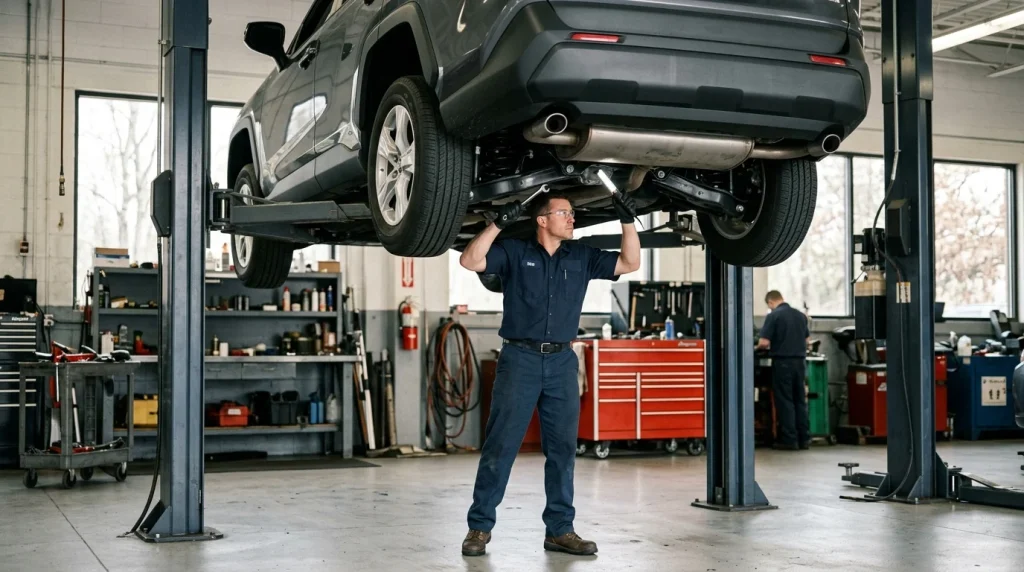
Quick answer: If you are preparing for your annual registration or buying a used vehicle, you are likely wondering: how long does it take to inspect a car? A standard state vehicle safety inspection typically takes 30 to 45 minutes to complete. If your state also requires an emissions test, the combined safety and emissions inspection will take about 45 to 60 minutes. A comprehensive pre-purchase inspection for a used car is much more detailed and requires 1 to 2 hours of active diagnostics.
Key takeaways:
- Safety-only inspections verify basic roadworthiness and take 30 to 45 minutes.
- Safety plus emissions testing takes 45 to 60 minutes, using an OBD-II scanner on newer cars.
- Pre-purchase inspections take 1 to 2 hours because they evaluate the engine, transmission, and structural integrity.
- Planning your visit on mid-week mornings (Tuesday or Wednesday) is the best way to minimize waiting room times.
Safety Inspection vs. Emissions Test: Typical Time Breakdown
The active time a mechanic spends inspecting your vehicle depends entirely on the type of inspection required by your local regulations. While a basic safety check is relatively fast, adding emissions diagnostics or ordering a complete mechanical assessment will extend the duration.
Safety Inspection Duration (30 to 45 Minutes)
A standard safety inspection takes 30 to 45 minutes of active evaluation. During this time, the technician verifies that all vehicle components required by state law are functioning correctly. This includes testing exterior lights, checking tire tread depth, evaluating the steering assembly, and testing the horn and wipers.
According to official safety guidelines from the New York State DMV, most registered passenger vehicles must undergo a safety and emissions inspection every 12 months to verify basic road readiness.
Safety plus Emissions Testing (45 to 60 Minutes)
If you live in a state or county with mandatory environmental testing, the technician must perform an emissions check alongside the safety inspection. This combined process takes 45 to 60 minutes.
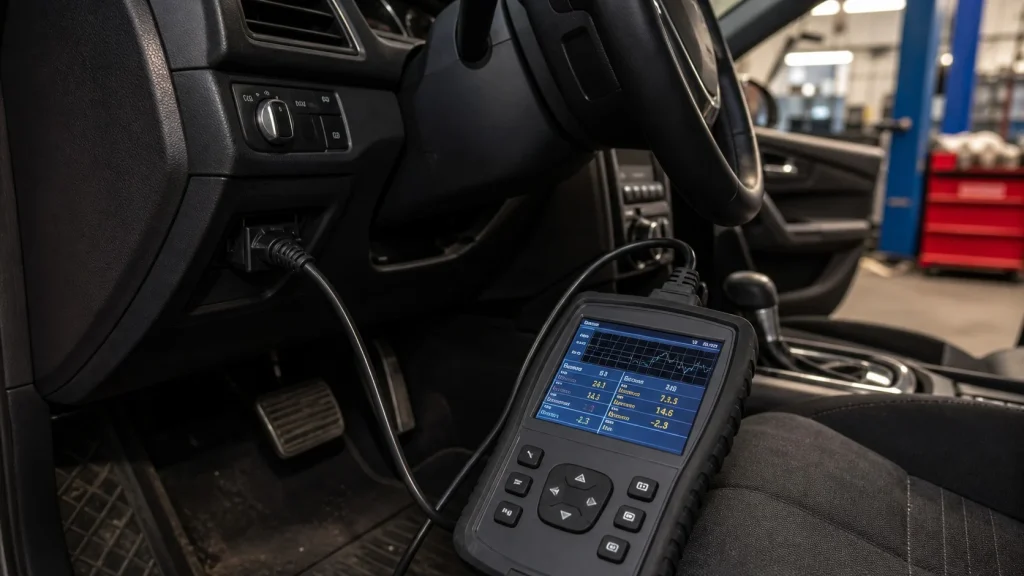
On vehicles manufactured in 1996 or later, the inspector connects an OBD-II diagnostic scanner to the computer port under the dashboard. The scanner reads the emissions monitors to confirm the vehicle’s onboard computers are registering correct environmental data. On older vehicles built before 1996, the inspector may need to place a physical probe in the tailpipe to measure exhaust gases directly, which can add 15 minutes to the test.
Note: Regional rules vary significantly. For example, the California Bureau of Automotive Repair requires smog checks biennially for gas-powered vehicles built in 1976 and newer, and diesel vehicles built in 1998 and newer. Conversely, the Texas Department of Public Safety officially eliminated safety inspections for non-commercial vehicles on January 1, 2025, although emissions tests remain mandatory in specific counties.
Pre-Purchase Inspection (1 to 2 Hours)
A pre-purchase inspection (PPI) is a voluntary, comprehensive mechanical diagnostic performed before buying a used vehicle. Unlike state-mandated safety tests that only look for immediate road hazards, a PPI evaluates the internal health of the engine, transmission, suspension, and electrical systems.
A thorough PPI takes 1 to 2 hours because the mechanic must place the car on a hydraulic lift, remove underbody shields, check for hidden fluid leaks, look for signs of structural collision repairs, and perform a road test.
Ray Shefska, automotive expert and co-founder of CarEdge, highlights the importance of this time investment in the CarEdge PPI Guide:
“Always get a pre-purchase inspection before buying a used car, even if it has low mileage. It’s worth the money to pay an independent mechanic. Don’t let the dealership convince you otherwise. A PPI typically costs between $100 and $300, but can save you several thousand dollars in the long run.”
According to the Bumper PPI Guide, paying for an independent evaluation gives buyers the leverage needed to negotiate or avoid purchasing a vehicle with costly mechanical issues.
What Do Mechanics Check During a Car Inspection?
The specific items checked during your appointment dictate the final inspection time. Knowing what is included in each checklist helps you prepare your vehicle in advance.
Safety Components Checklist
During a state safety inspection, the technician concentrates on components that impact vehicle control and passenger safety. The checklist includes:
- Braking System: Inspecting brake pads, rotors, drums, and lines for wear or leaks.
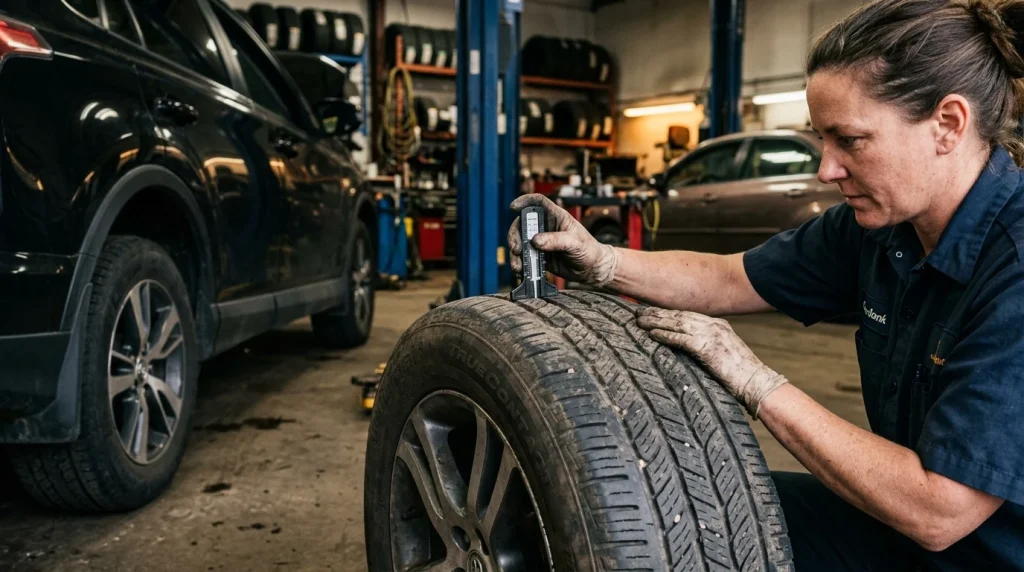
- Tire Condition: Measuring tire tread depth to ensure it exceeds the legal limit (typically 2/32 of an inch) and checking for uneven wear.
- Lights and Signals: Verifying the operation of headlights, high beams, brake lights, turn signals, hazard lights, and license plate lamps.
- Visibility: Checking the windshield for cracks, testing windshield wipers, and inspecting mirrors.
- Steering and Suspension: Checking ball joints, tie rods, shocks, and steering linkages.
While these safety checks cover basic electrical components, they will not diagnose internal charging problems. If you experience starting issues, you might need to check if you can jumpstart a car with a bad alternator.
Emissions Diagnostic Scan (OBD-II)
The emissions portion focuses on the tailpipe output and the evaporative emissions system. The mechanic checks:
- The check engine light: A lit check engine light results in an automatic inspection failure in states requiring emissions testing.
- OBD-II monitor readiness: The vehicle’s computer must complete internal system checks. If you recently reset the battery, the monitors may show “not ready,” requiring you to drive the car for several days before returning for a retest.
- Gas cap seal: Testing the fuel cap to ensure it prevents fuel vapors from escaping into the atmosphere.
Dealership vs. Independent Shop: Wait Times Explained
Where you take your car determines how much total time you will spend at the facility. While the hands-on inspection takes the same amount of time, administrative workflows differ.
Independent inspection stations and local garages are generally faster. Many operate on a first-come, first-served basis and have dedicated inspection bays. If there is no line, you can complete the process in 30 to 45 minutes.
Dealership service centers usually require an appointment. While they offer premium waiting areas, the check-in and paperwork processes are longer. Dealerships also service vehicles in large batches, which means your car might sit for an hour before a technician drives it onto a lift.
Analysis: To minimize your waiting time, avoid booking appointments during the last three days of the month. Because inspection stickers expire at the end of the month, stations experience a surge in last-minute walk-ins, which can extend a simple 45-minute visit into a 3-hour wait. Scheduling your appointment on a Tuesday or Wednesday morning is the most effective way to secure a fast turnaround.
What to Do If Your Car Fails Inspection?
If your vehicle fails, the inspector will issue a rejection report detailing the specific components that did not meet regulatory standards. You are not required to have the repairs performed at the inspection facility. You can drive the vehicle home or to an independent repair shop.
Most states grant a grace period of 15 to 30 days to resolve the issues and return for a reinspection. Driving a vehicle with an expired inspection sticker past this window can result in a traffic citation. Many stations provide free or discounted reinspections if you return to the same facility within the designated grace period.
To save time, check simple items like wiper blades, light bulbs, and tire pressure in your driveway before your appointment. Resolving these minor issues beforehand prevents the need for a secondary visit. For more detailed guides on automotive maintenance and regulatory updates, you can explore our latest automotive news.
FAQ about Car Inspection Times
Can I wait while my car is being inspected?
Yes, most inspection facilities provide a customer waiting area. Since the hands-on safety inspection takes less than 45 minutes, waiting on-site is common. If you schedule a pre-purchase inspection, you can arrange to wait or ask the mechanic to call you once the diagnostic report is ready.
How often do I need a car inspection?
Frequency depends on your state of registration. States like New York require annual safety and emissions testing. Other states require inspections biennially (every two years), while some states only require an inspection when a vehicle changes ownership.
Do electric vehicles need state inspections?
Yes. Although electric vehicles (EVs) have no tailpipe emissions and are exempt from smog tests, they must still pass safety inspections in states that mandate them. Technicians check the brakes, suspension, steering, and lights just as they would on a gasoline vehicle. While an EV is exempt from emissions tests (making its inspection faster), charging a depleted pack is a different story. Understanding how long it takes to charge a car battery is still crucial for daily EV planning.

