

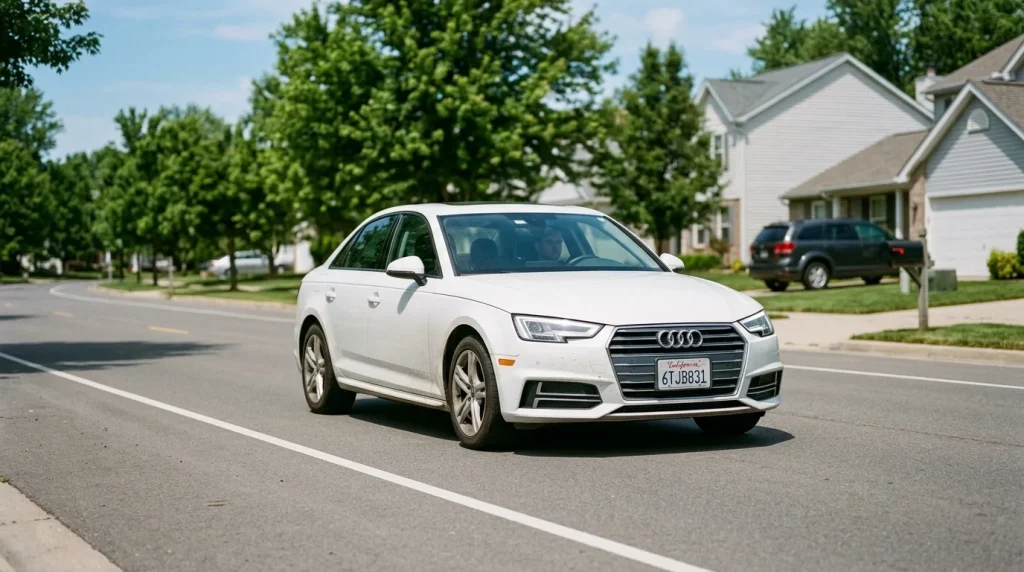
Quick answer: The 2017 Audi A4 represents the debut of the B9 generation, built on the lightweight MLB Evo platform. Offered in a 190hp Ultra FWD or a 252hp standard FWD/Quattro version, it delivers refined performance but carries typical first-year risks. Used prices in 2026 range from $8,900 to $16,000, though potential water pump replacements costing $858 to $1,027 require careful pre-purchase inspections.
Key takeaways:
- The B9 generation sheds 111 pounds compared to the preceding B8.5 model while introducing the optional 12.3-inch digital Virtual Cockpit display.
- Drivetrain choices include the 190hp Ultra engine or the standard 252hp 2.0T engine, the latter achieving a 0-60 mph time of 5.7 seconds.
- Plastic coolant regulator housing failure is the most common mechanical defect, typically developing leaks between 40,000 and 60,000 miles.
- Six NHTSA safety recalls affect the model, including passenger occupant detection wiring faults, but the electric coolant pump recall (18V229) does not apply.
- Transmission maintenance is crucial, as the seven-speed DSG S-tronic gearbox demands fresh fluid services every 40,000 miles.
Redesign and Platform: Transition to the B9 Generation
Answer-first: The 2017 Audi A4 launched the ninth-generation B9 platform in the United States, utilizing the modular MLB Evo architecture to improve structural rigidity by 20% while cutting vehicle weight by up to 111 pounds.
This complete redesign represented a pivotal moment for Audi’s bestselling entry-level luxury sedan, which was introduced in early 2016 for the 2017 model year. The transition from the older B8.5 generation to the B9 generation brought massive technological updates, refined driving dynamics, and a major redesign of the interior and exterior styling. For used car buyers, understanding this generational transition is crucial, as first-year models are known to carry specific teething issues alongside their cutting-edge tech. To see how this model compares to other years, consult our comprehensive Audi A4 buyer guide index containing reviews of all B9 model years.
The platform relies on a combination of hot-formed ultra-high-strength steel and cast aluminum components. For instance, the front shock towers are cast aluminum, and the front and rear five-link suspension setups make extensive use of forged aluminum control arms. This reduces unsprung mass, allowing the suspension to react faster to road imperfections.
The table below outlines the core dimensions and weight differences between the B9 generation and the outgoing B8.5 generation:
| Specification | 2017 Audi A4 (B9) | 2016 Audi A4 (B8.5) | Difference |
|---|---|---|---|
| Wheelbase | 111.0 inches | 110.6 inches | +0.4 inches |
| Overall Length | 186.1 inches | 185.1 inches | +1.0 inches |
| Curb Weight (AWD) | 3,626 lbs | 3,737 lbs | -111 lbs |
| Torsional Rigidity | Increased by 20% | Base Level | +20% |
| Drag Coefficient | 0.27 Cd | 0.30 Cd | -0.03 Cd |
Is the 2017 Audi A4 a Good Used Car?
When evaluating the 2017 Audi A4 as a used vehicle, buyers are met with a classic luxury-car compromise. According to RepairPal, the model holds an overall reliability rating of 3.5 out of 5 stars, which ranks it 14th out of 31 luxury midsize cars. The average annual maintenance and repair cost is estimated at $739, which is relatively competitive for the German luxury segment.
However, buyers must distinguish between the front-wheel-drive (FWD) and all-wheel-drive (Quattro) versions. The Quattro version carries an independent RepairPal reliability rating of 3.0 out of 5.0 stars, ranking 21st out of 31 luxury midsize cars, with an annual repair cost average of $925. This increase is driven by the complexity of the all-wheel-drive system and the higher frequency of suspension and accessory repairs. For buyers willing to accept the higher likelihood of electronic and cooling system repairs in exchange for depreciated luxury, the vehicle offers exceptional value, but it is not a hands-off commuter car.
2017 Audi A4 B9 vs B8.5 Generation
The generational leap from the B8.5 to the B9 platform is massive. While the exterior of the B9 resembles an evolutionary facelift, almost every single mechanical and electronic component is brand new. The chassis utilizes high-strength steel and aluminum to cut weight while improving cabin safety and crash protection.
In terms of interior space, the slight wheelbase stretch increases rear-seat legroom by 0.9 inches and shoulder room by 0.5 inches, resolving one of the main complaints about the B8.5 generation. The cabin dashboard is also completely modernized, swapping out the integrated infotainment screen of the B8.5 for a floating high-definition central display and a digital gauge cluster. The driving dynamics are also vastly improved, featuring a revised five-link front and rear suspension that eliminates the heavy steering feel and understeer characteristics typical of older Audi sedans.
2017 Audi A4 S Line Trim Features
The popular S Line package is a styling and trim option that adds an aggressive, sporty appearance to the vehicle. Externally, the package includes unique front and rear bumpers with honeycomb mesh air intakes, extended side skirts, a rear diffuser insert, chrome exhaust tips, and distinctive S Line badges on the front fenders. It also came equipped with 18-inch or optional 19-inch five-spoke alloy wheels wrapped in summer performance tires.
Inside, the S Line package adds sport seats with larger side bolsters, brushed aluminum trim panels, stainless steel door sill inserts, and a black cloth headliner. The package also features a sport suspension that lowers the vehicle’s ride height by 23 millimeters (approximately 0.9 inches). While this lowering kit sharpens cornering response and reduces body roll, buyers should note that it creates a noticeably firmer ride on broken city streets compared to the standard comfort suspension.
Powertrains and Specifications: Horsepower, MPG, and Manual Option
Answer-first: The 2017 Audi A4 features two variants of the 2.0-liter EA888 Gen 3 turbocharged engine: the efficiency-tuned Ultra FWD producing 190 horsepower, and the standard version delivering 252 horsepower.
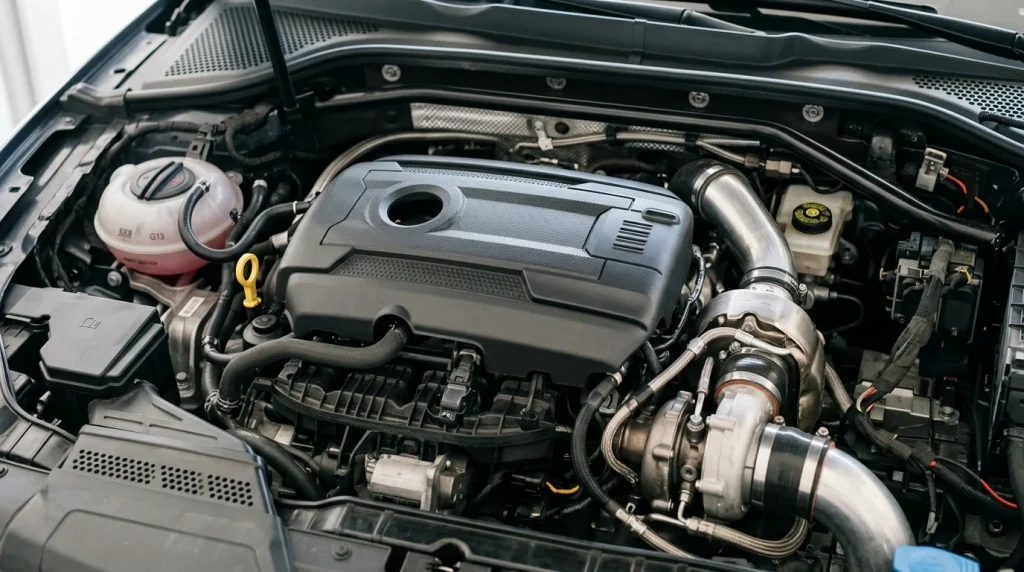
Both engines are paired with a seven-speed S-tronic dual-clutch automatic transmission, though a six-speed manual was also available in limited numbers on standard Quattro models. The drivetrain options dictate not only the performance feel but also the fuel economy and winter weather capability of the sedan.
The following table provides a complete breakdown of the engine specifications, performance metrics, and EPA-estimated fuel economy for the US market:
| Specification | 2.0T Ultra FWD (B-Cycle) | 2.0T Standard FWD | 2.0T Standard Quattro AWD |
|---|---|---|---|
| Engine Code | EA888 Gen 3B (Ultra) | EA888 Gen 3 (Standard) | EA888 Gen 3 (Standard) |
| Horsepower | 190 hp @ 4,200 rpm | 252 hp @ 5,000 rpm | 252 hp @ 5,000 rpm |
| Torque | 236 lb-ft @ 1,450 rpm | 273 lb-ft @ 1,600 rpm | 273 lb-ft @ 1,600 rpm |
| Transmission | 7-Speed S-Tronic DSG | 7-Speed S-Tronic DSG | 7-Speed S-Tronic or 6-Speed Manual |
| 0-60 mph (Est) | 7.1 seconds | 6.1 seconds | 5.7 seconds (Manual: 5.7s) |
| EPA Fuel Economy | 27 City / 37 Hwy / 31 Combined mpg | 25 City / 33 Hwy / 28 Combined mpg | 24 City / 31 Hwy / 27 Combined mpg |
| EPA Reference | fueleconomy.gov | fueleconomy.gov | fueleconomy.gov |
2017 Audi A4 Ultra Horsepower and FWD Specs
The Ultra variant is designed specifically for buyers prioritizing highway fuel economy. Generating 190 horsepower and 236 lb-ft of torque, this engine uses a unique modified combustion cycle based on the Miller cycle, which Audi calls the B-cycle. By closing the intake valves earlier in the intake stroke, the engine achieves a higher expansion ratio relative to the compression ratio, squeezing more energy out of every drop of premium fuel.
The Ultra model is offered exclusively in front-wheel drive, which saves approximately 100 pounds of curb weight compared to the all-wheel-drive system. This combination yields outstanding EPA fuel ratings of 27 mpg city, 37 mpg highway, and 31 mpg combined, which are verified on the official fueleconomy.gov database. On real-world highway cruises, many owners report exceeding 40 mpg with conservative driving.
2017 Audi A4 Quattro Horsepower and AWD Specs
For those seeking traditional Audi performance, the standard engine option steps up output to 252 horsepower and 273 lb-ft of torque. This engine delivers strong, linear acceleration without the typical turbocharger lag associated with older small-displacement engines. The peak torque is available from a low 1,600 rpm, making highway passing maneuvers effortless.
Drivetrain configurations for the 252hp engine include standard front-wheel drive or the optional Quattro all-wheel-drive system. The 2017 model year marked the introduction of the new Quattro with Ultra technology system on S-tronic models, which replaces the classic mechanical Torsen center differential with an electronically controlled multi-plate clutch system. This system allows the car to completely disconnect the driveshaft and rear axle when cruising, running as a front-wheel-drive vehicle to save fuel, and then engaging the rear wheels in a fraction of a second when traction loss is predicted.
2017 Audi A4 0-60 mph Times and Performance
Acceleration varies significantly depending on the engine selection. The 190hp Ultra FWD model completes the 0-60 mph sprint in a respectable but average 7.1 seconds. In contrast, the 252hp Quattro model drops the 0-60 mph time to 5.7 seconds, placing it near the top of its class for entry-level luxury sedans.
In independent instrumented tests by major automotive magazines, the Quattro model has regularly recorded 0-60 mph times as low as 5.4 seconds when launching using the built-in S-tronic launch control system. The quarter-mile is cleared in 14.0 seconds at a trap speed of 99 mph. Top speed is electronically limited to 130 mph on models with all-season tires, and 155 mph when equipped with the summer performance tires of the Sport package.
2017 Audi A4 Manual Transmission Availability
Enthusiasts shopping for a used A4 often seek out the rare six-speed manual transmission option. Offered only on the 252hp engine paired with the Quattro all-wheel-drive system, this gearbox features a self-adjusting dual-mass clutch and a short-throw shifter that provides a highly engaging driving experience.
It is important to correct a common misconception: the 2017 model year was not the final year for the manual A4 in the United States. Audi continued to offer the six-speed manual transmission through the entire 2018 model year, officially retiring the manual gearbox for the 2019 model year. Because of their limited production runs over these two model years, used manual A4s command a premium of $1,500 to $2,500 over their automatic counterparts. If you want to compare the first-year B9 manual transmission with the next model year, our 2018 Audi A4 review outlines changes in manual transmission availability and packages.
Used Reliability and Common Problems: Owner Warnings
Answer-first: The 2017 Audi A4 achieves average reliability scores, though ownership costs are heavily influenced by known cooling system defects and transmission fluid maintenance requirements.
While the B9 generation represents a significant step forward in build quality compared to the preceding B8 platform, it is not without mechanical vulnerabilities. The electrical architecture is highly complex, and the engine cooling system relies on plastic components that degrade over time.
Expert view: Buying a first-year B9 A4 requires checking the service history for water pump replacements and DSG fluid services. Skipping the transmission service is the fastest path to a costly mechatronics failure.
The following checklist highlights the most critical mechanical and safety issues that used buyers should inspect before purchase:
- Coolant Regulator Housing: Inspect for pink crusty deposits around the front of the engine block.
- S-Tronic DSG Gearbox: Test for hesitation or jerkiness when launching from a stop or reversing.
- Camshaft Adjuster Magnets: Check the front upper timing covers for active oil leaks.
- NHTSA Recall Database: Verify that the passenger airbag occupant detection system (PODS) wiring harness recall has been completed.
- Timing Chain Stretch: Scan the engine control module (ECM) for camshaft correlation codes (P0016).
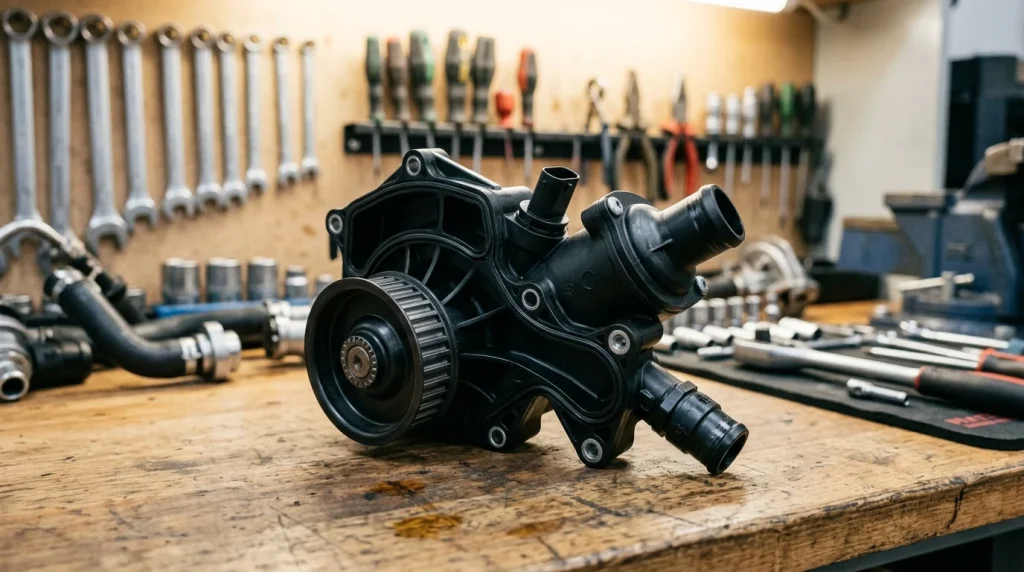
2017 Audi A4 Water Pump and Thermostat Housing Failures
The single most common mechanical problem on the B9 Audi A4 is coolant leakage from the water pump and thermostat housing assembly, often called the coolant regulator. The housing of this integrated unit is made of composite plastic, which sits directly on the engine block and is exposed to intense thermal cycles. Over time, the plastic housing develops hairline cracks, or the sealing gasket swells and fails.
The cost to replace the water pump and thermostat assembly at an authorized Audi dealership ranges from $858 to $1,027. Independent European repair specialists typically perform the work for $600 to $800 using upgraded aftermarket aluminum housings, which resist cracking better than the original plastic parts. Due to the high failure rate, a class-action lawsuit (VW-Audi Water Pump Litigation) resulted in a settlement that extended the warranty coverage on this component. Depending on the VIN, the warranty was extended to 8 years/80,000 miles or 10 years/100,000 miles from the in-service date.
Note that the deadline to submit claims for past out-of-pocket reimbursements (capped at $1,150 for independent shop repairs) passed in late 2022. For buyers in 2026, check if the replacement has already been performed, or if the car is still within the remaining 10-year warranty window based on its original sale date.
2017 Audi A4 Excessive Oil Camshaft Seal Leaks
While the EA888 Gen 3 engine resolved the severe piston ring issues that plagued the older B8 generation (which burned a quart of oil every few hundred miles), it still develops minor oil consumption and leakage issues as it crosses the 80,000-mile mark. The most common source of oil leaks is the seals around the Camshaft Adjuster magnets located on the front upper timing cover.
Oil seeping from these magnets runs down the front of the engine block. If left unaddressed, this oil drips directly onto the water pump and thermostat housing assembly below. The chemical composition of the engine oil degrades the rubber seals of the coolant regulator, accelerating the water pump failure described above. Replacing the upper timing cover gaskets and camshaft magnet seals costs roughly $250 to $350 but prevents much more expensive secondary repairs.
2017 Audi A4 DSG S Tronic Transmission Hesitation
The seven-speed S-tronic dual-clutch transmission (internal code DL382) offers lightning-fast shifts under acceleration, but it can exhibit jerky behavior or low-speed hesitation in stop-and-go traffic. Early production units of the 2017 model year were particularly prone to this calibration issue. Audi released several transmission control unit (TCU) software updates that smoothed out these engagement points, so used buyers should ensure the transmission has the latest software flashed by a dealer.
Beyond software, strict maintenance is mandatory. The DL382 gearbox requires a dual-fluid service (mechanical gear oil and mechatronic hydraulic fluid) every 40,000 miles. Neglecting this service leads to fluid contamination, which can damage the mechatronics unit, resulting in a replacement cost of $3,500 to $4,500. During test drives, check for smooth take-offs from a complete stop and ensure the car does not hesitate or jerk when shifting between Drive and Reverse.
Safety Profile: Verified NHTSA Recalls and PODS Issues
Answer-first: The 2017 Audi A4 is subject to six NHTSA safety recalls, dominated by passenger occupant detection system (PODS) errors and door trim defects.
Used car buyers should verify that all recall work has been performed by entering the vehicle’s unique VIN into the official NHTSA database. Dealerships perform all recall repairs free of charge.
The 2017 Audi A4 recalls tracked in the NHTSA database include:
- PODS Airbag Sensor (Recall 21V874 / 19V547): This is the most critical recall. The passenger occupant detection system (PODS) connecting cable harness can develop contact faults or surface oxidation. This causes the software to misdiagnose a sensor malfunction and switch off the passenger airbag even when an adult is in the seat. Under the active recall, dealers replace the connecting cable and either the seat heating mat or the seat cover.
- Door Speaker Trim (Recall 17V675): On certain A4 Premium Plus and Prestige models, the aluminum trim on the door speaker covers can peel or bend away due to insufficient adhesive, exposing sharp metal edges that pose a cut risk to occupants. Dealers replace the trim.
- Side Marker Lights (Recall 16V642): A software error in the electrical system rendered the front side marker lights inoperative when the parking lights or headlights were turned on, violating federal safety standards. A simple dealer software update resolves this.
- Airbag Deployment (Recall 16V955): A small batch of early 2017 A4 models had frontal airbags and seat belt pretensioners that could fail to deploy in a crash due to a supplier manufacturing defect. Affected units require replacement modules.
- Prestige Airbag Mounting Screw (Recall 18V836): A very limited run of 12 A4 Allroad models had passenger airbag mounting screws that were not tightened to specifications.
The Electric Coolant Pump Recall Clarification
It is vital to clear up a common used car myth regarding the B9 generation. Many online buyer guides list the electric coolant pump recall (Recall 18V229 / 17V002) as a primary concern for the 2017 Audi A4. However, official NHTSA recall documentation indicates that this campaign, which addressed an auxiliary after-run pump fire hazard, only covered A4 models from the 2013-2016 model years (B8.5 generation). The redesigned 2017 A4 sedan and Allroad do not utilize the affected pump design and are entirely exempt from this recall.
Technology and Cabin: Optional Virtual Cockpit and Bang & Olufsen
Answer-first: The interior of the 2017 Audi A4 sets a class benchmark with its horizontal design architecture, high-grade soft-touch surfaces, and optional 12.3-inch Virtual Cockpit digital instrument cluster.
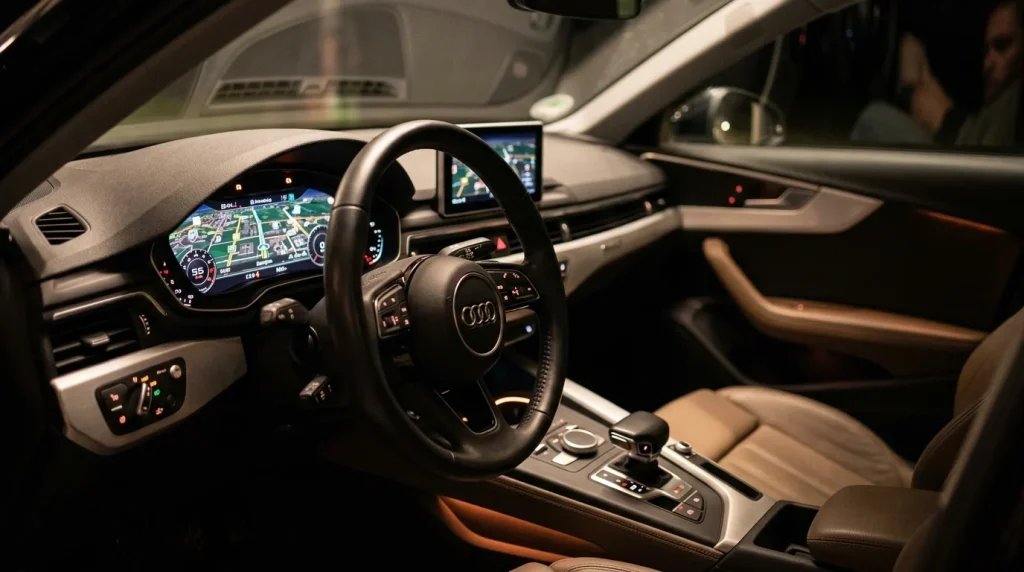
The dashboard layout features a continuous air vent band that accentuates cabin width, accented by aluminum or genuine wood trim pieces. The build quality is excellent, with tight panel gaps and high-quality materials extending down to the lower door panels where competitors often use hard plastics.
To help buyers navigate the complex trim packages offered in 2017, the list below outlines the standard and optional technology configurations:
- Premium Trim (Base): Standard 7-inch MMI central display, analog gauges with a 5-inch driver information screen, tri-zone automatic climate control, leather upholstery, and a sunroof.
- Premium Plus Trim (Mid): Adds standard LED headlights, a 19-speaker Bang & Olufsen sound system, proximity keyless entry, and heated front seats.
- Prestige Trim (Top): Standard 12.3-inch Virtual Cockpit, 8.3-inch central display with MMI Navigation Plus, head-up display, top-view camera system, and advanced driver assistance systems.
- Technology Package: Optional on Premium Plus; adds the Virtual Cockpit, the larger 8.3-inch navigation screen, and side assist blind-spot monitoring.
Audi Virtual Cockpit and MMI Infotainment Review
The standout feature of the B9 cabin is the optional Audi Virtual Cockpit. Swapping out the traditional analog speedometer and tachometer, this 12.3-inch TFT display has a high-resolution layout and a 60 frames-per-second refresh rate. Using controls on the steering wheel, the driver can toggle between classic view (large dials) and infotainment view, which shrinks the gauges to display a full-color 3D navigation map.
The central MMI display is operated via a rotary dial on the center console, which includes an integrated touchpad surface. This touchpad allows the driver to write letters and numbers with their finger to input navigation addresses or search contacts, reducing eyes-off-the-road time. While the floating screen does not retract into the dashboard, it features excellent contrast and remains legible in direct sunlight.
Apple CarPlay, Android Auto, and Audio System Upgrades
All versions of the 2017 A4 come standard with wired Apple CarPlay and Android Auto integration. The systems require a physical USB connection, located inside the center console armrest. Used buyers should note that early MMI software could drop connections randomly. Using high-quality OEM cables and ensuring the MMI system has the latest software updates resolved this issue for most owners.
Audi offered two sound systems. The standard setup is a ten-speaker, 180-watt audio system that provides clean sound but lacks deep bass. The Premium Plus and Prestige trims include the outstanding Bang & Olufsen 3D sound system. This premium setup utilizes a 16-channel amplifier powering 19 speakers, producing 755 watts of power. The system features unique speaker placement in the A-pillars to simulate a wide, three-dimensional soundstage, making it one of the best factory audio systems in this price class.
2017 Audi A4 Trunk Space and Cargo Dimensions
Trunk capacity for the sedan stands at 13.0 cubic feet, which is average for the compact luxury class. The trunk opening is relatively wide, and the lid hinges are shrouded in plastic trim panels to prevent them from crushing luggage when closed. To carry longer items, the rear seatback features a 40/20/40 split-folding design, allowing owners to slide long cargo like skis through the center section while retaining passenger seats on either side.
Cabin storage is somewhat limited. The center console bin under the armrest is shallow, occupied mostly by the USB ports and auxiliary jacks. The door pockets are long but narrow, and the glovebox is partially taken up by the MMI media unit containing the CD player and SD card slots. Small item storage is limited to a small bin to the left of the steering wheel.
Buying Options: A4 Allroad Wagon vs. Performance S4 Sedan
Answer-first: Buyers seeking greater utility or performance can opt for the raised-wagon A4 Allroad, while performance enthusiasts must look to the 2018 S4 due to the S4’s absence in the 2017 model year.
This split strategy left a temporary gap in Audi’s performance lineup for the 2017 model year, which buyers must navigate when shopping the used market.
The table below compares the performance and dimensions of the standard sedan with the alternative Allroad wagon and the subsequent S4 sports sedan:
| Metric | 2017 Audi A4 Sedan | 2017 Audi A4 Allroad | 2018 Audi S4 |
|---|---|---|---|
| Body Style | Four-Door Sedan | Four-Door Wagon | Four-Door Sedan |
| Engine | 2.0L Turbo 4-Cylinder | 2.0L Turbo 4-Cylinder | 3.0L Turbo V6 |
| Horsepower | 252 hp | 252 hp | 354 hp |
| Transmission | 7-Speed DSG S-tronic | 7-Speed DSG S-tronic | 8-Speed Tiptronic |
| Ground Clearance | 5.0 inches | 6.5 inches | 4.7 inches |
| Cargo Volume (Seats Up) | 13.0 cu ft | 24.2 cu ft (58.5 total) | 13.0 cu ft |
| Used Pricing (2026) | $8,900 – $16,000 | $11,500 – $18,500 | $22,000 – $29,000 |
2017 Audi A4 Allroad Off-Road Wagon Specs
The A4 Allroad is a compelling choice for active buyers who want the driving feel of a sedan but need the cargo capacity of a small SUV. It features standard roof rails, rugged plastic wheel-arch cladding, underbody skid plates, and a revised suspension that increases ground clearance by 1.5 inches compared to the standard sedan (6.5 inches total).
The wagon body style increases cargo space to 24.2 cubic feet behind the rear seats, and 58.5 cubic feet when the rear seats are folded flat. The Allroad came equipped only with the 252hp engine and standard Quattro all-wheel drive, paired with the S-tronic transmission. In the used market, the Allroad retains its value much better than the sedan, with used prices in 2026 ranging from $11,500 to $18,500.
2018 Audi S4 Performance Upgrade Comparison
Enthusiasts shopping for a high-performance B9 variant must skip the 2017 model year entirely. The previous-generation B8.5 S4 ended production in 2016, and Audi did not release the redesigned B9 S4 until the 2018 model year.
The 2018 S4 swaps out the four-cylinder engine for a 3.0-liter turbocharged V6 engine that produces 354 horsepower and 369 lb-ft of torque. It also replaces the S-tronic DSG transmission with an eight-speed Tiptronic torque-converter automatic transmission, which handles the higher torque load better and eliminates low-speed launch hesitation. Zero to 60 mph times drop to 4.4 seconds. Because of this major performance gap, used 2018 S4 models command a significant premium, trading between $22,000 and $29,000 in 2026.
Used Market Pricing, Depreciation, and Value Verdict
Answer-first: Used 2017 Audi A4 pricing has dropped significantly in 2026, making the luxury compact sedan an excellent value proposition, provided buyers inspect for known weaknesses.
The vehicle has lost over 65% of its original manufacturer’s suggested retail price (MSRP) due to standard luxury-car depreciation. This steep drop benefits used buyers who can purchase a technologically advanced B9 sedan for a fraction of its original cost.
Note: Fuel costs and insurance premiums vary between the Ultra and Quattro. The 62-horsepower difference on Quattro models increases insurance rates by approximately $200 to $300 annually.
The following matrix breaks down the average used market pricing in 2026 based on trim level and mechanical condition:
| Trim & Drivetrain | Original MSRP | Used Price (Fair Condition) | Used Price (Excellent Condition) |
|---|---|---|---|
| Premium Ultra FWD | $34,900 | $8,900 | $10,500 |
| Premium Quattro AWD | $39,400 | $9,800 | $11,800 |
| Premium Plus Ultra FWD | $39,650 | $10,500 | $12,200 |
| Premium Plus Quattro AWD | $43,200 | $11,500 | $13,800 |
| Prestige Quattro AWD | $46,500 | $13,200 | $16,000 |
2017 Audi A4 Used Price Trends by Trim Level
The pricing ranges above indicate that the entry-level Premium Ultra FWD is the most affordable entry point, with high-mileage examples falling below $9,000 in 2026. The mid-tier Premium Plus Quattro remains the volume seller, typically trading between $11,500 and $13,800 depending on mileage and condition. This trim represents the sweet spot for most buyers, especially when equipped with the optional Technology Package that adds the Virtual Cockpit and blind-spot monitoring.
The top-tier Prestige Quattro sits at the pinnacle of the used market, topping out around $16,000 for low-mileage, exceptionally maintained specimens. Prestige models include driver assistance features like adaptive cruise control and active lane assist, which are rare and highly sought after. Regardless of trim, the presence of a documented maintenance history showing a recent water pump replacement adds roughly $1,000 to the transaction value.
For buyers with a slightly larger budget, the refreshed styling and touchscreen MMI of the 2020 Audi A4 might offer a more modern alternative to the early B9 models.
2017 Audi A4 Ownership Cost Analysis: Is It Worth It?
Whether a used 2017 A4 is worth buying depends heavily on your budget for scheduled maintenance. The car demands premium fuel, and the EPA fuel economy of 27 combined mpg for Quattro models translates to average annual fuel costs of roughly $2,100. Insurance rates are typical for German luxury cars, running about $1,800 annually.
The vehicle is best suited for buyers who are comfortable allocating $1,500 to $2,000 annually for preventive maintenance and repairs. If you can perform basic services yourself or have a trusted independent European auto shop, the A4 represents a highly advanced, comfortable, and efficient highway cruiser that looks and feels modern. However, buyers who want low-maintenance reliability and low ownership costs should avoid the 2017 A4 and look toward Japanese luxury alternatives like the Lexus IS or Acura TLX.
Pre-Purchase Inspection (PPI) Checklist
Before purchasing a used 2017 A4, ensure a qualified independent shop performs a thorough pre-purchase inspection:
- Cooling System Leak Test: Pressurize the cooling system to inspect the plastic thermostat housing and water pump for leaks. Check for dried pink crust on the front of the block.
- OBD2 Diagnostic Scan: Perform a full system scan to check for active or stored fault codes. Pay close attention to timing chain stretch correlation codes (P0016) and mechatronics pressure faults.
- Transmission Engagement Test: Drive the vehicle until warm. Ensure the DSG shifts smoothly without jerking, hesitation, or clunking during low-speed crawling and reversing.
- Camshaft Magnet Inspection: Inspect the front of the upper timing cover for oil seeping past the adjuster seals.
- Recall Campaign Verification: Run the VIN through the NHTSA database to ensure the PODS sensor cable harness recall (21V874) has been officially closed by a dealer.
Frequently Asked Questions
What are the most common mechanical failures in a used 2017 Audi A4?
The most prevalent mechanical failure is the cracking of the plastic coolant regulator (water pump and thermostat housing assembly), which develops leaks between 40,000 and 60,000 miles. Other issues include camshaft adjuster magnet oil leaks, low-speed DSG transmission hesitation, and passenger occupant sensor faults.
Is the 2017 Audi A4 a reliable used car to buy in 2026?
It is moderately reliable, earning a 3.5 out of 5 stars from RepairPal. However, the Quattro AWD model drops to a 3.0 out of 5 stars with higher average repair costs. Buyers should verify completed water pump repairs and 40,000-mile transmission services.
Does the 2017 Audi A4 require premium gasoline?
Yes, both the 190-horsepower Ultra and the 252-horsepower standard engines require 91 octane or higher premium unleaded gasoline to maintain performance and prevent engine knock.
How much does it cost to replace the water pump on a 2017 A4?
A professional replacement at an authorized dealership costs between $858 and $1,027. Independent European specialty shops typically perform the work for $600 to $800 using upgraded metal aftermarket parts.
How long does a 2017 Audi A4 engine last?
With strict adherence to oil changes and coolant maintenance, the 2.0T EA888 Gen 3 engine can exceed 150,000 to 200,000 miles without major internal mechanical failures.

