

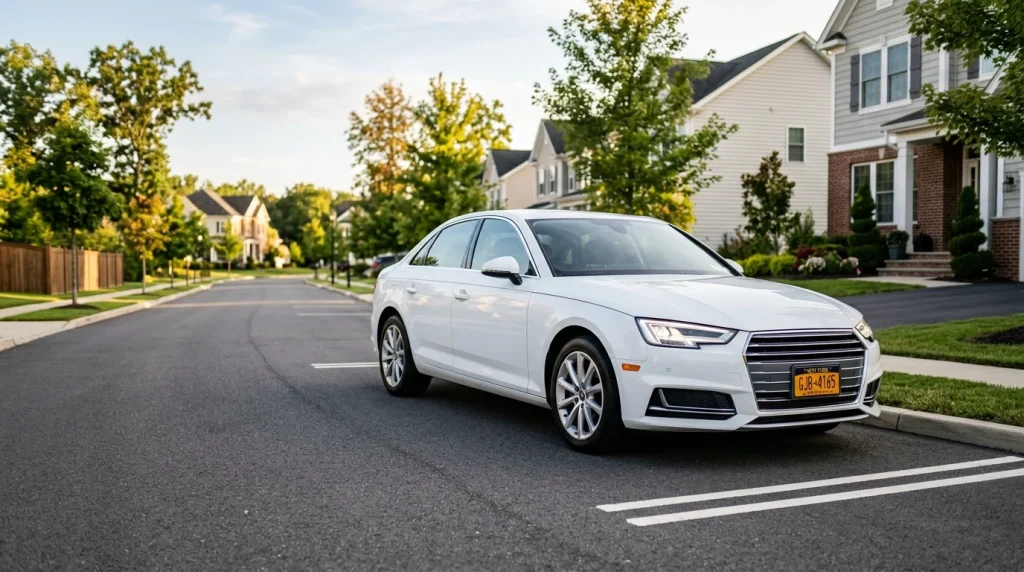
Quick answer: The 2018 Audi A4 is a highly rated used compact luxury sedan, securing a J.D. Power consumer reliability score of 85 out of 100. Buyers can choose between the fuel-efficient 190-horsepower FWD (40 TFSI) and the sporty 252-horsepower Quattro AWD (45 TFSI). Used prices range from $14,000 to $23,000, though owners must prepare for common water pump leaks.
Key takeaways:
- Retail used market values span from $14,000 for front-wheel-drive Premium models up to $23,000 for low-mileage Quattro Prestige trims.
- The FWD Ultra model delivers an impressive EPA-estimated 27 city / 37 highway MPG, while the Quattro version gets 24 city / 34 highway MPG.
- Maintenance costs average $739 annually, with a critical 7-speed S tronic dual-clutch transmission service required every 40,000 miles.
- Cooling system weaknesses are common, with plastic water pump and thermostat housing replacements costing between $1,200 and $1,900.
2018 Audi A4 Model Overview and B9 Generation
Answer-first: The 2018 Audi A4 represents the second model year of the B9 generation in the United States. Built on the premium MLB Evo architecture, this generation utilized aluminum-hybrid body panels to shed 99 pounds compared to the previous B8 generation, resulting in sharper handling and improved cabin insulation.
The fifth-generation (B9) A4 was introduced to the North American market for the 2017 model year, making the 2018 version the second production run of this chassis. In the automotive industry, buying a second-year model is highly recommended. Launch years often suffer from assembly line teething issues, unrefined transmission software, and early-batch electronic bugs. By the time the 2018 production run commenced, Audi engineers had resolved several early software glitches in the infotainment system and smoothed out low-speed transmission shift logic.
The foundation of the B9 generation is the Volkswagen Group MLB Evo platform (Modular Longitudinal Matrix). Unlike transverse engine layouts found in entry-level premium cars like the Audi A3, the longitudinal engine placement of the A4 pushes the engine weight further back behind the front axle. This architecture is shared with upscale vehicles like the Audi Q7 and A8, giving the A4 a sophisticated suspension geometry. The front suspension features a five-link design with lightweight forged aluminum control arms, paired with a five-link independent rear setup. This setup minimizes road harshness while maintaining body composure during spirited cornering.
Used car buyers should note that this pre-facelift B9 model (running from 2017 through 2019) features physical dashboard controls. Many drivers prefer this layout over the 2020 facelift, which removed the center-console rotary control dial in favor of a larger touchscreen that requires taking eyes off the road to adjust settings.
2018 Audi A4 Reliability Ratings and E-E-A-T
Answer-first: The 2018 Audi A4 earns a Quality and Reliability consumer rating of 85 out of 100 from J.D. Power, classifying it in the “Great” tier. This rating is derived from verified owner surveys, reflecting fewer mechanical complaints and higher build quality than rival German compact sedans.
To understand the long-term viability of the A4 as a used purchase, buyers should evaluate independent reliability data. According to J.D. Power Consumer Ratings, the 2018 model stands out as one of the most dependable years for the modern A4 lineup. In comparison, the previous B8 generation (2009-2016) carried a reputation for severe oil consumption, premature timing chain tensioner failures, and power steering fluid leaks. The B9 generation corrected these systemic engineering flaws, earning praise from independent European car specialists.
Independent maintenance databases place the average annual service and repair cost of the A4 at $739. This is lower than the luxury compact car average of $809, though significantly higher than mainstream midsize sedans. The probability of an A4 requiring a major or severe repair is rated at 12 percent, which aligns with the premium segment average. While routine parts like brake rotors, cabin filters, and specialized fluids carry a luxury price premium, the mechanical drivetrain itself is robust.
Below is a comparison of reliability scores and estimated ownership costs among key competitors in the 2018 model year segment:
| Competitor Model | J.D. Power Reliability | Average Annual Maintenance | Major Repair Probability |
|---|---|---|---|
| 2018 Audi A4 | 85 / 100 (Great) | $739 | 12% |
| 2018 BMW 3 Series | 83 / 100 (Great) | $748 | 12% |
| 2018 Mercedes C-Class | 81 / 100 (Great) | $908 | 13% |
| 2018 Lexus IS 300 | 80 / 100 (Average) | $543 | 11% |
Expert view: The B9 generation represents the most reliable modern Audi A4. The EA888 Gen 3 engine resolves the high oil consumption issues of the past. However, buyers must understand that “reliable” for a German luxury car means it will run beautifully only if you perform all fluid changes exactly on schedule. Deferred maintenance on this platform will lead to expensive mechatronic or engine repairs.
Engine Performance and Drivetrain Options
Answer-first: The 2018 Audi A4 features two performance levels of the 2.0-liter turbocharged four-cylinder EA888 engine. The base 40 TFSI Ultra FWD produces 190 horsepower and 236 lb-ft of torque, while the upgraded 45 TFSI Quattro AWD generates 252 horsepower and 273 lb-ft of torque.
Both engine variants utilize a cast-iron engine block paired with an aluminum cylinder head, direct fuel injection, and a dual-overhead-cam valvetrain featuring Audi valvelift system (AVS). However, their combustion cycles and turbocharger tunings are completely different, catering to different driving preferences.
The standard transmission for both engines is the DL382 seven-speed S tronic dual-clutch automatic. This transmission features two wet multi-plate clutches that pre-select gears, allowing for near-instantaneous shifts in under 100 milliseconds. The transmission also features a coasting function that disconnects the engine from the wheels when coasting down hills in Efficiency mode, saving fuel. For enthusiasts, the 45 TFSI Quattro could also be optioned with a traditional six-speed manual transmission, though these models are rare on the used market.
The Quattro all-wheel-drive system on the 252-horsepower model is a permanent, mechanical setup. Under normal driving conditions, the self-locking center differential distributes engine torque in a 40:60 front-to-rear ratio. If traction loss is detected, the differential automatically redirects up to 70 percent of power to the front axle or up to 85 percent to the rear. This provides predictable handling in snow and rain, while reducing understeer during dry-weather cornering.
40 TFSI Horsepower and Torque (Ultra FWD)
Answer-first: The 40 TFSI Ultra engine produces 190 horsepower at 4,200 rpm and 236 lb-ft of torque at 1,450 rpm. It achieves high thermal efficiency by running on the Budack cycle, which closes the intake valves early during the induction stroke to increase the effective expansion ratio.
The Budack cycle (also known as the B-cycle) is a modified version of the Miller cycle. By closing the intake valves before the piston reaches bottom dead center, the air-fuel mixture is compressed less but expanded more during the combustion stroke. This cycle maximizes efficiency during low-load driving, such as highway cruising. However, because the engine draws in less air per stroke, peak horsepower is capped at 190 hp.
On the road, the 40 TFSI Ultra feels responsive from a standstill because its peak torque of 236 lb-ft is available starting at a low 1,450 rpm. This low-end torque is ideal for stop-and-go city traffic. The limitation of the Budack cycle engine becomes apparent at higher engine speeds, where power tapers off past 5,000 rpm. This engine is paired exclusively with front-wheel drive, reducing mechanical drag and vehicle weight by 110 pounds compared to the Quattro model.
45 TFSI Horsepower and Torque (Quattro AWD)
Answer-first: The 45 TFSI engine produces 252 horsepower at 5,00: rpm and 273 lb-ft of torque at 1,600 rpm. Operating on a conventional Otto cycle, this version uses a larger turbocharger and higher boost pressures to deliver strong acceleration up to its redline.
Unlike the efficiency-minded 40 TFSI, the 45 TFSI is tuned for sportier performance. The Otto cycle maintains standard valve timing, allowing the engine to draw in a full volume of air and fuel. This results in a 62-horsepower increase and a 37 lb-ft torque gain. The peak torque of 273 lb-ft is sustained from 1,600 rpm up to 4,500 rpm, providing a broad powerband for overtaking and highway merges.
The 45 TFSI engine is paired with the Quattro all-wheel-drive system, which prevents front-wheel wheelspin under heavy throttle. The power delivery is linear, with minimal turbo lag. This engine is highly receptive to aftermarket ECU tuning, though buyers should exercise caution when purchasing modified used cars, as tunes accelerate wear on the turbocharger and clutch packs.
0-60 MPH Acceleration Times
Answer-first: The 2018 Audi A4 45 TFSI Quattro automatic accelerates from 0 to 60 mph in 5.6 seconds when using its launch control program. The front-wheel-drive 40 TFSI Ultra is noticeably slower, requiring 7.1 seconds to complete the same sprint.
The 1.5-second acceleration gap is highly noticeable in daily driving. The Quattro model benefits from immediate off-the-line traction, whereas the FWD model can experience front wheelspin on damp pavement before the traction control intervenes.
The S tronic transmission includes a hidden launch control feature. To activate it, the driver selects Dynamic mode, turns off the traction control (ESC Sport), depresses the brake pedal fully with the left foot, and floors the accelerator with the right. The engine holds revs at approximately 3,000 rpm until the brake pedal is released, launching the vehicle with minimal wheel slip. For buyers who found a rare six-speed manual Quattro variant, the 0-60 mph time is nearly identical at 5.7 seconds.
EPA Fuel Economy Ratings
Answer-first: According to U.S. EPA Fuel Economy Data, the FWD 40 TFSI achieves 27 city / 37 highway / 31 combined MPG. The 45 TFSI Quattro automatic is rated at 24 city / 34 highway / 27 combined MPG.
The fuel economy ratings of the 2018 A4 are excellent for a luxury sedan. The FWD Ultra’s highway rating of 37 MPG allows for a highway driving range of over 560 miles on a single 15.3-gallon fuel tank. This fuel efficiency rivals smaller economy cars while offering the refinement of a premium cabin.
The 45 TFSI Quattro sacrifices some efficiency due to the extra weight of the all-wheel-drive components and the higher power output of the Otto-cycle engine. However, its 34 MPG highway rating remains highly competitive, beating many smaller, less powerful luxury vehicles. Both engines require premium gasoline (91 octane or higher) to prevent engine knock and achieve their rated horsepower and fuel economy. Using regular 87-octane fuel will cause the engine computer to retard ignition timing, reducing performance and fuel efficiency.
Below is a summary of the mechanical differences between the two engine configurations:
| Powertrain Specification | 40 TFSI Ultra FWD | 45 TFSI Quattro AWD |
|---|---|---|
| Engine Architecture | 2.0L Turbo EA888 Gen 3B | 2.0L Turbo EA888 Gen 3 |
| Combustion Cycle | Budack Cycle (B-cycle) | Conventional Otto Cycle |
| Peak Horsepower | 190 hp @ 4,200-6,000 rpm | 252 hp @ 5,000-6,000 rpm |
| Peak Torque | 236 lb-ft @ 1,450-4,200 rpm | 273 lb-ft @ 1,600-4,500 rpm |
| 0-60 mph Time | 7.1 seconds | 5.6 seconds (7-speed S tronic) |
| EPA Fuel Economy | 27 city / 37 highway / 31 combined | 24 city / 34 highway / 27 combined |
| Drivetrain Layout | Front-Wheel Drive (FWD) | Permanent All-Wheel Drive (Quattro) |
Reliability Issues and Common Problems
Answer-first: The most common problems reported on the B9 Audi A4 involve coolant leaks from the plastic water pump, mechatronic transmission glitches due to deferred fluid flushes, and passenger seat airbag sensor wiring failures.

While the B9 generation is a significant reliability improvement over the older B8, it is not without weaknesses. Prospective buyers should inspect used vehicles for common wear areas. The front control arm bushings are a known wear point; by 80,000 miles, the rubber hydraulic bushings can crack, causing a clunking noise when driving over speed bumps or braking at low speeds.
SUNROOF rattle is another frequent cosmetic complaint. The sunroof frame screws can loosen over time, causing a persistent clicking noise overhead when driving on rough roads. Dealerships resolve this by applying specialized felt tape and tightening the frame mounting bolts.
For buyers looking at sportier models, the S Line package adds a sport suspension that lowers the ride height by 23 mm (0.9 inches). While this suspension sharpens steering response, it delivers a firmer ride over potholes, which some drivers find uncomfortable for daily driving.
Water Pump and Thermostat Housing Failures
Answer-first: The 2018 Audi A4’s primary mechanical failure point is the plastic water pump and thermostat housing assembly. Heat cycles cause the plastic body to warp and leak coolant, typically between 50,000 and 70,000 miles, resulting in a $1,200 to $1,900 repair bill.
The water pump on the EA888 engine is located on the driver’s side of the block, underneath the intake manifold. It is driven by a small, dedicated belt connected to the engine balance shaft. To save weight and manufacturing costs, Audi utilizes a composite plastic housing that integrates both the water pump and the electronically controlled thermostat.
Over time, the constant temperature changes of the engine cause the plastic housing to contract and expand, leading to hairline cracks or seal warping. The first symptom is usually a sweet, syrup-like smell after parking, followed by a slowly dropping coolant level in the expansion tank. If the leak is ignored, the coolant level will drop rapidly, triggering a low coolant warning on the dashboard. Replacing this assembly requires removing the intake manifold, replacing the manifold gaskets, installing the new pump assembly, and performing a vacuum bleed of the cooling system. Many independent European shops now offer aftermarket aluminum thermostat housings, which are far more resistant to warping than the factory plastic units.
Note: Continued operation of the engine with a low coolant level or a warped thermostat can cause rapid overheating. Because the engine head is aluminum, severe overheating can warp the cylinder head or damage the head gasket, leading to engine replacement costs exceeding $5,000.
S Tronic DSG Transmission Maintenance
Answer-first: The seven-speed S tronic transmission requires oil and filter changes every 40,000 miles. Neglecting this maintenance interval can lead to premature wear on the mechatronic solenoids and wet clutch packs, causing transmission failure.
The S tronic DSG transmission utilizes two separate oil chambers: one for the mechanical gear set and another for the mechatronic control unit and wet clutches. The mechatronic unit contains electronic solenoids that route pressurized hydraulic fluid to actuate the gear shifts and control clutch engagement.
Over miles of driving, clutch material sheds into the transmission fluid. If the fluid and external filter are not replaced every 40,000 miles, this suspended debris can clog the solenoids or cause them to stick. Early signs of transmission neglect include harsh downshifts when slowing to a stop, a noticeable delay when shifting from park to drive, or a slipping sensation under heavy acceleration. A standard DSG fluid flush costs approximately $450 to $550 at an independent European specialist, whereas replacing a failed mechatronic unit or worn clutch pack will cost between $4,500 and $7,000. When buying a used 2018 A4, verifying that the transmission service was performed at 40,000 miles (and again at 80,000 miles if applicable) is critical.
NHTSA Recalls and Safety Bulletins
Answer-first: The 2018 Audi A4 has been subject to four safety recalls issued by the National Highway Traffic Safety Administration. The most significant campaigns involve the Passenger Occupant Detection System (19V547000) and the auxiliary coolant pump (18V229000).
Used buyers should check the NHTSA database using their vehicle’s 17-digit VIN to ensure that all recall campaigns have been completed by an authorized Audi dealer. Dealerships perform recall repairs free of charge, regardless of the vehicle’s warranty status.
The Passenger Occupant Detection System (PODS) recall (NHTSA Campaign 19V547000) is a critical safety issue. The sensor cable connecting the seat heater to the occupant detection system could develop contact faults due to oxidation. This fault could cause the airbag control module to misdiagnose a sensor failure, disabling the front passenger airbag even if an adult is seated. Dealerships resolve this by installing an updated wiring harness and sensor module.
The auxiliary coolant pump recall (NHTSA Campaign 18V229000) addresses the electric pump that circulates coolant when the engine is turned off. Debris from the cooling system could block the pump, causing it to overheat and potentially start an engine fire. Dealers replace the auxiliary pump and update the engine control module software.
Interior Technology and Comfort Features
Answer-first: The 2018 Audi A4 cabin features high-quality soft-touch surfaces, standard leather upholstery, and excellent physical layout. The interior offers 13.0 cubic feet of trunk cargo space, which can be expanded using the standard 40/20/40 split-folding rear seats.
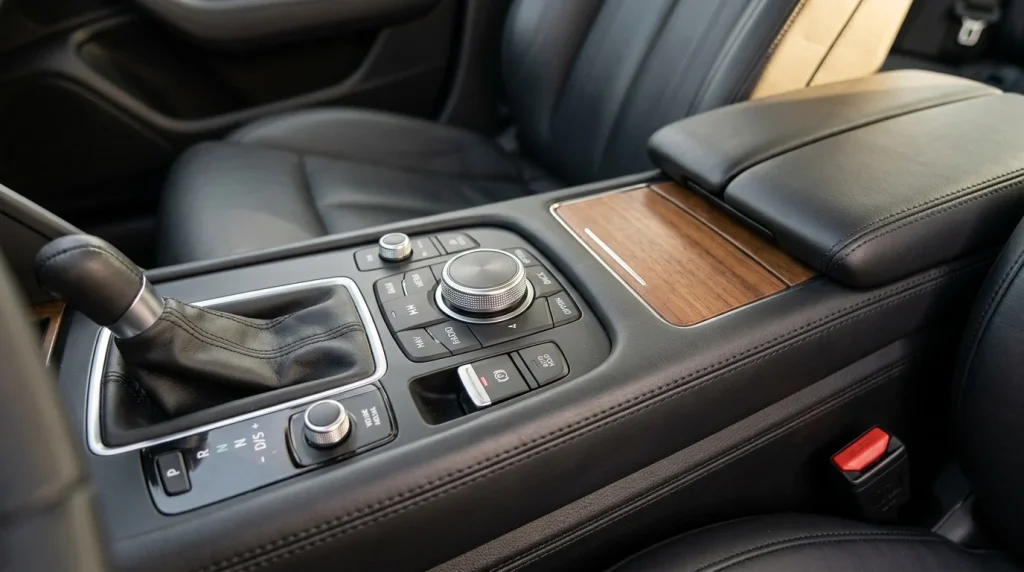
The interior materials used in the 2018 A4 are a highlight of the B9 generation. Premium soft-touch plastics, real open-pore wood, or brushed aluminum trim elements are used throughout the cabin. Standard equipment includes leather upholstery, eight-way power-adjustable front seats, and a sunroof. Rear-seat passengers benefit from dedicated climate controls and comfortable seating for two adults, though three across is tight due to the transmission tunnel.
The center console layout is notable for its ergonomics. It features a leather-wrapped gear selector that acts as a wrist rest when operating the MMI controller dial. The climate controls utilize capacitive metal switches that preview menu options on a small screen when lightly touched. This physical layout minimizes distraction compared to touchscreens, which require precise finger placement. The standard trunk space of 13.0 cubic feet is average for the class, but the 40/20/40 split rear seats provide flexibility for transporting longer items like skis while maintaining passenger seating.
Virtual Cockpit and MMI Infotainment
Answer-first: The 2018 A4 is available with the 12.3-inch Virtual Cockpit display, which replaces traditional gauges with a high-resolution screen. The dashboard features a standard 7.0-inch or optional 8.3-inch MMI screen with wired Apple CarPlay and Android Auto.
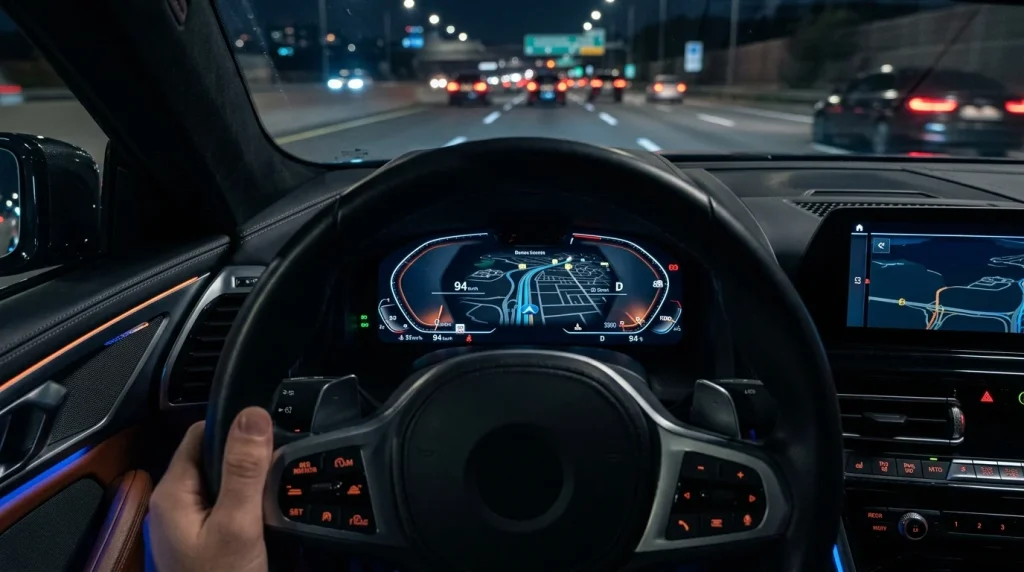
The Virtual Cockpit (standard on Prestige, optional on Premium Plus) is a highly desirable option. It allows the driver to toggle between a Classic view with a large speedometer and tachometer, and an Infotainment view that shrinks the gauges to display a full-screen Google Earth navigation map. The display is controlled via buttons on the steering wheel, allowing the driver to change radio stations, make calls, or view vehicle diagnostics without looking away from the road.
All trims include standard wired Apple CarPlay and Android Auto integration, which requires a USB connection located in the center console. The MMI infotainment system is generally reliable, though some owners report occasional black screens or Bluetooth pairing issues. These glitches are typically resolved by performing a hard reset of the MMI system (holding down the Nav and Radio toggle switches while pushing the center knob) or updating the system software at an Audi dealership. Premium Prestige models also feature a 19-speaker, 755-watt Bang & Olufsen 3D sound system, which is highly regarded for its acoustic clarity.
High-Performance Variants: Audi S4 and RS3
Answer-first: For buyers seeking faster acceleration, the 2018 Audi S4 features a 354-horsepower turbocharged 3.0-liter V6, while the compact Audi RS3 uses a 400-horsepower 2.5-liter five-cylinder engine to achieve a 3.9-second 0-60 mph time.
For buyers comparing the 2017 Audi A4 model year or looking at the 2019 Audi A4 successor, the S4 and RS3 variants represent step-ups in performance and used price.
The Audi S4 is built on the same MLB Evo platform as the A4 but replaces the four-cylinder engine with a single-turbo 3.0-liter V6 producing 354 horsepower and 369 lb-ft of torque. To handle the torque, the S4 replaces the dual-clutch transmission with an eight-speed Tiptronic torque-converter automatic. The S4 features an active rear sport differential that splits power between the rear wheels to improve handling. Used S4 prices range from $20,000 to $30,000, presenting a high-performance alternative with slightly higher maintenance costs.
The Audi RS3 is a smaller, track-focused vehicle built on the transverse MQB platform (shared with the A3). Its 2.5-liter turbocharged inline-five engine produces 400 horsepower and 354 lb-ft of torque, delivering a distinctive exhaust note. Paired with a seven-speed DSG and a front-biased Haldex AWD system, the RS3 is faster than the S4 but has a smaller back seat and a less refined ride. Used RS3 models hold their value well, with prices ranging from $35,000 to $45,000.
The specification table below compares the performance of these models:
| Specification Metric | A4 45 TFSI Quattro | S4 V6 Turbo | RS3 Inline-5 Turbo |
|---|---|---|---|
| Engine Size / Configuration | 2.0L Turbo Inline-4 | 3.0L Turbo V6 | 2.5L Turbo Inline-5 |
| Peak Horsepower | 252 hp | 354 hp | 400 hp |
| Peak Torque | 273 lb-ft | 369 lb-ft | 354 lb-ft |
| Transmission Type | 7-speed Dual-Clutch | 8-speed Automatic | 7-speed Dual-Clutch |
| 0-60 mph Time | 5.6 seconds | 4.4 seconds | 3.9 seconds |
| Used Price Range (2026) | $16,000 – $23,000 | $20,000 – $30,000 | $35,000 – $45,000 |
Used Market Pricing and Value Analysis
Answer-first: The average used price for a 2018 Audi A4 ranges from $14,000 to $23,000. Drivetrain and trim level are the primary price drivers, with Quattro AWD models commanding a $2,500 to $4,000 premium over FWD Ultra versions.
As a seven-year-old vehicle in 2026, the 2018 A4 has depreciated by approximately 65 percent from its original MSRP. This makes it a compelling value compared to a new model, though buyers should verify the vehicle’s maintenance history before purchasing.
The base Premium trim includes standard features like leather upholstery, a sunroof, and a backup camera. The Premium Plus trim is the most popular, adding the Virtual Cockpit, LED headlights, and keyless entry. The top-tier Prestige trim features a head-up display, dual-pane acoustic front glass, adaptive cruise control, and the Bang & Olufsen sound system.
The valuation table below shows typical retail and trade-in pricing by trim level:
| Trim Level & Drivetrain Configuration | Original MSRP | Used Trade-In Range | Used Private Party | Used Dealer Retail |
|---|---|---|---|---|
| Premium 40 TFSI Ultra FWD | $36,000 | $9,070 – $10,500 | $11,600 – $13,500 | $14,000 – $16,000 |
| Premium Plus 40 TFSI Ultra FWD | $39,200 | $10,000 – $10,800 | $13,000 – $14,100 | $15,400 – $16,700 |
| Premium 45 TFSI Quattro AWD | $40,500 | $11,600 – $13,500 | $14,300 – $16,700 | $16,500 – $19,300 |
| Premium Plus 45 TFSI Quattro AWD | $43,700 | $12,500 – $13,500 | $15,100 – $16,400 | $17,200 – $18,700 |
| Prestige 45 TFSI Quattro AWD | $50,000 | $13,600 – $14,700 | $16,900 – $18,300 | $19,500 – $23,000 |
Used 2018 Audi A4 Price Range in 2026
Answer-first: In 2026, used 2018 Audi A4 models are priced between $14,000 and $23,000 in the United States. High-mileage or FWD models sit at the lower end, while low-mileage Quattro Prestige models occupy the upper end.
When shopping, buyers should compare pricing across the Audi A4 catalog to find a balance between price and features. Models with over 100,000 miles can be found below $11,000, but these vehicles carry a higher risk of needing immediate repairs like control arms or engine mounts.
Documented maintenance history is a key factor in pricing. A vehicle with records showing 5,000-mile oil changes and DSG transmission services at 40,000 and 80,000 miles commands a premium of $1,000 to $1,500 over a vehicle with no service history. Buyers should also inspect vehicles for ECU modifications; modified vehicles are more likely to have been driven hard, accelerating wear on the drivetrain components.
Used Audi A4 5-Year Maintenance Projections
Answer-first: Over a five-year ownership period (assuming 12,000 miles driven annually), a used 2018 Audi A4 will require approximately $3,360 in scheduled maintenance and faces an estimated $3,400 in out-of-warranty repairs.
German luxury cars require regular maintenance using specialized fluids. Skipping fluid changes or using incorrect oils can lead to premature component failure. Owners should establish a dedicated maintenance fund of $1,500 annually to cover routine services and unexpected repairs.
The table below outlines the projected costs for scheduled maintenance:
| Ownership Year | Projected Mileage | Required Services | Estimated Cost |
|---|---|---|---|
| Year 1 | ~80,000 miles | Engine oil & filter change, cabin air filter, brake fluid flush | $330 |
| Year 2 | ~92,000 miles | Engine oil & filter change, engine air filter, spark plug replacement | $350 |
| Year 3 | ~104,000 miles | Engine oil & filter change, S tronic transmission fluid service, front brake pads & rotors | $1,150 |
| Year 4 | ~116,000 miles | Engine oil & filter change, cabin air filter, rear brake pads & rotors | $630 |
| Year 5 | ~128,000 miles | Engine oil & filter change, spark plug replacement, serpentine drive belt | $450 |
| Total | 5-Year Scheduled Maintenance Total | $3,360 |
Between 80,000 and 130,000 miles, several out-of-warranty mechanical components are likely to wear out. The estimated costs (parts and labor at independent shops) for these common repairs include:
- Water pump & thermostat assembly replacement (80% probability): $1,400.
- Front control arm bushings replacement (50% probability): $850.
- Hydraulic engine mounts replacement (40% probability): $750.
- PCV valve / oil separator replacement (30% probability): $400.
Competitor Comparisons
Answer-first: The 2018 Audi A4 compares favorably against the 2018 BMW 3 Series by offering a quieter cabin and better interior materials, while it has better electronic reliability than the 2018 Mercedes-Benz C-Class.
When shopping for a used luxury sedan, buyers typically compare the A4 with its German rivals:
The 2018 BMW 3 Series (F30 generation) is the dynamic benchmark in the class, offering sportier handling and more steering feedback. However, its interior uses cheaper plastics and lacks the design refinement of the B9 A4. The 330i’s B48 engine is reliable, but the cabin is noisier on the highway than the A4.
The 2018 Mercedes-Benz C-Class (W205 generation) focuses on comfort, featuring a softer ride and a traditional luxury interior. However, its COMAND infotainment system is slow and feels dated compared to Audi’s Virtual Cockpit. The C300 is also prone to electrical glitches, and its average annual maintenance costs are higher than the A4.
The 2018 Genesis G70 was introduced as a value-oriented competitor, offering sporty handling and a long warranty for original owners. However, this warranty does not transfer in full to second owners, and the G70’s rear seat and trunk are tighter than the A4’s.
Below is a comparison of these models:
| Vehicle Metric | 2018 Audi A4 45 TFSI | 2018 BMW 330i xDrive | 2018 Mercedes C300 4Matic |
|---|---|---|---|
| Engine Size & Output | 2.0L Turbo, 252 hp | 2.0L Turbo, 248 hp | 2.0L Turbo, 241 hp |
| Torque Rating | 273 lb-ft | 258 lb-ft | 273 lb-ft |
| Transmission | 7-speed Dual-Clutch | 8-speed Automatic | 9-speed Automatic |
| Average Annual Service | $739 | $748 | $908 |
| Cabin Quietness | Excellent | Moderate | Good |
| Infotainment Usability | High (Rotary dial) | Moderate (iDrive) | Low (COMAND) |
Next Steps for Used Buyers
Answer-first: To ensure a reliable purchase, buyers should verify the vehicle’s service history for DSG transmission fluid changes, inspect the front block for coolant leaks, and perform a pre-purchase inspection at an Audi specialist.
A systematic approach to buying a used B9 A4 includes:
- Drivetrain selection: Decide between the fuel-efficient FWD 40 TFSI (31 MPG combined) or the performance-oriented 45 TFSI Quattro (5.6-second 0-60 mph).
- Service history verification: Confirm that the S tronic transmission fluid was changed at 40,000 miles (and 80,000 miles if applicable). If no records are available, budget for this service immediately or walk away.
- Coolant leak inspection: Look for pink, crusty deposits around the thermostat housing and front of the block. If leaks are present, negotiate a $1,500 repair discount.
- NHTSA recall verification: Enter the VIN on the NHTSA portal to ensure that the PODS wiring harness and auxiliary water pump recalls were completed.
- Pre-Purchase Inspection (PPI): Invest $200 to $300 for an independent Audi specialist to scan for fault codes, check suspension bushings, and inspect the engine mounts on a lift.
For buyers comparing other model years, we recommend reviewing our 2020 Audi A4 facelift review or the 2022 Audi A4 used review to see how prices and standard technology changed over the B9 generation lifecycle.
Frequently Asked Questions
What are the common problems with the 2018 Audi A4?
The most common issue is coolant leaks from the plastic water pump and thermostat housing assembly, typically occurring between 50,000 and 70,000 miles. Other reported issues include worn front suspension control arm bushings and occasional MMI screen glitches.
Is the 2018 Audi A4 a reliable car to buy used?
Yes, the 2018 Audi A4 is a reliable used luxury car, earning a J.D. Power consumer reliability score of 85 out of 100. It avoids the oil consumption and timing chain tensioner failures that affected the previous B8 generation.
What is the horsepower difference between the 2018 A4 FWD and Quattro?
The front-wheel-drive 40 TFSI Ultra FWD produces 190 horsepower, while the 45 TFSI Quattro AWD produces 252 horsepower, representing a difference of 62 horsepower. The Quattro model is significantly faster, completing 0-60 mph in 5.6 seconds compared to 7.1 seconds for the FWD.
Does the 2018 A4 have transmission problems?
The 7-speed S tronic DSG transmission is generally durable but requires fluid changes every 40,000 miles. Neglecting this maintenance can lead to solenoid clogging in the mechatronic unit, causing rough shifts or mechatronic failure.
How does the 2018 A4 compare to the 2018 BMW 3 Series?
The 2018 Audi A4 offers a higher-quality interior, a quieter highway ride, and more advanced tech (Virtual Cockpit) than the BMW 3 Series (F30 generation), though the BMW provides slightly sharper handling feedback.
How much does a used 2018 Audi A4 cost?
Used prices range from $14,000 for a FWD Premium trim with average mileage to around $23,000 for a clean Quattro Prestige model with documented service history.

