

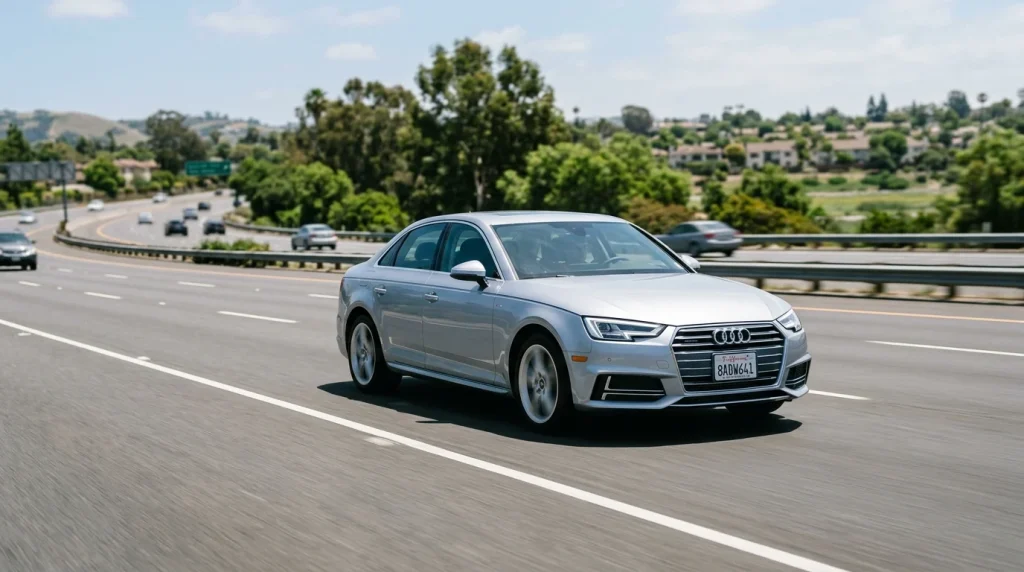
Quick answer: The 2020 Audi A4 is a highly competitive compact luxury sedan on the used market. It introduces the B9.5 facelift with a standard 10.1-inch MMI touchscreen, updated styling, and no standard mild-hybrid system for US-spec cars. Used prices in 2026 range from $15,323 to $27,300. Drivetrain setups include the front-wheel-drive 40 TFSI with 188 horsepower or the 45 TFSI Quattro with 248 horsepower.
Key takeaways:
- The B9.5 facelift features standard LED headlights, a wider Singleframe grille, and updated front and rear bumpers.
- Inside, a 10.1-inch MIB 3 touchscreen replaces the old rotary dial on the center console.
- The base 40 TFSI engine delivers 236 lb-ft of torque, correcting widely published incorrect database listings.
- Critical safety recalls, such as the fuel suction pump campaign 24V-110, do not include the A4 model.
- Regular S-tronic dual-clutch transmission service every 40,000 miles is vital for long-term gearbox reliability.
Overview of the 2020 Audi A4 (B9.5 Facelift)
The 2020 model year brought the most substantial package of updates to the A4 sedan since the B9 generation debuted for the 2017 model year. Known in enthusiast circles as the B9.5 facelift, this mid-cycle refresh fundamentally altered the exterior aesthetics and modernized the interior electronics. Buyers evaluating used premium compact sedans often target 2020 and newer models specifically because of these changes. By implementing these updates, the manufacturer kept the model competitive against major premium rivals.
Exterior styling changes are extensive enough that almost every body panel was revised. The signature Singleframe grille grew wider and flatter, lowering the visual center of gravity and lending the car a more planted stance. The character lines along the sides of the vehicle were repositioned to sit lower, accentuating the wheel arches. Additionally, standard LED headlights replaced the older bi-xenon units on base models, while the upper trims gained optional matrix-design LED headlight configurations.
On the rear fascia, revised trapezoidal exhaust outlets integrated into a newly designed diffuser replaced the older round dual tailpipes. A chrome strip now connects the rear LED taillights, matching the design themes seen on the larger A6 and A8 sedans. These design adjustments ensure that the vehicle remains modern and fresh, even when compared to brand-new models entering the market today. For buyers who want to research the styling differences of earlier years, looking back at the pre-facelift 2019 Audi A4 provides a direct visual contrast in grille and headlight design.
Design features transition clearly between the pre-facelift and facelift models. The following table highlights the primary visual and functional differences introduced for the 2020 model year:
| Exterior Feature | Pre-Facelift (2017-2019) | Facelift (2020) |
|---|---|---|
| Grille Design | Tall and narrow Singleframe | Wide and flat Singleframe |
| Headlights | Xenon standard, LED optional | LED standard, Matrix LED optional |
| Exhaust Tips | Dual round outlets | Integrated trapezoidal outlets |
| Infotainment Control | Center console rotary wheel | 10.1-inch touchscreen display |
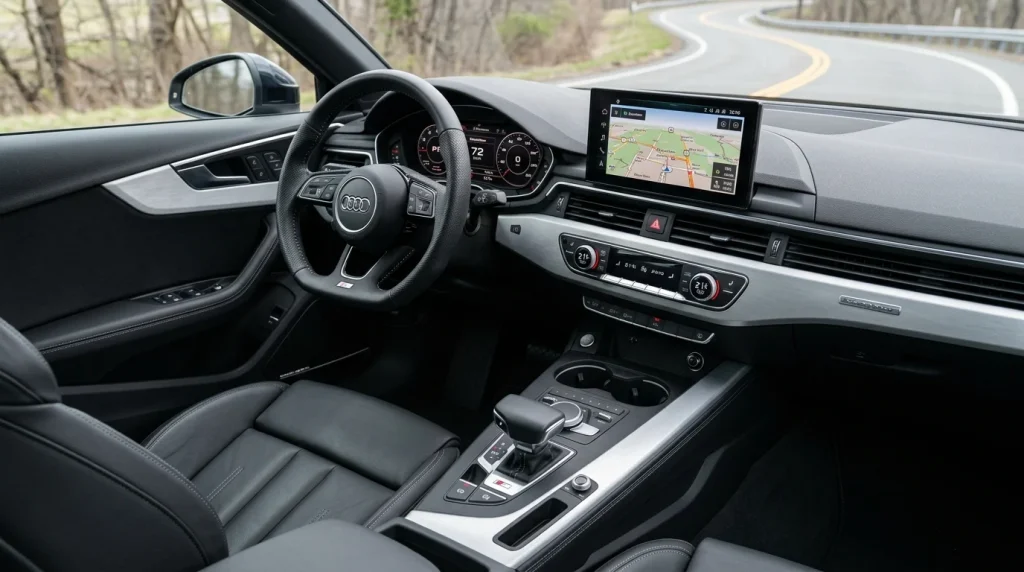
Inside the cabin, the physical changes are equally noticeable. The elimination of the rotary controller knob on the center console created space for a new storage cubby. This update shifted all input functions to the new 10.1-inch touchscreen. This system utilizes the third-generation Modular Infotainment Matrix (MIB 3), which boasts processing speeds up to ten times faster than the MIB 2 setup found in pre-facelift models.
Engine Specs, Horsepower, and Performance Configurations
The performance character of the 2020 Audi A4 varies based on the engine configuration selected. Both options utilize versions of the EA888 2.0-liter turbocharged four-cylinder engine. This powerplant features direct fuel injection, double overhead camshafts, and the Valvelift system. For detailed engineering specifications of this engine family, buyers can consult the Wikipedia guide to Volkswagen petrol engines. Power is routed through a seven-speed S-tronic dual-clutch transmission, which provides quick gear changes and helps maintain excellent fuel efficiency.
The base configuration is the 40 TFSI, which is paired exclusively with a front-wheel-drive (FWD) system. This setup generates 188 horsepower and 236 lb-ft of torque. It is important to correct a common error in online databases: many outlets incorrectly list the torque figure of the 2020 model as 221 lb-ft. Official manufacturer data confirms that the 40 TFSI model produces 236 lb-ft of torque, which arrives at a low 1,450 rpm and remains available up to 4,200 rpm. This low-end torque provides responsive acceleration in city driving conditions.
For buyers seeking more performance or all-weather traction, the 45 TFSI configuration is the logical choice. This engine produces 248 horsepower and 273 lb-ft of torque. It comes standard with the Quattro all-wheel-drive system. The extra 60 horsepower changes the driving dynamics significantly. Under acceleration, the dual-clutch transmission snaps through gears rapidly, keeping the engine in the meat of its powerband.
Performance metrics illustrate the capabilities of each drivetrain option. The following table outlines the specifications, acceleration times, and fuel economy ratings:
| Performance Metric | 40 TFSI (FWD) | 45 TFSI (Quattro) |
|---|---|---|
| Engine Displacement | 2.0-liter Turbo I4 | 2.0-liter Turbo I4 |
| Horsepower | 188 hp | 248 hp |
| Torque | 236 lb-ft @ 1,450 rpm | 273 lb-ft @ 1,600 rpm |
| Transmission | 7-Speed S-tronic DSG | 7-Speed S-tronic DSG |
| 0-60 MPH Time | 7.1 Seconds | 5.2 Seconds |
| EPA Fuel Economy | 27 / 35 / 30 MPG | 24 / 32 / 27 MPG |
Acceleration times highlight the performance gap between the two setups. The 40 TFSI FWD completes the sprint from 0 to 60 mph in 7.1 seconds. In contrast, the 45 TFSI Quattro drops that time down to 5.2 seconds, making it one of the quickest entry-level luxury sedans in its class. The Quattro system also optimizes launching traction, eliminating the front-wheel wheelspin that can occur under hard acceleration in FWD models.
2020 Audi A4 Cabin Technology and Interior Design
The interior layout remains a benchmark for materials quality and ergonomic design, even years after its introduction. Soft-touch plastics, authentic aluminum trim, and genuine leather seating surfaces are standard across all trim lines. The horizontal dashboard layout emphasizes interior width, while the slim-profile HVAC controls feature touch-sensitive buttons that react to the proximity of your fingers.
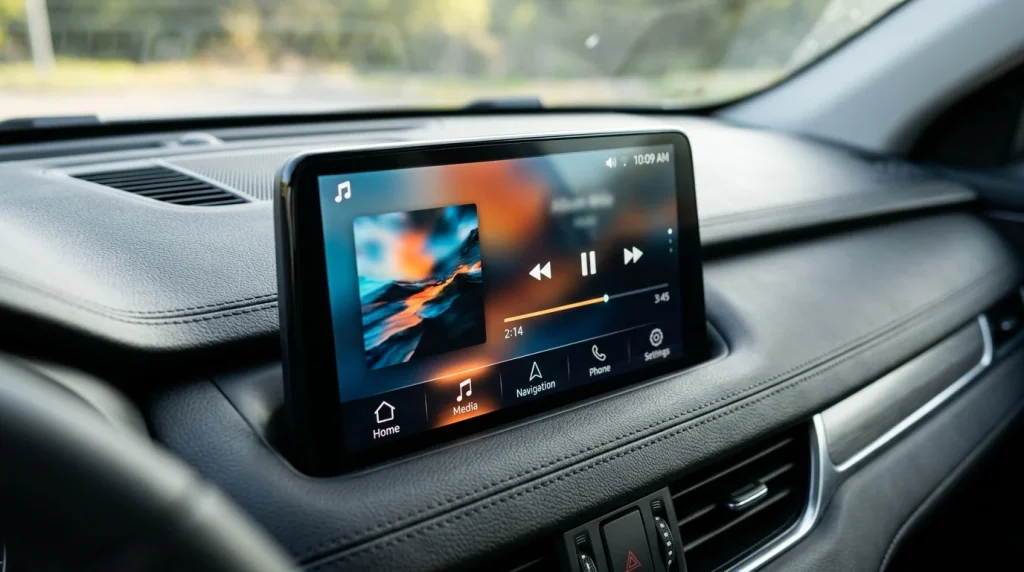
The centerpiece of the technology updates is the 10.1-inch MMI touch display. Mounting the screen high on the dashboard keeps it within the driver’s line of sight. The display features a resolution of 1540 by 720 pixels, producing crisp graphics and rich colors. The MIB 3 system supports wireless Apple CarPlay and wired Android Auto as standard features. Haptic feedback provides a reassuring click sound and vibration when selecting menu items, which helps reduce driver distraction.
Trims above the base model include the Virtual Cockpit digital instrument cluster. This 12.3-inch screen replaces traditional analog gauges with a high-resolution display. Drivers can customize the layout to show large tachometer and speedometer dials, or minimize them to make room for a full-color navigation map with Google Earth imagery. The cluster is responsive, updating its readouts with no perceptible lag.
Trunk capacity is rated at 12 cubic feet. While this volume is average for the compact luxury segment, the trunk space is rectangular and flat, making it highly usable. The rear seatbacks fold in a versatile 40/20/40 split configuration, allowing long items to pass through while still accommodating rear passengers. Storage inside the cabin is somewhat limited. The center console storage bin is shallow, and the door pockets are narrow. The cup holders are positioned forward of the shifter, which can block access to the climate controls when large drinks are placed in them.
S Line and Alternative Configurations
For buyers seeking sportier aesthetics or different body styles, the platform offers several configurations. The S Line package is available on 45 TFSI models. It adds a sport suspension that lowers the ride height by 23 millimeters, firmer dampers, and unique exterior body trim. The package also includes sport seats with larger side bolsters to hold passengers in place during cornering, brushed aluminum trim, and a flat-bottom steering wheel. However, the stiffer suspension setup does degrade the ride quality, making it less comfortable over rough pavement.
Those seeking high performance can opt for the S4. This sport-focused sedan replaces the four-cylinder engine with a 3.0-liter turbocharged V6 that generates 349 horsepower and 369 lb-ft of torque. Power is routed through an eight-speed Tiptronic automatic transmission and a rear-biased Quattro system. The S4 completes the 0-60 mph sprint in 4.4 seconds. While the S4 offers exceptional speed, used pricing in 2026 commands a significant premium, with good examples trading between $25,000 and $35,000.
Another unique variant is the A4 Allroad wagon. This model raises the ground clearance by 1.4 inches and adds rugged plastic body cladding. It is designed for buyers who want light off-road capability and extra utility without purchasing a larger SUV. The wagon cargo area provides 29.1 cubic feet of space behind the rear seats, which expands to 58.5 cubic feet when the seats are folded. The Allroad wagon uses the 248 horsepower engine and standard Quattro all-wheel drive, offering a refined ride and a distinctive styling alternative.
Used 2020 Audi A4 Pricing and Depreciation in 2026
When new, the starting MSRP for a base 2020 model was $37,400, while a top-trim Prestige model with the 45 TFSI engine started at $49,950. As of 2026, used market data shows that these vehicles are trading at a substantial discount compared to their original MSRPs. This depreciation is typical for German luxury sedans, presenting an appealing value proposition for used car buyers who want premium features without the new car price tag. Buyers can find comprehensive listings for these models under the main Audi A4 lineup page.
Current market data shows used pricing ranging from $15,323 to $27,300 depending on the mileage, overall vehicle condition, and trim level. The 40 TFSI Premium models sit at the lower end of this pricing spectrum, while the 45 TFSI Prestige models command the highest prices. The Premium Plus trim is the most common configuration found on used car lots, representing the middle ground of price and equipment. The following table provides used market pricing ranges by trim level:
| Trim Level | 40 TFSI (FWD) Used Price | 45 TFSI (Quattro) Used Price |
|---|---|---|
| Premium | $15,323 – $17,500 | $17,000 – $19,500 |
| Premium Plus | $17,200 – $19,800 | $19,000 – $22,500 |
| Prestige | $21,000 – $23,500 | $23,000 – $27,300 |
Depreciation has largely stabilized for the 2020 model year. According to market data from Kelley Blue Book, the steepest drop occurred during the first three years of ownership. In 2026, the annual depreciation rate has slowed to approximately 7% to 10% per year. Buyers who purchase a well-maintained example today can expect a relatively stable value trajectory, provided they maintain the car properly and avoid excessive mileage accumulation.
Original Value Assessment: Is the 2020 Audi A4 Worth Buying?
For buyers shopping in the used luxury market in 2026, the 2020 model year represents a compelling value proposition. It serves as the entry point to the modern B9.5 interior technology, featuring the fast MIB 3 system and standard touchscreen navigation. When comparing used cars, the technology updates alone make the 2020 model worth the price premium over a pre-facelift 2019 model.
Furthermore, purchasing a 2020 model helps buyers avoid the added complexity of the 2021 Audi A4. The 2021 model added a standard 12-volt mild-hybrid system to both engines, which boosted output by 13 horsepower but introduced a secondary lithium-ion battery system and belt-alternator starter assembly. For long-term used car buyers, the simpler non-hybrid setup of the 2020 model reduces the potential for costly electrical system repairs as the vehicle ages.
Who Should Buy the 2020 Audi A4?
- Tech-focused buyers: The standard 10.1-inch touchscreen and available Virtual Cockpit look modern and perform fast.
- Commuters: The FWD 40 TFSI trim is exceptionally efficient, returning up to 35 MPG on the highway.
- All-weather drivers: The 45 TFSI Quattro models provide excellent grip in rain or snow.
Who Should Avoid It?
- Low-maintenance buyers: German luxury cars require strict adherence to service schedules. Neglecting maintenance will lead to expensive breakdowns.
- Budget-conscious repairers: Parts and diagnostic labor rates for this model are high, even at independent mechanic shops.
Expert view: The 2020 model year represents the sweet spot of the B9 generation. It offers the modern cabin design and standard LED lighting of the facelift while avoiding the added mechanical complexity of the mild-hybrid engines introduced for 2021.
2020 Audi A4 Reliability Ratings and Recalls
Reliability for used luxury cars is always a key consideration, and the B9.5 generation benefits from several years of production refinements. While earlier B9 models, such as the 2017 Audi A4, suffered from initial build issues, by the 2020 model year, most of these problems had been addressed. This makes the 2020 model year one of the more dependable choices in the used German luxury car segment.
According to Consumer Reports, the 2020 model year received a reliability rating of 76 out of 100. This score is considered above average for the compact luxury category. It ranks higher than many contemporary rivals from Mercedes-Benz and BMW. In contrast, J.D. Power officially lists the 2020 Audi A4 as Not Rated for quality and reliability. Buyers should be skeptical of articles claiming J.D. Power scored the A4 at 85/100, as no official rating was published for this model year.
It is also important to clarify the recall history. Many used car guides incorrectly state that the 2020 model is subject to a major fuel suction pump recall under NHTSA campaign number 24V-110. Official NHTSA records confirm that this specific campaign, which affects 261,257 Volkswagen Group vehicles, is limited to front-wheel-drive versions of the Audi A3 and Volkswagen Golf/Jetta platforms. The 2020 A4 was never included in this recall.
However, the 2020 A4 was subject to three official NHTSA recalls that buyers should check. The first is campaign 21V-874, which addresses a passenger airbag occupant detection system (PODS) cable defect that can disable the front passenger airbag. The second is campaign 21V-295, which covers a rear axle trailing arm lock nut that can break due to stress corrosion. The third is campaign 42L5, which required alignment inspections after the axle nuts were repaired. Buyers should check the official NHTSA recalls portal using a vehicle’s VIN to verify any active recalls for a specific car.
Common 2020 Audi A4 Problems and Maintenance Costs
While the B9.5 platform is generally robust, several common problems have been documented by owners and service technicians. The most prominent issue involves coolant leaks originating from the engine’s plastic water pump housing and thermostat assembly. This leak typically develops between 50,000 and 70,000 miles. Over time, heat cycles degrade the plastic housing, causing it to warp or crack. Replacing the assembly with an updated metal housing part costs between $600 and $800 at an independent specialist shop, whereas a dealership will charge over $1,500.

Another common issue is mild engine oil consumption. Like many modern turbocharged four-cylinder engines, the 2.0-liter EA888 engine may consume up to one quart of oil every 3,000 to 5,000 miles. Owners should monitor the electronic oil level gauge on the MMI screen and keep a spare quart of synthetic oil on hand for top-offs. Infotainment glitches can also occur, such as screen freezes or wireless connection drops with Apple CarPlay. If the MMI touchscreen becomes unresponsive, it can be reset by pressing and holding the console volume knob for ten seconds.
Common issues, symptoms, and expected repair costs are summarized below:
| Common Issue | Typical Mileage | Symptoms | Repair Cost Range |
|---|---|---|---|
| Water Pump Leak | 50,000 – 70,000 Miles | Coolant smell, low coolant warning | $600 – $800 (Independent) |
| Oil Consumption | 30,000+ Miles | Low engine oil light, smoky exhaust | $10 – $20 (DIY Top-up) |
| MMI Screen Freeze | Any Mileage | Touchscreen unresponsive, black screen | $0 (System Reset) |
| DSG Service Skipping | 40,000 Miles | Harsh shifting, transmission shudder | $400 – $500 (DSG Service) |
Proper maintenance is critical for the long-term health of the seven-speed S-tronic DSG transmission. Audi mandates a fluid and filter change for this dual-clutch transmission every 40,000 miles. Skipping this service can cause the clutch packs to wear prematurely, leading to rough shifts, hesitation, and eventual transmission failure. A standard DSG service costs between $400 and $500, which is a small price to pay to avoid a transmission rebuild that can cost upwards of $6,000.
Note: Do not buy a used model without verifying that the S-tronic transmission was serviced at the 40,000-mile mark. If the seller cannot provide maintenance records, budget an extra $500 to perform this service immediately after purchase.
2020 Audi A4 vs. Competitors: C-Class, 3 Series, and G70
To make an informed purchase, buyers should understand how the A4 stacks up against its primary segment rivals: the BMW 3 Series (330i), the Mercedes-Benz C-Class (C300), and the Genesis G70 (2.0T). Each sedan emphasizes a different premium priority, from outright driver engagement to serene cabin comfort. Further history on competitor platforms can be studied by looking at previous generation reviews like the 2022 Audi A4 used review.
The BMW 3 Series (330i) is the segment’s benchmark for driving dynamics. It offers more communicative steering, a better-balanced rear-wheel-drive chassis, and a slightly punchier base engine. However, the A4 counteracts with a more user-friendly infotainment setup and a quieter interior cabin at highway speeds. The A4 also tends to trade at lower used prices in 2026, making it the better value buy.
The Mercedes-Benz C-Class (C300) prioritizes traditional luxury and ride comfort. Its cabin features more eye-catching wood trims and organic shapes. However, the 2020 C300 is held back by its older COMAND infotainment interface, which is controlled via a console touchpad and rotary wheel. The A4 touchscreen technology is vastly superior, reacting faster and proving much easier to navigate while driving.
Key specifications for the major 2020 model year competitors show how these models compare:
| Specification | 2020 Audi A4 45 TFSI | 2020 BMW 330i xDrive | 2020 Mercedes C300 4Matic | 2020 Genesis G70 2.0T AWD |
|---|---|---|---|---|
| Engine | 2.0L Turbo I4 | 2.0L Turbo I4 | 2.0L Turbo I4 | 2.0L Turbo I4 |
| Horsepower | 248 hp | 255 hp | 255 hp | 252 hp |
| Torque | 273 lb-ft | 294 lb-ft | 273 lb-ft | 260 lb-ft |
| 0-60 MPH | 5.2 Seconds | 5.3 Seconds | 5.7 Seconds | 6.2 Seconds |
| Infotainment | 10.1-in Touchscreen | 10.25-in Touchscreen | 10.25-in Non-touch | 8.0-in Touchscreen |
The Genesis G70 is the value-focused alternative, offering sharp handling and an excellent equipment list. While original owners benefited from a ten-year powertrain warranty, this coverage does not transfer to second-hand used buyers. The A4 outclasses the G70 in rear-seat legroom and trunk capacity, making it a more practical choice for daily passenger transportation. Additionally, the interior materials of the A4 feel more premium than the hard plastics found on lower panels inside the G70 cabin.
Frequently Asked Questions about the 2020 Audi A4
What are the common problems with the 2020 Audi A4?
The most common problems reported by owners include coolant leaks from the plastic water pump housing and thermostat assembly, which typically manifest between 50,000 and 70,000 miles. Some EA888 engines also experience mild engine oil consumption, requiring top-offs between scheduled oil changes. Minor electronic glitches, such as the MMI touchscreen freezing or Apple CarPlay dropping connection, can also occur but are easily resolved with a system reset.
Is the 2020 Audi A4 a reliable car to buy used?
Yes, the 2020 model is generally considered a reliable used luxury car. It sits on a matured B9 platform that benefited from several years of production refinements before the facelift. Consumer Reports awarded the 2020 model a reliability score of 76 out of 100, which is above average for its class. To ensure maximum reliability, buyers should look for cars with a documented service history showing regular oil changes and transmission services.
What is the difference between the 2020 A4 40 and 45 TFSI?
The main differences lie in engine output and drivetrain configuration. The 40 TFSI model produces 188 horsepower and 236 lb-ft of torque, routing power exclusively to the front wheels. The 45 TFSI model increases output to 248 horsepower and 273 lb-ft of torque, and it comes standard with the Quattro all-wheel-drive system. The 45 TFSI is significantly faster, completing the 0-60 mph sprint in 5.2 seconds compared to 7.1 seconds for the 40 TFSI.
What is the difference between the 2020 A4 and the 2021 A4?
The 2021 model added a standard 12-volt mild-hybrid system to both engines, which boosted horsepower output by 13 hp (raising the 40 TFSI to 201 hp and the 45 TFSI to 261 hp). Additionally, the successor 2021 model made the Quattro all-wheel-drive system standard across the entire lineup, eliminating the front-wheel-drive configuration that was available for the 2020 model year.

