You may also like:
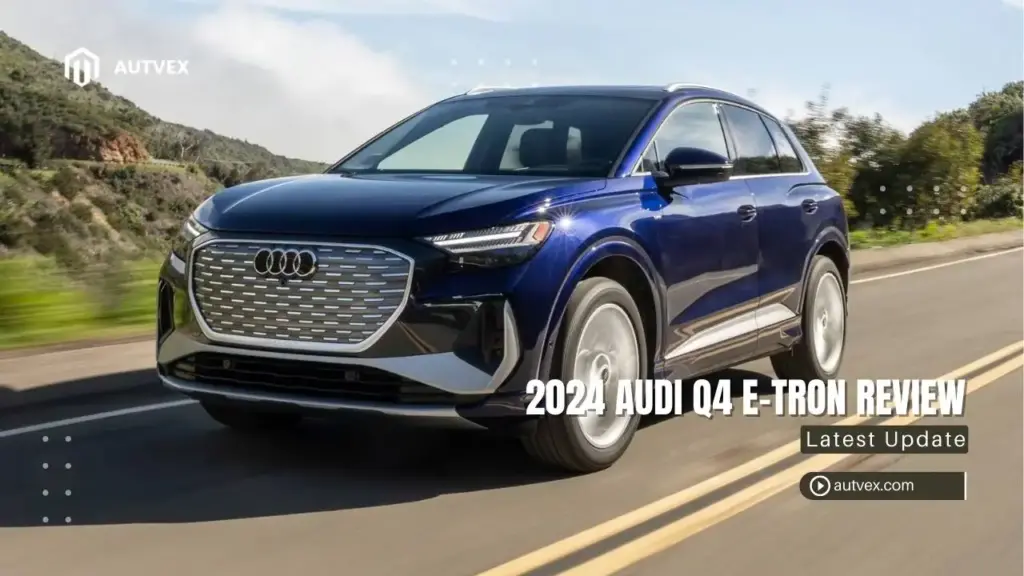
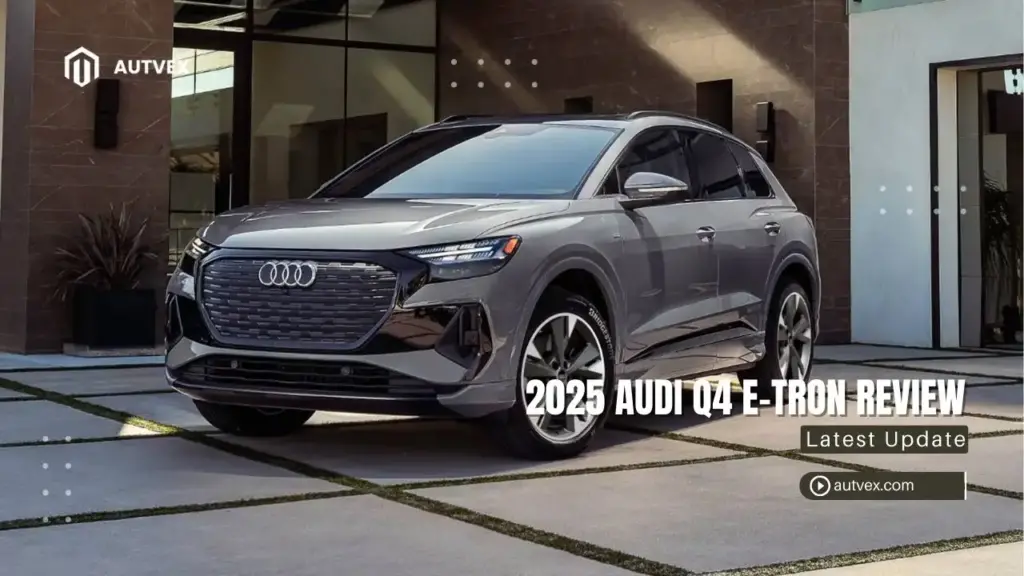
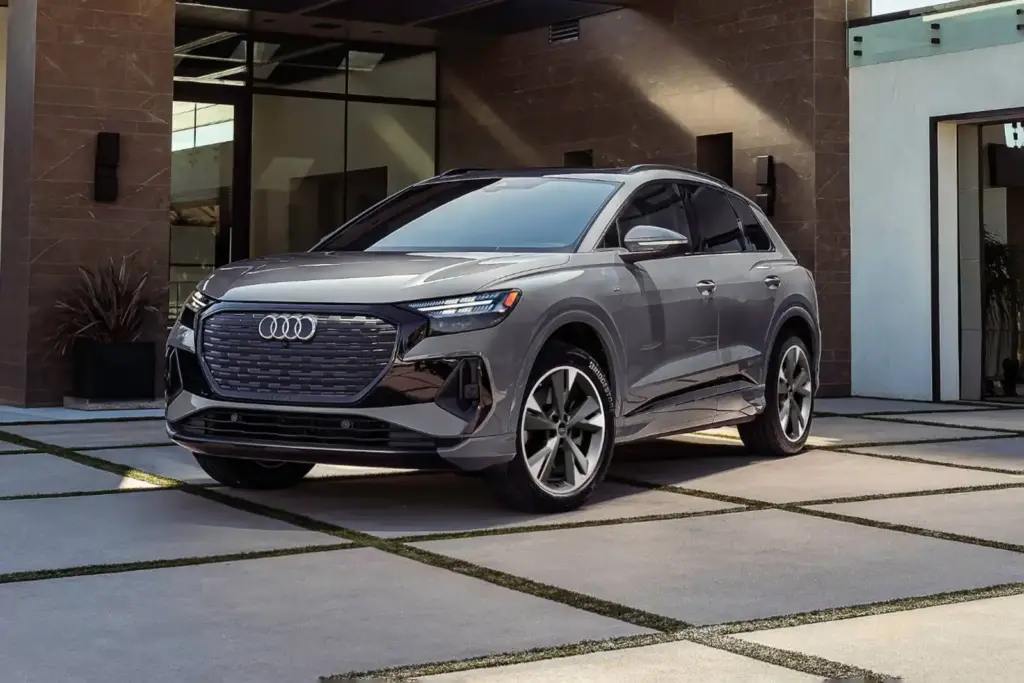
The 2025 Audi Q4 e-tron delivers meaningful upgrades that address previous shortcomings—the base Q4 45 e-tron gains a substantial 81-horsepower boost and 23 extra miles of range, while faster 175 kW charging now comes standard across the lineup[1]. Starting at $49,800, Audi’s compact electric SUV offers up to 288 miles of range and a refined interior that distinguishes it from non-luxury competitors[1]. After extended evaluation, the 2025 Q4 e-tron proves far more competitive than when it debuted—though software reliability concerns and missing one-pedal driving mode remain notable weaknesses[2].
Why This Review Matters
The compact electric luxury SUV segment has become fiercely competitive, with the Tesla Model Y, Genesis GV60, Cadillac Lyriq, Volvo EX40, and Hyundai Ioniq 5 all vying for buyers’ attention[1]. Edmunds recommends considering the Genesis GV60 for more interior space and a comparably luxurious cabin, the Volvo EX40 for similar price and range alignment, or the Cadillac Lyriq for greater luxury and range—though at a higher price[1]. Understanding where the refreshed Q4 excels and falls short helps buyers determine whether Audi’s entry-level EV justifies its premium over loaded non-luxury alternatives.
Specifications Overview
| Category | Q4 45 e-tron (RWD) | Q4 55 e-tron (AWD) |
|---|---|---|
| Powertrain | Single rear motor[1] | Dual motors (quattro)[1] |
| Horsepower | 282 hp (+81 vs 2024)[3] | 335 hp[3] |
| 0-60 mph | 6.3 seconds[3] | 5.0 seconds[3] |
| Battery Capacity | 82 kWh[3] | 82 kWh (87 kWh gross)[4] |
| EPA Range | 288 miles (+23 vs 2024)[1] | 258 miles[3] |
| DC Fast Charging | 175 kW[3] | 175 kW[3] |
| Charge Time (10-80%) | ~28 minutes[3] | ~28 minutes[3] |
| Trims Available | Premium, Premium Plus[1] | Premium, Premium Plus, Prestige[1] |
| Starting MSRP | $49,800[1] | $55,200[1] |
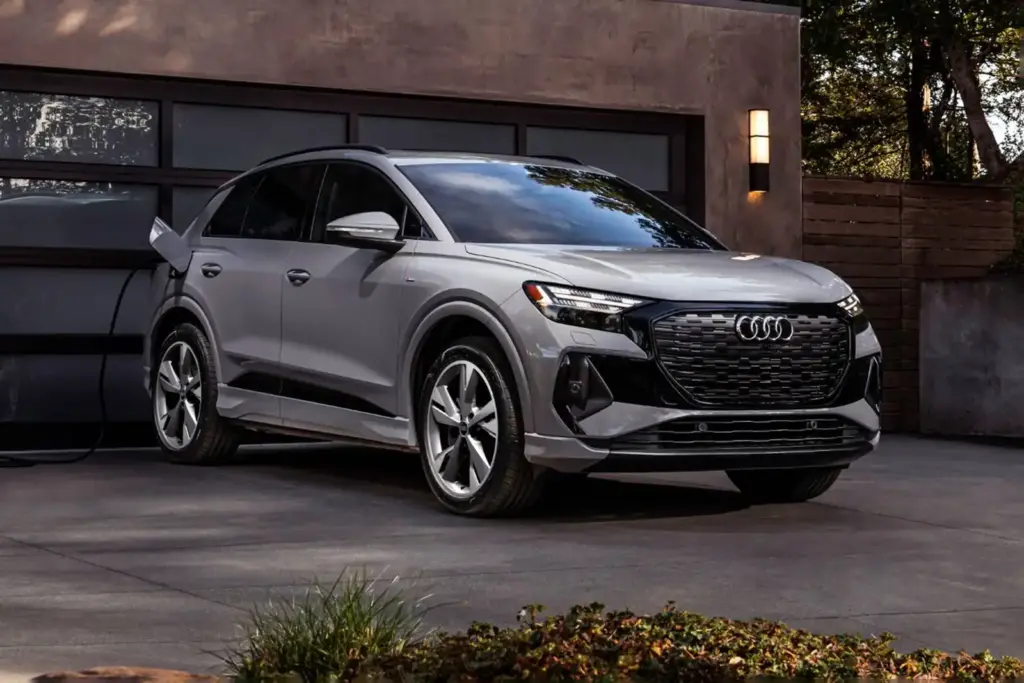
The Q4 e-tron shares its MEB platform with the Volkswagen ID.4, but Audi delivers a more premium cabin experience and refined driving dynamics[2]. Notably, the naming convention changed for 2025—last year’s Q4 40 becomes the Q4 45, and the Q4 50 becomes the Q4 55[1].
Design and Practicality
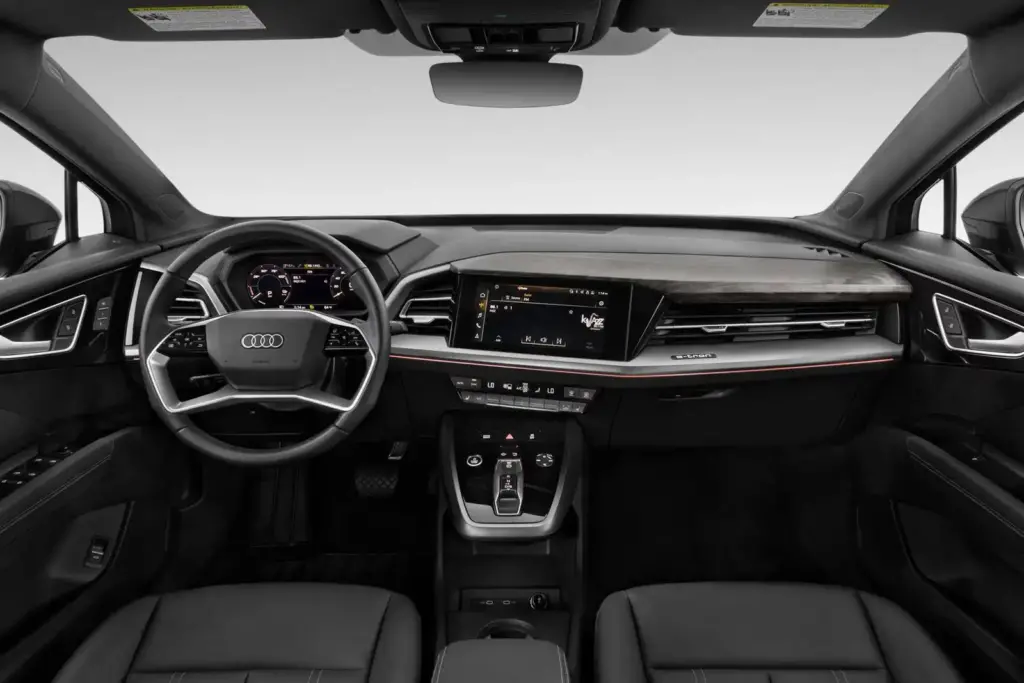
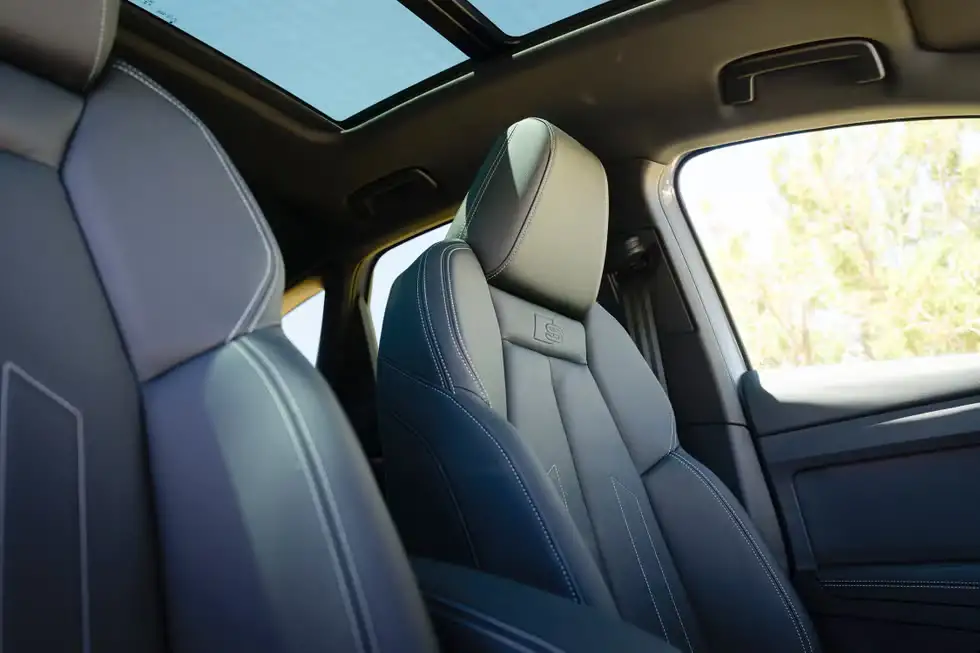
Consumer Reports describes the Q4 e-tron as feeling “like an Audi through and through” with a well-finished cabin that avoids the “indulgent, newfangled controls found in some other EVs”[2]. The interior design elevates the look and feel beyond the platform-sharing ID.4, though Edmunds notes that some elements “like the plastic on the center console and wood trim pieces look a bit low-budget” for the price point[1].
The flat floor in back gives outboard rear passengers extra room to spread out, though fitting three adults in the middle row remains challenging—typical for compact SUVs[1]. For families, the LATCH covers slide up rather than pop out, preventing the common annoyance of losing small parts[1]. The dual-pane windows help create an exceptionally quiet cabin, even by EV standards[1].
Two characteristics mar the ride quality. The Q4 isn’t the best at smoothing rough surfaces, and undulating roads can rock the vehicle into an oscillating state that’s not particularly comfortable[1]. Consumer Reports confirms this, noting you’re “well aware of that bulk when you steer it through turns” given the curb weight exceeds 5,500 pounds—about 500 pounds heavier than the larger three-row Q7[2].
A Sportback body style offers sleeker styling for buyers prioritizing aesthetics over maximum cargo utility.
Performance and Efficiency
The 2025 updates deliver substantial performance improvements. The rear-wheel-drive Q4 45 e-tron gains 81 horsepower over the 2024 Q4 40, dropping its 0-60 time by 1.6 seconds to 6.3 seconds[3]. The all-wheel-drive Q4 55 produces 335 horsepower and completes the sprint in 5.0 seconds flat[3].
Consumer Reports tested the Q4 at “just under six seconds” to 60 mph, noting that while quick compared to most vehicles, it’s “slightly slower than rivals such as the Ford Mustang Mach-E, Genesis GV60, and Tesla Model Y”[2]. That said, they appreciate how Audi “tuned the Q4 to deliver a smoother, less neck-wrenching burst of speed from a stop than some EVs”[2].
The Q4 45’s 288-mile EPA range represents a 23-mile improvement over last year—sufficient for most buyers, though Edmunds notes they’d “prefer to get more than 300 miles from a single-motor luxury EV”[1]. Both versions now support 175 kW DC fast charging, enabling a 10-80% charge in approximately 28 minutes under ideal conditions[3]. Audi EVs can access Tesla Superchargers with an adapter, substantially expanding charging network options.
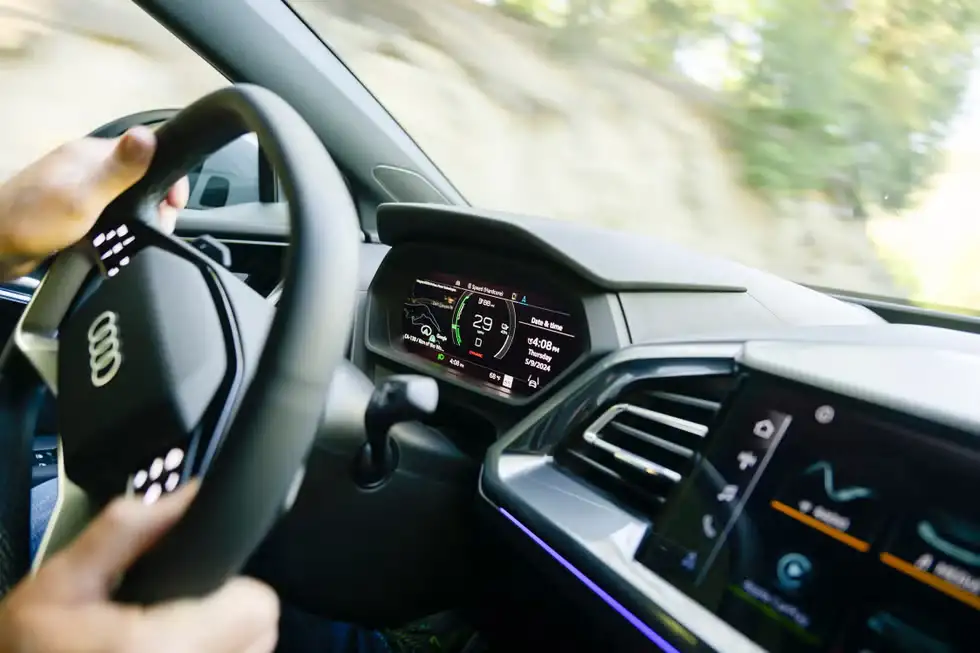
Edmunds rates the brakes as “a bit underwhelming”—measured panic stops from 60 mph were longer than competitors[1]. Consumer Reports dislikes the “spongy, long-travel brake pedal”[2]. Critically, the Q4 still lacks a one-pedal driving mode, which frustrates experienced EV drivers who expect this feature[5].
Technology and Features
The 2025 Q4 e-tron now includes top-of-the-line digital instruments, navigation, and remote services as standard equipment across all trims[1]. The 55 e-tron is available with a winter-ready heat pump for improved cold-weather efficiency[1].
| Trim | MSRP | Key Features |
|---|---|---|
| Premium (45/55) | $49,800 / $55,200[1] | Digital instruments, navigation, remote services standard |
| Premium Plus (45/55) | $53,600 / $59,000[1] | Comprehensive driver aids, wireless charging |
| Prestige (55 only) | $61,800[1] | LED matrix headlights, head/tail light animation[4] |
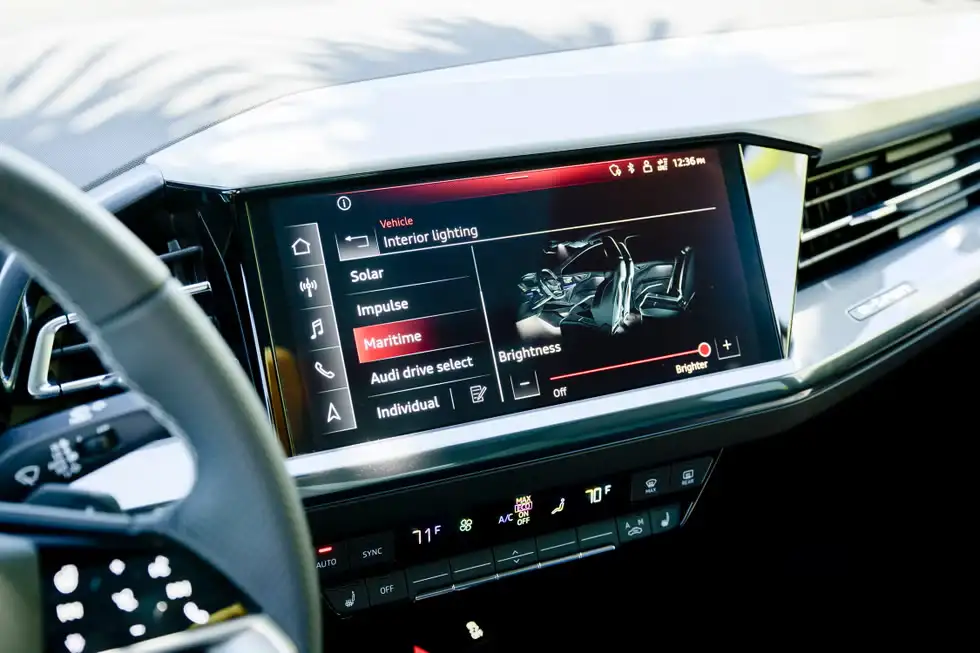
Device integration hits all the high points—a deeply integrated smartphone app lets you use your phone as a key, and wireless Apple CarPlay and Android Auto connectivity comes standard[1]. Edmunds rates in-cabin tech at 9.1/10[1].
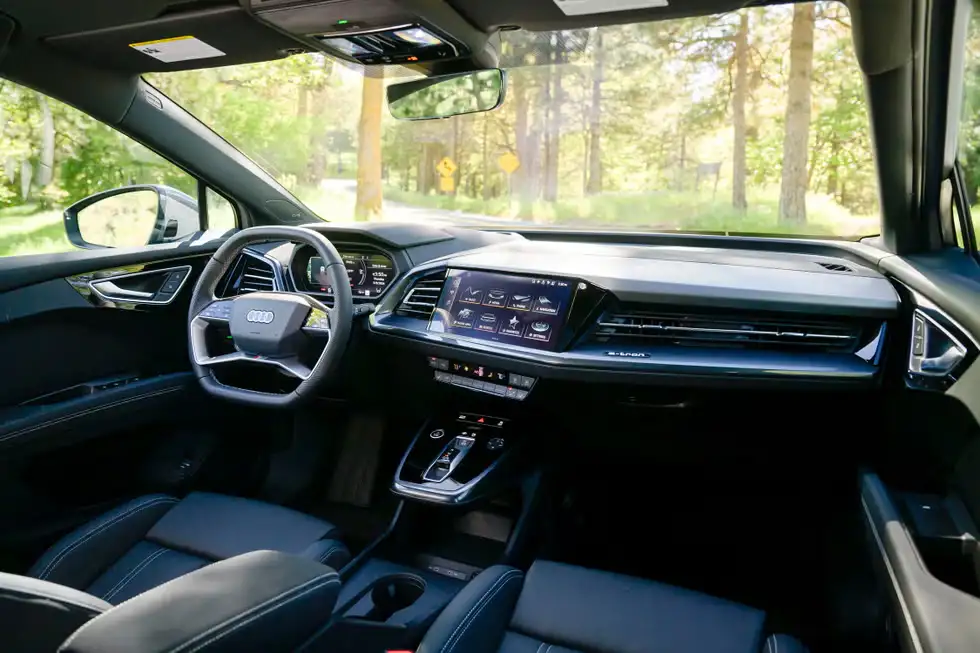
The touchscreen and infotainment represent both a strength and weakness. Consumer Reports finds the touch-capacitive steering wheel buttons “tedious to use while driving”[2]. Owner reviews on Edmunds consistently cite software problems—the infotainment freezing, navigation zoom resetting automatically, and Bluetooth connectivity issues that take months to resolve through dealer visits[6].
One notable omission: the Q4 lacks a surround-view camera system that most competitors offer[1].
Edmunds recommends the Premium Plus trim level for its wealth of equipment at a reasonable price premium[1].
Safety Ratings
The 2025 Audi Q4 e-tron earns Good ratings across all IIHS crashworthiness categories, though recent testing reveals some concerns[7].
| IIHS Test | Rating |
|---|---|
| Small Overlap Front (Driver) | Good[7] |
| Small Overlap Front (Passenger) | Good[7] |
| Side Impact (Updated) | Good[7] |
| Roof Strength | Good[7] |
| Head Restraints & Seats | Good[7] |
| Front Crash Prevention (Vehicle) | Superior[7] |
| Front Crash Prevention (Pedestrian) | Advanced[7] |
| Headlights (Prestige) | Good[7] |
| Headlights (Premium/Premium Plus) | Acceptable[7] |
The Q4 avoided collisions in both 12 mph and 25 mph vehicle-to-vehicle crash prevention tests[7]. Pedestrian detection performed well during daytime scenarios at both test speeds[7]. Nighttime pedestrian detection showed mixed results—in the 37 mph parallel adult test, impact speed was only reduced by 21 mph, insufficient to avoid striking a pedestrian[7].
Recent reports indicate IIHS has raised concerns about rear-passenger injury risk and seat belt positioning during impact—a consideration for families frequently carrying rear-seat passengers[8].
Ownership Costs
Audi provides a 4-year/50,000-mile basic warranty and an 8-year/100,000-mile EV battery warranty[1]. Edmunds characterizes the warranty and roadside assistance coverage as “solidly average” for the class[1].
Market pricing offers meaningful savings. Buyers are paying approximately 6% less than MSRP—roughly $3,223-$3,319 in savings[1]. A $6,000 customer cash rebate is generally available across all trims[1]. The vehicle is not eligible for the federal EV tax credit[1].
Used 2025 Q4 e-trons are moving quickly, spending only about 27 days on lots, while new inventory takes approximately 120 days to sell—providing negotiating leverage for new car buyers[1]. Complimentary Electrify America charging may offset public charging costs for eligible owners.
Reliability remains a concern. DrivingElectric reports Audi finished 30th out of 32 manufacturers in their brand reliability survey, with 23% of owners reporting faults within the first year—predominantly electrical issues[9]. Owner reviews consistently cite software problems requiring dealer visits to resolve[6].
Pros and Cons
Strengths:
- Base Q4 45 e-tron gains 81 horsepower and 23 miles of range for 2025, making the entry-level version far more competitive with 282 hp and 288-mile range[1][3]
- Faster 175 kW DC charging now standard across lineup, enabling 10-80% charge in approximately 28 minutes under ideal conditions[3]
- Interior feels “like an Audi through and through” with premium materials, exceptional cabin quietness, and straightforward controls per Consumer Reports[2]
- Buyers paying approximately 6% below MSRP plus $6,000 cash rebate available—substantial savings versus sticker price[1]
- Good crash test performance with IIHS Good ratings across all crashworthiness categories and Superior vehicle-to-vehicle crash prevention[7]
Weaknesses:
- Software reliability concerns dominate owner complaints—infotainment freezing, navigation issues, and Bluetooth problems requiring dealer visits to resolve[6]
- No one-pedal driving mode available, which experienced EV drivers expect and competitors like Tesla Model Y and Genesis GV60 offer[5]
- Brakes feel “spongy” per Consumer Reports with longer-than-average panic stopping distances in Edmunds testing[1][2]
- Not eligible for federal EV tax credit, reducing overall value proposition versus qualifying competitors[1]
- Touch-capacitive steering wheel buttons are “tedious to use while driving” according to Consumer Reports testing[2]
Final Verdict
The 2025 Audi Q4 e-tron represents a significant improvement over previous model years. Edmunds summarizes: “Performance and range improvements the last two years have also made the Q4 E-tron far more compelling than when it debuted for the 2022 model year”[1]. The base Q4 45’s 282 horsepower and 288-mile range are “certainly sufficient for most people,” though Edmunds would prefer breaking the 300-mile barrier for a single-motor luxury EV[1].
For buyers prioritizing winter capability, Edmunds recommends the all-wheel-drive 55 e-tron with the available heat pump. Otherwise, the rear-wheel-drive 45 e-tron in Premium Plus trim offers the best balance of features and value[1].
- Choose the Q4 e-tron if: You want Audi’s entry-level electric luxury with a refined cabin, appreciate a familiar driving experience over EV-specific features, and can take advantage of current rebates and below-MSRP pricing.
- Consider alternatives if: You prioritize software reliability (Tesla Model Y), faster acceleration and charging (Genesis GV60), one-pedal driving capability, federal EV tax credit eligibility, or maximum range for the money (Cadillac Lyriq).
FAQs
Is the 2025 Audi Q4 e-tron reliable?
Owner reviews on Edmunds average 2.7 out of 5 stars with significant software-related complaints[6]. DrivingElectric reports 23% of Audi owners experienced faults within the first year, predominantly electrical issues[9]. The 8-year/100,000-mile battery warranty provides coverage for the most expensive component, but software support remains a concern based on owner feedback.
What’s new for the 2025 Audi Q4 e-tron?
The base model is renamed from Q4 40 to Q4 45 e-tron and gains 81 horsepower (now 282 hp total) plus 23 additional miles of range (288 miles)[1]. Top-of-the-line digital instruments, navigation, and remote services are now standard. The Q4 55 is available with a winter-ready heat pump[1]. Both versions now charge at up to 175 kW[3].
Does the 2025 Q4 e-tron have one-pedal driving?
No, the Q4 e-tron lacks a full one-pedal driving mode[5]. You can adjust regenerative braking strength using steering wheel paddles, but the vehicle will not come to a complete stop using regeneration alone. Audi deliberately chose not to include this feature, which disappoints experienced EV drivers who expect this capability.
How does the Q4 e-tron compare to the Tesla Model Y?
The Model Y offers faster acceleration, quicker charging speeds, one-pedal driving, and federal EV tax credit eligibility. The Q4 e-tron counters with a more premium interior feel, exceptional cabin quietness, and a driving experience that Consumer Reports says delivers “a smoother, less neck-wrenching burst of speed”[2]. Range is competitive between the two, though Tesla’s Supercharger network remains more extensive than Electrify America.
References
- Edmunds. (2025). 2025 Audi Q4 e-tron Prices, Reviews, and Pictures. https://www.edmunds.com/audi/q4-e-tron/
- Consumer Reports. (2025). 2025 Audi Q4 E-Tron Road Test Report. https://www.consumerreports.org/cars/audi/q4-e-tron/2025/road-test-report/
- Audi Natick. (2025). 2025 Audi Q4 e-tron Specifications. https://www.audinatick.com/en/model-research/2025/2025-audi-q4-etron/
- CarPro. (2025). 2025 Audi Q4 55 e-tron Prestige Review. https://www.carpro.com/vehicle-reviews/2025-audi-q4-55-e-tron-prestige-review
- The Torque Report. (2025). 2025 Audi Q4 e-tron Review: Comfortable and Refined.
2025 Audi Q4 e-tron Review: Comfortable and Refined
- Edmunds. (2025). 2025 Audi Q4 e-tron Consumer Reviews. https://www.edmunds.com/audi/q4-e-tron/2025/consumer-reviews/
- IIHS. (2025). 2025 Audi Q4 e-tron Safety Ratings. https://www.iihs.org/ratings/vehicle/audi/q4-e-tron-4-door-suv/2025
- SpeedMe. (2025). IIHS slams Audi Q4 e-tron: poor crash-test safety rating. https://speedme.ru/en/posts/id11687-iihs-slams-audi-q4-e-tron-poor-crash-test-safety-rating
- DrivingElectric. (2024). Audi Q4 e-tron Review: Reliability & Safety Rating. https://www.drivingelectric.com/audi/q4-e-tron/reliability

I am a senior automotive analyst at Autvex. Expert vehicle evaluations, in-depth reviews, and objective analysis helping readers make informed automotive decisions with years of industry experience.