

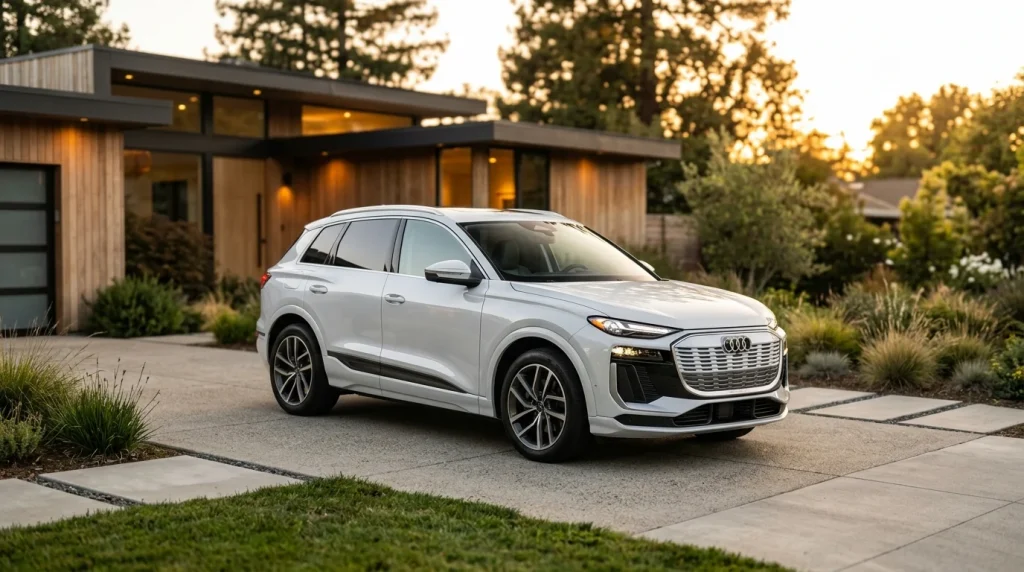
Quick answer: The best Audi electric car for most buyers is the Audi Q6 e-tron (2027 model year), which offers a starting price of $65,795 and delivers 307 to 321 miles of EPA-estimated range with 800-volt charging technology. For maximum driving range, the A6 e-tron (2027 model year) achieves up to 392 miles of range under specific configurations. The cheapest option in the current lineup is the refreshed Q4 e-tron (2026 model year), starting at $50,600 and introducing bidirectional charging capability.
Key takeaways:
- The Q8 e-tron has been discontinued, with production officially ending on February 28, 2025, following the closure of the Brussels facility.
- Five all-electric models are currently available in the US market, with prices starting from $50,600 up to $170,500.
- Models built on the Premium Platform Electric (PPE) feature 800-volt architecture, allowing 10 to 80 percent charging in about 21 minutes.
- Under the One Big Beautiful Bill Act, the federal $7,500 tax credit expired on September 30, 2025, and current Audi EVs do not qualify for the new auto loan interest deduction due to German final assembly.
- The 2026 Q4 e-tron is the first Audi model to offer bidirectional Vehicle-to-Load (V2L) power output up to 2.3 kW.
Which Audi Electric Car Should You Buy?
The right Audi electric vehicle depends on your daily driving habits, cargo space requirements, and how much charging speed impacts your routine. For families seeking utility combined with modern charging speeds, the Q6 e-tron (2027 model year) serves as the most balanced option. Buyers cross-shopping conventional luxury crossovers like the Audi Q5 vs BMW X3 or comparable premium options like the Audi Q5 vs. Lexus RX 350 will find that moving to an EV like the Q6 e-tron provides immediate torque and significantly quieter operation, though at a higher initial purchase price.
If maximum highway range is your priority, the aerodynamic design of the A6 e-tron (2027 model year) outperforms the rest of the lineup. Budget-conscious shoppers can access the brand with the Q4 e-tron (2026 model year), which is priced near conventional gas SUVs and includes new utility features like bidirectional power supply. Just as understanding what GMC stands for clarifies traditional American utility branding, evaluating Audi’s electric badge hierarchy helps identify which vehicle fits your driving profile. Performance enthusiasts must choose between the grand touring focus of the S e-tron GT and the high-output RS e-tron GT.
| Buyer Profile | Recommended Model | Primary Reason |
|---|---|---|
| Families and Daily Commuters | Q6 e-tron | SUV packaging, fast charging, mid-tier pricing |
| Highway Drivers / Max Range | A6 e-tron | Lowest drag coefficient, up to 392 miles of range |
| Budget-Focused Shoppers | Q4 e-tron | Lowest entry price, household power outlet (V2L) |
| Performance Enthusiasts | RS e-tron GT | 912 horsepower, supercar-level acceleration |
| Long-Distance Grand Touring | S e-tron GT | Refined ride comfort, 670 horsepower, luxury cabin |
Complete Audi Electric Car Lineup Comparison
Five distinct Audi EV model families are available at US dealerships. The lineup features a split in vehicle year designations. The compact Q4 e-tron and the high-performance e-tron GT sedans continue as 2026 model year vehicles, while the newly introduced A6 e-tron and Q6 e-tron represent the 2027 model year. This variation is due to Audi skipping the 2026 model year for these newly launched platforms to align U.S. dealership deliveries with hardware updates.
| Model | Model Year | Starting MSRP | EPA-Est. Range | Horsepower | 0-60 MPH Time | Battery Capacity (Gross/Net) | Platform (Voltage) | Max DC Charge Rate |
|---|---|---|---|---|---|---|---|---|
| Q4 e-tron | 2026 | $50,600 | 258-288 miles | 282-335 hp | 5.4-6.7 sec | 82 kWh / 77 kWh | MEB (400V) | 175 kW |
| Q6 e-tron | 2027 | $65,795 | 307-321 miles | 322-515 hp | 4.3-5.9 sec | 100 kWh / 94.9 kWh | PPE (800V) | 270 kW |
| A6 e-tron | 2027 | $67,995 | 327-392 miles | 375-543 hp | 3.9-5.6 sec | 100 kWh / 94.4 kWh | PPE (800V) | 270 kW |
| S e-tron GT | 2026 | $127,700 | 300 miles | 670 hp | 3.3 sec | 105 kWh / 97 kWh | J1 (800V) | 320 kW |
| RS e-tron GT | 2026 | $170,500 | 278 miles | 912 hp | 2.5 sec | 105 kWh / 97 kWh | J1 (800V) | 320 kW |
In a public discussion regarding the brand’s long-term powertrain transition, Audi CEO Gernot Döllner stated, “Beyond climate protection, the electric car is simply the better technology,” emphasizing its inherent advantages in mechanical efficiency, torque delivery, and cabin refinement.
Detailed Audi EV Model Rankings
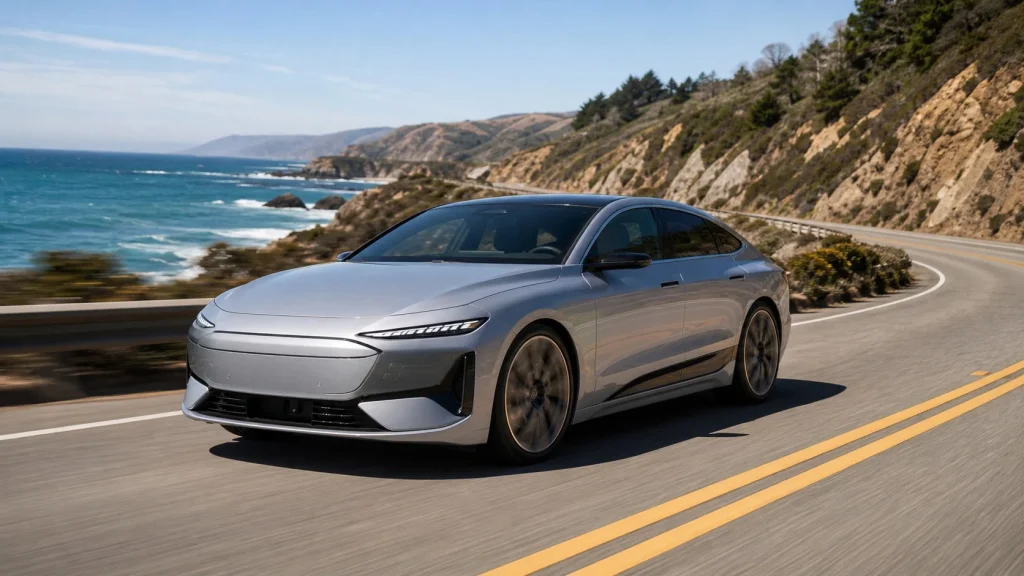
#1. Audi Q6 e-tron – Best Overall SUV
The Audi Q6 e-tron (2027 model year) represents the core of the brand’s next-generation EV strategy. It is built on the Premium Platform Electric (PPE) developed in partnership with Porsche, which utilizes an 800-volt architecture. This allows the Q6 e-tron to accept DC fast charging at rates up to 270 kW. At a compatible high-speed charger, the battery can replenish from 10 percent to 80 percent in approximately 21 minutes, recovering roughly 190 miles of range in 10 minutes of charging.
The interior showcases a curved OLED display panel that combines an 11.9-inch driver gauge cluster and a 14.5-inch center touchscreen. An optional 10.9-inch passenger display screen includes active privacy filtering, preventing the driver from seeing video content while the vehicle is in motion. For the 2027 model year, Audi restored physical buttons on the steering wheel, replacing the sensitive touch-capacitive pads found on older models.
- Battery Capacity: 100 kWh gross (94.9 kWh usable)
- Starting Price: $65,795 (Rear-Wheel Drive)
- EPA Range: 321 miles (RWD), 307 miles (quattro All-Wheel Drive)
- Horsepower: 322 hp (RWD), 456 hp (quattro AWD), 509 hp (SQ6 e-tron)
- 0-60 MPH: 5.9 seconds (RWD), 4.3 seconds (quattro AWD), 3.7 seconds (SQ6 e-tron)
- Cargo Space: 25.5 cubic feet behind the second row (SUV style)
Analysis: The Q6 e-tron corrects the range and charging limitations of Audi’s previous midsize utility offerings, positioning it as the most practical daily driver in the lineup.
Note: US dealership arrivals began in the second quarter of 2026, meaning initial stock levels may be limited at regional franchise locations.
#2. Audi A6 e-tron – Longest Range Option
The Audi A6 e-tron (2027 model year) shares the same 800-volt PPE platform and battery cells as the Q6 e-tron, but packages them in a low-slung, highly aerodynamic body. With a drag coefficient of 0.21, the A6 Sportback e-tron is the most aerodynamic production vehicle Audi has ever built. This aerodynamic efficiency translates directly into highway range, pushing the rear-wheel-drive Sportback with the optional Ultra package to an EPA-estimated range of 392 miles per charge.
The A6 e-tron is available in the US as a Sportback (a sedan-like body with a rear liftgate) and an Avant (wagon body style). The Avant variant offers estate-style cargo space without sacrificing the aerodynamic range advantages of a low-riding passenger car.
- Battery Capacity: 100 kWh gross (94.4 kWh usable)
- Starting Price: $67,995 (RWD Sportback)
- EPA Range: 392 miles (RWD Ultra), 327 miles (quattro AWD)
- Horsepower: 375 hp (RWD), 456 hp (quattro AWD), 543 hp (S6 e-tron)
- 0-60 MPH: 4.9 seconds (RWD), 4.3 seconds (quattro AWD), 3.9 seconds (S6 e-tron)
Analysis: The A6 e-tron is engineered for drivers who travel long distances regularly and want to minimize stops. It provides the longest range of any current Audi model.
Note: Performance variants like the S6 e-tron require a higher starting price of $80,895, which significantly narrows its target market.
#3. Audi Q4 e-tron – Best Value and Bidirectional Charging
The compact Q4 e-tron (2026 model year) serves as the entry-level vehicle in Audi’s electric family, with a starting price of $50,600. It utilizes the Volkswagen Group MEB platform, operating on a 400-volt electrical architecture. Although its platform is older than the PPE structure, the Q4 e-tron receives a major update for the 2026 model year, increasing its maximum DC fast-charging rate to 175 kW (or 185 kW for all-wheel-drive trims) and shortening the 10 to 80 percent charge time to 27 minutes.

Crucially, the 2026 Q4 e-tron is the first Audi model to offer bidirectional charging capabilities. According to the Audi press release on Q4 e-tron upgrades, the vehicle supports Vehicle-to-Load (V2L) power export. This allows owners to draw up to 2.3 kW of AC electricity from a dedicated household outlet in the trunk, making it possible to run camping equipment, power tools, or home appliances during an emergency.
- Battery Capacity: 82 kWh gross (77 kWh usable)
- Starting Price: $50,600
- EPA Range: 288 miles (RWD SUV), 258 miles (quattro AWD SUV)
- Horsepower: 282 hp (RWD), 335 hp (quattro AWD)
- 0-60 MPH: 6.7 seconds (RWD), 5.4 seconds (quattro AWD)
Analysis: The addition of bidirectional V2L charging and a higher charging cap keeps the Q4 e-tron competitive with mass-market rivals while maintaining a luxury cabin.
Note: The 400-volt platform means the Q4 e-tron charges more slowly than its PPE-based siblings during road trips.
#4. Audi S e-tron GT – Performance Luxury
Replacing the former base e-tron GT, the S e-tron GT (2026 model year) offers a starting MSRP of $127,700. It is built on the J1 performance platform developed with Porsche. The S e-tron GT features a dual-motor all-wheel-drive system producing 670 horsepower under launch control, allowing it to accelerate from 0 to 60 mph in 3.3 seconds.
The S e-tron GT focuses on grand touring comfort, featuring standard adaptive air suspension and sound-insulated glass. The interior utilizes sustainable upholstery options alongside traditional leather trims, offering a cabin designed for high-speed cruising rather than track performance.
- Battery Capacity: 105 kWh gross (97 kWh usable)
- Starting Price: $127,700
- EPA Range: 300 miles
- Horsepower: 670 hp (with launch control)
- 0-60 MPH: 3.3 seconds
Analysis: The S e-tron GT delivers the visual impact and acceleration of a supercar while maintaining daily ride quality that matches the brand’s executive gas sedans.
Note: The low roofline restricts rear-seat headroom and cargo space compared to the A6 Sportback e-tron.
#5. Audi RS e-tron GT Performance – Flagship Supercar
The RS e-tron GT Performance (2026 model year) represents the absolute pinnacle of Audi’s performance EV engineering, carrying a starting price of $170,500. Its dual electric motors produce 912 horsepower, enabling a 0 to 60 mph sprint in 2.5 seconds.
The performance model features advanced battery chemistry with upgraded thermal management. This cooling efficiency prevents power degradation during consecutive acceleration runs. The J1 platform’s upgraded 800-volt charging system supports charging rates up to 320 kW, restoring 10 to 80 percent battery capacity in 18 minutes under optimal conditions.
- Battery Capacity: 105 kWh gross (97 kWh usable)
- Starting Price: $170,500
- EPA Range: 278 miles
- Horsepower: 912 hp (with overboost)
- 0-60 MPH: 2.5 seconds (or 2.1 seconds under specific launch conditions)
Analysis: This flagship is designed for collectors and performance buyers who want maximum power. It competes directly with top-tier performance sedans like the Porsche Taycan Turbo.
Note: The performance-oriented tire options and power demands lower the EPA range to 278 miles, the shortest in the electric lineup.
Why the Q8 e-tron Is No Longer Part of the Lineup
The Q8 e-tron is no longer listed in Audi’s current vehicle catalog because production officially ended on February 28, 2025. Audi closed its Brussels, Belgium manufacturing plant, where the Q8 e-tron and SQ8 e-tron were built, due to declining sales and high operating costs.
The Q8 e-tron relied on the older MLB Evo platform, a converted internal combustion architecture operating on a 400-volt system. It was limited to a maximum DC fast-charging rate of 170 kW, meaning a 10 to 80 percent charge required over 31 minutes. The introduction of the smaller, cheaper Q6 e-tron, which charges faster and offers comparable cargo space, made the heavy Q8 e-tron obsolete. Buyers looking at previous large luxury crossovers might note that the Q8 e-tron’s discontinuation mirrors structural styling and technical transitions across the brand, similar to how gas-powered models are reviewed in the Audi Q7 Years to Avoid analysis.
800V vs 400V Charging Speed and Platform Comparison
Audi EVs are split between 800-volt (PPE and J1 platforms) and 400-volt (MEB platform) architectures. The voltage of the battery pack dictates how much heat is generated during fast charging, which determines the maximum charge rate the vehicle can sustain.
| Platform Type | Voltage | Supported Models | Max DC Charge Rate | 10-80% Charging Time | Range Added in 10 Minutes |
|---|---|---|---|---|---|
| PPE (Premium Platform Electric) | 800V | Q6 e-tron, A6 e-tron | 270 kW | ~21 minutes | ~190-200 miles |
| J1 Platform | 800V | S e-tron GT, RS e-tron GT | 320 kW | ~18-22 minutes | ~170 miles |
| MEB (Modularer E-Antriebs-Baukasten) | 400V | Q4 e-tron | 175 kW | ~27 minutes | ~130 miles |
Real-World Road Trip Impact
On a long-distance road trip requiring multiple charging stops, the 800-volt system provides a clear time advantage. A Q6 e-tron owner can stop for 15 minutes and recover enough charge to drive another 200 miles. A Q4 e-tron owner must wait roughly 27 to 30 minutes to recover a similar proportion of range. Over a 600-mile highway journey, this difference saves approximately 20 to 30 minutes of total travel time.
Level 2 Home Charging Equalization
For drivers who charge their cars overnight at home, the platform voltage does not affect charging speeds. Standard Level 2 home charging systems supply alternating current (AC) at 240 volts, which is converted by the vehicle’s onboard charger. All Audi electric models charge at similar rates on a home charger, delivering between 25 and 30 miles of range per hour. An overnight charge of 8 hours will fully replenish any battery in the lineup, making the 400-volt architecture of the Q4 e-tron just as convenient as the 800-volt platform for daily commuting.
Federal EV Incentives and Tax Breaks: What Changed
The regulatory environment for electric vehicle incentives changed significantly in late 2025. The federal $7,500 Clean Vehicle Credit (Section 30D) officially expired on September 30, 2025. No electric vehicle purchased after that date is eligible for the flat tax credit.
To replace the expired credit, the One Big Beautiful Bill Act (OBBBA) introduced a new incentive package allowing taxpayers to deduct up to $10,000 in qualified passenger vehicle loan interest annually on their federal tax returns. However, this tax break is highly restrictive:
- Final Assembly Requirement: The vehicle must undergo final assembly within the United States.
- Income Limits: The deduction phases out between $100,000 and $150,000 in adjusted gross income for single filers, and between $200,000 and $250,000 for joint filers.
- Condition: The deduction applies only to new vehicle purchases, excluding leased or pre-owned vehicles.
Because all current Audi electric models are assembled at German plants (Ingolstadt, Zwickau, and Böllinger Höfe), no Audi EV is eligible for this loan interest deduction. Buyers financing a new Audi EV must pay the full vehicle cost without federal tax offsets.
Note: Federal tax regulations require that the vehicle identification number (VIN) be reported on the taxpayer’s return to claim any auto loan interest deduction. Always check the final assembly location on the vehicle’s window sticker before purchasing.
Frequently Asked Questions About Audi Electric Cars
What is the cheapest Audi electric car?
The 2026 Audi Q4 e-tron is the most affordable electric model in the lineup, with a starting price of $50,600. The next closest models, the Q6 e-tron and A6 e-tron, start at $65,795 and $67,995, representing a significant price gap.
Which Audi electric car has the longest range?
The 2027 Audi A6 e-tron Sportback with the Ultra package offers the longest range in the lineup, delivering up to 392 miles of EPA-estimated range. The Q6 e-tron SUV is rated up to 321 miles, while the S e-tron GT performance sedan offers 300 miles.
How fast do Audi electric cars charge?
PPE-platform models like the Q6 e-tron and A6 e-tron can charge from 10 percent to 80 percent in approximately 21 minutes using a 270 kW DC fast charger. The compact Q4 e-tron charges at up to 175 kW, requiring approximately 27 minutes for the same charge level.
Are Audi electric cars eligible for the federal tax credit?
No. The federal $7,500 tax credit expired on September 30, 2025. Furthermore, Audi electric vehicles do not qualify for the OBBBA auto loan interest deduction because they are assembled in Germany, failing the U.S. final assembly requirement.
Is the Audi Q8 e-tron discontinued?
Yes. Audi officially ended Q8 e-tron production on February 28, 2025, and closed the Brussels manufacturing facility. The midsize Q6 e-tron has effectively replaced the Q8 e-tron in the brand’s SUV lineup.
For additional automotive buying guides and news updates on premium vehicles, visit Autvex News.

